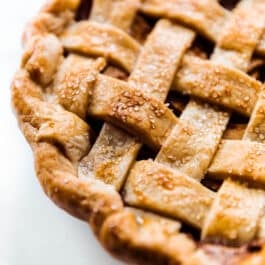
Description
Follow this simple recipe and video tutorial for the best all butter pie crust. It will make you a pie expert immediately! Complete with all my tips and troubleshooting, this pie crust recipe is buttery, flaky, and tender with the most incredible flavor. This recipe is also in my cookbook, Sally’s Baking 101.
Ingredients
- 2 and 1/2 cups (313g) all-purpose flour, plus more as needed (spooned & leveled)
- 2 teaspoons granulated sugar
- 1 teaspoon salt
- 1 cup (16 Tbsp; 226g) unsalted butter, chilled and cubed
- 1/2 cup (120ml) ice water, plus more as needed
Instructions
- In a large bowl, whisk together the flour, sugar, and salt together. Add the cold cubed butter on top. Using a pastry cutter, food processor, or two forks (pastry cutter is ideal, see post above), cut or pulse the butter into the dry ingredients until it resembles coarse meal. You’re looking for pea-sized bits of flour-coated butter. A few larger bits of butter is OK.
- Drizzle the cold water over the surface of the flour mixture, 1 Tablespoon at a time, and stir after each addition. Stop adding water when the dough comes together easily and begins to form large clumps. The dough will feel moist and a little sticky, but not feel overly wet. Do not add any more water than you need to. I always use about 1/2 cup (120ml) of ice water.
- Transfer the dough to a lightly floured work surface. Using floured hands, gently bring the dough mixture together into a ball. Avoid overworking the dough. If it feels too dry or is too crumbly to form a ball, dip your fingers in cold water and then continue bringing the dough together. If it feels too sticky, sprinkle on a little more flour and continue bringing it together. Using a sharp knife or bench scraper, divide the dough in half. Using your hands, gently flatten each half into a 1-inch-thick disc.
- Wrap each disc tightly in plastic wrap and refrigerate for at least 2 hours and up to 5 days before using in a pie recipe.
- After refrigerating, the dough is ready to roll out and use in a pie recipe. Proceed with the pie per your recipe’s instructions. TIP: When rolling out the chilled pie dough discs, use gentle force with your rolling pin. Start from the center of the disc and work your way out in all directions, turning the dough with your hands between rolls. Smooth out the edges if you notice cracks. (See video.) Keeping your work surface, rolling pin, and hands lightly floured makes rolling out easier.
Notes
- Make Ahead Instructions: Prepare the pie dough through step 4 and freeze the discs for up to 3 months. Thaw overnight in the refrigerator before using in your pie recipe.
- Special Tools (affiliate links): Glass Mixing Bowl | Pastry Cutter | Silicone Spatula | Rolling Pin | 9-inch Glass Pie Dish | Pizza Cutter or Pastry Wheel | Pastry Brush | Pie Weights | Pie Crust Shield
- Pie Crust Comparison: Let’s see how this all butter pie crust recipe compares to my favorite buttery flaky pie crust, which uses a mix of shortening and butter. Due to butter’s high water content, this all butter pie crust is lighter textured with more defined flakes. As the crust bakes, the butter’s water converts to steam, creating thousands of deliciously light flakes. It’s also so buttery! However, because of all this butter, I find that the shortening and butter pie crust is a little easier to work with. Shortening has a higher melting point than butter, so the crust holds its shape wonderfully. Both crusts are fantastic, but if you are looking to make intricate pie crust designs I highly recommend my buttery flaky pie crust.
- Try This: Replacing 1 Tablespoon of ice water with cold apple cider vinegar creates an even flakier, more tender pie dough. It’s so tasty. Try it!