Description
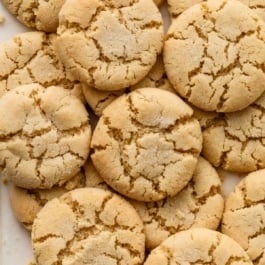
These naturally gluten-free almond flour sugar cookies are sweet and buttery with lightly crisp edges and chewy centers. Enjoy them plain, or dress them up with sprinkles or frosting. See recipe Notes about substitutions.
Ingredients
- 3 cups (288g) super-fine blanched almond flour (spooned & leveled)
- 1/4 cup (30g) cornstarch or tapioca starch (we prefer cornstarch; see Note)
- 1 teaspoon baking powder
- 1/2 teaspoon baking soda
- 1/4 teaspoon salt
- 1/2 cup (8 Tbsp; 113g) unsalted butter, melted and slightly cooled
- 1/2 cup (100g) granulated sugar
- 1/4 cup (50g) packed light or dark brown sugar
- 1 large egg, at room temperature
- 2 teaspoons pure vanilla extract
- 1/2 teaspoon almond extract
- optional: 1/3 cup (53g) certified gluten free sprinkles*
Topping
- 1/2 cup (100g) granulated sugar, for rolling
- optional: cookie decorating buttercream and certified gluten free sprinkles
Instructions
- In a medium bowl, whisk together the almond flour, cornstarch, baking powder, baking soda, and salt. Set aside.
- In a large bowl whisk together the melted butter, granulated sugar, and brown sugar until combined. Add the egg, vanilla, and almond extract. Whisk until combined.
- Add the dry ingredients to the wet ingredients and mix with a silicone spatula or wooden spoon until fully combined. Fold in the sprinkles, if using. The dough will be very soft. Cover and chill the dough for at least 2 hours (or up to 3 days). Do not skip chilling.
- Preheat the oven to 350°F (177°C). Line large baking sheets with parchment paper or silicone baking mats. Have ready a small bowl of granulated sugar for coating the cookie dough balls.
- Scoop and roll dough into balls, about 1.5 Tablespoons (28–30g) of cookie dough each. Roll the dough balls in the sugar, and arrange 3 inches apart on the lined baking sheets. Using the bottom of a measuring cup, gently press down on each cookie to slightly flatten.
- Bake the cookies for 13–15 minutes, until the surface looks crackly and the edges are set but the centers still look soft. Allow cookies to cool on the baking sheet for 10–20 minutes and then transfer to a cooling rack to cool completely.
- If desired, decorate cooled cookies with buttercream frosting and top with sprinkles. For the pictured frosted cookies, I used the Wilton 12 piping tip to swirl buttercream on top of the cooled cookies.
- Store unfrosted cookies in an airtight container at room temperature for up to 5 days. Store frosted cookies in an airtight container at room temperature for up to 1 day, or in the refrigerator for up to 5 days.
Notes
- Make Ahead & Freezing Instructions: There are a few options here! First, you can prepare the cookie dough and chill it in the refrigerator for up to 3 days. You can also freeze the cookie dough balls. Roll the dough into balls then freeze the balls for up to 2–3 months. I recommend freezing without the sugar coating. When you are ready to bake, remove the balls from the freezer, let sit for 30 minutes, preheat the oven, then roll in sugar. Read my tips and tricks on how to freeze cookie dough. You can also freeze the baked (unfrosted) cookies for up to 3 months. Thaw overnight in the refrigerator before frosting and serving.
- Special Tools (affiliate links): Glass Mixing Bowls | Whisk | Silicone Spatula | Baking Sheets | Silicone Baking Mats or Parchment Paper | Medium Cookie Scoop | Cooling Rack
- Sprinkles: If you’d like to mix sprinkles into the dough, reach for the jimmies-style strands. Nonpareils (the tiny balls) bleed their color in cookie dough and cake batter. Be certain the product you are using are certified gluten free if necessary.
- A Note About Gluten-Free Ingredients: Almond flour, cornstarch, and tapioca starch/flour are naturally gluten free; however, cross-contamination during manufacturing can introduce gluten, so always check for a “certified gluten-free” label, especially if you have celiac disease or high sensitivity.
- Can I Use Almond Meal Instead of Almond Flour? No. Almond meal (made from whole almonds with skins) produces gritty, denser cookies. Fine blanched almond flour is essential for the correct texture. Super-fine blanched almond flour can be found at most grocery stores, or you can purchase it online. I’ve used and tested the cookies with various brands including this one, this one, and this one.
- Can I Make These Dairy Free? You can use melted coconut oil or vegan butter, but the cookies won’t be quite as chewy. If using coconut oil, choose refined to avoid coconut flavor.
- Can I Leave Out the Egg? Almond flour cookies rely heavily on egg for binding. A flax egg won’t provide the same structure, and the cookies tend to crumble. I don’t recommend it for this particular recipe. Here are all of my egg-free baking recipes to browse instead.
- Cornstarch or Tapioca Starch: One of these is essential for soft, chewy results in a gluten-free cookie. Our tests found cornstarch produced slightly better browning and a pleasantly chewier texture.
- Be sure to check out my top 5 cookie baking tips AND these are my 10 must-have cookie baking tools.