Description
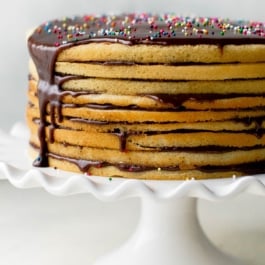
Smith Island cake is the official dessert of Maryland. This stunning cake features 9 delicious yellow cake layers and chocolate icing layers. The chocolate icing seeps down into the cake layers creating the most deliciously moist cake you’ll ever taste. Garnish with sprinkles for an extra special treat!
Ingredients
Chocolate Icing
- 6 Tablespoons (85g) unsalted butter, cut into 6 pieces
- 6 ounces (170g) bittersweet chocolate, coarsely chopped*
- 1 and 2/3 cups (335g) granulated sugar
- 1 cup (240ml) heavy cream
- 2 teaspoons corn syrup (optional, for shine)
- 1 teaspoon pure vanilla extract
- pinch of salt (optional, to taste)
Cake
- 3 and 3/4 cups (443g) sifted all-purpose flour* (spooned & leveled)
- 1 and 1/2 teaspoons baking powder
- 3/4 teaspoon baking soda
- 1 teaspoon salt
- 1 and 1/2 cups (340g) unsalted butter, softened to room temperature
- 1 and 3/4 cups (350g) granulated sugar
- 5 large eggs, at room temperature
- 2 and 1/2 teaspoons pure vanilla extract
- 1 and 3/4 cups (420ml) buttermilk, at room temperature*
- optional: rainbow sprinkles for garnish
Instructions
- Make the icing first: The icing needs to cool completely and thicken before assembling the cake, so prepare it first. Combine the butter, chocolate, granulated sugar, heavy cream, and corn syrup in a medium saucepan over medium heat. Stir constantly until the butter and chocolate have melted. Continue to cook, stirring occasionally, as the sugar dissolves and the mixture comes to a full boil. (You should see bubbling in the center of the saucepan, not just around the edges.) Once boiling, cook for 2 minutes, or until the mixture reaches 220°F (104°C). Remove from heat and stir in the vanilla extract. Carefully taste and add a pinch of salt, if desired. Leave uncovered and set aside to cool and thicken for at least 2 hours, or until it reaches a spreadable consistency. This gives you plenty of time to bake and cool the cake layers. See the Make Ahead Tip if preparing in advance. Yields about 2 and 1/4 cups icing.
- Preheat oven to 350°F (177°C). Grease three 9-inch cake pans, line with parchment paper rounds, then grease the parchment paper. Parchment paper helps the thin cakes seamlessly release from the pans; they may crack and crumble otherwise. (If it’s helpful, see my parchment paper rounds for cakes video & post. You can also reuse the parchment rounds for each batch or cut 9 individual rounds.)
- Make the cake batter: Whisk the flour, baking powder, baking soda, and salt together in a large bowl. Set aside. Using a handheld or stand mixer fitted with a paddle attachment, beat the butter and sugar together on high speed until smooth and creamy, about 5 minutes. Scrape down the sides and up the bottom of the bowl with a silicone spatula as needed.
- On medium-high speed, add 1 egg at a time, beating well after each addition. Beat in the vanilla extract. Scrape down the sides and up the bottom of the bowl with a silicone spatula as needed.
- With the mixer on low speed, add the dry ingredients in three additions alternating with the buttermilk, beginning and ending with the dry ingredients, and mixing each addition just until incorporated. Do not overmix this batter. The batter will be smooth, velvety, and slightly thick.
- Bake the layers: You’ll have about 7 cups of batter total, so each of the 9 cake layers will use slightly less than 1 cup of batter, or about 200–210g. Keep any unused batter loosely covered at room temperature while the other layers bake. Pour slightly less than 1 cup (200–210g) of batter into each prepared cake pan and spread evenly. Bake for 11–12 minutes, or until a toothpick inserted in the center comes out clean. The layers are VERY thin, so they shouldn’t need much longer than this. Allow the cakes to cool in the pans for a couple minutes, then carefully invert each onto parchment paper on the counter. Peel off the parchment round from the bottom of the cake; you can reuse it for the next batch or use a new one. Once the pans are cool enough to handle, grease them again, line with parchment rounds, and grease the parchment. Repeat baking the remaining batter until you have baked all 9 layers. Allow all of the cake layers to cool completely, about 1 hour.
- Assemble the cake: Carefully place one layer on a serving platter, cake turntable, or cake stand. Spoon and spread 1/4 cup of icing on top, then repeat with the rest of the cake layers and icing. Some icing will spill over the sides and that’s ok. Decorate the top with sprinkles, if desired.
- Set the cake aside for at least 1 hour before slicing and serving. This gives the icing time to set and makes the cake easier to slice. You can refrigerate the cake during this time, if desired.
- Cover and store leftover cake at room temperature for 1–2 days or in the refrigerator for up to 1 week.
Notes
- Make Ahead & Freezing Instructions: The cake layers can be baked, cooled completely, covered tightly, and stored at room temperature for up to 1 day. The icing can also be prepared ahead of time, covered, and refrigerated for up to 2 days. The assembled cake can be frozen for up to 3 months. Thaw overnight in the refrigerator, then bring to room temperature before serving. For the best taste and texture, though, I recommend enjoying this cake fresh.
- Special Tools (affiliate links): Medium Saucepan | 9-inch Round Cake Pans | Whisk | Glass Mixing Bowl | Electric Mixer (Handheld or Stand) | Cake Turntable | Cake Carrier (for storage)
- 9 Layers: The 9 thin cake layers are baked individually rather than baking 3 or 4 thicker cakes and slicing them horizontally. This is actually easier and helps the layers bake more evenly—and because they’re so thin, each batch only takes about 11–12 minutes in the oven. If you have multiple 9-inch cake pans, you can bake several layers at once. If you only have 1 or 2 pans, simply work in batches until all 9 layers are baked.
- Chocolate in Icing: I prefer bittersweet chocolate for a rich chocolate flavor that balances the sweetness of the icing. For a sweeter icing, use semi-sweet chocolate. You need 6 ounces (170g) of chocolate, which is more than 1 standard 4-ounce baking chocolate bar, so be sure to have 2 bars on hand. Use baking chocolate bars, not chocolate chips, which don’t melt as smoothly.
- Flour: Sift flour before measuring.
- Buttermilk: Buttermilk (an acid) is required for this cake recipe. If you don’t have any, you can make a DIY buttermilk substitute. Add 1 Tablespoon of white vinegar or lemon juice to a liquid measuring cup. Then add enough whole milk to the same measuring cup until it reaches 1 and 3/4 cups. (In a pinch, lower fat or nondairy milks work for this soured milk, but the cake won’t taste as moist or rich.) Stir it around and let sit for 5 minutes. The homemade “buttermilk” will be somewhat curdled and ready to use in the recipe.