Description
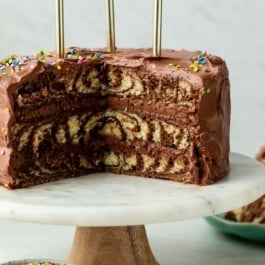
This 3-layer zebra cake features mesmerizing swirls of chocolate and vanilla, plus a silky chocolate cream cheese frosting. This marbled cake is easier than it looks because it starts with just 1 batter!
Ingredients
- 3 and 1/2 cups (413g) sifted all-purpose flour* (spooned & leveled)
- 1 teaspoon salt
- 2 teaspoons baking powder
- 3/4 teaspoon baking soda
- 1 and 1/2 cups (340g) unsalted butter, softened to room temperature
- 2 cups (400g) granulated sugar
- 5 large eggs, at room temperature
- 1/3 cup (75g) sour cream, at room temperature
- 1 Tablespoon pure vanilla extract (yes, Tbsp!)
- 1 and 3/4 cups (420ml) buttermilk, at room temperature
Chocolate Batter
- 2 Tablespoons milk or buttermilk, warmed
- 1 teaspoon espresso powder (optional)
- 1/3 cup (27g) unsweetened natural or dutch-process cocoa powder
- 2 Tablespoons granulated sugar
Chocolate Cream Cheese Frosting
- 12 ounces (339g) full-fat brick cream cheese, softened to room temperature*
- 3/4 cup (12 Tbsp; 170g) unsalted butter, softened to room temperature
- 3 and 1/2 cups (420g) confectioners’ sugar
- 2/3 cup (55g) unsweetened natural or dutch-process cocoa powder
- 1 teaspoon pure vanilla extract
- 1-2 Tablespoons milk or heavy cream
- pinch salt
- sprinkles for decorating, if desired
Instructions
- Preheat oven to 350°F (177°C).
- Make the vanilla batter: Whisk the flour, salt, baking powder, and baking soda together in a large bowl. Set aside. Using a handheld or stand mixer fitted with a paddle attachment, beat the butter and sugar together on high speed until smooth and creamy, about 3 minutes. Scrape down the sides and bottom of the bowl with a silicone spatula as needed. Add the eggs and mix on medium speed until combined. Scrape down the bowl again, and then beat in the sour cream and vanilla extract. The batter will look lumpy and curdled; that’s normal at this point.
- Add about 1/3 of the dry ingredients and 1/3 of the buttermilk, then beat on low speed until combined. Add another 1/3 of the dry ingredients and 1/3 of the buttermilk, then beat again on low speed until combined. Add the remaining of each, and beat just until incorporated. Do not over-mix this batter. The batter will be smooth, velvety, and slightly thick.
- Make the chocolate batter: There will be around 8 cups of batter total. Divide it in half (you can just eyeball it) and transfer half of the batter into another bowl. Whisk espresso powder into the warmed milk and then add it to one of the batters, along with the cocoa powder and sugar. Whisk until combined; a few small lumps are OK.
- Grease three 9-inch round cake pans, line with parchment paper rounds, then grease the parchment paper. Parchment paper helps the cakes seamlessly release from the pans. (If it’s helpful, see this parchment paper rounds for cakes video & post.)
- Drop a large spoonful of 1 batter in the center of each pan. You can use the back of the spoon to spread it around a bit to make a circle. Top each circle with a spoonful of the other batter. Rotating the pans as you add the batters will help you get that circle shape. Alternate spoonfuls of the batters on top of each other in each pan and repeat until all the batter is used. After every few spoonfuls, give the pans a little shake to level out the batters.
- Bake for 25–27 minutes, or until the cakes are baked through. To test for doneness, insert a toothpick into the center of the cake. If it comes out clean, it is done. Allow the cakes to cool in the pans set on a cooling rack for 1 hour, then remove them from the pans and let the cakes finish cooling directly on the rack. The cakes must be completely cool before frosting and assembling.
- Make the frosting: In a large bowl using a handheld or stand mixer fitted with a paddle or whisk attachment, beat the cream cheese on high speed until completely smooth and creamy, about 1 minute. Scrape down the sides of the bowl. Add the butter and beat until combined. Scrape down the sides and bottom of the bowl with a silicone spatula as needed. Add the confectioners’ sugar, cocoa powder, vanilla extract, 1 Tablespoon milk, and salt and beat on low speed; gradually increase the speed to medium-high and beat until combined and creamy. Add 1 more Tablespoon of milk to slightly thin out, if needed. Taste, then add another pinch of salt if desired.
- Assemble and frost: First, using a large serrated knife, slice a thin layer off the tops of the cakes to create a flat surface. Discard (or crumble over ice cream!). Place 1 cake layer on your cake stand, cake turntable, or serving plate. Evenly cover the top with about 1 cup of frosting (about 240g). Top with the 2nd cake layer, upside down, and evenly cover the top with the same amount of frosting. Top with the 3rd cake layer. Spread the remaining frosting in a thick layer all over the top and around the sides. Garnish with sprinkles, if desired. Refrigerate for at least 45 minutes before slicing. This helps the cake keep its shape when cutting—it could slightly fall apart without this time in the fridge.
- Cover leftover cake tightly and store in the refrigerator for up to 5 days. I like to use a cake carrier for storing and transporting.
Notes
- Make Ahead & Freezing Instructions: Prepare cakes and frosting 1 day in advance. Keep cakes at room temperature, covered tightly. Refrigerate prepared frosting in an airtight container until ready to use. Bring frosting to room temperature before spreading as it will be quite stiff after refrigerating. (Add a splash of cream or milk to thin out, if needed.) Frosted or unfrosted cakes may be frozen for up to 3 months; thaw overnight in the refrigerator and bring to room temperature, if desired, before serving.
- Special Tools (affiliate links): 9-inch Round Cake Pans | Glass Mixing Bowl | Whisk | Electric Mixer (Handheld or Stand) | Silicone Spatula | Cooling Rack | Cake Turntable | Straight Spatula (for frosting) | Round Cake Carrier (for storage)
- Flour: Sift flour before measuring.
- Buttermilk: If you don’t have buttermilk, you can make a DIY buttermilk substitute. Add 1 Tablespoon of white vinegar or lemon juice to a liquid measuring cup. Then add enough whole milk to the same measuring cup until it reaches 1 and 3/4 cups. (In a pinch, lower fat or nondairy milks work for this soured milk, but the cake won’t taste as moist or rich.) Stir it around and let sit for 5 minutes. The homemade “buttermilk” will be somewhat curdled and ready to use in the recipe.
- Cream Cheese: Make sure you’re using the bricks of cream cheese, not cream cheese spread. They’re typically sold in 8-ounce bricks, so you’ll need 1 and 1/2 bricks.
- Room Temperature Ingredients: All refrigerated items should be at room temperature so the batter mixes together easily and evenly. Read more about the importance of room-temperature ingredients.
- Tint Half of the Batter: Instead of turning half of the batter into chocolate batter, simply tint half of the batter your desired color using a couple drops of gel food coloring.
- Smaller 6-Inch Cake: I scaled down this recipe to make a 6-inch version, and served it as a 1st birthday cake for my daughter’s “safari”-themed birthday.