

Room temperature ingredients may seem like a small detail, but they can make a big difference in your baking. Learn why ingredient temperature matters, what properly softened butter means, and how to bring eggs and dairy ingredients to room temperature before you begin.
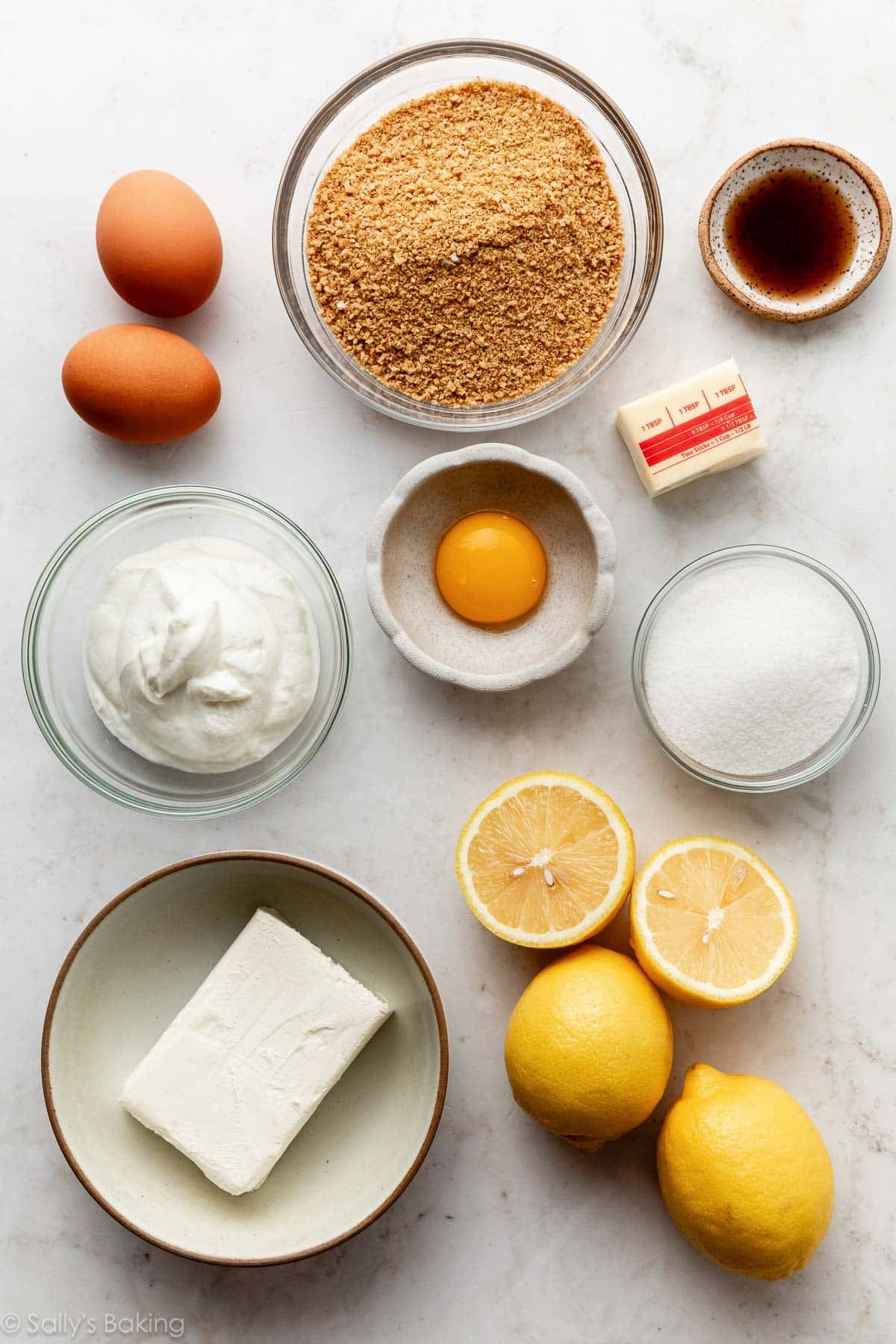
You’ve measured your flour, preheated the oven, and pulled out your mixing bowls. Then you notice those three little words in the ingredient list: at room temperature.
Can you just use the eggs and butter straight from the refrigerator?
Trust me, I know it’s tempting… especially when you’re ready to get baking! But when a recipe specifies an ingredient’s temperature, there’s a reason for it. Taking a little time to prepare your ingredients can help you achieve a smoother batter, a more even texture, and get the results that the recipe was developed to produce.
This is an important baking tip, and a topic worth a closer look. Let’s talk about why it matters and how to make this step easier!
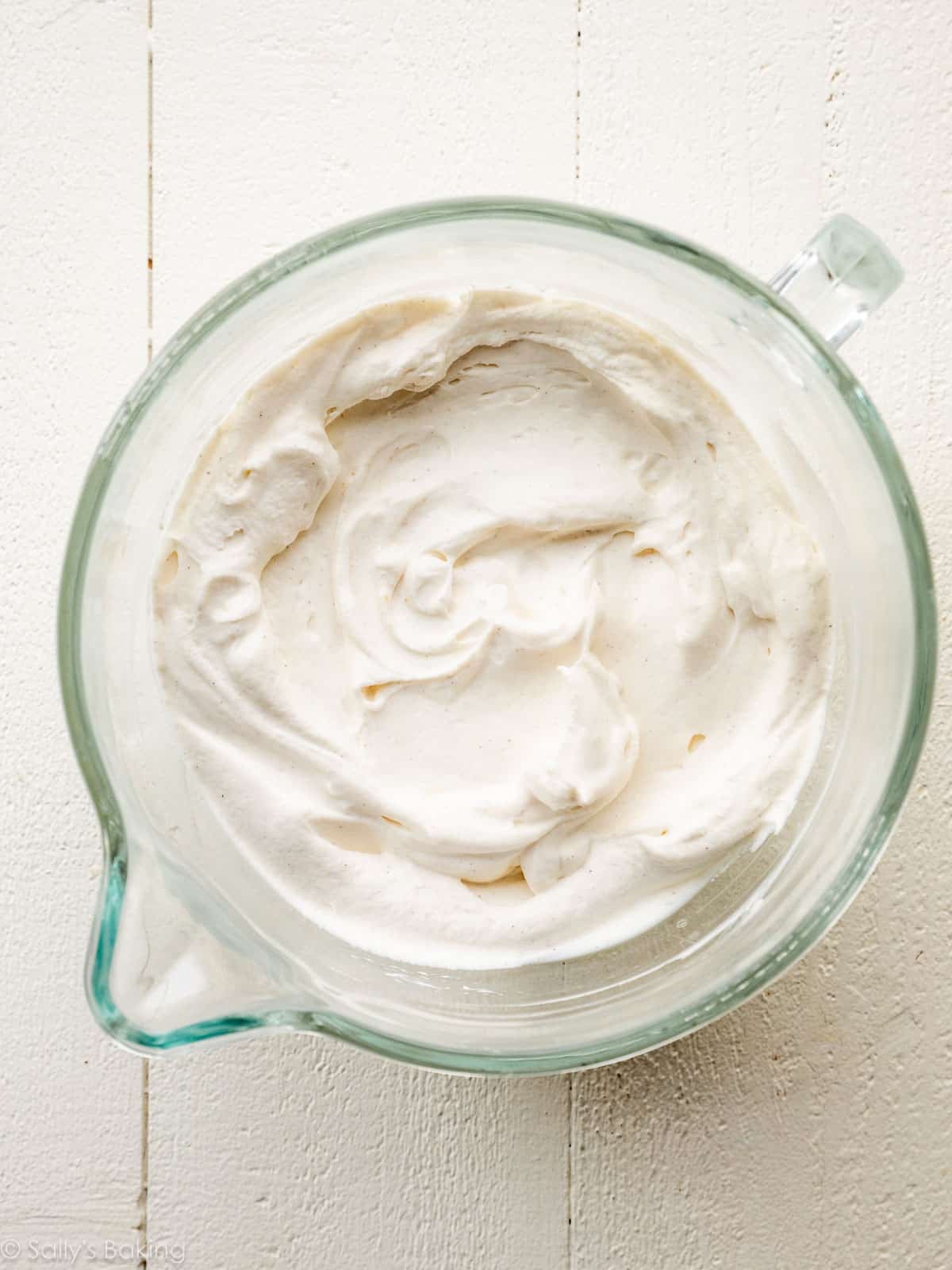
Why Are Room Temperature Ingredients Important?
Most importantly, ingredients at similar temperatures mix together more easily. Softened butter blends smoothly with sugar, room temperature eggs incorporate more readily into that mixture, and milk or yogurt can be added without suddenly cooling everything down.
This is especially helpful in recipes that begin by creaming butter and sugar. That step incorporates air into the butter, helping build the structure for your cake, cupcakes, or cookies. Adding cold ingredients can firm the butter back up and make the mixture harder to mix evenly.
Ingredient temperature also matters in recipes like cheesecake and frosting, where cold cream cheese or butter can leave stubborn lumps.
Does using a cold egg mean your recipe is guaranteed to fail? No. Some recipes are more forgiving than others. But following the temperatures listed in the recipe gives you the best chance of getting the intended results.
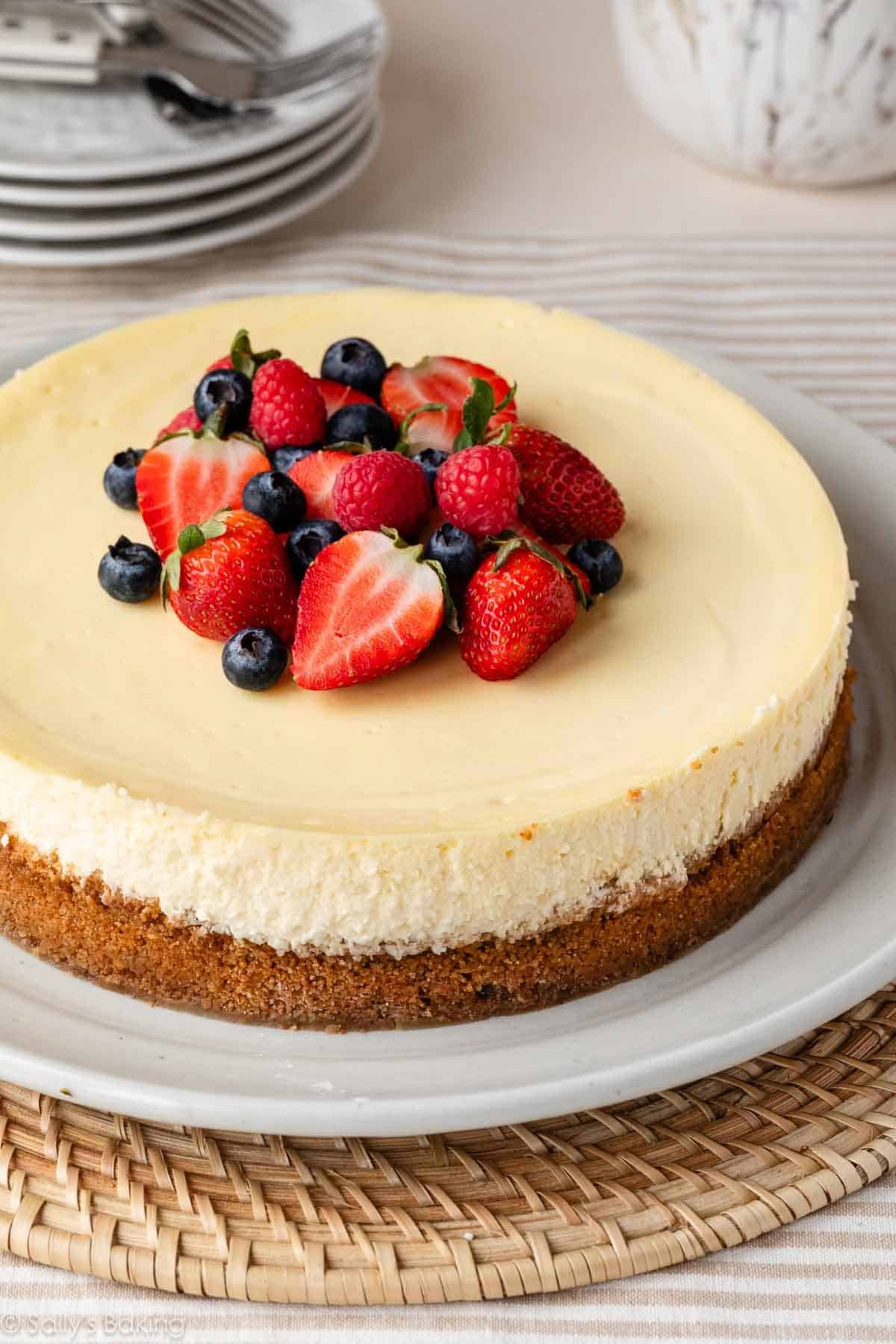
Room Temperature Butter
Butter is the ingredient I pay the most attention to here, because softened butter and warm butter behave differently.
Many cake and cookie recipes begin by creaming butter and sugar together. As you beat them, the sugar helps create tiny air pockets in the butter. Those pockets provide a starting point for the gases that expand during baking, helping the batter or dough rise.
Butter needs to be soft enough to beat smoothly, but still firm enough to hold that air. Cold butter is difficult to break down and cream. (Save it for flaky pie crust!) Butter that’s greasy, partially melted, or too soft won’t hold air as effectively.
For a closer look at this step, see my guide on how to cream butter and sugar.
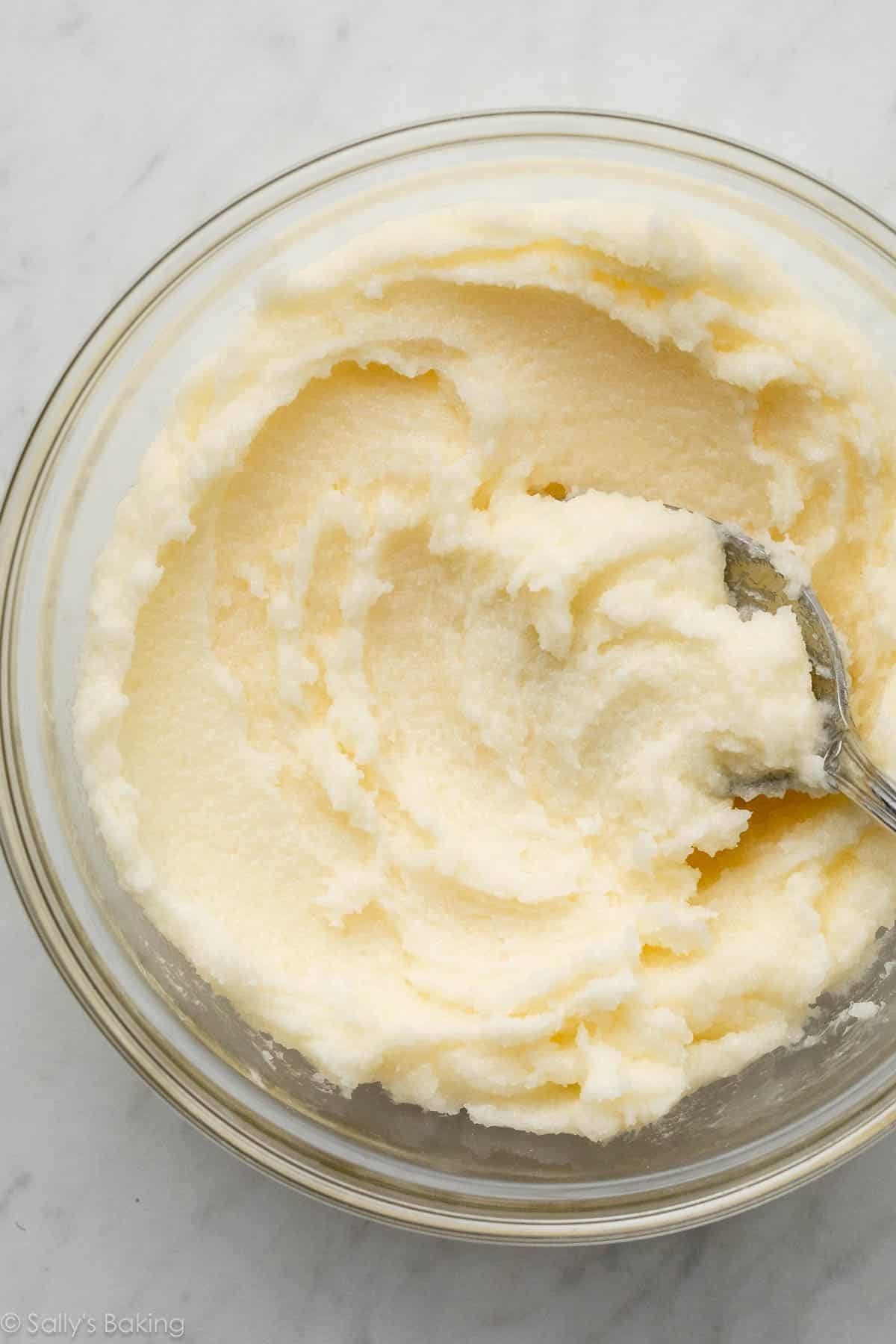
What Is Room Temperature Butter?
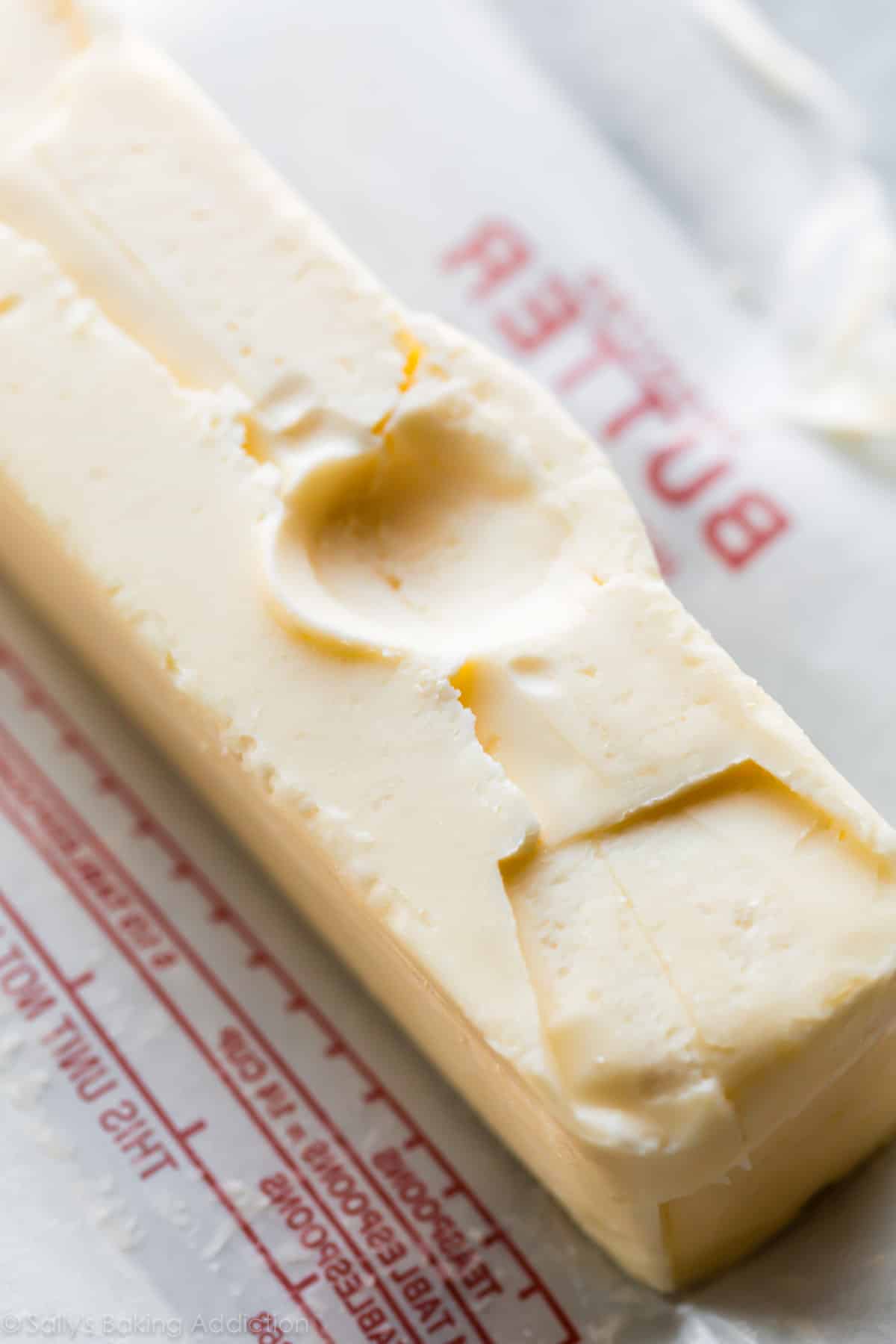
Room temperature butter should be slightly cool to the touch and soft enough to indent with your finger. Your finger should leave a shallow impression without sinking through the butter.
The butter should still hold its shape. If it’s shiny, greasy, or beginning to melt, it’s too warm for a recipe that calls for creaming.
Despite the name, “room temperature” doesn’t mean whatever temperature your kitchen happens to be! A warm kitchen can soften butter too much, while a chilly kitchen can leave it quite firm. Room temperature butter is about 65°F (18°C), which might be colder than your kitchen! An instant read thermometer can be very helpful here.
How to Bring Butter to Room Temperature
Take the butter out of the refrigerator about 1 hour before you begin, though it may need more or less time depending on your kitchen’s temperature and the size of the pieces.
To speed things up, cut the butter into tablespoon-size pieces and spread them out on a plate. Smaller pieces soften faster than a whole stick.
Avoid placing butter on a hot surface or too close to the oven because it can begin to melt. Microwaving can also soften it unevenly, leaving melted spots while the center is still cold. Cutting it into pieces and letting it soften on the counter is the easiest method to control.
If your butter gets too soft, refrigerate it briefly, then check the texture (or temperature) again before using.
What About Butter in Frosting?
Properly softened butter also helps you make smooth, creamy buttercream. Cold butter can leave little lumps that are difficult to beat out, while overly warm butter can make the frosting greasy and unstable.
The same idea applies to cream cheese frosting: softened cream cheese blends much more easily with the butter.

Room Temperature Eggs
Room temperature eggs mix more easily into batters and doughs, especially those made with creamed butter and sugar.
Adding cold eggs can chill the softened butter, causing it to firm into little pieces. As a result, the mixture may look curdled instead of smooth.
A slightly curdled mixture doesn’t necessarily mean you need to start over; it may come together as you continue following the recipe. Still, using room temperature eggs and adding them as directed helps keep the mixture more uniform from the beginning.
Egg temperature can also matter when whipping eggs or egg whites. Room temperature eggs generally whip more quickly and easily, which is useful in recipes that rely on beaten eggs for volume, like chiffon cake.
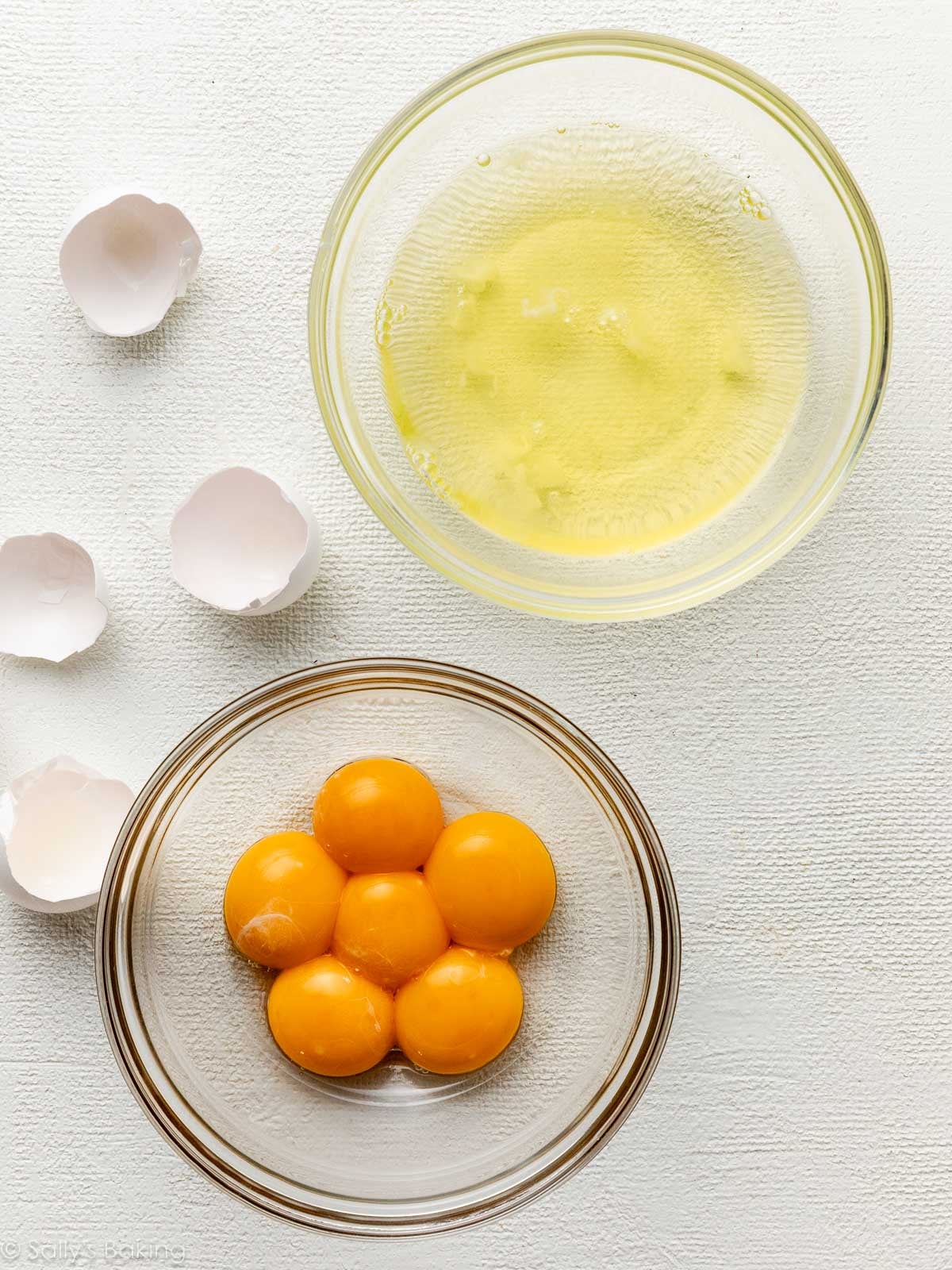
If you need to separate eggs, do it while they’re cold. The yolks are easier to separate from the whites that way. Then let the portions you need come to room temperature before using, if the recipe calls for it.
How to Bring Eggs to Room Temperature
This one is easy! Place the uncracked eggs in a bowl of warm (not hot) water for about 10–15 minutes.
I like to do this while I measure the dry ingredients and prepare the pan. It’s a simple shortcut when you’ve forgotten to take the eggs out ahead of time.
Room Temperature Milk, Yogurt, Sour Cream, and Cream Cheese
And for all other cold ingredients, the same reason applies: they blend more smoothly into batter or dough when they aren’t cold from the refrigerator.
In a butter-based cake batter, cold milk, yogurt, or sour cream can cool the butter and make the batter look curdled. In a cheesecake filling, cold cream cheese can leave lumps. Trying to beat those lumps out after adding the eggs can lead to more mixing than the recipe needs.
Room temperature liquids are especially helpful in recipes made with melted butter (or even melted coconut oil). Very cold milk or eggs can cause the melted butter (or coconut oil) to solidify into small pieces, causing your baked good to bake unevenly.
Follow the temperature specified for each ingredient in the recipe. If one ingredient needs to be cold while the others should be at room temperature, trust that there’s a reason for that.

How to Bring Dairy Ingredients to Room Temperature
Measure the amount you need into a small bowl or measuring cup, rather than leaving the entire container out.
- Milk: Let the measured milk sit on the counter briefly, or microwave it in short intervals, stirring between each. You want to take off the refrigerator chill, not make it hot.
- Yogurt & sour cream: Measure into a bowl and let sit at room temperature while you prepare the other ingredients. Microwave in very short intervals if needed. Stir before using.
- Cream cheese: Remove it from the packaging, cut it into smaller pieces, and spread them out on a plate to soften more quickly.
The time needed will vary with the amount of the ingredient and the temperature of your kitchen. Check before mixing, particularly with cream cheese: it should be soft enough to blend smoothly.
Keep the usual food safety limit in mind: refrigerated perishable ingredients should not sit out for more than 2 hours.
Should All Baking Ingredients Be at Room Temperature?
No. The right temperature actually depends on what you’re making!
Cold butter helps create flaky layers in pie crust, biscuits, and many scone recipes. Heavy cream should be cold when making whipped cream.
Other recipes may specifically call for melted butter (like my chewy chocolate chip cookies) or warm liquid, like many yeast bread recipes or my favorite chocolate cake.
There isn’t one temperature that works for every recipe, so follow the instructions rather than automatically bringing everything to room temperature.
Isn’t baking fun? 😉
A Little Preparation Makes a Big Difference
Before you start baking, read through the recipe and check the ingredient temperatures. Take out anything that needs to soften, then use that time to measure your dry ingredients, prepare your pans, and gather your tools.
Set yourself up for success before that first ingredient hits the mixing bowl.
It’s a small habit that makes the mixing process easier… and can make a noticeable difference in the finished bake!















Reader Comments and Reviews
Thanks for information on room temperature. I’m 85 and am just learning this important info.
Yes, but what temperature is Room Temperature? My house runs about 60 degrees in the winter. That’s probably not normal room temperature for most people- should I just preheat my oven sooner and move things close to it?
Hi Anneliz, for butter, room temperature is cool to the touch and about 65°F. There’s a lot more information in this What Room Temperature Butter Really Means post that might be helpful!
For years my chocolate chip cookies always came out amazing and thick! But now they always come out disappointingly flat, even after chilling the dough before baking. I have a gut feeling it’s in the creaming process because when I add the eggs to the creamed butter and sugar, it produces a frothy mixture instead of creamed ingredients. I never had this issue before and can’t figure out if it’s from the egg or butter temp, or if I’m mixing on too high of a setting. So my questions are if a recipe doesn’t specify “room temp” eggs, should they be used directly from frig? What speed on mixer do you cream your ingredients together and for how long? Some hand mixers lowest speed is not low at all! If a recipe calls for margarine, does it make a difference what margarine I use? Different brands of margarine have different amounts of vegetable oil in them so not sure if that’s affecting my flat chocolate chip cookies also. Should you chill dough before baking the chocolate chip cookies to achieve thick cookies? Thank you so much! Love your tips and recipes!
Hi Laurie, our Tips to Prevent Cookies from Spreading should be helpful in troubleshooting. Hope this helps for your next batch!
Hello! May I know if a buttermilk glaze can be left out at room temperature, or need to be refrigerated, due to the use of buttermilk in it? (E.g. icing sugar + buttermilk, instead of water or milk etc). I believe the one made with water can be left at room temp whilst the one with milk needs to be refrigerated? Or they can all be left at room temp for a long time?
Hi Chiara, it’s best for icings/frostings made with dairy to be stored in the refrigerator. I usually keep mine out on the counter for up to a day though. Then store in the refrigerator.
Thanks Sally! Does this apply also to buttercream made only with butter and icing sugar (plus salt and vanilla)?
are your baking suggestions printable?
Hi Leo, we don’t have a PDF version of this page at this time, but you can still print the webpage or copy and paste into another document and print. Hope this helps!
When baking a cake with soda pop, should the pop be room temperature?
Hi Bonnie, yes, we would bring that to room temperature as well.
I am making jumbo blueberry muffins. My buttermilk is outdated. Can I still use it in this recipe?
Hi Susan, see the recipe Notes of that recipe for details: You can use any milk, dairy or nondairy, but the lower fat milk you use, the less flavorful and moist your muffins will taste. Happy baking!
I recently made the Blueberry Muffin Cookies which everyone that ate them liked, however I had a difficult time using the cookie scoop to place batter on baking sheet without cutting into the fresh blueberries. So the blueberries bled onto baking sheet making the cookies not as pretty as the ones you pictured in your recipe. What could I do to not cut up the blueberries?
Hi Susan, that can be inevitable, but if you can work around the blueberries as much as possible, that should help a bit! We’re so glad the cookies were a hit.
I am making bean pie and two problems I keep bumping up against are 1) white spots on the top of the pie – my research is saying that is sugar or fat bloom but this is mostly in relation to chocolate and 2) there is supposed to be a distinct and then top layer that is explicitly darker than the filling itself. Any suggestions, ideas and/or questions I should be asking? All of my wet ingredients are at room temperature.
Hi Abdul-Haqq, unfortunately, we do not have any experience with bean pies, so we can’t offer much advice here. Sorry we can’t be of help!
Hi Sally,
I live in England and attempted to bake a lemon cake yesterday – my plan was to bake the layers in advance and freeze then defrost and ice for my son’s birthday next Saturday. I very rarely make sponge cakes (am used to making things like lemon polenta cakes and brownies which are easier). My first attempt was a bit of a disaster – I added the eggs straight from the fridge so it all curdled. So I’m going to attempt tomorrow having now come across your ‘room temperature’ tips! I
just wanted to ask about ratios of flour to sugar – I see that your lemon cake recipe has a larger ratio of flour to butter and sugar. Most of the recipes I have seen suggest an equal amount of butter, sugar and flour. I just wondered what the reason is and if I can actually use less sugar or if this will affect the consistency? I often find cakes are too sweet so would like to lessen the sugar if poss
Hi Antonia, you will definitely have better success with room-temperature eggs here! I think the ratio here is different because the recipe calls for sifting flour, which not every cake recipe does, and we also have a fair amount of liquid in this batter between the milk and lemon juice. If you want to try reducing the sugar, try going down just a little bit, say, 300g instead of 350g. You could also keep the sugar the same but use a less sweet icing, such as this Not-So-Sweet Whipped Frosting. Though I know from first-hand experience that finding brick-style cream cheese is a challenge in England! I hope this helps, and that your lemon cake turns out wonderfully.
This recipe is the very best!!! My daughter and I have made it twice in a 6 day period. And we are setting ingredients out to achieve room temp so we can make these this afternoon!! Way to go Sally, we enjoy your little “ditties,” too.
I have a recipe for chocolate butter cake that calls for hot coffee to be added at the end after all other ingredients are fully incorporated. Is this a good idea? I changed the pan size and I am at high altitude but the cake came out perfect the first couple of times I made it but after that it started to sink slightly in the middle and I can’t figure out why.
Hi Kathy! Is it a chocolate cake recipe? Adding hot liquid helps the cocoa powder and chocolate flavor bloom. We use a similar technique in our favorite chocolate cake recipe. This is an exception for the room temperature ingredients rule!
How do you define room temperature? We never heat our house above 62 degrees. is that sufficient to soften butter and to take the chill off eggs and dairy, or do I need to resort to more extreme measures?
Hi Susanna, room temperature ingredients should be about 65°F (18°C).
I’ve been baking for two years now but still having issues sometimes. Why do my cakes become raw in the middle. I always follow the temperature given in the recipe. Whenever I try to bake it a little bit longer, it makes the sides overcooked and dry. Wondering if you could help me with this.
Hi Faye! It sounds like your oven may run a bit too hot – this would cause the edges to brown before the middle can cook through. A helpful tool for you would be an in-oven thermometer so you always know exactly what temperature your oven is (see this post of details).
Definitely use an over thermometer. Another factor could be your baking pan. Darker color metals tend to bake the out sides faster, leaving the center under cooked. As I’ve become more experienced in my baking, I’ve upgraded to anodized aluminum.
Regarding room temperature, incorporation of ingredients is a factor, however much of baking involves chemical reaction which is better achieved when all ingredients start out at uniform temperature. As Sally mentioned, unless otherwise specified in the recipe, have ingredients at room temperature or bring to room temperature (warm water bath for eggs, in a pinch). I sometimes microwave milk for a few seconds, if I forgot to leave it out a head of time.
Hope this helps : )
Eggs do NOT NEED to be at room temperature! That’s the IDEAL, but it’s NOT absolutely necessary!
I’m wondering something. When you uses buttermilk in your recipes but you don’t any. You use milk then you add vinegar or lemon juice. My question is this: if you need buttermilk at room temperature do i let the milk out the fridge first to bring it to room temperature and then add the vinegar or i make the buttermilk and then let it go to room temperature? (because usually when you add vinegar to the milk it takes 5 minutes to become buttermilk)
Hi Josianne, you can make the DIY buttermilk and then allow it to sit at room temperature. This also gives it time to become a soured milk, as you mention.
If i’m separating the eggs (the white and yolks). It’s easier to do so cold i think. So how long I leave my eggs out the fridge in that case?
Hi Josianne, you can bring your eggs out of the fridge to separate at the same time that you bring out your butter — about an hour before you begin baking.
Our chocolate chip cookies have been coming out very flat and the spread out. I tested the baking soda with lemon juice and it is good. Only thing I can think of is maybe butter is to soft or eggs to warm. Wife usually takes butter and eggs out of refrigerator and sets them on a plate on counter anywhere from 6 to 8 hours before she uses them. Our kitchen is 69 to 70 F, so guessing this is her problem. I check oven temperature and it varies no more than about 6 degrees either way from the set temperature. I used a oven temperature gauge and also I used a blue tooth oven temperature probe. Both showed the same thing, that the oven temperature only varied about 6 degrees of the preset temperature. I also check the timer on range and it is good when compared to an iPhone or Alexa.
Hi Richard, it sounds like your butter is a bit too warm. You typically only need about 1-2 hours (depending on the temperature of your kitchen) to bring your butter to room temperature — more on that here. You also might find our post on 5 Cookie Baking Tips to Improve Your Next Batch helpful. See #2 there for tips on preventing excess spreading. Hope this helps!
Dear Sally, thank you for sharing your wonderful recipes. So far I have tried four recipes that I can happily report have turned out very delicious. In addition, I appreciate the extra tips, info, explanation and crutial baking facts you provide with every recipe ; they are extremely helpful. I enjoy reading them and have a much better understanding of baking rules and the strict reasons behind them. I know it takes so much of your time and energy for you to go above and beyond to share your knowledge and equip us with these important baking info, it certainly means you genuinely care in our baking success, for that I thank you immensely.
Thanks so much for this information. I’m 75 and never knew the reason behind the “room temperature” thing. I hate to admit it, but I will….I hardly ever made anything (other than butter because it was so hard) that had the ingredients at room temperature. I will now!!! PROMISE!
You’re soo good explaining these tips and why they are important. Thanks!!
I love your baking basics! I’m sometimes in denial about how such small changes can make such a big difference. And it’s usually because my sweet tooth doesn’t have any patience 🙂 thanks for the positive reinforcement!
Hi, if a recipe does not state room temp or melted for the butter, is it always safe to assume room temp is best, even when not specified? Also, for the eggs, can you just leave them out for an hour with the rest of the stuff or do you recommend the warm water trick. Thanks so much, it’s so nice to be able to ask these questions!!
Sarah, if creaming is a step in the recipe then yes– begin with room temperature butter. You can leave eggs out with the rest of the ingredients for the hour, yes. But if you forget or if you only need eggs for a recipe then the warm water works!
So what is the degrees for room temp milk?
Sally–
I’ve been baking for over 35 years and I am finally learning why some recipes turn out great sometimes and other times, good or “OK”, but not great. The temperature issue is certainly one of them. I am usually good about getting the butter to room temp, but sometimes forget about the eggs & milk as well. Just the other day, I made some muffins where I subbed out coconut oil for the vegetable oil, but I had to melt the oil first. Then I added the cold eggs, & presto–solid coconut oil that wouldn’t mix in!! Uh oh!
The other thing I finally did that has made a very big difference (in a good way) is that I took your advice and got a scale. I measure all my flour now for sure, sometimes the sugar and other dry ingredients, but mostly the flour. Thank you for that tip, it makes a huge difference (especially cookies!)
–Lisa
Thank you, Sally, for explaining so clearly why things need to be done a certain way. My baking has improved since I began following you and I have been able to share some of your tips with others as well. Love you and all of your recipes!
Thanks so much for this post! It really does help to understand WHY it’s important, otherwise I usually forgo following through with it. Good to know and looking forward to reading more of these posts! Thanks, Sally!