

Sweet and buttery, with crisp edges and chewy centers, these almond flour sugar cookies are naturally gluten free. Enjoy them plain, or dress them up with sprinkles or frosting. You need just a couple bowls to whip up these gluten-free sugar cookies—no mixer required!

If you’ve been searching for a soft-centered sugar cookie that just happens to be gluten free—not sandy, not dry, not crumbly—your search ends here! These almond flour sugar cookies are sweet and buttery with crisp edges and satisfyingly chewy centers.
The almond flour adds a subtle nuttiness that makes these taste like a classic sugar cookie, but with just a little something extra. Taste testers were surprised to learn they were gluten free!
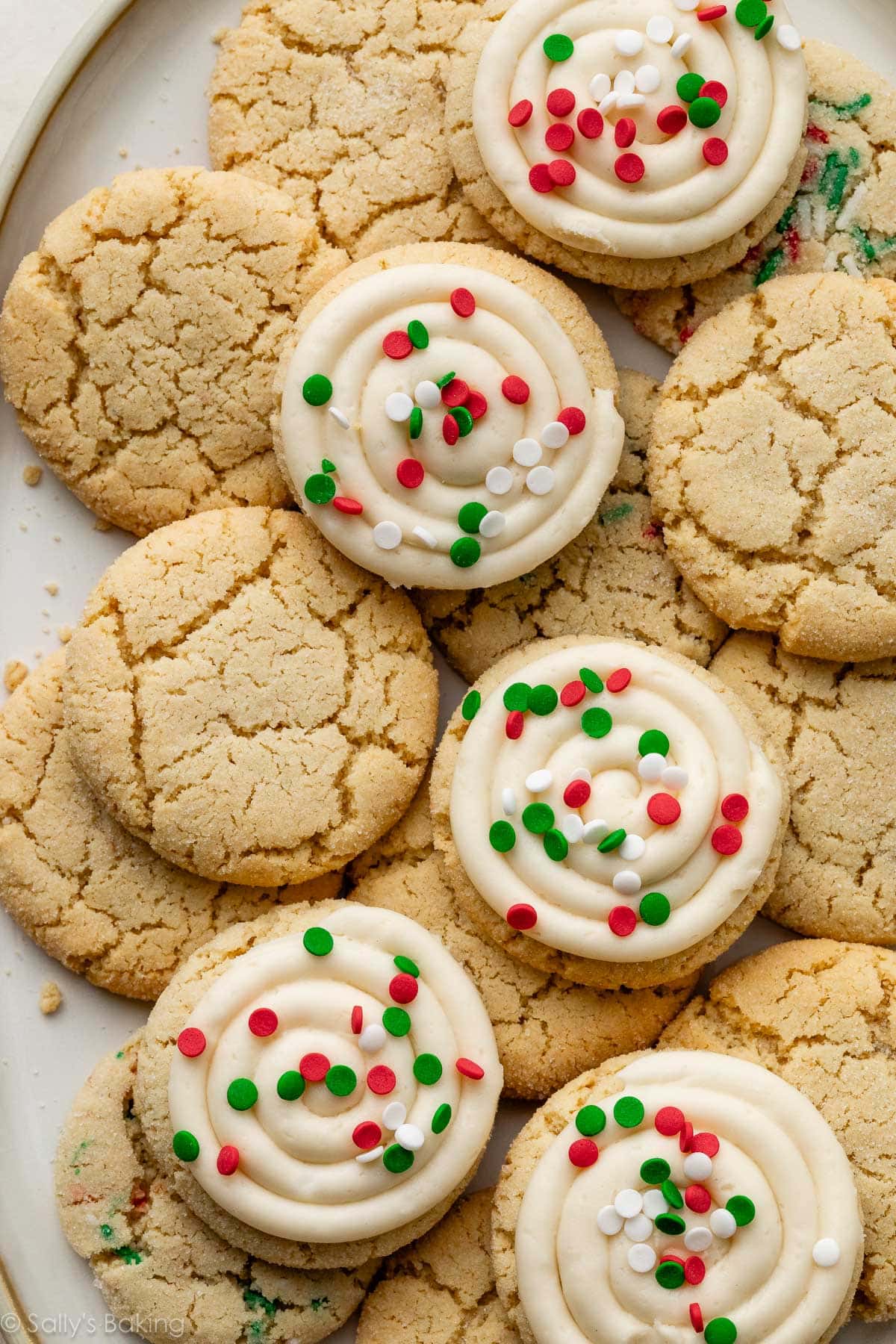
Keep them simple, mix in sprinkles, or top them with cookie decorating buttercream… they are also wonderful warm, straight off the cooling rack. (My team and I have done the research.)

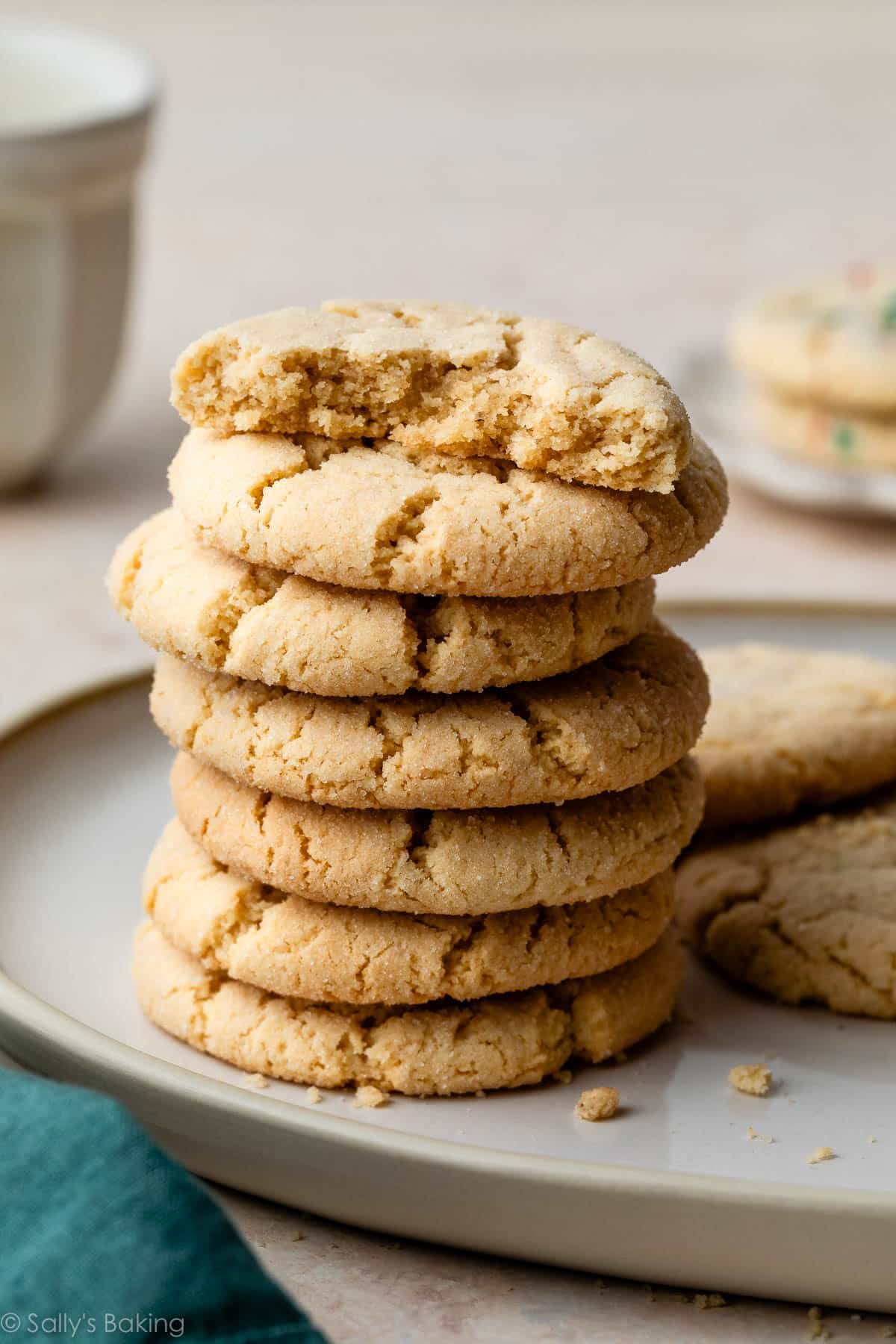
Today’s almond flour sugar cookies don’t just taste good for a gluten-free cookie… they’re just plain delicious. The flavor! The chew! Everything you love in a sugar cookie.
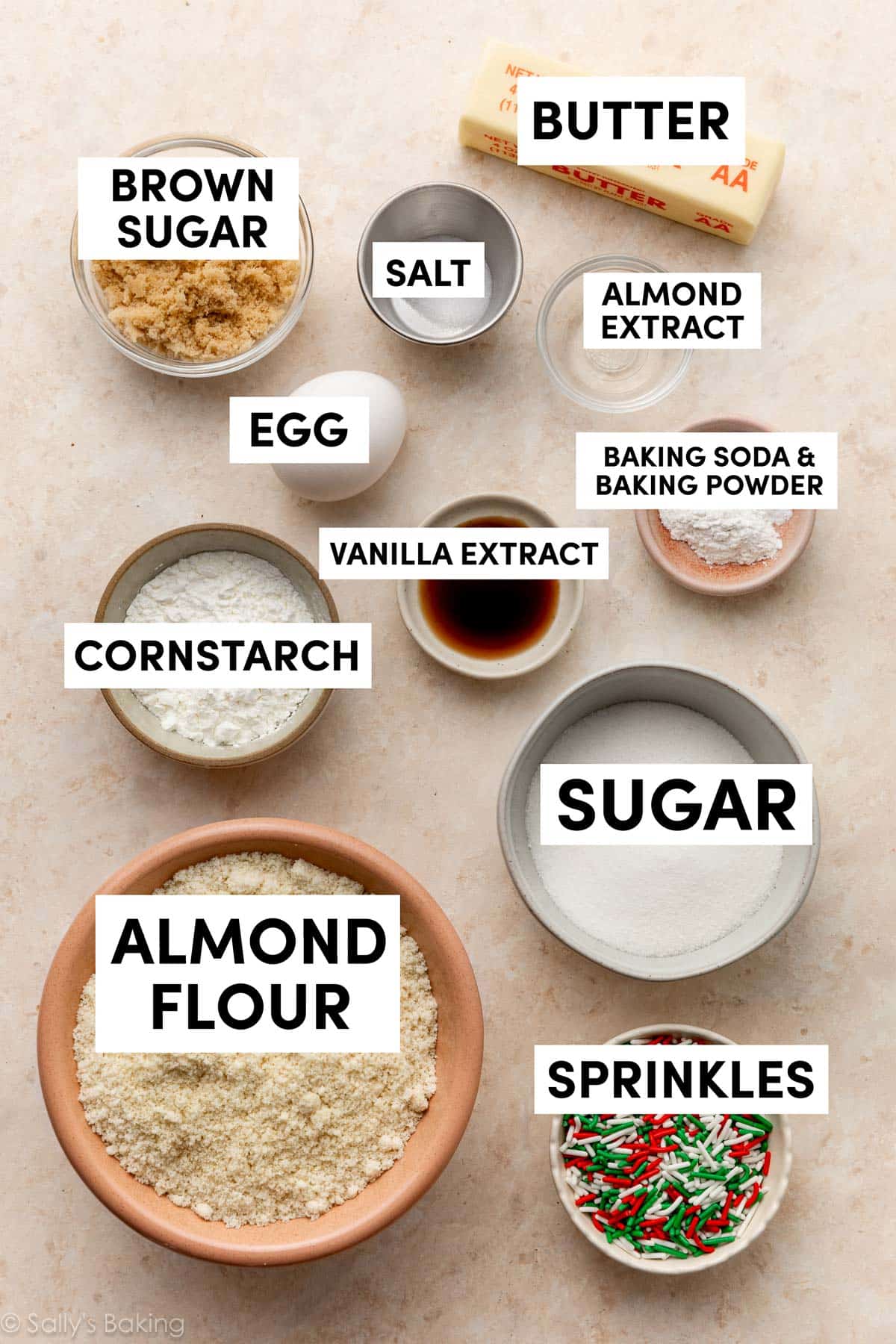
Ingredients You Need
- Fine Blanched Almond Flour: Look for the kind labeled “fine” or “super-fine” blanched almond flour. Unblanched almond flour (which is made from whole almonds with the skins) or coarse-ground almond meal will both yield a gritty cookie.
- Cornstarch or Tapioca Starch: Essential for soft, chewy results in a gluten-free cookie. Our tests found cornstarch produced slightly better browning and a pleasantly chewier texture.
- Baking Powder & Baking Soda: For rise and spread.
- Salt: For flavor.
- Butter: We’re using melted butter here, which brings deep, rich buttery flavor and makes the dough wonderfully easy to mix—no mixer needed. It also helps keep the cookies chewy and tender, especially important in a gluten-free dough.
- Sugar: Granulated and brown sugar sweeten these almond flour sugar cookies. You also need a little more granulated sugar for coating the cookie dough balls in before baking.
- Egg: To bind all the ingredients together. Extra important when you don’t have gluten for structure.
- Vanilla & Almond Extracts: The same flavors you’ll find in my regular sugar cookies!
Tip: If you’d like to mix sprinkles into the dough, reach for the jimmies-style strands. Nonpareils bleed their color in cookie dough and cake batter. For these photos, we made a couple batches and used sprinkles in 1 batch, as pictured below.
No. Almond meal (made from whole almonds with skins) produces gritty, denser cookies. Fine blanched almond flour is essential for the correct texture.
You can use melted coconut oil or vegan butter, but the cookies won’t be quite as chewy. If using coconut oil, choose refined to avoid coconut flavor.
Almond flour cookies rely heavily on egg for binding. A flax egg won’t provide the same structure, and the cookies tend to crumble. I don’t recommend it for this particular recipe. Here are all of my egg-free baking recipes to browse instead.
How to Make Gluten-Free Sugar Cookies
This almond flour sugar cookie dough comes together quickly with just a couple bowls, a whisk, and a spatula. Combine the dry ingredients and then the wet ingredients. The dough is very soft from the melted butter, so it needs to chill for at least 2 hours before you can shape and bake the cookies.
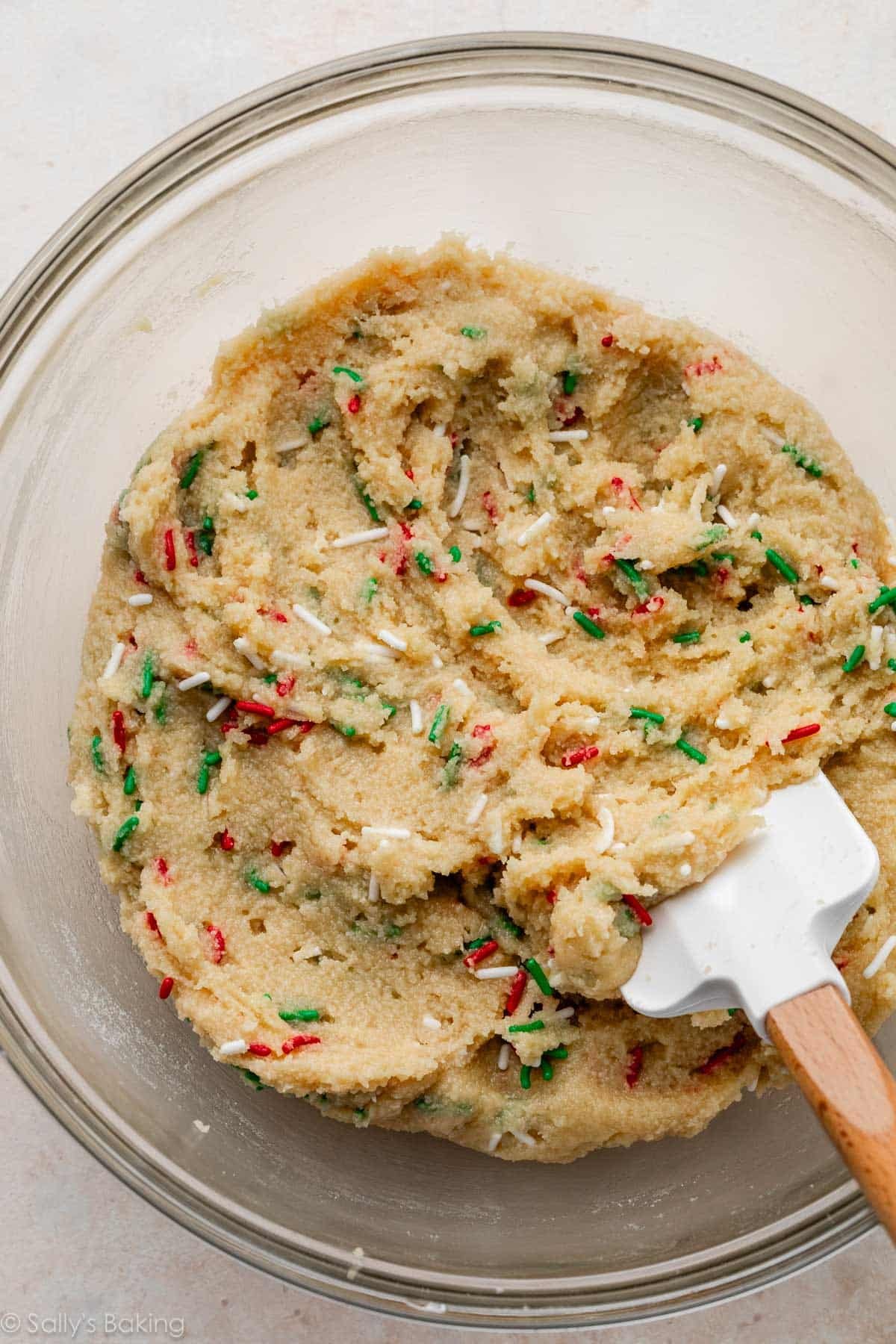
Once it has firmed up, use a medium cookie scoop to shape 1.5-Tablespoon portions (about 28–30g each) of dough, roll into balls, and roll them in granulated sugar to coat.
Place them on a lined baking sheet and use the bottom of a measuring cup to gently flatten the cookie dough balls. These almond flour cookies won’t spread much on their own without a little head start.

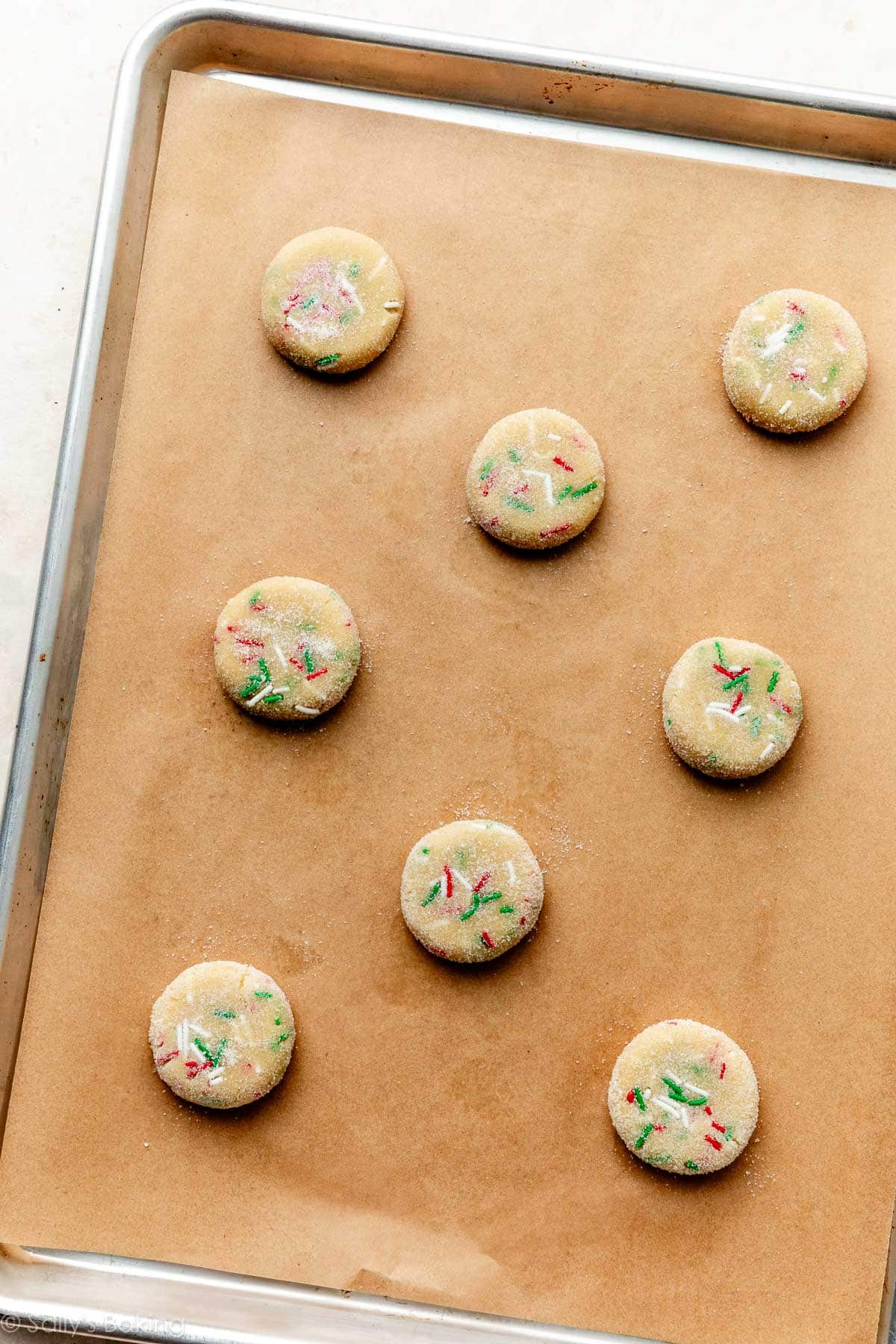
Let the gorgeously crackled cookies cool and continue to set on the baking sheet for a little while, then enjoy! Or you could…
Decorate These Almond Flour Sugar Cookies
My cookie-decorating buttercream tastes incredible on these almond flour sugar cookies, can be tinted any color you’d like, and soft-sets. Keep it vanilla, or add a tiny splash of almond extract to really amp up the almond flavor!
For the pictured frosted cookies, I used the Wilton 12 piping tip. If you’re new to decorating with piping tips, this tutorial on 5 piping tips + how to use them is a great place to start.
You could also make the cookies a little smaller—try 1 Tbsp (20g) each—then sandwich 2 cookies together with some chocolate ganache or jam. I love the flavor combination of raspberry jam and almond, like in these raspberry almond thumbprint cookies.
This almond flour sugar cookie recipe joins my list of 40+ gluten-free dessert recipes.
This recipe is part of my annual cookie countdown called Sally’s Cookie Palooza. It’s the biggest, most delicious event of the year! Browse dozens of cookie recipes over on the Sally’s Cookie Palooza page.


Almond Flour Sugar Cookies (GF)
- Prep Time: 2 hours, 15 minutes (includes chilling)
- Cook Time: 14 minutes
- Total Time: 2 hours, 30 minutes
- Yield: 20-24 cookies
- Category: Dessert
- Method: Baking
- Cuisine: American
Description
These naturally gluten-free almond flour sugar cookies are sweet and buttery with lightly crisp edges and chewy centers. Enjoy them plain, or dress them up with sprinkles or frosting. See recipe Notes about substitutions.
Ingredients
- 3 cups (288g) super-fine blanched almond flour (spooned & leveled)
- 1/4 cup (30g) cornstarch or tapioca starch (we prefer cornstarch; see Note)
- 1 teaspoon baking powder
- 1/2 teaspoon baking soda
- 1/4 teaspoon salt
- 1/2 cup (8 Tbsp; 113g) unsalted butter, melted and slightly cooled
- 1/2 cup (100g) granulated sugar
- 1/4 cup (50g) packed light or dark brown sugar
- 1 large egg, at room temperature
- 2 teaspoons pure vanilla extract
- 1/2 teaspoon almond extract
- optional: 1/3 cup (53g) certified gluten free sprinkles*
Topping
- 1/2 cup (100g) granulated sugar, for rolling
- optional: cookie decorating buttercream and certified gluten free sprinkles
Instructions
- In a medium bowl, whisk together the almond flour, cornstarch, baking powder, baking soda, and salt. Set aside.
- In a large bowl whisk together the melted butter, granulated sugar, and brown sugar until combined. Add the egg, vanilla, and almond extract. Whisk until combined.
- Add the dry ingredients to the wet ingredients and mix with a silicone spatula or wooden spoon until fully combined. Fold in the sprinkles, if using. The dough will be very soft. Cover and chill the dough for at least 2 hours (or up to 3 days). Do not skip chilling.
- Preheat the oven to 350°F (177°C). Line large baking sheets with parchment paper or silicone baking mats. Have ready a small bowl of granulated sugar for coating the cookie dough balls.
- Scoop and roll dough into balls, about 1.5 Tablespoons (28–30g) of cookie dough each. Roll the dough balls in the sugar, and arrange 3 inches apart on the lined baking sheets. Using the bottom of a measuring cup, gently press down on each cookie to slightly flatten.
- Bake the cookies for 13–15 minutes, until the surface looks crackly and the edges are set but the centers still look soft. Allow cookies to cool on the baking sheet for 10–20 minutes and then transfer to a cooling rack to cool completely.
- If desired, decorate cooled cookies with buttercream frosting and top with sprinkles. For the pictured frosted cookies, I used the Wilton 12 piping tip to swirl buttercream on top of the cooled cookies.
- Store unfrosted cookies in an airtight container at room temperature for up to 5 days. Store frosted cookies in an airtight container at room temperature for up to 1 day, or in the refrigerator for up to 5 days.
Notes
- Make Ahead & Freezing Instructions: There are a few options here! First, you can prepare the cookie dough and chill it in the refrigerator for up to 3 days. You can also freeze the cookie dough balls. Roll the dough into balls then freeze the balls for up to 2–3 months. I recommend freezing without the sugar coating. When you are ready to bake, remove the balls from the freezer, let sit for 30 minutes, preheat the oven, then roll in sugar. Read my tips and tricks on how to freeze cookie dough. You can also freeze the baked (unfrosted) cookies for up to 3 months. Thaw overnight in the refrigerator before frosting and serving.
- Special Tools (affiliate links): Glass Mixing Bowls | Whisk | Silicone Spatula | Baking Sheets | Silicone Baking Mats or Parchment Paper | Medium Cookie Scoop | Cooling Rack
- Sprinkles: If you’d like to mix sprinkles into the dough, reach for the jimmies-style strands. Nonpareils (the tiny balls) bleed their color in cookie dough and cake batter. Be certain the product you are using are certified gluten free if necessary.
- A Note About Gluten-Free Ingredients: Almond flour, cornstarch, and tapioca starch/flour are naturally gluten free; however, cross-contamination during manufacturing can introduce gluten, so always check for a “certified gluten-free” label, especially if you have celiac disease or high sensitivity.
- Can I Use Almond Meal Instead of Almond Flour? No. Almond meal (made from whole almonds with skins) produces gritty, denser cookies. Fine blanched almond flour is essential for the correct texture. Super-fine blanched almond flour can be found at most grocery stores, or you can purchase it online. I’ve used and tested the cookies with various brands including this one, this one, and this one.
- Can I Make These Dairy Free? You can use melted coconut oil or vegan butter, but the cookies won’t be quite as chewy. If using coconut oil, choose refined to avoid coconut flavor.
- Can I Leave Out the Egg? Almond flour cookies rely heavily on egg for binding. A flax egg won’t provide the same structure, and the cookies tend to crumble. I don’t recommend it for this particular recipe. Here are all of my egg-free baking recipes to browse instead.
- Cornstarch or Tapioca Starch: One of these is essential for soft, chewy results in a gluten-free cookie. Our tests found cornstarch produced slightly better browning and a pleasantly chewier texture.
- Be sure to check out my top 5 cookie baking tips AND these are my 10 must-have cookie baking tools.














Reader Comments and Reviews
How can I leave out the cornstarch if I dont have it nor tapioca starch?
Hi Emma, one of those is essential for soft, chewy results in a gluten-free cookie. We don’t recommend leaving it out.
Is it possible to use coloured coarse sugar in place of granulated sugar?
Absolutely!
I made these for a Lenten Luncheon series at my church. They were a huge hit and many people were very thankful for a gluten free option. They are delicious, “best almond cookies ever” from everyone who commented.
I followed the ingredient directions exactly and refrigerated for about 8 hrs. I used a food scale to make sure my cookies were 27-29 gm each and baked them for 13 min. This recipe is fantastic and the baked cookies have a flavor that remind me of a macaron. Thanks Sally!
Do you think it would work to substitute potato starch for the cornstarch?
We haven’t tested it, Sally! Let us know if you do.
Hi Sally, I havnt made these yet, but I am wondering if I could use this recipe but in a heart shape pan for Valentine’s Day?
Thank you!
Hi Stefanie, We haven’t tested it but can’t see why not. The bake time will depend on the size of your pan and how thick your dough is in the pan so just keep your eye on it.
I wasn’t happy with how they came out, was embarrassed share with others. Dry and bland and crisp. Maybe because it’s hard to tell when they’re finished baking that I overbaked? I measured correctly and followed instructions on when to take out of oven etc. Maybe that’s just how almond flour vs gluten cookies taste?
I made these recently for a visitor with a known dairy allergy and gluten free. Turned out really good! Rolled them in sugar to sweeten them up. Enjoyed by everyone!
I baked these for our annual Christmas cookie baking day and they were a huge hit! Both Gluten and Nongluten family loved them! I did put the buttercream frosting on them, but they were wonderful without the frosting too! Texture and flavor were perfect! I appreciate you making naturally gluten free recipes too since I have a wheat allergy. I especially love your yeast bread recipes, I make your honey butter rolls for my family every holiday! My family just loves those rolls and request I make them! Thank you!
These are fabulous cookies. They came out with soft middle and lightly crunchy edges. I served them at my book club’s holiday party and they received rave reviews! I even got a request to share the recipe.
I made these exactly as the recipe suggests, using cornstarch, and they were wonderful. A nice crunch on the outside and a little chewy inside. I didn’t use sprinkles or icing and I think that would have made them too sweet for my taste.
The first batch I made were with 30gram balls of dough but these made very large cookies -likely great for family, but a little too large for my guests. I cut the next batch down to 25 grams and that made nice 3 inch diameter cookies (just needed to reduce the baking time by a couple of minutes!)
I made these for a friend who is gluten intolerant and he loved them, as did I. They’re better than standard sugar cookies, IMO.
I made these last night,- Simply Delicious! I used regular salted butter as it is what I had on hand and frosted with butter cream and Christmas sprinkles (SuperNatural gluten free ones!). My GF husband and my good friend who is also GF both really liked them. I will be making again very soon to give as gifts. I am not GF and I really liked them too…taste like a regular gluten cookie with a nice chewy texture. 10 for 10 in my kitchen! Thank you so much for an easy delicious GF recipe!!!!
I’m not sure why, but these did not turn out for me. They were very flat. Everything was at room temp and I followed the recipe. I tend to have a problem with almond flour recipes, idk why. Any ideas? The flavor was good though.