

Become a better baker by learning the similarities and differences between baking powder vs. baking soda. In this article and accompanying video tutorial, you’ll learn why and when to use one or the other (or both!), in easy-to-understand language—no chemistry degree required!

If you’ve ever wondered about the difference between baking powder and baking soda, and why some recipes call for one or both, you’ve come to the right place. Understanding the science behind this simple question is essential to your baking recipes turning out as expected.
Can I Substitute Baking Powder for Baking Soda (& Vice Versa)?
One of the most common baking questions I’m asked is whether you can substitute baking powder for baking soda. The simple answer is no. They’re both leaveners, whose primary function is to make baked goods rise in the oven, but they are chemically different.
If there is one thing that you take away from today’s lesson, let it be this: baking powder and baking soda are not the same, and you should not substitute one for the other in a recipe.
5 Min. Video: Baking Powder vs Baking Soda
What Are Leaveners?
Baking powder and baking soda are both chemical leavening agents. You use leavening agents—or leaveners—in baking because they help the dough or batter to rise and expand. These two white powders are both made from the chemical sodium bicarbonate, which, when combined with an acid, produces carbon dioxide (CO2). That gas is what lifts up your baked goods in the oven.
(FYI: Some examples of natural leavening agents are yeast, eggs, sourdough starter, and steam.)
What Is Baking Soda?
Let’s start with baking soda, aka bicarbonate of soda.
Baking soda is pure sodium bicarbonate, with nothing else added.
Do you remember the model volcano experiment from grade school science class, where you mix baking soda with vinegar and get an eruption of bubbles? When you mix baking soda, a BASE (pH value above 7), with vinegar, an ACID (pH value below 7), you get a chemical reaction: an eruption of bubbles. A product of this reaction is carbon dioxide.
The same reaction happens in our cookies, cakes, and muffins. When a recipe calls for baking soda, it usually calls for some type of ACID. Common acidic ingredients include buttermilk, brown sugar, yogurt, vinegar, cream of tartar, molasses, applesauce, honey, natural cocoa powder (not Dutch-process cocoa), and lemon juice.
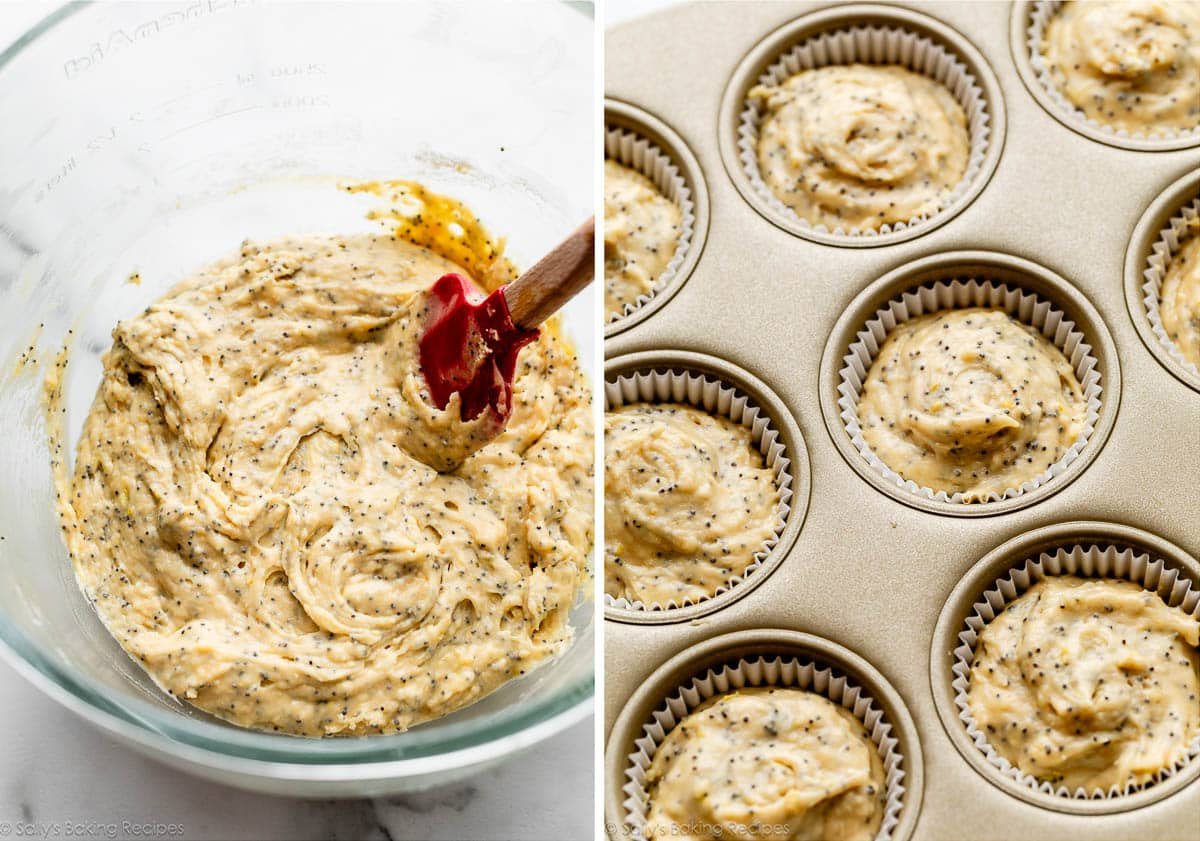
You need this ACID in the recipe to react with the baking soda, which creates carbon dioxide and allows your baked good to rise. Like this no-yeast bread (soda bread), which gets all its lift from the chemical reaction between baking soda and buttermilk.
Baking soda also helps baked goods brown better by raising the pH level of the batter. Creating a more alkaline environment speeds up the chemical reaction that happens between sugars and amino acids in the presence of heat, which causes browning and develops flavor. In fact, it’s part of the reason we boil homemade soft pretzels in a baking soda bath before baking. Pale pretzels aren’t nearly as appetizing!
Baking soda is about 3–4 times stronger than baking powder, so you don’t need as much. More baking soda in a recipe doesn’t necessarily mean more lift. You want to use *just enough* to react with the amount of acid in the recipe. Too much baking soda and not enough acid to neutralize it will give your baked goods a metallic, soapy aftertaste.
A good rule of thumb for baking is to use around 1/4 teaspoon of baking soda per 1 cup (125g) of flour.
What Is Baking Powder?
Now let’s talk about baking powder.
Baking powder is a mix that contains baking soda, as well as a dry acid to neutralize it—typically cream of tartar—and sometimes cornstarch (a drying agent).
Because baking powder already contains an acid to neutralize its sodium bicarbonate, it is most often used when a recipe does not call for an additional acidic ingredient, like sugar cookies or scones.

However, this isn’t always the case. You can still use baking powder as the leavening agent in recipes calling for an acidic ingredient, particularly when you want the flavor of the acidic ingredient to shine through, like in a lemon pound cake.
Because it’s a mix, baking powder isn’t as strong as baking soda. A good rule of thumb is to use around 1 teaspoon of baking powder per 1 cup (125g) of flour.
What Is Double-Acting Baking Powder?
Most baking powder sold today is “double acting.” This means that the first leavening occurs when baking powder gets wet—like when you combine the dry and wet ingredients in the recipe.
The second leavening occurs when the baking powder is exposed to heat. This is why it’s usually best to bake a batter right away—because the baking powder has already been activated.
An exception to this rule is pancakes, when I recommend letting the batter sit for a few minutes before cooking. You want to give the first activation a little time to start working before you add heat, to get those bubbles going so your pancakes rise up nice and fluffy in only a few minutes on the hot griddle.

Why Do Some Recipes Call for Both Baking Soda and Baking Powder?
The simplest answer is that sometimes you need more leavening than you have acid available.
If a recipe contains an acid, like the sour cream in my vanilla cupcakes recipe, but the carbon dioxide created from the acid + baking soda is not enough to leaven the volume of batter, we need to add baking powder as well, for necessary lift.
Another example for using both is my buttermilk pancakes recipe. In this recipe, you use buttermilk partly for its tangy flavor. If we used only baking soda, it could neutralize all of the buttermilk’s acid and we’d lose that tanginess! However, by including baking powder as well (which has its own acid), some of the buttermilk’s flavor is left behind, and there is still enough leavening for fluffy pancakes.

Another reason to use both baking powder and baking soda is because in addition to causing the baked good to rise and expand, they also affect both flavor and browning.
Let Me Show You the Difference
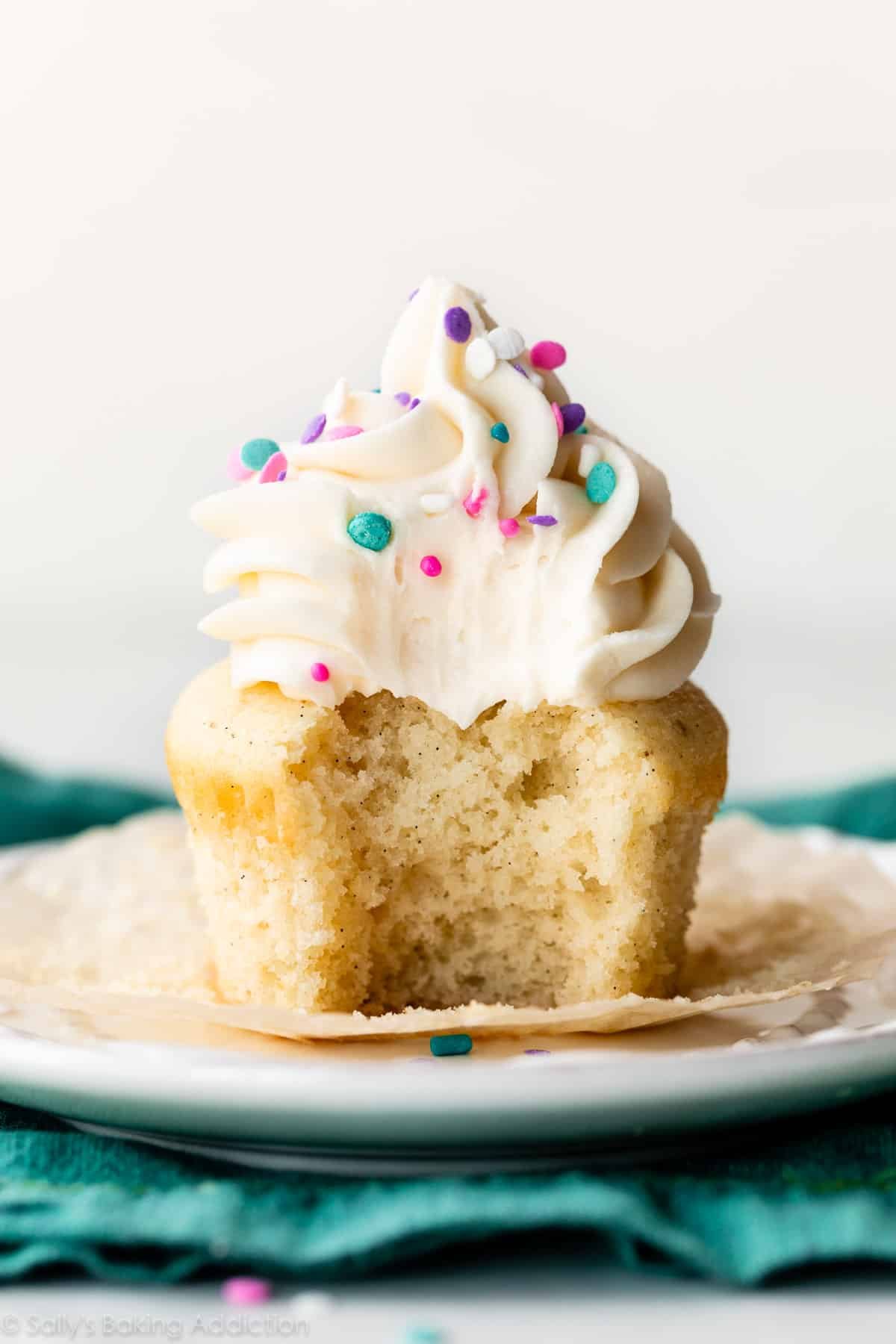
To demonstrate the importance of using the right amount and type of leavener in your baking recipes, I made 3 batches of vanilla cupcakes.

- I made the cupcakes as written, with 3/4 teaspoon of baking powder and 1/4 teaspoon of baking soda, which is the perfect balance for this batter.
- I made the cupcakes with 1 teaspoon of baking powder. It didn’t brown enough, and it baked up short and squat because it didn’t rise enough because baking powder isn’t as strong as baking soda. The texture was gummy and dense.
- I made the cupcakes with 1 teaspoon of baking soda. You can see that it browned too much, and also sank in the middle because the baking soda is too strong and there wasn’t enough acid in the batter to neutralize it. And—you’ll have to take my word for this—it tasted AWFUL!

Follow the recipe as written with the combination of baking powder and baking soda for simply perfect vanilla cupcakes. 🙂
Make Sure They’re Fresh
No matter which leavener you’re using in your baking recipe, I recommend replacing baking powder and soda every 3 months, to make sure they’re fresh.
If you don’t bake often, you may need to test your baking powder and soda for effectiveness before using.
How to Test Baking Powder for Freshness
To test baking powder, pour 3 Tablespoons of warm water into a small bowl. Add 1/2 teaspoon of baking powder. Give it a stir. The mixture should moderately fizz if the baking powder is effective.
How to Test Baking Soda for Freshness
To test baking soda, pour 3 Tablespoons of white distilled vinegar into a small bowl. Add 1/2 teaspoon of baking soda. Give it a light stir. The mixture should rapidly bubble if the baking soda is effective.

Key Takeaways:
- Baking soda is pure sodium bicarbonate. Use baking soda when the recipe calls for an acidic ingredient.
- Baking powder contains baking soda, plus other ingredients, including a dry acid. Use baking powder when there’s no additional acidic ingredient in the recipe.
- If your recipe calls for both baking soda and baking powder, there’s a reason for that, so be sure to follow the recipe.
- Both leaveners are initially activated when combined with wet ingredients, so bake right away, unless your recipe instructs otherwise.
- Keep it fresh: Replace your leaveners 3 months after opening.
Remember that baking is science and it takes practice, trial and error, and the willingness to learn in order to succeed. If you’re interested in learning more, head on over to the Baking Tips section of my website. Here are just a few of the many helpful articles and video tutorials you will find there:










Reader Comments and Reviews
Your spiced gingerbread cake has baking powder and brown sugar but not baking soda!
Hi Mary, the spiced gingerbread cake calls for baking soda, not baking powder.
Hi, Sally’s youers all recipes are delicious and so good, I like very much. Thankfully Naeem from lahore Pakistan.
This is my goto page for sending ppl when they ask about the difference – well thought out, well presented, answers pretty much every important question. You rock Sally!
Thank you for this info, I appreciate the clear explanation. I will keep it to refer back to.
Wonderfully helpful info to remember! I also remember baking S oda = Spreading; baking P owder = Puffing when baking cookies.
Thank you For explaining this, it is very helpful
Would cornmeal be counted as “flour” when trying to determine the amount of baking powder or soda to use in a recipe for cornbread? Or would I only consider the amount of all-purpose flour to calculate the amount of baking powder or baking soda to use?
thank you sooo much for this explanation of and differences between baking soda and baking powder! i do a fair amount of baking – cakes, cookies, “dessert” breads – like buttermilk banana bread – and now have a firm(er) grasp on the two! thank you also for ratio of powder/soda to flour…
I love that your approach to baking is that it has a scientific mindfulness to it. I remember watching Cooks Corner and hearing Bridgett talk about how you can change the look taste and texture of bread by tweaking temperature and the time storing the dough in the refrigerator. I see a lot of the approach to baking as trying different tweaks to change a particular outcome. My mother who taught me what I know of baking approached it through experience and usually stayed with the recipe. I like to tweak the recipe to see what effect it has. With information from someone like yourself, it gives me a road map with options to more intelligently and accurately make changes. I’m looking forward to your tips.
Hello! What kind of salt should I reach for when making your recipes? Do you use table salt or Kosher, and if it’s Kosher Diamond or Morton?
Thank you!
Hi Maureen, I use table salt in my recipes.
Oh. My. Gosh!!!!
Thank you for explaining the differences between baking powder and baking soda!!
Now! I know why I would have that metallic taste. I was blaming it on baking powder.
Thank you very much.
A d No you did not bore me.
Lovely plain and simple explanation. Something I knew but you explained it so well I felt like it was all new again 😀
If a recipe, such as your buttermilk pancakes, requires more acid to preserve the flavour, why would you not just add Cream of Tartar for additional acid, rather than adding even more Bicarb with the baking powder?
If you ran out of Baking Powder, why would you not make your own with Sodium Bicarbonate and Cream of Tartar?
I ask because I’m in Australia and Baking Powder is a recent thing here (within my lifetime anyway) and before it appeared, we were making our own, and I still do that if I run out before shopping day (and during pandemic lockdowns)
The ratio my family has used for forever is 2 Tartar to 1 Bicarb. If not using it immediately, or there is some left over, add a pinch (tiny pinch) of cornflour as an anti-clumping measure.
We always have Tartar in the pantry because we are typical Aussies, addicted to Pavlova 😉 and we love making caramel.
Great information, but dare I say I need more! I have been searching for a banana bread recipe that makes 3 or 4 loaves. A lot of home bakers are just tripling or quadrupling recipes… I have read you shouldn’t do that when it comes to baking powder and soda… but can’t find how much I should be using. Can I base the measurements off of pH strips of the batter before the flour and rising agents are added?? Thanks for any additional info you can provide!
Hi Niki, You can double a quick bread recipe like banana bread without changing the ratio of ingredients. We don’t recommend making 3 or 4 times the recipe though. Doing so makes it very easy to over or under mix the ingredients, or overwhelm your mixer.
Your recipes all say salt but never say what kind?
Table salt, kosher salt ( Morton’s or diamond), fine sea salt.
It makes a difference and I don’t know what and how much to use !
Thanks
Hi Rana, my recipes use table salt. I am sure to mention fine sea salt or kosher salt, and which kind, when it is used.
I had a recipe that used 1 1/2 tsp baking soda and 1 1/2 tsp baking powder and regular milk (a cake). I somehow over the years changed it (without realizing) to buttermilk and leaving out the baking powder, and we like it fine. But I found my old recipe so we tried adding the baking powder back in WITH the buttermilk. Made a very soft, light cake, but domed and cracked, so I’m guessing it’s too much leavening. Trying to decide where to cut back…..should I replace the buttermilk with regular milk and go back to equal b p and b s, or should I leave the buttermilk and drop the baking powder? Hard to say based on cakes –they are all good….I’ve made four this week and we just can’t handle any more cake this week! LOL
It always helps me to understand the science behind the things we do. Baking tends to come with ingredients and instructions, but little to no explanation as to why. This was very informative, thank you!
Finally an explanation about the difference between baking soda and baking powder – I have been searching for years – Thank you, Thank you
Now I am ready to bake!
Thank you for the lesson in chemistry, which I never took in any level of school. I especially appreciate how to test baking soda and baking powder to see if they need replacing!
Very well written, but did not explain how it is heat activated. And I thought baking powder expired because the acid and base — being mixed together — eventually reacted and neutralized each other? Individual chemicals on their own (not mixed) — baking soda & cream of tartar — should have a very long shelf life.
Thanks for explaining the difference! I recently started baking, and really enjoy it. Mom always had baking soda and baking powder, but I never knew what the difference was.
I had no idea what these two ingredients did! Outstanding explanation. Thanks.
So very helpful – tested both and need new baking powder, but the soda is fine!
Thank you for explaining this. I am working on updating some family recipes and creating a few of my own and documenting them for our daughters, so understanding the baking powder and baking soda balance is so helpful. Thank you!
I LOVE the science of baking, baking powder vs. baking soda! I learned so much! Thank you
I didn’t e know that one could and should check their soda and powder. Thank you Sally. What is your addiction has now become mine.
you wouldn’t believe how well you cleared some things up for me. thank you.
Your Baking Basics lessons are So helpful! Your website is the place I go to for any questions I have about baking. My Joy of Cooking cookbook does not explain these important basics like you do, or at all…
Thank you Sally!
Do you have a recipe for Zuc.bread?
Hi Joyce, this is my favorite zucchini bread recipe. Enjoy!
wow! this page is incredibly helpful. it clears up so many questions. thank you.
I honestly have learned excellent information from every newsletter.