

Learn how to cream butter and sugar properly, a key step in many baking recipes. If you’ve ever wondered why it’s important, or what would happen if you skipped it, this baking tutorial is for you. Watch the video for even more visuals!

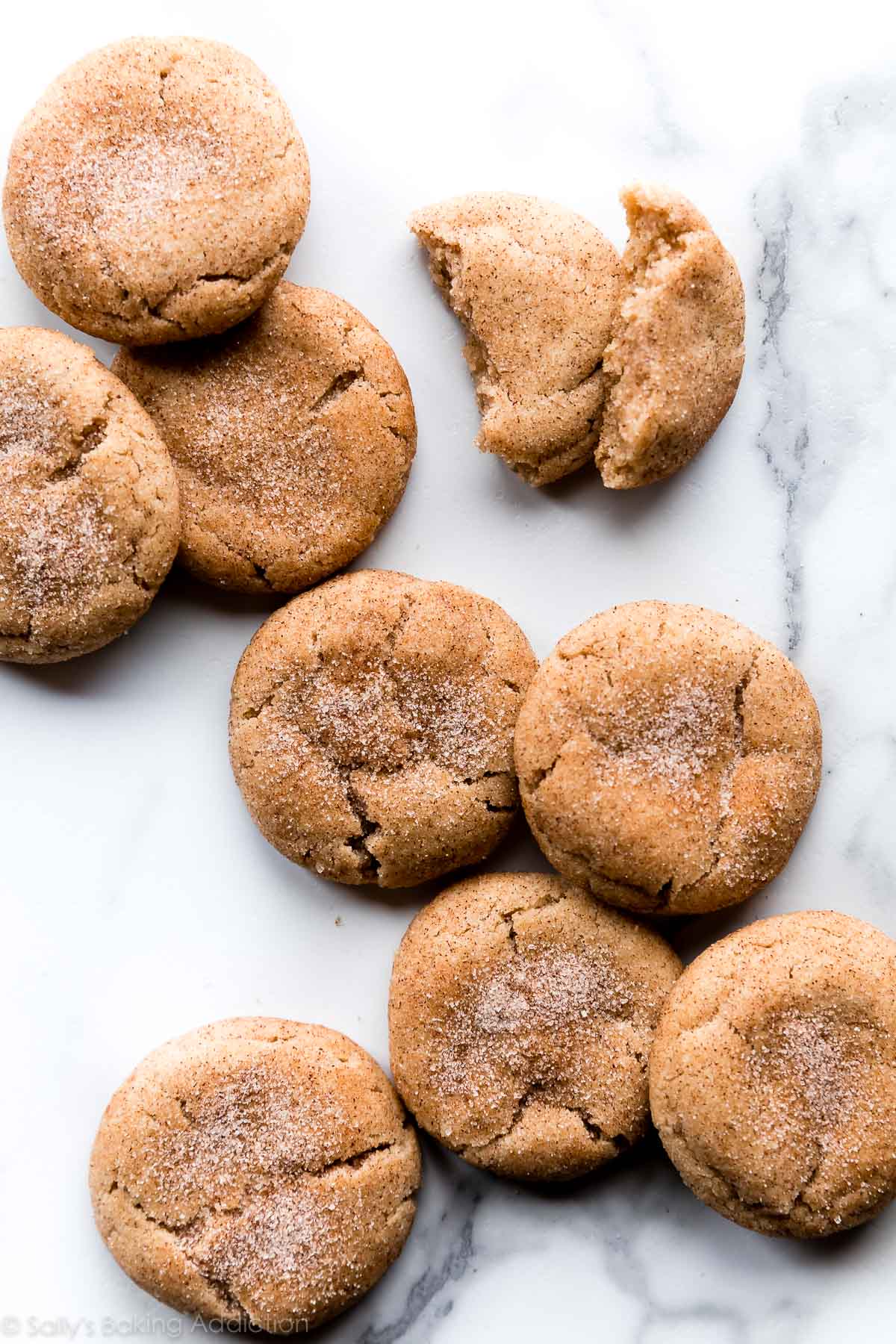
From simple snickerdoodles to a tiered wedding cake, chances are good that if a recipe includes sugar and softened butter, the instructions will call for beating the two ingredients together before you add in the other ingredients.
This is called creaming butter and sugar. But why is it its own step? Why can’t you just throw all the wet ingredients into the mixing bowl at once and get on with it?
How to Cream Butter & Sugar: Video Tutorial
Why It’s Important to Cream Butter & Sugar
Let’s start by going over WHY recipes call for creaming butter and sugar as a step.
The process of creaming room-temperature butter and sugar together is crucial for developing the structure and texture of a baked good. There are three main benefits creaming provides your batter or dough:
- First, beating together incorporates air into the mixture, which gives you a lighter, fluffier crumb. All those teeny-tiny air pockets that are created during creaming then expand during baking. Think: extra soft cupcakes and tall, fluffy cake layers. Without creaming, your baked good will end up dense.
- Second, the butter is broken down (no lumps!) and the sugar crystals are more evenly distributed throughout, so your baked goods are soft, not gritty.
- And third, creaming butter and sugar together creates structure and makes for a stable base to add the remaining ingredients to. There’s magic (or rather, science!) happening in there, building a network of fat, sugar, and air.
Now let’s go over HOW to cream butter and sugar.
Use a Mixer
The first important part is to use an electric mixer. Even if you have super strong arm muscles from kneading dough, it would take at least 10 minutes of vigorous stirring to cream butter and sugar by hand; and even then, you likely won’t get the same light and fluffy result.
I recommend using a stand mixer or a handheld mixer to cream butter and sugar. If you’re using a stand mixer, make sure you use the paddle attachment.

Use Softened Butter That’s Still Cool
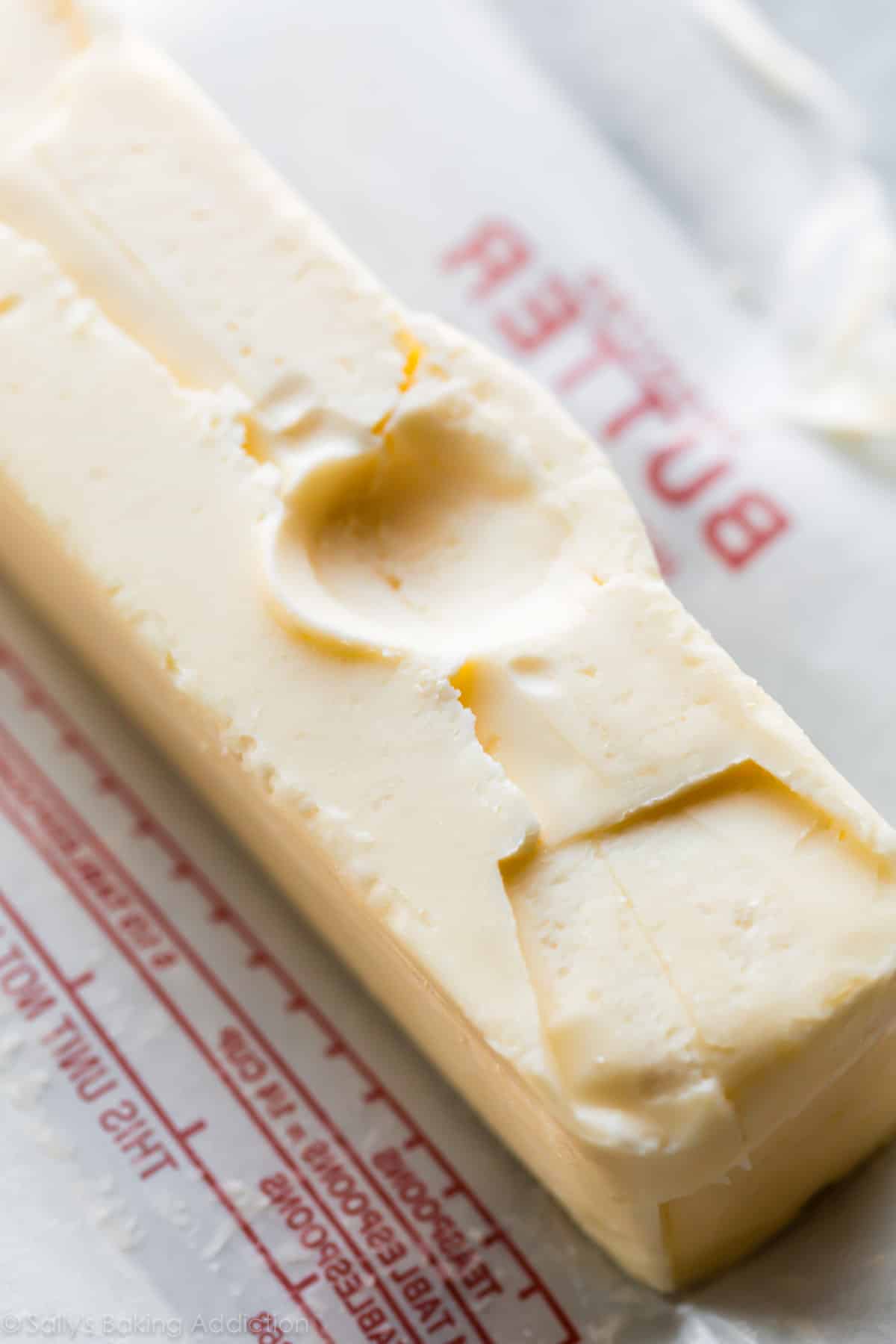
Did you know that proper room-temperature butter does not mean that the butter is the exact same temperature as your kitchen? It should actually still feel cool to the touch.
When butter is cool, it’s capable of trapping air. If it gets too warm, it loses that ability, and your creaming will all be for nothing—a waste of both your time and your ingredients!
You want to aim for a butter temperature of about 65°F (18°C). The butter will gradually warm up during the creaming process, so err on the cooler side—better to be under 65° than over at the start. An instant-read thermometer can take the guesswork out of this!
Beat on Medium Speed for About 5 Minutes
Start the mixer on low speed and gradually increase it as the sugar gets combined with the butter. It takes about 5 minutes of beating on medium speed to reach that perfect pale yellow color and light and fluffy texture you are looking for.
Sometimes I speed things up a bit and beat on medium-high speed for about 3 minutes.
Success Tip: stop and scrape. Stop the mixer at least once during this time and scrape down the sides of the bowl. Some butter and sugar can stick to the sides of the bowl, and we want the mixture to all come together evenly.
Properly Creamed Butter & Sugar, 3–5 Minutes
Properly creamed butter and sugar is a very pale yellow color. The sugar granules are evenly dispersed, there are no visible chunks of butter, and the texture looks fluffy, not greasy.
Here is what creamed butter and sugar looks like:

Under-Creamed Butter & Sugar, 1 Minute
Before butter and sugar reaches the point of properly creamed, described above, it’s not nearly as light and fluffy. With only around 1 minute of beating, the butter and sugar mixture is clumpy, you’ll likely see pieces of butter, and the sugar hasn’t begun to dissolve. If you were to add your remaining ingredients at this point, your batter would look like a chunky soup, instead of the smooth, velvety cupcake batter we’re aiming for.
Here is what under-creamed butter and sugar looks like:

Over-Creamed Butter & Sugar, 7 Minutes
On the other end of the spectrum, it’s possible to over-cream butter and sugar. If you’re using a stand mixer and walk away from it, that’s when you could accidentally make this mistake. After around 7+ minutes of beating, the color is really light, and the mixture looks greasy and overly soft, not fluffy.
Here is what over-creamed butter and sugar looks like:

Comparison in a Baked Good
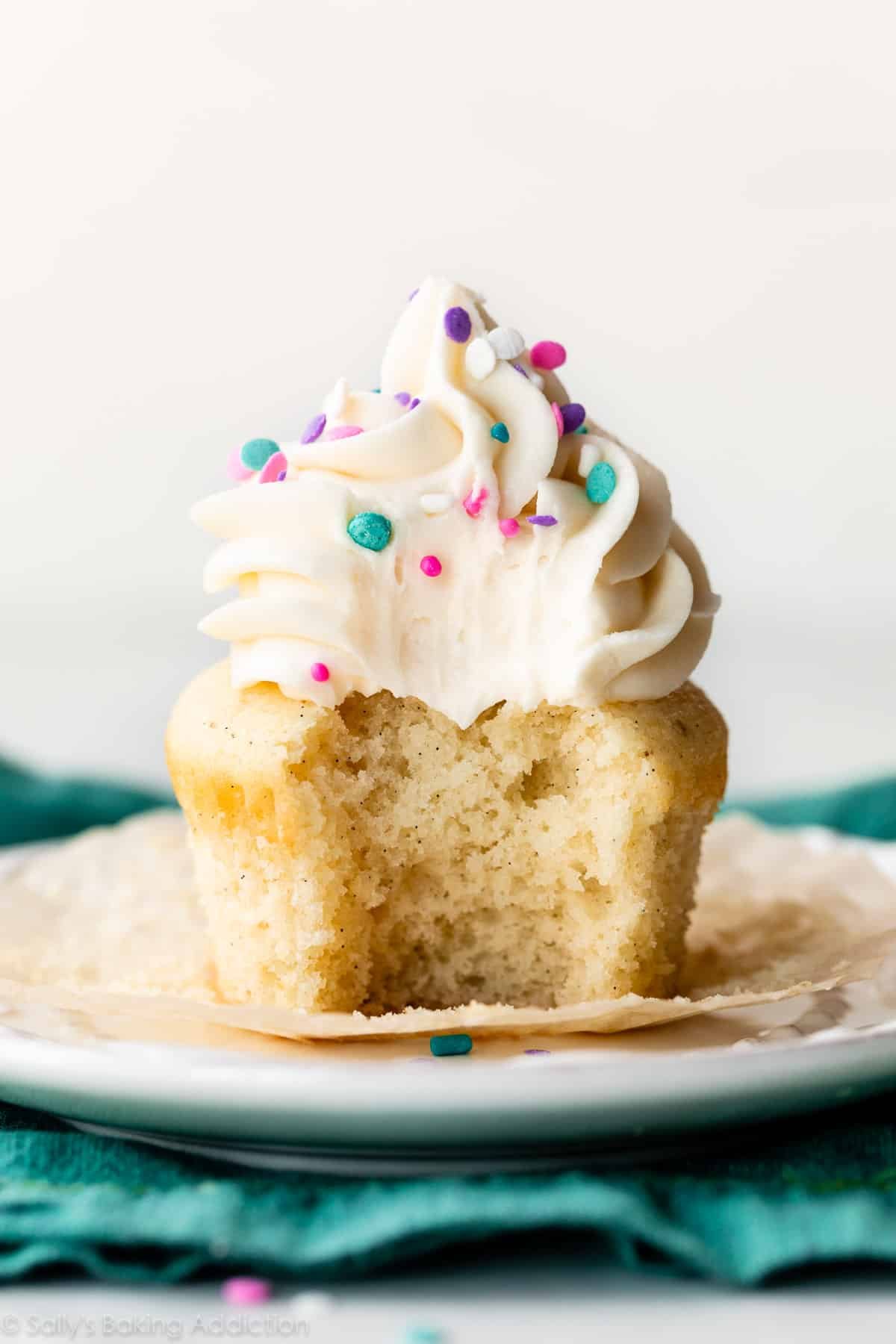
My team and I tested what would happen if we under-creamed and over-creamed butter and sugar. For this baking experiment, we used my favorite vanilla cupcakes recipe.

- Under-creamed butter and sugar: The cupcakes were short and squat, dense and spongey, and the surface was pockmarked with holes from where the too-big chunks of butter that didn’t get broken down by the mixer caused steam to tunnel out through the surface. The sugar didn’t dissolve properly, either, so the result was a grainy, uneven crumb. They looked and tasted awful.
- Properly creamed butter and sugar: We know the perfectly creamed version works! When made properly, these cupcakes have an airy and springy crumb, and rise just over the top of the cupcake liner without spilling over the sides into mushroom tops. This was our control, or baseline for comparison.
- Over-creamed butter and sugar: These were some sad, sunken cupcakes. If the batter has too much air in it, the cupcakes will quickly rise high in the oven, and then collapse or sink in the center as they cool. And if the butter warms up too much from excessive beating, cookies and cupcakes end up spreading OUT instead of rising UP. The too-soft butter can also make for a greasy baked good.
Now that you know why creaming butter and sugar is key to light, fluffy bakes, you’re one step closer to your cookies and cakes turning out perfectly on the first try. Happy baking!
Want to Learn More?
My Baking Tips & Tutorials section is always growing:












Reader Comments and Reviews
Please can you tell me how long would it take to cream 250g butter and 250g sugar and also 400g butter and 400g sugar. Thanks.
Hi Shalu, that would depend on the power of your mixer and other factors, so look for the change in color and texture for properly creamed butter as instructed above. Happy baking!
Then why the guideline of 3-5 minutes above. Surely the guideline is wrong as for larger quantities of sugar and butter it will take longer and people will be under creaming. By the way I use a hand mixer on medium speed and room temperature butter. I don’t see what other factors will affect the creaming times.
thank you for the tip on creaming I make muff[ns every 3wks * now i know why some time their perfet other nots as perfect but just could not know what I was doing different +that is it.
Thank you so much for this tutorial on creaming butter and sugar (and all your tutorials). I have been baking for a decades and always wondered if I was doing this correctly. Very helpful!
Hello Sally. I commented a few days ago but do not see my comment posted so am reposting.
I wondered if it is absolutely necessary to cream the butter and sugar by a mixer as I do not have one. I would like to do by hand, or in a food processor if I could. I would like to make your nutella pound cake recipe.
Please advise! Thank you!
Hi Deborah, It’s not impossible to cream butter by hand but it is very difficult. It takes a lot of arm muscle! We don’t recommend using a food processor for this step because the fast blades can quickly overwork it or melt the butter.
Thank you!
I want to be able to cream butter and sugar but i have a hand held mixer with regular beaters. There is no option for paddle attachment. How can I get the results i need?
Hi Sue, you can absolutely use your hand mixer with the regular beaters, following the same directions here.
Do you only cream butter with granulated sugar? If the recipe calls for both brown and granulated sugar do you only cream with the granulated? Or do you do both sugars at once with the butter? I ask because your instructions cite the color of the mixture.
Hi Sarah! You can cream with brown sugar too. The color will still change!
Sally, I can’t tell you how many times I come to your site for tips and tricks! You’re the best. I do have a question about creaming. I’m making toffee squares and it says to cream the butter then add the brown sugar gradually then add all the rest of the ingredients. I’ve made these for years and years and always cream the butter and added the brown sugar afterward. Now that I’ve learned about proper creaming from you, I’m wondering if I should clean the brown sugar with the butter. They’ve always turned out perfect in the past now I’m second-guessing the recipe.
Hi Colleen, we’d recommend following the recipe as written, especially if they’ve always turned out perfectly in the past! We can’t offer advice on another recipe but it sounds like it works.
Good afternoon I am looking for gluten-free and sugar-free baking items for Christmas. I have a friend that has cancer and can not have either.
Thank you for your help
Hi Sandra! I wish we could help more, but we are not experts in sugar free or gluten free baking. We would search for recipes that match those restrictions instead of trying to adapt our recipes, since they likely won’t turn out correctly. Here’s a helpful list you could peruse: https://www.natashashome.com/gluten-and-sugar-free-dessert-recipes/
I’m not sure what I’m doing wrong but every time I cream butter and sugar in my stand mixer the butter just clumps around the paddle so hardly anything is left in the bowl.
Hi Joanne, is your butter properly warmed to room temperature? It sounds like your butter may be too cold and that is preventing it from creaming properly. You can always stop and use a spatula to clean off the paddle and then resume creaming.
This helped me solve my problem of consistently flat cookies! Thank you Sally for all of your specific and helpful tips.
Thanks again Sally, all your tips really help!! Although baking has always been a part of my life because my mother was an amazing baker in spite of not having the tools or resources we use today. I think about her every time I make one of your recipes (lots) knowing as good as her results were, she would have followed yours for sure!!
Thank you, love your recipes.
I’ve always wonder about this, thanks!
This is so informative and a question I have asked myself for years while reading instructions! Thank you! My question is, when a recipe says cream the butter and sugars until well combined does that mean we’re not really creaming it as per these creaming instructions? Or is that any time the recipe calls for you to cream the butter and sugars THIS is what it should look like?
Hi Janeen, anytime a recipe calls for creaming together butter and sugar this is what it should look like!
I’ve been doing it wrong all my life! There weren’t any bakers in my family so I didn’t know how to properly cream butter and sugar, and would always over cream them. Now that I’ve seen this video, I’m much more confident in my (still weak but improving) baking skills. Thanks so much for this video, Sally!
I inherited my MIL’s Sunbeam Mixmaster stand mixer a few years ago. It has 3 types of hook attachments: dough hooks, egg beaters, and whisks. It uses two attachments, similar to a hand mixer. No paddle attachment. Are the whisk attachments my best bet since I don’t have a paddle attachment? I made your vanilla cupcakes recently and used the egg beater attachments and the cupcakes came out dense.
Hi Vanessa, are the whisk attachments similar to the beater attachments for a hand mixer? Those are likely your best bet for creaming butter and sugar.
Yes, I have ones that are identical to the beaters on a hand mixer and also lighter, more whisk like ones. Should I cream the butter and sugar with the ones that are found on a hand mixer, then switch to the whisk ones when adding dry ingredients?
Hi Vanessa, we’d recommend using the ones closest to beaters on hand mixer, for both the creaming step and when adding the dry ingredients. Hope this helps!
Thank you very much for the butter & sugar creaming tutorial. That was Very helpful! I didn’t know how to properly cream butter and sugar, and now I think I get it! Your recipes are always splendid. Thank you very much for putting them out there!
You explain every step so thoroughly. Then the pictures to coincide with under, over and properly creamed butter is fantastic. I’m new to you and your site but not new to baking. I love your site. Thank you.
Thank you for this! Apparently I’ve never creamed butter and sugar long enough when baking. It’ll be interesting to taste the cake I just baked and see the result.
While viewing the creaming of the butter and sugar at the end there was a perfect cupcake with a swirl of icing on top. May I have the recipe for it? Many thanks and looking forward to your new cookbook!
Hi Melissa, that is this vanilla cupcakes recipe. Enjoy!
Supperb
I had no idea about over creaming. Thank you so much for this tutorial!
I love your videos and information. You are such an inspiration!
Would over creaming the butter/sugar be the reason my white cakes usually come out with a cornbread like texture? I’m very careful with not over mixing once I add the flour but I’m thinking I’ve maybe over mixed the butter and sugar without realizing the problems that would cause!
Hi Kim! Overcreaming and overmixing can often be the culprit here. Sally shares more about why cakes may turn out tasting like cornbread in this recipe testing post (scroll down to the section titled “Why Does My Cake Taste Like Cornbread?”). Hope this post helps for next time!
I love these tips and tutorials. Keep ‘em coming! I didn’t realize the impact of over-creaming butter & sugar. Thank you for the visuals!
You’re welcome, Courtney! I’m glad you found this helpful. My team and I have a couple more ideas for tutorials like this. We will get working on them!
This was very helpful! Now I feel I have to make some snicker doodles.. Just to make sure I am doing it correctly.