

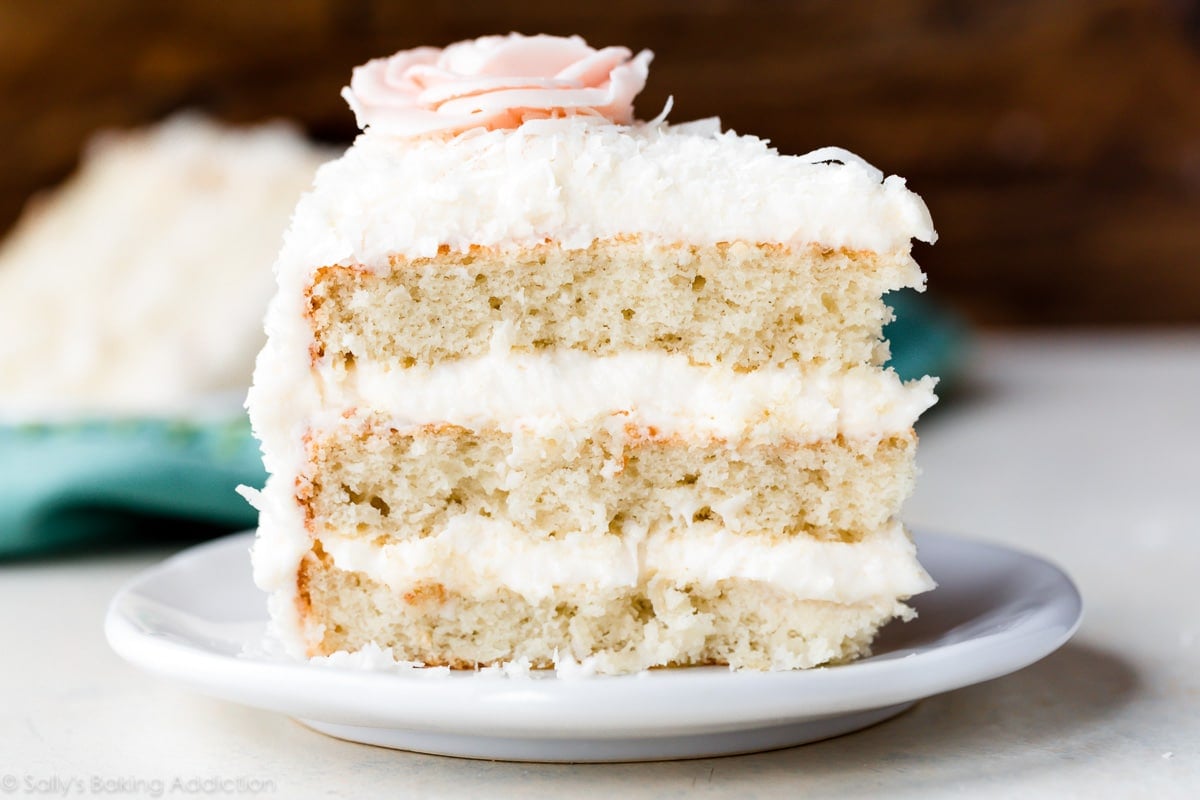
This perfect coconut cake sets the bar for homemade cakes everywhere. It’s supremely moist with a soft fluffy crumb and intense coconut flavor. To ensure success, follow this recipe carefully including using cake flour, egg whites, sour cream, and canned coconut milk.
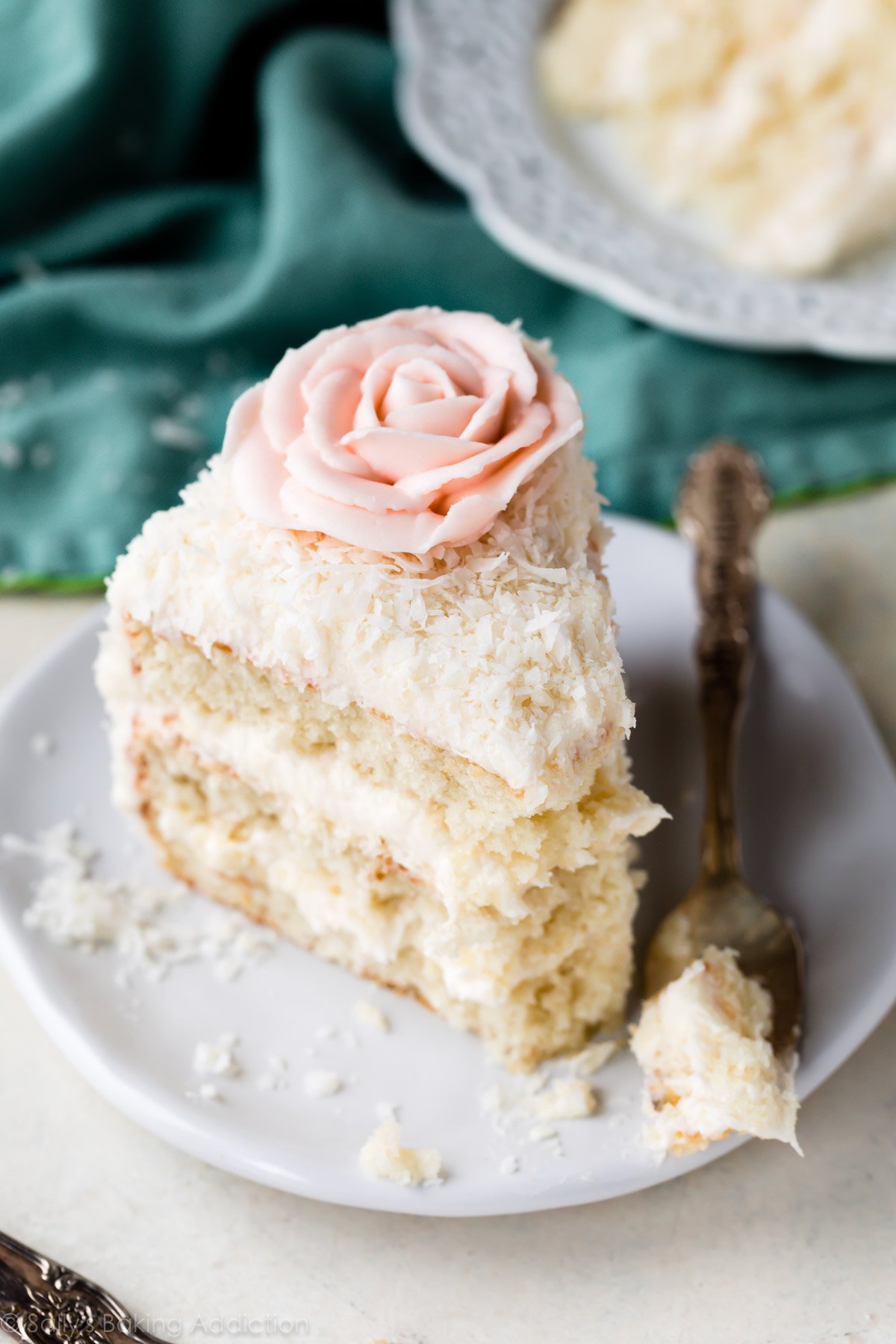
At the request of many readers, let me introduce you to the best coconut cake I’ve ever had. Homemade with love for coconut lovers everywhere, this cake exceeds my expectations. Complete with silky coconut cream cheese buttercream, she’s absolutely perfect and juxtaposes bold flavor with a light crumb.
I endlessly tested this cake recipe. In fact, I’m pretty sure my head turned into an actual coconut during the process. Is there shredded coconut caked into the crevices of my kitchen floor and backsplash? Yes.
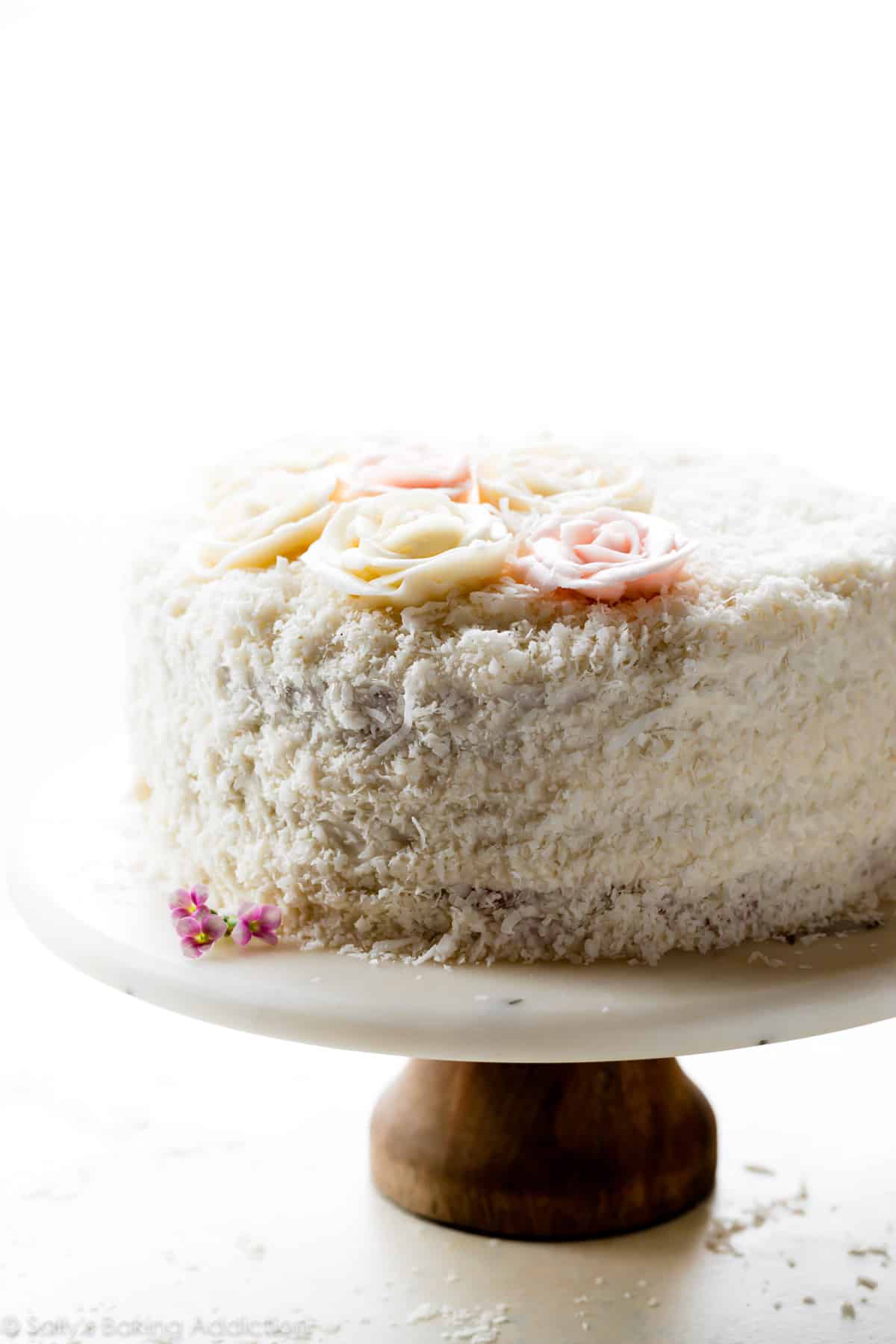
5 Reasons to Love This Coconut Cake Recipe
- Not Dry: This coconut cake is mega moist. There’s no point wasting your time (or calories!) on dry cakes.
- Intensely Flavorful: Using coconut milk, shredded coconut, and coconut extract, you are guaranteed an intensely flavorful coconut cake.
- Soft & Fluffy: By following the recipe carefully, as well as using the power ingredients described below, you are guaranteed a soft-as-silk coconut cake crumb.
- Any Shape: Use this cake batter for coconut Bundt cake, coconut cupcakes, a 2-layer cake, 3-layer cake, or a coconut sheet cake.
- Gets Along With Everyone: Use the frosting recipe below or try strawberry frosting, lemon frosting, brown butter cream cheese frosting, champagne frosting, or chocolate buttercream. Add raspberry cake filling between the layers or drizzle salted caramel on top! With so many ways to customize, this coconut cake is always a crowd-favorite when looking for Easter dessert ideas.
Coconut Cake Video Tutorial
This recipe sets the bar for homemade cakes everywhere. It’s simply exquisite and is sure to be one of your favorite spring dessert recipes and Easter brunch recipes. Talk about a show stopper!
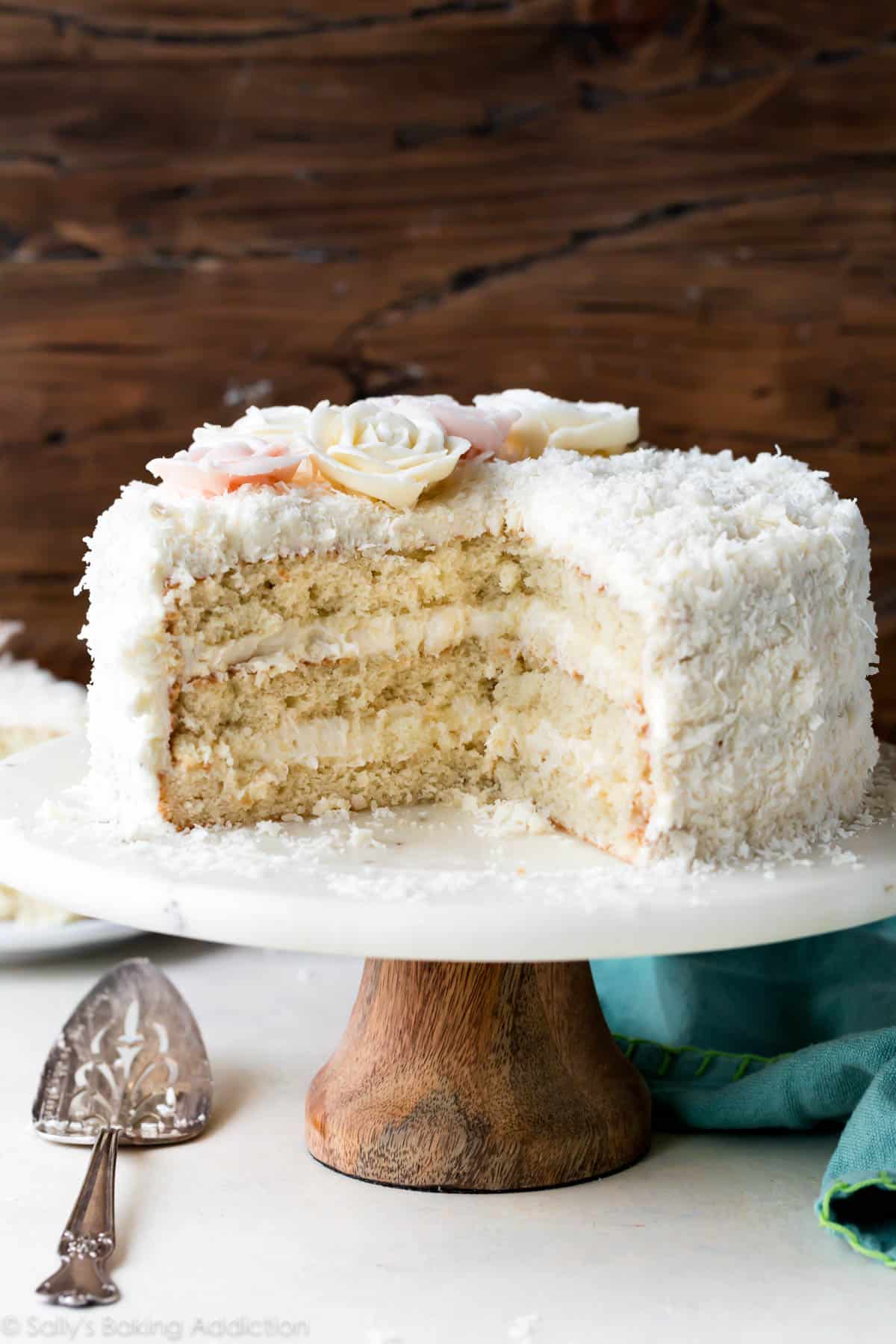
How to Make Coconut Cake
I adapted this recipe from my favorite white cake. Its pristine crumb, fluffy texture, and stick-to-your-fork moisture guarantee cake success. In fact, I have the recipe memorized and even used it as the base of pistachio cake, cookies & cream cake, espresso cake, burnt sugar caramel cake, and strawberry cake. The recipe is cake gold and I knew it would be the perfect starting point for a fluffy and moist coconut cake.
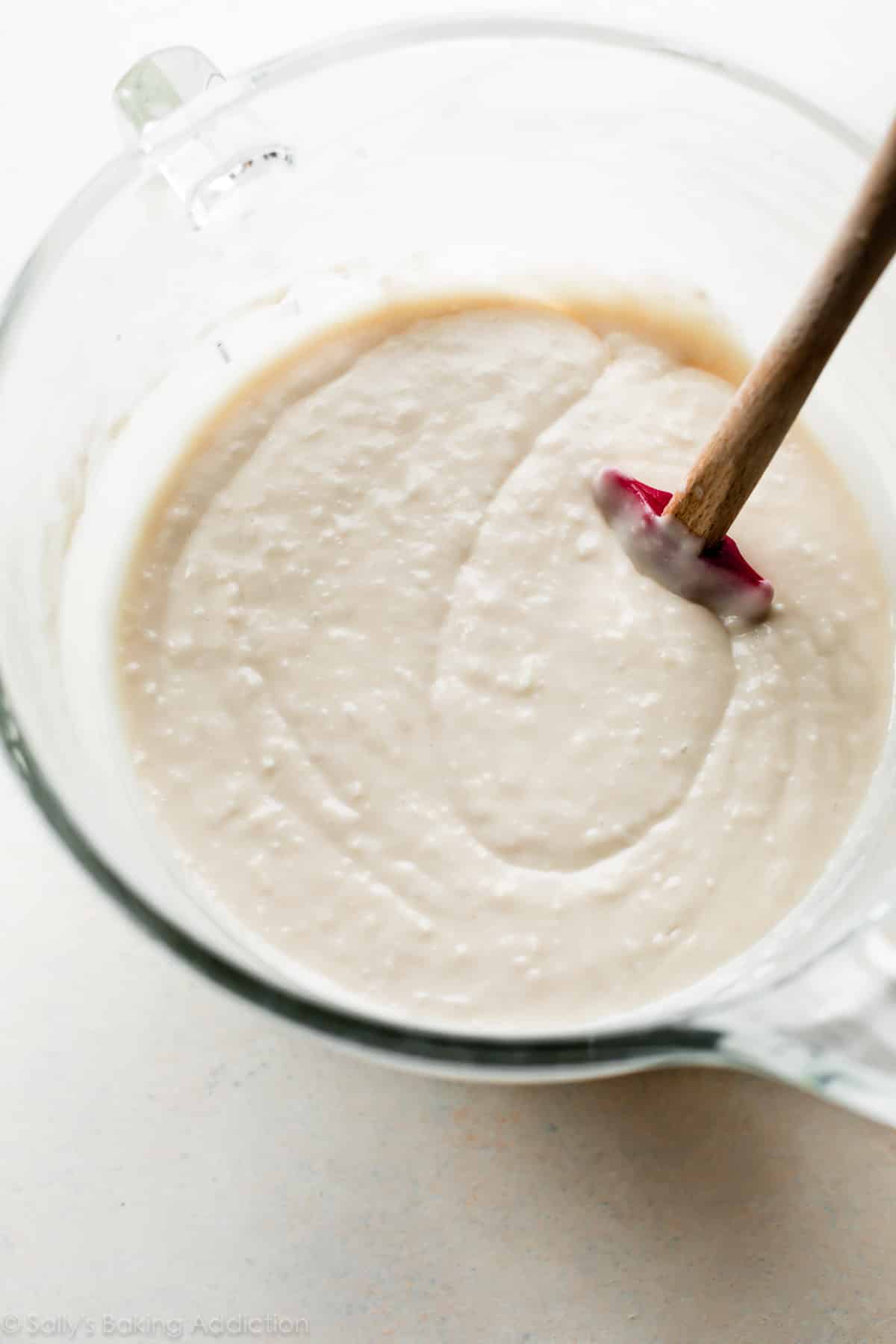
Your coconut cake journey begins with two mixing bowls. Dry ingredients in one and wet ingredients in another (see full recipe instructions below). Combine the two in your mixer, along with coconut milk and sweetened shredded/flaked coconut. That’s it! Your coconut cake batter is ready to bake.
Creamed butter and sugar provide a solid base for this cake recipe. Use room temperature butter, and remember that room temperature is cooler than you think.
Another tip: Use all room temperature ingredients, including the eggs and sour cream. Why? Ingredients bond together very easily when they’re warmer, which creates an evenly textured baked good. Cold ingredients do not emulsify together. Period.
Use These 6 Power Ingredients
Cake is literally nothing without its ingredients and these power players are the difference between dense dry cake and light moist cake.
- Cake Flour: Cake flour produces the softest cake. If you don’t usually buy cake flour, make the exception here. It’s sold in the baking aisle with the other flours. You can use leftovers in any of these cake flour recipes. If you can’t find it, try making this cake flour substitute.
- Egg Whites: Egg yolks are wonderful for moisture, but they’re heavy and weigh down cakes. We use whole eggs in my coconut Easter cake which is much more dense, like a pound cake. To keep this coconut cake light and fluffy, use only egg whites. We’ll add the moisture back in with sour cream.
- Sour Cream: The moist maker! This cake melts in your mouth.
- Coconut Extract: I tested this recipe with and without coconut extract. We loved it both ways, but coconut extract is necessary for best coconut flavor. It’s in the baking aisle near the vanilla extract.
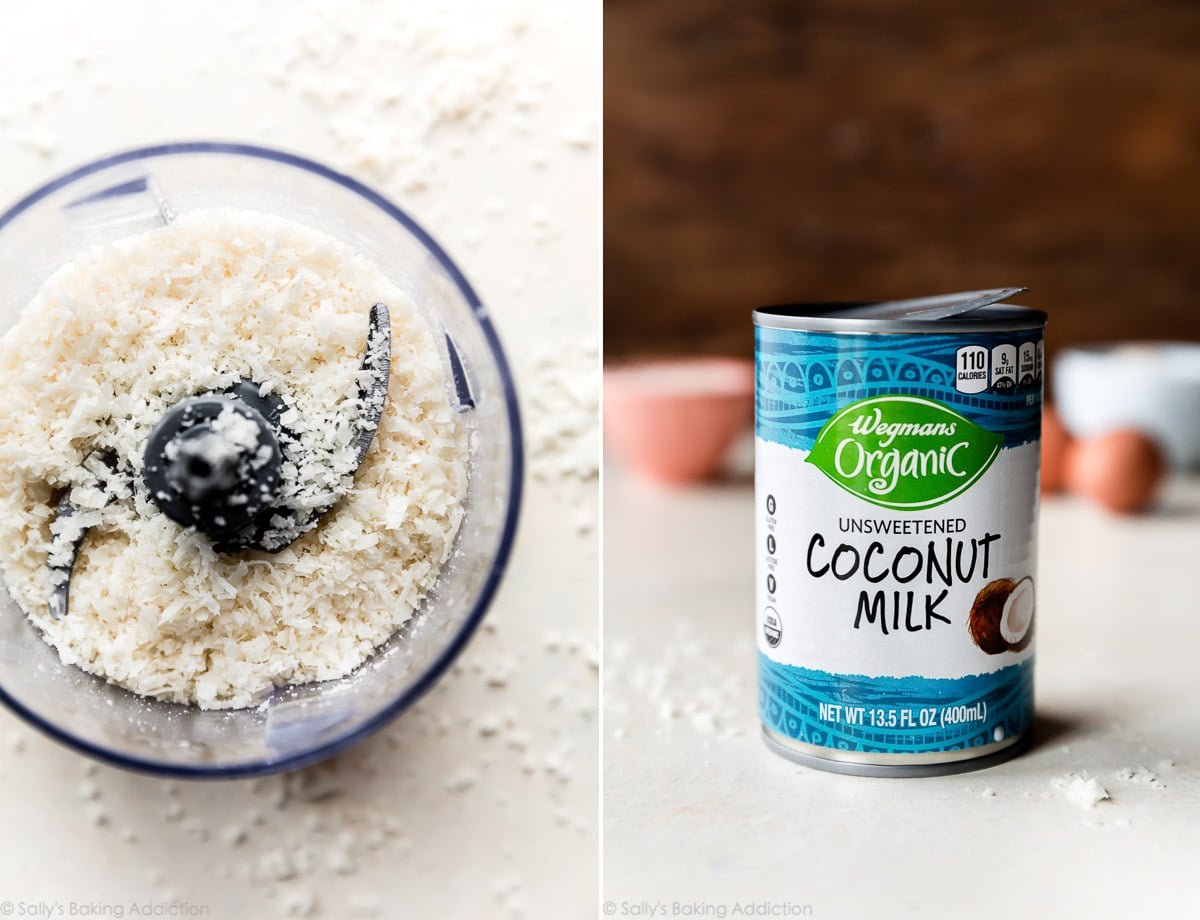
- Canned Coconut Milk: Canned coconut milk is a cooking ingredient, not a beverage. It’s creamier and thicker than regular milk and usually found near the Thai food products. Do not use the refrigerated coconut milk beverage that comes in a carton, because the two are very different.
- Sweetened Shredded Coconut: I recommend using sweetened shredded coconut, also called sweetened flaked coconut. It’s moister than unsweetened coconut and that makes a big difference in the cake’s texture. I reduced the added sugar in the cake batter to make up for the sweetness. Sweetened coconut is sometimes sold as long skinny shreds, a size some find off-putting in cake. Therefore, I recommend pulsing them in a food processor so they’re smaller.
Coconut Cream Cheese Buttercream Frosting
What do you love about vanilla buttercream? It’s buttery, sweet, and smooth.
And what about cream cheese frosting? It’s creamy, silky, and tangy.
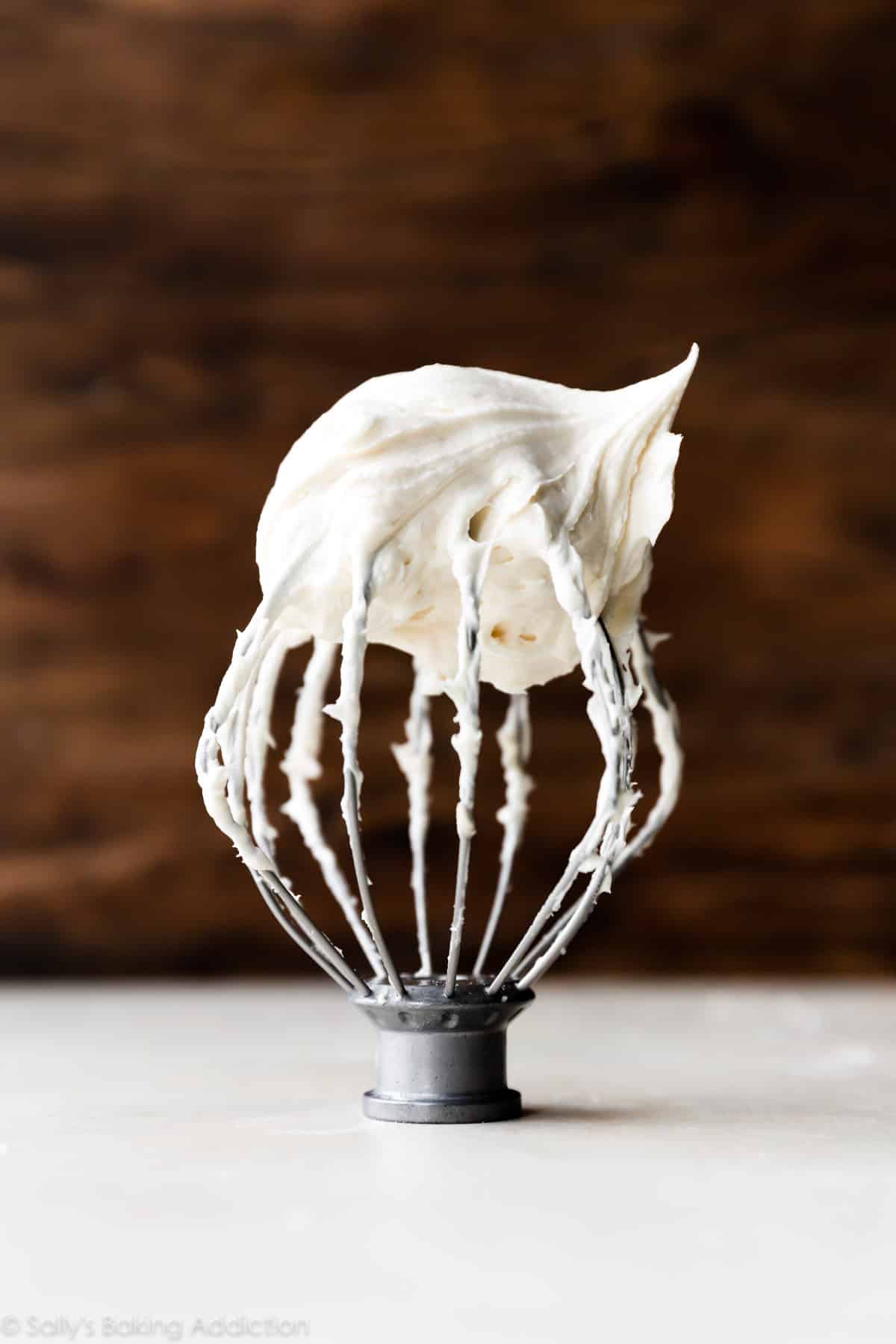
Let’s combine the two, then add coconut milk and coconut extract. It’s even creamier and silkier than the coconut frosting on these coconut chocolate Easter cupcakes so that glides onto the cake seamlessly. (Which is a happy bonus because decorating a layer cake can be quite the task. See more below.)
If you prefer a non-cream cheese option, use my vanilla buttercream instead—use canned coconut milk instead of milk and add 1/2 teaspoon coconut extract.
How to Frost a Layer Cake
Alright, let’s do this.
- Cool cakes completely. Sounds obvious, but even the tiniest bit of warmth will melt the frosting. As a result, the layer cake will slip, slide, or even cave in!
- If your cakes have a dome on top, level them off with a cake leveler or serrated knife. Flat-topped cakes ensure a straight and sturdy layer cake.
- Choose a serving plate, cake turntable, or cake stand. The exact cake stand I use in these pictures is no longer available, but here is a similar option.
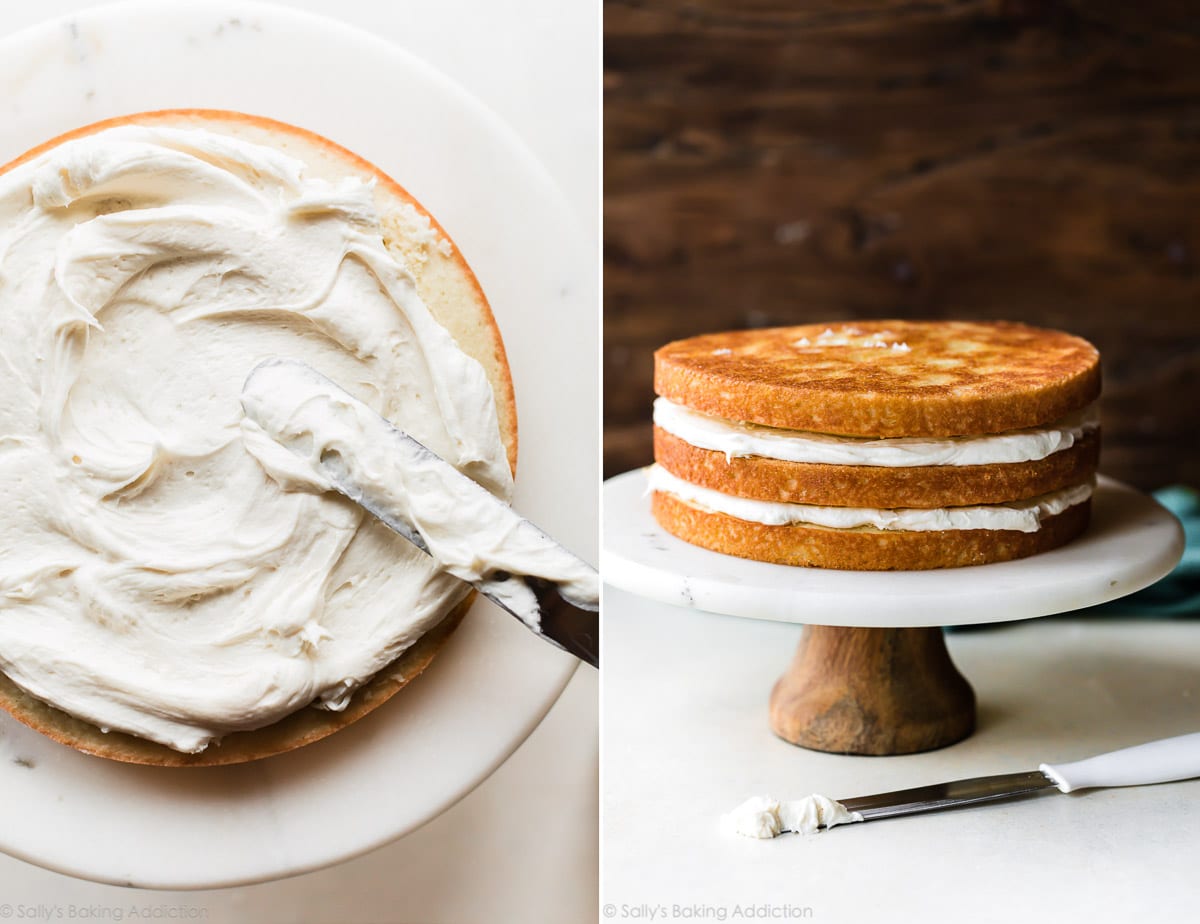
- Place the bottom layer on the cake stand. Using an icing spatula, spread 1 and 1/2 cups of frosting in an even layer on top. Bring the frosting just over the edge of the cake; this will be helpful when it’s time to frost the sides.
- Place the second layer top-side-down on top. Make sure it aligns with the bottom cake layer.
- Spread 1 and 1/2 cups frosting evenly on top, just as you did with the bottom layer.
- Place third layer top-side-up on top. Again, make sure it’s perfectly aligned.
- Divide the remaining frosting in half. (Just eyeball it.) Dollop half of the frosting on top of the cake and use an icing spatula to smooth it to the edges. Apply *some* of the remaining frosting all around the sides of the cake, then use a bench scraper to smooth it in a thin layer. Apply the rest of the frosting on the sides of the cake, then bench scrape to smooth it all out.
- Wipe any excess frosting off of the cake stand.
You can watch me decorate this coconut cake in the video tutorial above or you can use this detailed how to assemble and decorate a layer cake post as your guide. Don’t stress; if you take your time and make sure the cake layers are totally straight, you’re all set.
But I Don’t Want to
Skip the drama and make a coconut sheet cake instead! Sheet cakes are easier to frost because they’re only one layer. See my recipe note about different size coconut cakes.
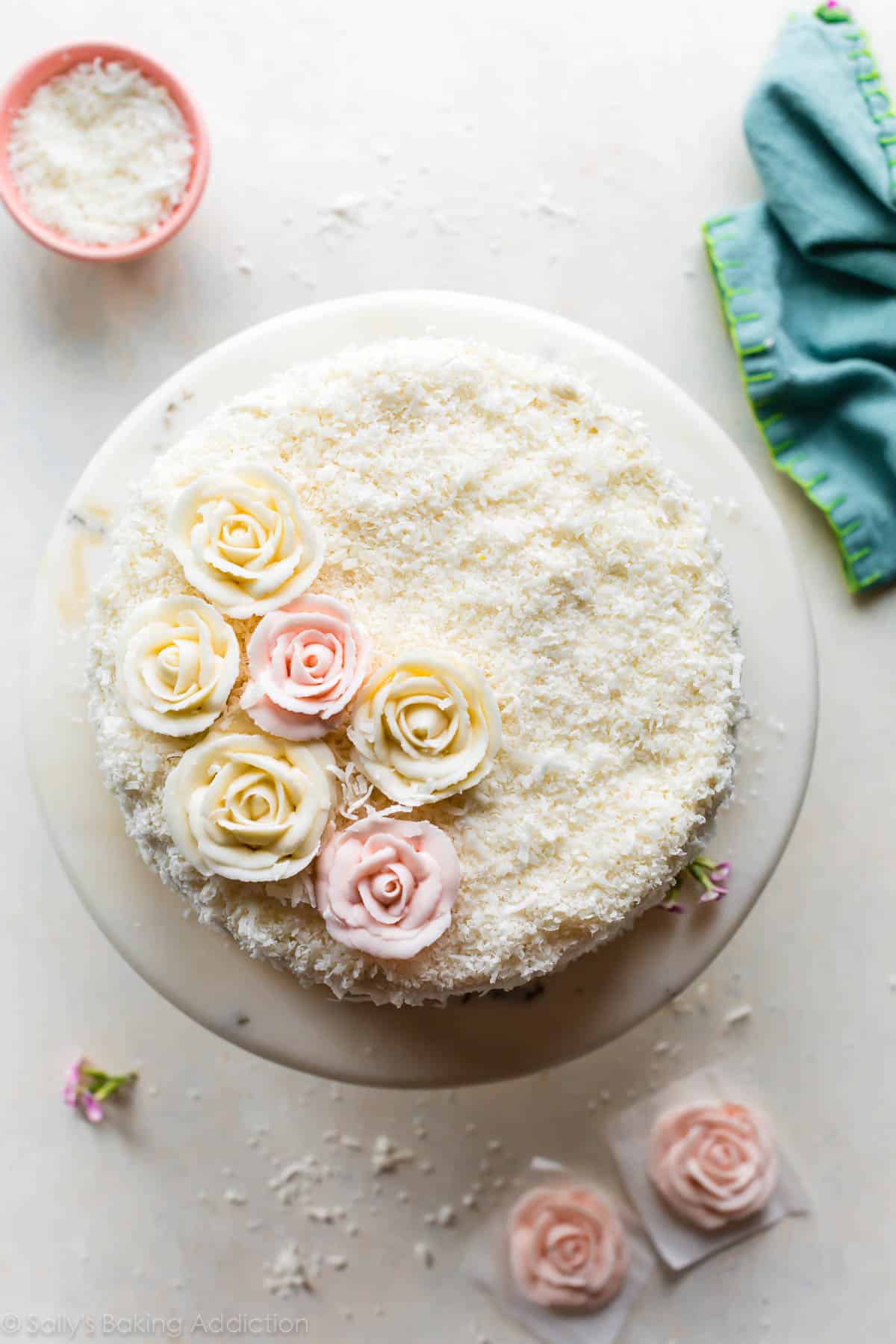
What About the Buttercream Roses?
Let’s give my assistant, Stephanie, a round of applause. This was her first time making “3D” buttercream roses and look how beautifully they turned out! She made the buttercream roses at my house and I froze them until it was time to decorate the coconut cake. She followed this video tutorial. Keep in mind that the cream cheese buttercream WILL NOT work for the intricate buttercream roses. Instead, use my vanilla buttercream and add 1 extra cup of confectioners’ sugar. You need very stiff buttercream for these roses. You also need small squares of parchment paper and:
Loosely cover the roses, then freeze or refrigerate them until ready to decorate, up to 1 week. No need to thaw prior to decorating the cake. Peel off parchment square and place the buttercream rose on the cake. If you’re traveling with the cake, I recommend securing the roses with a tiny dollop of cream cheese buttercream underneath.
Looking for something easier? Use Wilton 1M piping tip for these easy two-toned frosting buttercream roses.
More Classic Cake Recipes
Flavor is the name, moist is the game. These are some of my favorite classic cake recipes!
- Pound Cake
- Vanilla Cake
- Carrot Cake
- Red Velvet Cake
- Strawberry Cake (made from real strawberries)
- Lemon Blueberry Cake
- Chocolate Cake
Coconut Cake
- Prep Time: 35 minutes
- Cook Time: 22 minutes
- Total Time: 4 hours
- Yield: 12 servings
- Category: Dessert
- Method: Baking
- Cuisine: American
Description
This perfect coconut cake sets the bar for homemade cakes everywhere. It’s supremely moist with a soft fluffy crumb and intense coconut flavor. For success, follow this recipe carefully including using cake flour, egg whites, sour cream, and canned coconut milk.
Ingredients
- 2 and 1/2 cups (295g) cake flour (spooned & leveled)
- 2 teaspoons baking powder
- 1/2 teaspoon baking soda
- 1 teaspoon salt
- 3/4 cup (12 Tbsp; 170g) unsalted butter, softened to room temperature
- 1 and 2/3 cups (330g) granulated sugar
- 5 large egg whites, at room temperature
- 1/2 cup (120g) sour cream, at room temperature
- 2 teaspoons pure vanilla extract
- 1 teaspoon coconut extract
- 1 cup (226g/240ml) unsweetened canned coconut milk, at room temperature*
- 1 cup (80g) sweetened shredded coconut
Coconut Cream Cheese Buttercream
- 1 cup (16 Tbsp; 226g) unsalted butter, softened to room temperature
- 8 ounces (226g) full-fat brick cream cheese, softened to room temperature*
- 5 cups (600g) confectioners’ sugar
- 2 Tablespoons (30ml) canned coconut milk
- 1/2 teaspoon pure vanilla extract
- 1/2 teaspoon coconut extract
- 1/8 teaspoon salt
- 2 cups (160g) sweetened shredded coconut
Instructions
- Preheat oven to 350°F (177°C). Grease three 8-inch cake pans, line with parchment paper rounds, then grease the parchment paper. Parchment paper helps the cakes seamlessly release from the pans. (If it’s helpful, see this parchment paper rounds for cakes video & post.)
- Make the cake: Whisk the cake flour, baking powder, baking soda, and salt together. Set aside.
- Using a handheld or stand mixer fitted with a paddle or whisk attachment, beat the butter and sugar together on medium-high speed until smooth and creamy, about 2 minutes. Scrape down the sides and up the bottom of the bowl with a rubber spatula as needed. Beat in the egg whites until combined, then add the sour cream, vanilla extract, and coconut extract. Beat until combined. Mixture will look curdled as a result of the varying textures and solid butter combining. Scrape down the sides and up the bottom of the bowl as needed. With the mixer on low speed, slowly add the dry ingredients and coconut milk. Beat on low speed until combined, then add the shredded coconut. Whisk it all by hand to make sure there are no butter lumps at the bottom of the bowl. The batter will be slightly thick.
- Pour batter evenly into cake pans. Weigh them to ensure accuracy, if desired. Bake for 21–24 minutes or until the cakes are baked through. To test for doneness, insert a toothpick into the center of the cake. If it comes out clean, it’s done. Allow cakes to cool in the pans set on a cooling rack for 1 hour, then remove from the pans and place the cakes directly on the rack to continue cooling. The cakes must be completely cool before frosting and assembling.
- Make the frosting: In a large bowl using a handheld or stand mixer fitted with a whisk or paddle attachment, beat the butter and cream cheese together on medium speed until creamy and smooth, about 2 minutes. Add confectioners’ sugar, coconut milk, vanilla extract, coconut extract, and salt with the mixer running on low. Increase to high speed and beat for 3 minutes. Add more confectioners’ sugar if frosting is too thin, more coconut milk if frosting is too thick, or an extra pinch of salt if frosting is too sweet.
- Assemble and decorate: Using a large serrated knife, slice a thin layer off the tops of the cakes to create a flat surface. Discard (or crumble over ice cream!). Place 1 cake layer on your cake stand, cake turntable, or serving plate. Evenly cover the top with 1 heaping cup (about 250–300g) of frosting. Top with second cake layer and evenly cover the top with another heaping cup of frosting. Top with the third cake layer. Spread the remaining frosting all over the top and sides. I use and recommend an icing spatula to apply the frosting and a bench scraper to smooth the sides. Sprinkle coconut on top of the cake and apply it to the sides. This can get a little messy and you can watch me do it in the video tutorial. See blog post above about buttercream rose decoration.
- Refrigerate cake for at least 20 minutes before slicing. This helps the cake hold its shape when cutting, though it’s still a pretty fluffy cake!
- Cover leftover cake tightly and store in the refrigerator for up to 5 days.
Notes
- Make Ahead & Freezing Instructions: The cake layers can be baked, cooled, and covered tightly at room temperature overnight. Likewise, the frosting can be prepared, then covered and refrigerated overnight. When ready to decorate, let the frosting sit at room temperature to slightly soften for about 15 minutes, then give it one more mix with the mixer on medium speed for about 1 minute before frosting cake. Frosted cake or unfrosted cake layers can be frozen for up to 2–3 months. Thaw overnight in the refrigerator and bring to room temperature before decorating/serving.
- Special Tools (affiliate links): 8-inch Cake Pans | Electric Mixer (Handheld or Stand Mixer) | Glass Mixing Bowls | Whisk | Cake Stand or Cake Turntable | Icing Spatula | Bench Scraper | Cake Carrier (for storing)
- Cake Flour: For the best results, I strongly recommend cake flour. You can find cake flour in the baking aisle and I have many more recipes using it. If you can’t find it, try making this cake flour substitute.
- Egg Whites: Egg whites (no yolks) are KEY to the cake’s fluffy texture. For best success, I recommend using fresh eggs instead of carton egg whites. (Using an egg separator is really handy!) Here are all my recipes using leftover egg yolks. Success tip: Eggs separate much easier when they’re cold.
- Canned Coconut Milk: Canned coconut milk is a cooking ingredient, not a beverage. It is usually unsweetened, so make sure you’re using unsweetened. It’s usually found in the grocery store near the Thai food products. Do not use refrigerated carton coconut milk beverage. You need 1 cup for the cake, not the entire can. You use 2 more Tablespoons in the frosting.
- Sweetened Shredded Coconut: I recommend using sweetened shredded/flaked coconut. It’s moister than unsweetened coconut and that makes a big difference in the cake’s texture. If desired, pulse the coconut shreds in a food processor to chop them up so they aren’t as long inside and outside of the cake. Chopping the coconut is optional.
- Cream Cheese: Use brick cream cheese, not cream cheese spread. If desired, you can use this vanilla buttercream instead (no cream cheese). Use canned coconut milk instead of milk and add 1/2 teaspoon coconut extract.
- 9×13-Inch Sheet Cake: Simply pour the batter into a greased and lightly floured 9×13-inch pan and bake for 40 minutes or until a toothpick inserted in the center comes out clean.
- 2-Layer Cake: Prepare two 9-inch cake pans in step 1. Divide batter between pans and bake for 24–26 minutes or until a toothpick inserted in the center comes out clean.
- Bundt Cake: This cake batter will fit into a greased 10-cup or larger Bundt pan. I’m unsure of the exact bake time (likely around an hour); use a toothpick to test for doneness. Same oven temperature.
- Cupcakes: Fill cupcake liners 2/3 full. Bake at 350°F (177°C) for 19–21 minutes. Yields about 2–3 dozen. Or try my vanilla cupcakes recipe and substitute canned coconut milk for whole milk, 1/2 teaspoon coconut extract for the vanilla bean, and add 3/4 cup (60g) of sweetened shredded coconut.
- Why is everything at room temperature? All refrigerated items should be at room temperature so the batter mixes together easily and evenly. Read more about the importance of room temperature ingredients.












Reader Comments and Reviews
I made your Amazing Coconut Cake today for my Daughter’s 50th Birthday Party…And it was the most Delicious Super Moist Cake I’ve had in a Great While…it was a Big Hit!!!! Guest thought it was from an Expensive Bakery…My Daughter thought it was Vegan such a light Delightful Taste
I’ve made this cake before, and it disappeared quickly! Can I make it (unfrosted) two days in advance for an out-of-town family gathering?
Hi Nikki, that should work just fine. Make sure the cooled cake layers are wrapped well to preserve freshness. So glad the cake was a hit!
I’ve made this cake couple times for my church gathering they love it Sunday is my pasture appreach day I’m making it for that Sunday thank you sally
I planned on using this recipe for a two-tiered cake with the bottom tier consisting of three 7″ cakes and the top tier consisting of three 5″ cakes. A bit of math was involved, but to accomplish this, I would use 1.5x recipe ingredients and fill each of the 7″ pans with approximately 22.1% of the total batter weight, and each of the 5″ pans with approximately 11.3% of the batter weight. This equates to roughly 25–30% taller cakes. Do you think this would be acceptable? The baking times will be slightly different. What would be the best metric to determine doneness?
Note: I recognize that this is a more fragile cake / buttercream recipe. Additional support measures will be taken.
Hi Michael, we trust your math to be sound! Using a toothpick to test for doneness is the most reliable way. We also like to poke our cakes (carefully and gently!) – if you leave a dent, the cake is not done, if it bounces back, the cake is done.
I have not yet frosted or eaten this cake, but it came out looking a little flat. I’m wondering why the recipe doesn’t require the egg whites to be beaten and then folded in? It smells amazing and I look forward to eating it, but I’m curious if that step was just accidentally not included. We have loved just about every recipe we’ve tried from this site. Thank you!
i found your recipe online ,made it and loved the cake , it turned out deliciously rich
Hi! Planning on making this cake tomorrow but was wondering how many cups of batter this makes and I couldn’t find it on the page…? Thanks!
Hi Bailey, This cake recipe yields about 7-8 cups of batter. Enjoy!
The coconut cake is phenomenal, I would Add a few drops of fresh lemon juice to the frosting. It give a subtle depth to the flavor.
Sara, I must have done something wrong. I followed the recipe, and used 2 nine inch cake pans, but after 26 min. in the oven- they were wiggy and wet, so I left them in for a good while longer, checking them every 2 minutes. When they were cooling, large holes appear on top, leaving small chasms. I’ve made a lot of cakes, but never seen anything like this. Not sure if they will be ok to eat.
Can this cake be left overnight at room temp or does it need to stay in fridge?
Hi Sara, after decorating anything with buttercream or cream cheese frosting, it’s fine for 1 day at room temperature. After that, we would refrigerate it. But, use your best judgment and whatever you are comfortable with – we’ve never had any problems leaving frosted desserts at room temperature for a day.
This cake is the best. I love everything about it. But I have a beef with Sally: You said that if we watched your video we could see how to apply coconut to the cake at the end and I cannot find that anywhere. I don’t know how to put the coconut on top of the frosting without getting globs, empty spaces and smudges.
Hi Cheryl, you can find the video after the recipe and before the recipe Notes – around the 7 minute mark is where you can see Sally adding the coconut to the outside of the cake!
I make desserts for our monthly ED group dinners and this cake is a favorite! One of our friends though cannot eat most dairy products. Is there anything I can substitute for the sour cream? I saw greek yogurt was recommended but she cannot eat that either. Will the taste be affected if I omit it?
Hi Nina, a dairy free yogurt (usually coconut based) would be the best substitute!
I made this cake and it was delicious but even though I doubled the amount of coconut extract I could still barely taste it for some reason.
This recipe gets 5 stars.
Made this yesterday. Such a luxurious cake- so soft, moist and fluffy. You must be a lover of coconut though ! Cake for breakfast today !
Hi! I can’t wait to make this for a friend’s birthday on Sunday. Is it okay to make it the day before and just leave it in the refrigerator until serving? Thank you!:)
Hi Rebecca, absolutely! Just make sure it is well covered to help preserve freshness.
Awesome recipe. I used low fat coconut milk, margarine instead of butter, low fat sour cream. I also reduced the sugar to half of what the recipe calls for. It was still amazing. Definitely the best coconut cake I have made, and it has no oil ( big bonus ).
Hi. Delicious cake and everyone at work raved about it. But it was very crumbly. Is that normal, or did I do something wrong?! Thank you!!
Hi Antonio, it can certainly be quite fragile, but if it seemed excessively crumbly, it’s possible it was overbaked a bit (even a minute or two less next time can make a difference). Thank you for giving it a try!
I dont have 9 inch pans but i have 8 inch ones. Can i use two of those instead? Would i need to adjust the baking time?
Hi Sarah! This recipe uses three 8 inch pans, this would be too much batter for two pans. You can bake the first two layers first and leave the batter at room temperature while you wait to bake your third layer.
Hi how would I convert this to cupcakes? Thanks!
Hi Tim! You certainly could, but it would yield A LOT of cupcakes. See recipe notes about making cupcakes using our vanilla cupcakes recipe with the following changes: substitute canned coconut milk for whole milk, 1/2 teaspoon coconut extract for the vanilla bean, and add 3/4 cup (60g) of sweetened shredded coconut. We’d do that and make them as mini cupcakes instead. For around 30–36 mini cupcakes, bake for about 11–13 minutes, same oven temperature. Hope this helps!
Our favorite cake. The flavor and texture are outstanding. It looks fabulous as a three layer cake.
It takes a longer to assemble than stated. Be prepared to use a lot of dishes. It is with the effort
Thank you for the recipe, it was delicious.
The only catch, everyone that ate it said it was way too sweet.
I do agree that although it is amazingly delicious, the sugar was too much, is there a way to reduce it without compromising the texture of the cake?
Hi Noor, we’re glad it was a hit! You can try reducing the sugar if you’d like, but keep in mind that sugar plays an important role in the taste, texture, and structure of baked goods, so altering it may impact the final results. You could always try a lighter frosting, like Swiss meringue buttercream or whipped frosting, which are less sweet.
How can I make it gluten free?
Hi Arden, we haven’t tested a gluten free version of this recipe, but some readers have reported success using 1:1 flour substitutes (like Cup4Cup). If you try it, let us know how it goes!
Hi, can you taste the cream cheese in the frosting? I want to make it for my hubby’s birthday but he hates cream cheese. If you can taste it, could you please share a nice coconut frosting recipe without any kind of cheese in it? Thank you so very much.
Hi Codi, if your husband is not a fan of cream cheese, you could make a non-cream cheese coconut frosting by replacing the 1/3 cup of milk or heavy cream with 1/3 cup canned coconut milk and adding the 1/2 teaspoon coconut extract. Hope it’s a hit!
This looks amazing but I can’t access sour cream where I live. Is there anything I could substitute?
Hi Nic, plain Greek yogurt should work fine as a substitute for sour cream. Hope you enjoy the cake!
How to convert to bundt cake
Hi Barb, see recipe Notes for details: “This cake batter will fit into a greased 10-cup or larger Bundt pan. We’re unsure of the exact bake time (likely around an hour); use a toothpick to test for doneness. Same oven temperature.” Enjoy!
Can I use sugar substitute?
Hi Beverly, We’d love to help but we are not trained in baking with sugar substitutes. For best taste and texture (and so you don’t waste your time trying to adapt this recipe since it may not work properly), it may be more useful to find a recipe that is specifically formulated for sugar substitutes. Thank you!
Made this cake for my husband’s birthday and shared with neighbors they all said it was the best coconut cake they’ve ever had! Wow!! This was the first attempt and making a cake from scratch that I would consider successful. I want to try another from you Sally! Thank you for sharing!
Wow this cake was delicious! I do a lot of baking and look forward to adding this to my rotation. I made this in a 9×13 pan so there was generous frosting (is that a bad thing?). I can’t wait to see what my friends and family think of it! I loved it and easy to make. I will make a companion key lime pie to use the egg yokes, also not a bad thing.
Hi Sally, excited to try this cake. Wondering how you would adjust it for high altitude? Thank you for your help! 🙂
Hi Mallory! I wish we could help, but have no experience baking at high altitude. Some readers have found this chart helpful: https://www.kingarthurflour.com/learn/high-altitude-baking.html