

Made from 5 ingredients, this is perfect Swiss meringue buttercream. Written in easy terms with in-depth instructions and troubleshooting tips, this post teaches you how to make the best meringue buttercream even if you’ve failed before or if it’s your first try. This frosting is creamy, silky smooth, holds its shape beautifully, and the best part—and why everyone loves it—is that it’s not extra sweet like traditional American vanilla buttercream.
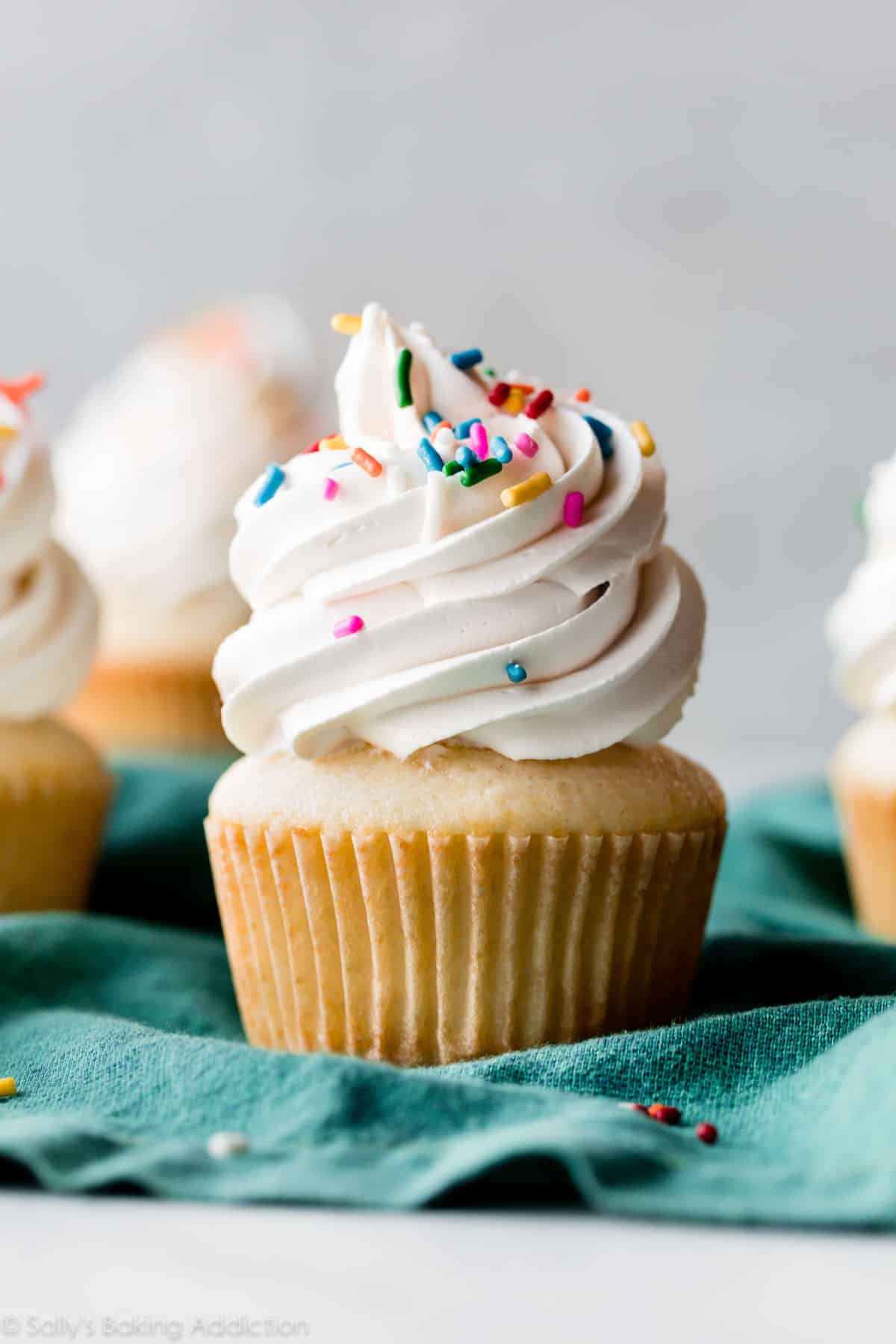
Do you want to master Swiss Meringue Buttercream (SMBC) but are too nervous to try it? I get it, the thought of making meringue as the base of a frosting sounds complicated, timely, and intimidating. Let me break down that barrier for you—this recipe is where you start.
What is Swiss Meringue Buttercream?
Swiss meringue buttercream joins other varieties—French and Italian—as a stable, not overly sweet frosting. The process for each is a little different, but the Swiss method is arguably the easiest. Swiss meringue buttercream is made from cooked egg whites and sugar, butter, and flavorings like vanilla and salt. Whip the cooked egg whites and sugar into stiff peaks, then slowly add the butter before adding flavors. It’s out-of-this-world creamy, extra smooth, and the perfect sweetness for any confection. The whipping process is long and where some trouble can start, including never reaching stiff peaks. The butter can also melt, leaving you with SMBC soup. Or you can over-whip everything into curdles.
It’s a little more complicated than my whipped frosting, but it’s worth it! Today I’m putting you on the right SMBC track, plus there’s usually a fix for everything—and I teach you how in this post.
This Swiss Meringue Buttercream Is:
- Made from 5 basic ingredients
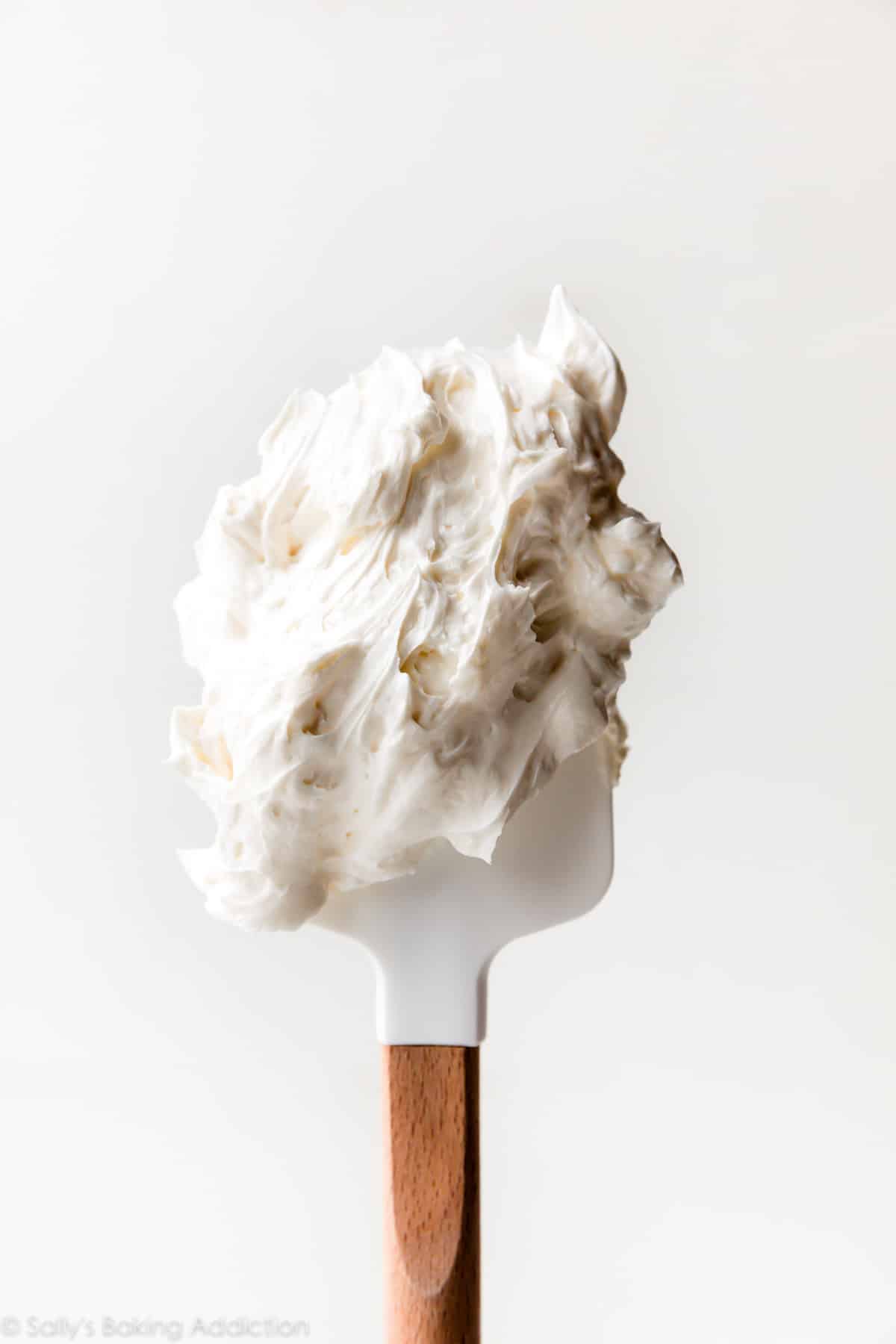
- Silky smooth and buttery
- Thick and ultra creamy
- Perfect for piping or spreading
- Flavored with vanilla and a touch of salt
- Not cloyingly sweet like traditional frosting
Ingredients
Let me explain why each ingredient is important. Feel free to keep scrolling to the full recipe written below.
- Egg Whites: Egg whites and sugar form the meringue. Just as I recommend when making French macarons, use fresh eggs instead of carton egg whites. Here are all my recipes using leftover egg yolks. Success tip: Eggs separate much easier when they’re cold.
- Granulated Sugar: Use regular granulated sugar, not confectioners’ sugar.
- Unsalted Butter: Butter turns meringue into meringue buttercream. I recommend unsalted butter because salted butter tastes overpowering. Keep in mind that the frosting will turn soupy and thin if the butter is too warm. Make sure you’re using butter that is slightly cooler than proper room temperature butter. Remove butter from the refrigerator and set it out for just 30-40 minutes before you need to use it. It should be cool to the touch, about 60°F (16°C). For accuracy, I recommend using an instant read thermometer. Cut butter into Tablespoon size pieces before using.
- Vanilla Extract: Adds flavor. See FAQs below for other flavor options.
- Salt: Some SMBC recipes don’t use salt, but I strongly recommend it for another layer of flavor. You may be wondering why you can’t just use salted butter and skip the added salt, so make sure you review Salted Vs Unsalted Butter in Baking.
Swiss Meringue Buttercream Video Tutorial
How to Make Swiss Meringue Buttercream
Here’s an overview of the steps. Full instructions available in the recipe below. Feel free to keep scrolling to the full recipe if you’d like!
- Get rid of any grease residue. Wipe all tools that will touch the meringue with a little lemon juice or white vinegar. Grease or fat prevents your meringue from setting up.
- Separate the eggs. Save the yolks for another recipe.
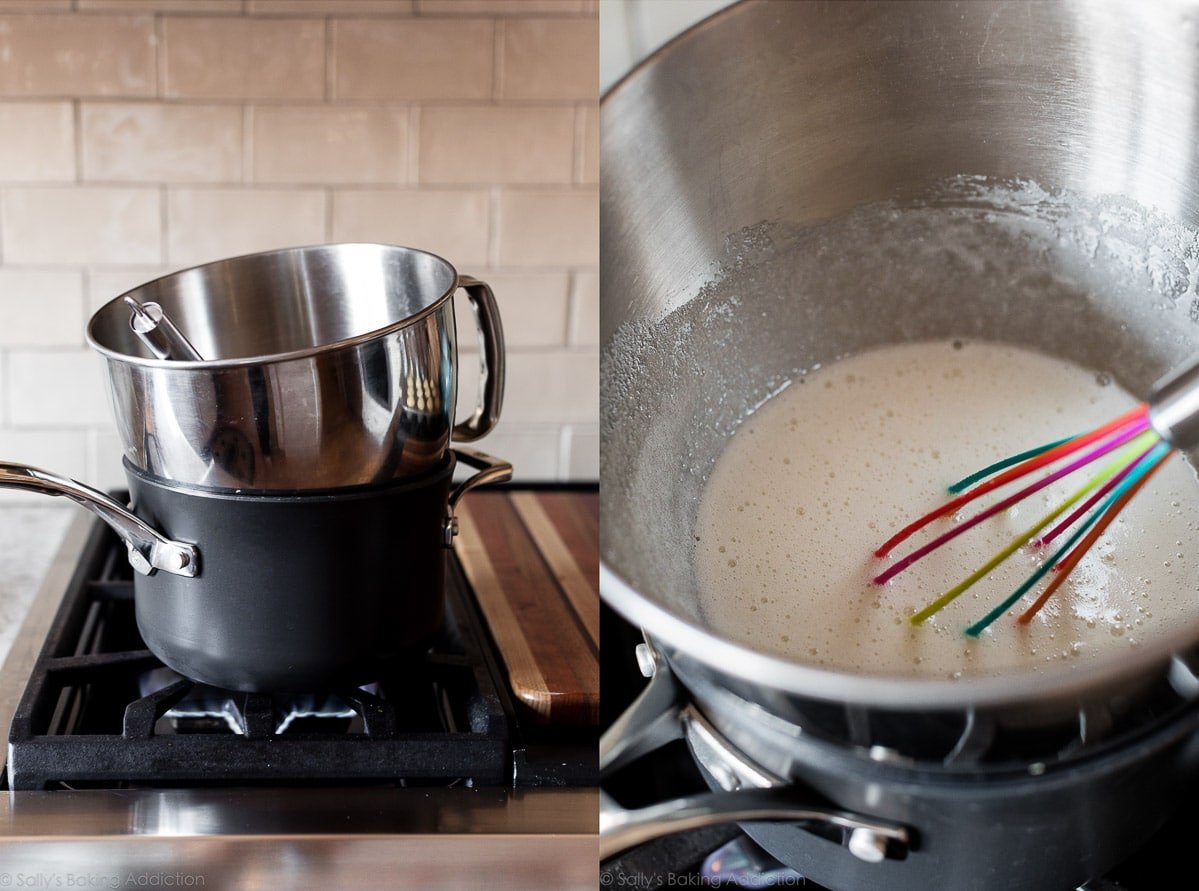
- Cook the egg whites & sugar: Whisk sugar & egg whites together, then set the bowl over a saucepan filled with simmering water. Do not let the bottom of the mixing bowl touch the water. Whisk the whites and sugar constantly until sugar is dissolved and mixture has thinned out. The mixture will be thick and tacky at first, then thin out and appear frothy on top. To test that it’s ready, you can use your finger or an instant read thermometer. Lightly and quickly dip your finger (it’s very hot, be careful) and rub the mixture between your thumb and finger. You shouldn’t feel any sugar granules. If using a thermometer, the temperature should read 160°F (71°C).
- Whip it: Transfer warm mixture to the bowl of a stand mixer fitted with a whisk attachment (if you aren’t already using the metal bowl that comes with it). Beat until stiff peaks form and the meringue is no longer warm to touch, at least 10-15 minutes. On particularly humid days, it will take longer. If it’s still not reaching stiff peaks, stop the mixer, place the bowl in the refrigerator for 10 minutes, then return to the mixer and continue beating until stiff peaks form.
- If the bowl and meringue still feel warm at this point, wait until both cool to room temperature (around 70°F (21°C)) before adding the butter.
- Add the butter and flavor: Switch the stand mixer to the paddle attachment and add the butter 1 Tablespoon at a time. Wait for the butter to fully mix in before adding the next. After all the butter has been added, beat in vanilla and salt. Done!
A small egg separator is a helpful tool in this recipe.
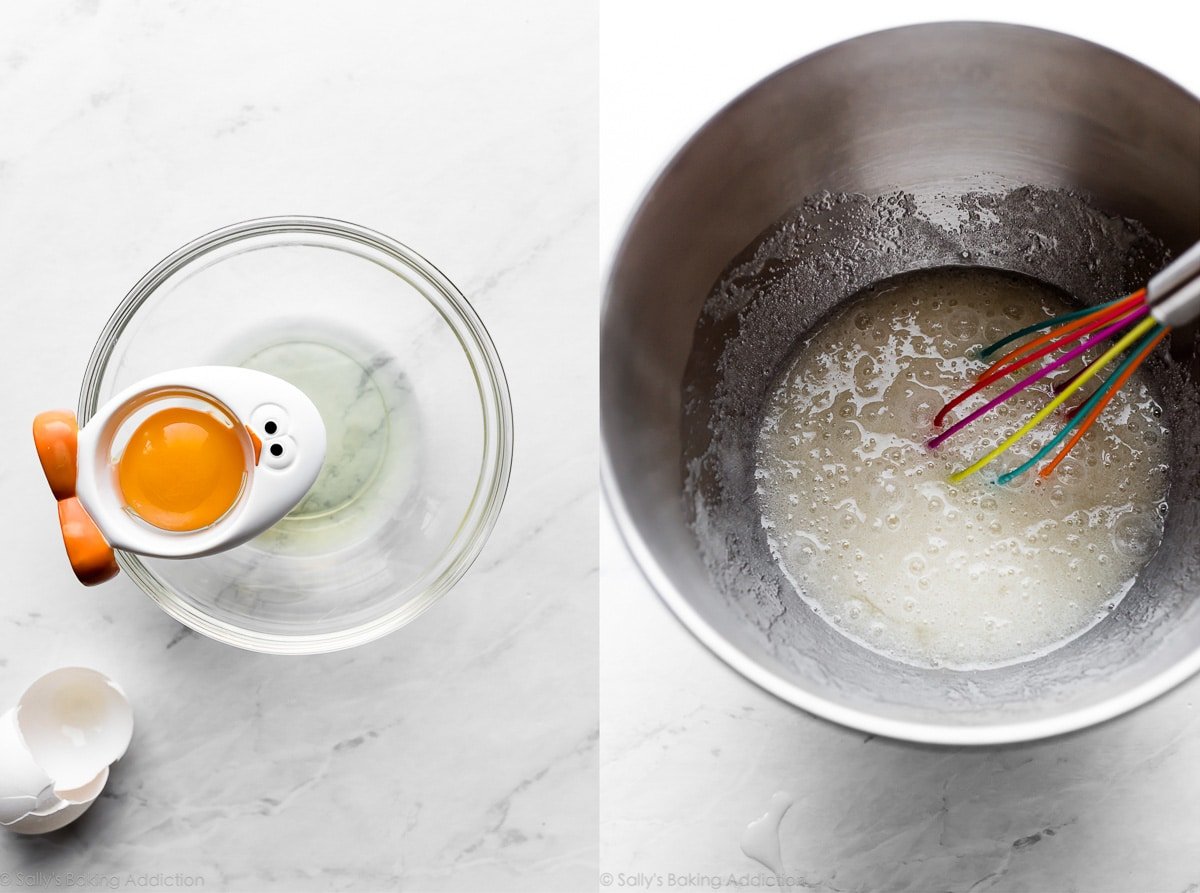
Cook and whisk egg whites and sugar over indirect heat. When it’s ready, the mixture will be frothy on top and thin. (Below, right.)
What Are Stiff Peaks?
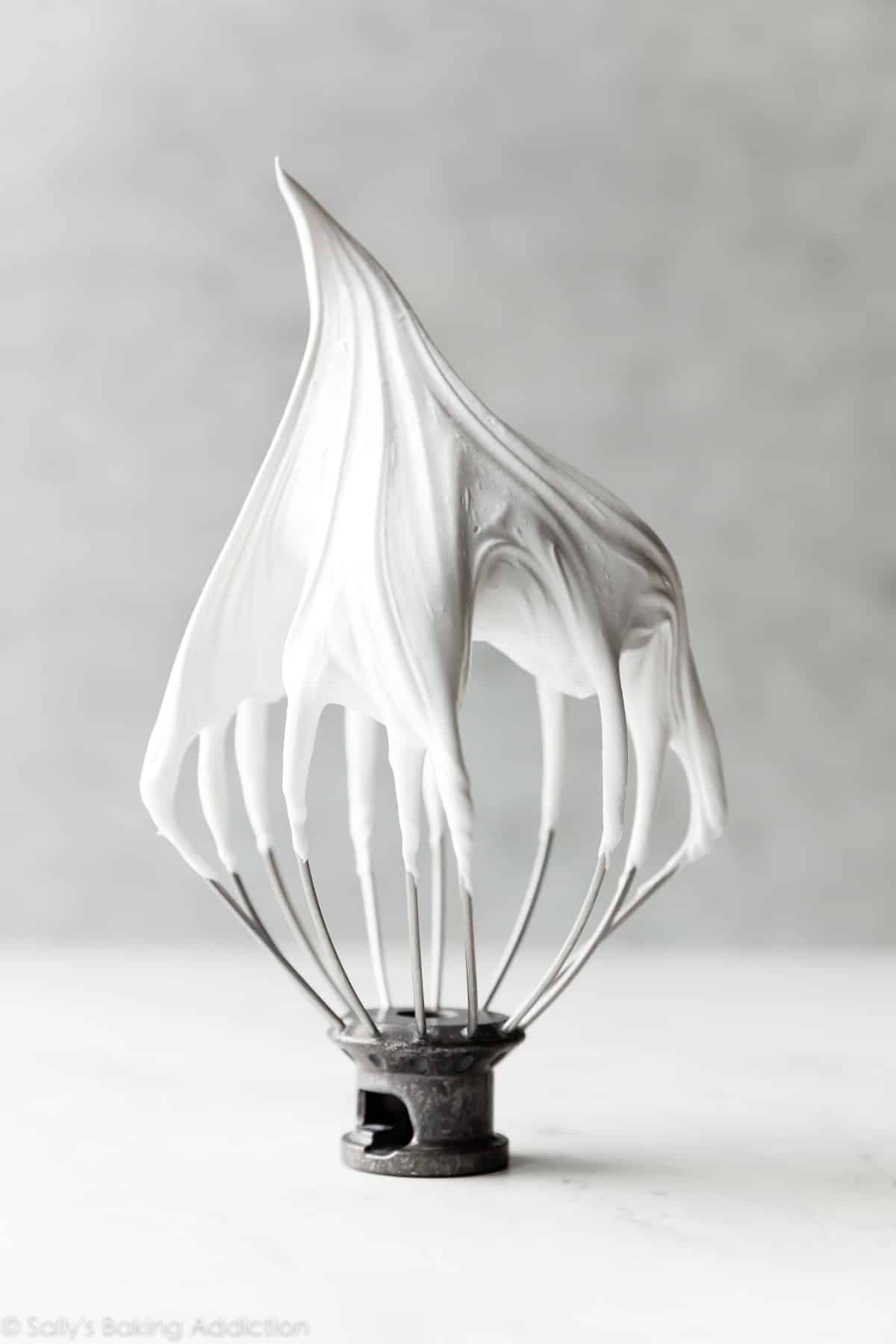
After several minutes of mixing, the meringue should form stiff glossy peaks. This means it forms stiff, smooth, and sharp points in the bowl or on the lifted whisk attachment.
Stiff peaks do not droop down.
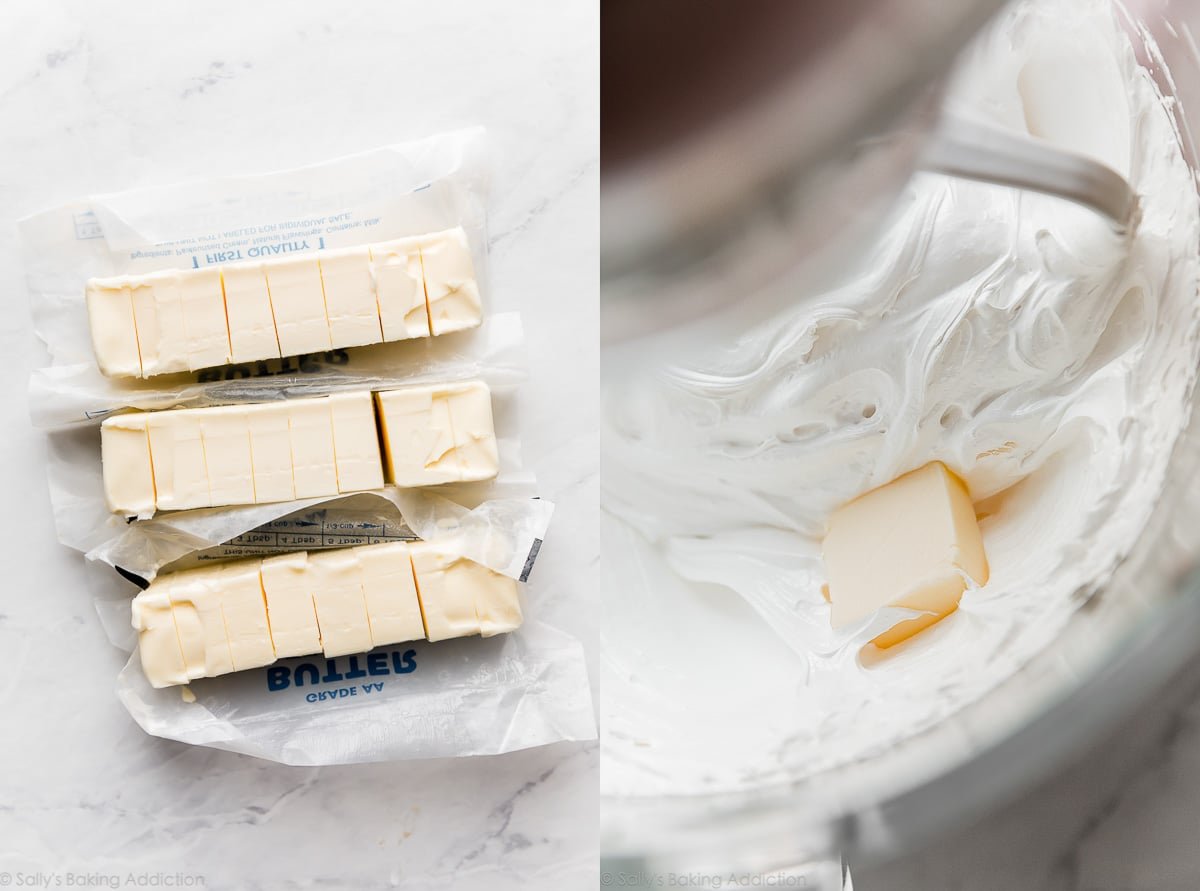
After reaching stiff peaks, let the meringue cool for a bit, then beat in the butter 1 Tablespoon at a time.
Success Tip: Because butter needs to be on the cooler side, I don’t remove it from the refrigerator and cut it into Tbsp pieces until I start whipping the meringue.
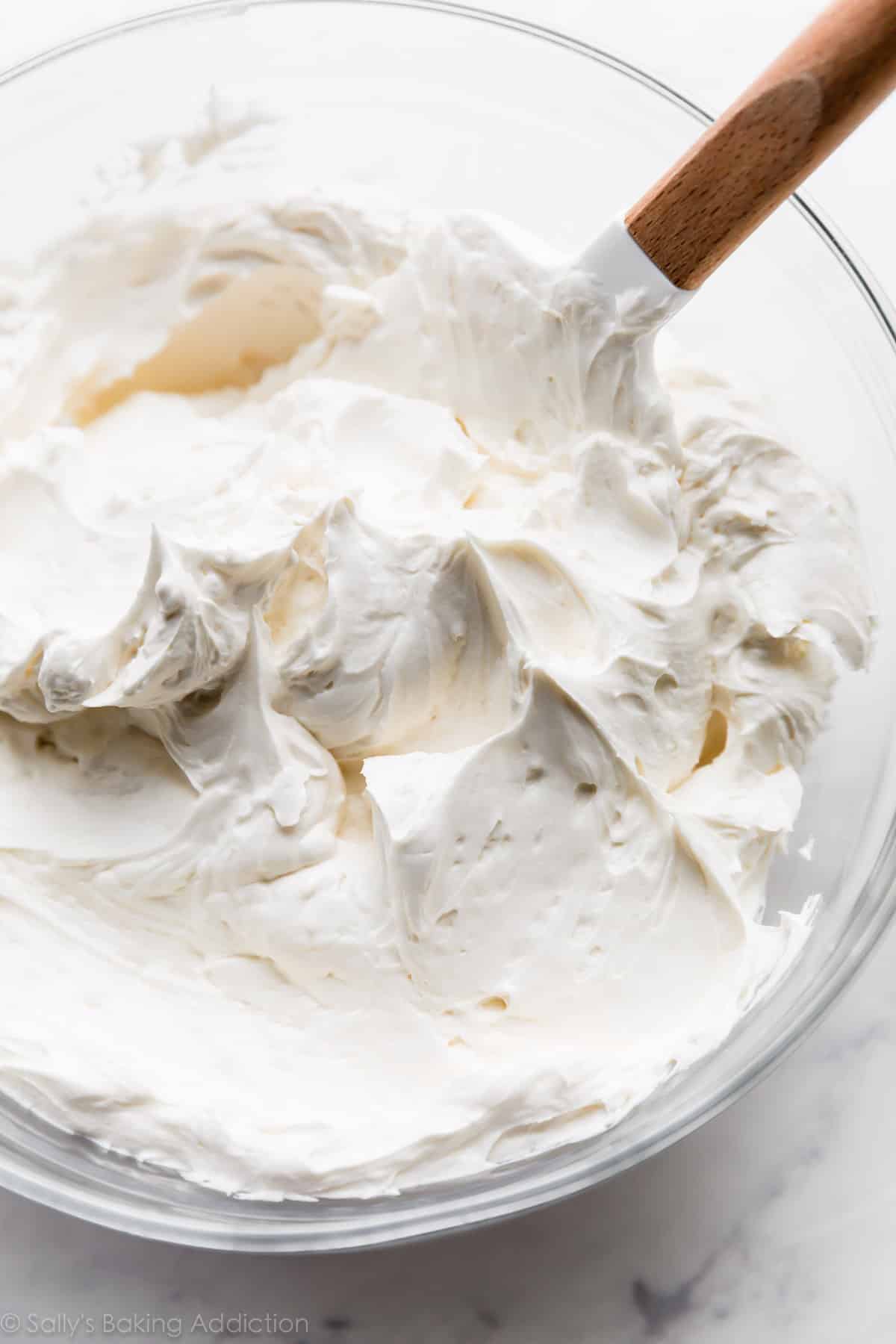
Add vanilla and salt, then you’re done. Buttercream is now deliciously creamy and smooth!
5 Helpful Tools
- Saucepan & heatproof bowl: Cook egg whites and sugar on indirect heat in a heatproof bowl set over a pan of simmering water. (I just use the metal mixing bowl that comes with a stand mixer.) This cooking method is essentially how we cook the eggs in French silk pie and make homemade marshmallow creme. If you own a double boiler, just use that.
- Whisk: Constantly whisking the egg whites and sugar as they gently cook is key.
- Electric Mixer: Beating the meringue into stiff peaks requires an electric mixer. I strongly recommend a stand mixer, but a handheld mixer can work. Give your arm a break every few minutes because the beating steps are tiresome. A handheld mixer will take longer to beat the meringue, too.
- Egg Separator: Though not required, it’s vastly helpful to have an egg separator to ensure no yolks make it into the mixing bowl. I generally recommend stocking your kitchen with an egg separator because they’re an inexpensive tool you can use for so many recipes like French macarons and chocolate soufflé.
- Instant Read Thermometer: Though also not required, it’s helpful to have an instant read thermometer (or a candy/oil thermometer) to determine the safe temperature of cooked egg whites, as well as the ideal temperature for the butter. Less mistakes this way.
Provided you aren’t allergic to any of these ingredients, yes. The eggs are cooked to 160°F (71°C), which is considered safe to eat for everyone including pregnant women and children. As always, use your best judgement and feel free to consult a Dr if you’re concerned.
No, Swiss meringue buttercream does not crust or dry out like American buttercream can. That’s why SMBC is excellent for creating the smoothest frosting detail on cakes and perfectly piped (yet still fluffy tasting!) designs.
Yes, Swiss meringue buttercream is stable at room temperature. Though if eating on a particularly humid day, keep your frosted confections in the refrigerator as close to serving as you can. You can use SMBC under fondant-topped cakes and confections, too.
Yes and it’s best to tint SMBC with gel food coloring so you aren’t adding a lot of extra liquid. Beat food coloring into the frosting on low speed after you add the vanilla extract and salt.
Yes. Swiss meringue buttercream is great left covered at room temperature for 1-2 days, but after that, refrigerate it for up to 5 days or freeze up to 3 months. If freezing, store in an airtight container, then thaw it at room temperature on the counter. Once completely at room temperature, about 72°F (22°C), place into the bowl of your stand mixer fitted with a paddle attachment and beat for 2-3 minutes until creamy again. If it separates or curdles, see troubleshooting tips below.
Replace some (about 1 teaspoon) of vanilla extract with 1 teaspoon of another flavor extract such as lemon, coconut, orange, maple, or even 1 teaspoon of espresso powder. Taste, then add a touch more if desired. For potent extracts, like peppermint or almond, replace 1 teaspoon of the vanilla with just 1/2 teaspoon. For chocolate Swiss meringue buttercream, beat 8 ounces of pure melted and slightly cooled chocolate into the buttercream when you add the vanilla and salt. Make sure you’re using pure baking chocolate (the 4 ounce bars) like Baker’s or Ghirardelli brands found in the baking aisle.
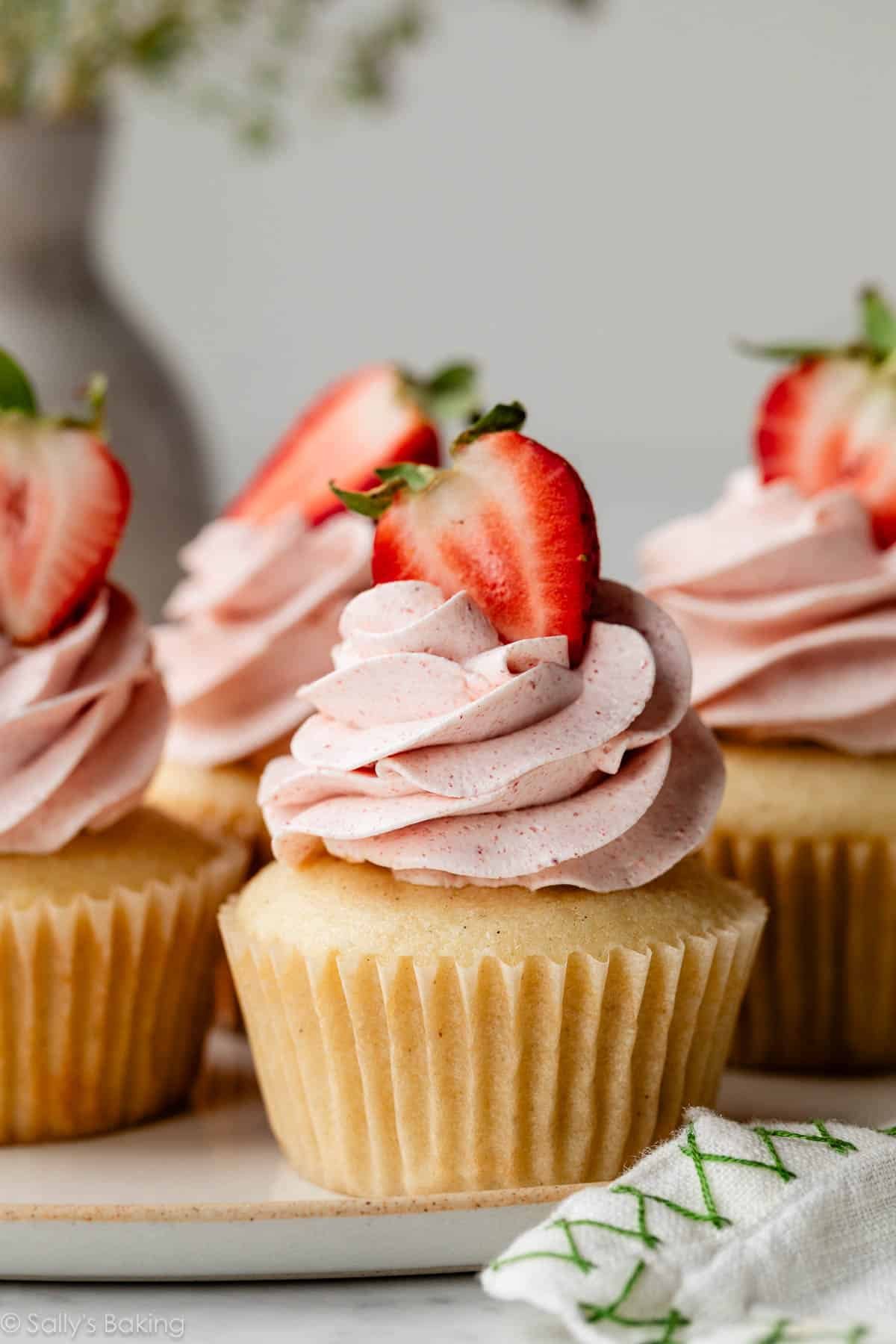
Yes! Using a food processor or blender, process 1 cup (about 25g) freeze-dried strawberries into a powdery crumb. You should have around 1/2 cup. If it’s not grinding down fine enough, you can sift it with a fine mesh sieve to rid larger seeds/pieces. Add the strawberry crumb powder when you add the vanilla.
Troubleshooting Swiss Meringue Buttercream
- Meringue Won’t Reach Stiff Peaks: Step 4 in the recipe below requires a long period of mixing the cooked egg whites and sugar together into stiff peaks. This mixture (the meringue) will never reach stiff peaks if there was a drop of egg yolk (fat) or grease in the mixture, mixing bowl, or on any tools you are using. Wipe down all of your tools with lemon juice or white vinegar, use an egg separator, and separate and add the egg whites one at a time to the mixing bowl. These are all instructions listed out in the recipe below. It’s also helpful to avoid making this on particularly humid days where there’s extra moisture in the air. If you did all of this and it’s still not reaching stiff peaks, the meringue could be too warm or it needs a break. See next.
- My Mixer Needs a Break: By all means, give it a break! Mixers can tire out while beating the cooked egg whites and sugar because this step requires a long period of mixing. If your mixer and its motor needs a break, it’s likely your meringue needs a break too. Stop what you’re doing, remove the whisk attachment (or beaters if you’re using a hand mixer), place the attachment/beaters in the bowl with the meringue, and refrigerate it all (covered or uncovered, doesn’t matter) for 20-30 minutes. This gives your mixer, as well as the meringue and mixing bowl, a chance to cool down. (Important: though it’s best to begin whipping the cooked egg/sugar while it’s still warm, it could simply need a cool break halfway through reaching stiff peaks.)
- Buttercream is Soupy/Too Thin: If your mixture has become too thin and soupy after you add the butter, your butter was likely too warm or the meringue was still too warm. Have no fear—this is fixable by bringing down its temperature. Place the entire bowl in the refrigerator (covered or uncovered, doesn’t matter) for 20 minutes to cool down, then return it to the mixer and beat on medium-high speed until thickened. Any longer than this will solidify the butter, so only refrigerate in 20 minute spurts. If it’s still soupy, place back in the refrigerator for longer before re-whipping again.
- Buttercream Only Tastes like Butter: The main ingredient, besides egg whites, is butter. Make sure you’re using unsalted butter because salted butter leaves your frosting with an overwhelmingly salty/buttery flavor. Use pure vanilla extract to flavor it and add a pinch of regular table salt. Other flavored extracts work too—see the Ingredients section above.
- Buttercream Solidified in the Refrigerator: There’s a lot of butter in this frosting, so if it’s stored in a bowl in the refrigerator, it will solidify into one large mass just like a bowl of cookie dough. Two ways to fix this: sit it on the counter and bring it to room temperature. Once completely at room temperature, about 72°F (22°C), place into the bowl of your stand mixer fitted with a paddle attachment and beat for 2-3 minutes until creamy again. If you don’t have time to wait for it to come to room temperature or if your home isn’t warm enough, follow the same instructions as #3 in this list (Buttercream is Curdled/Too Thick). Placing over gentle heat will melt the edges and when whipped, the melty edges and solid center will come together into 1 smooth frosting.
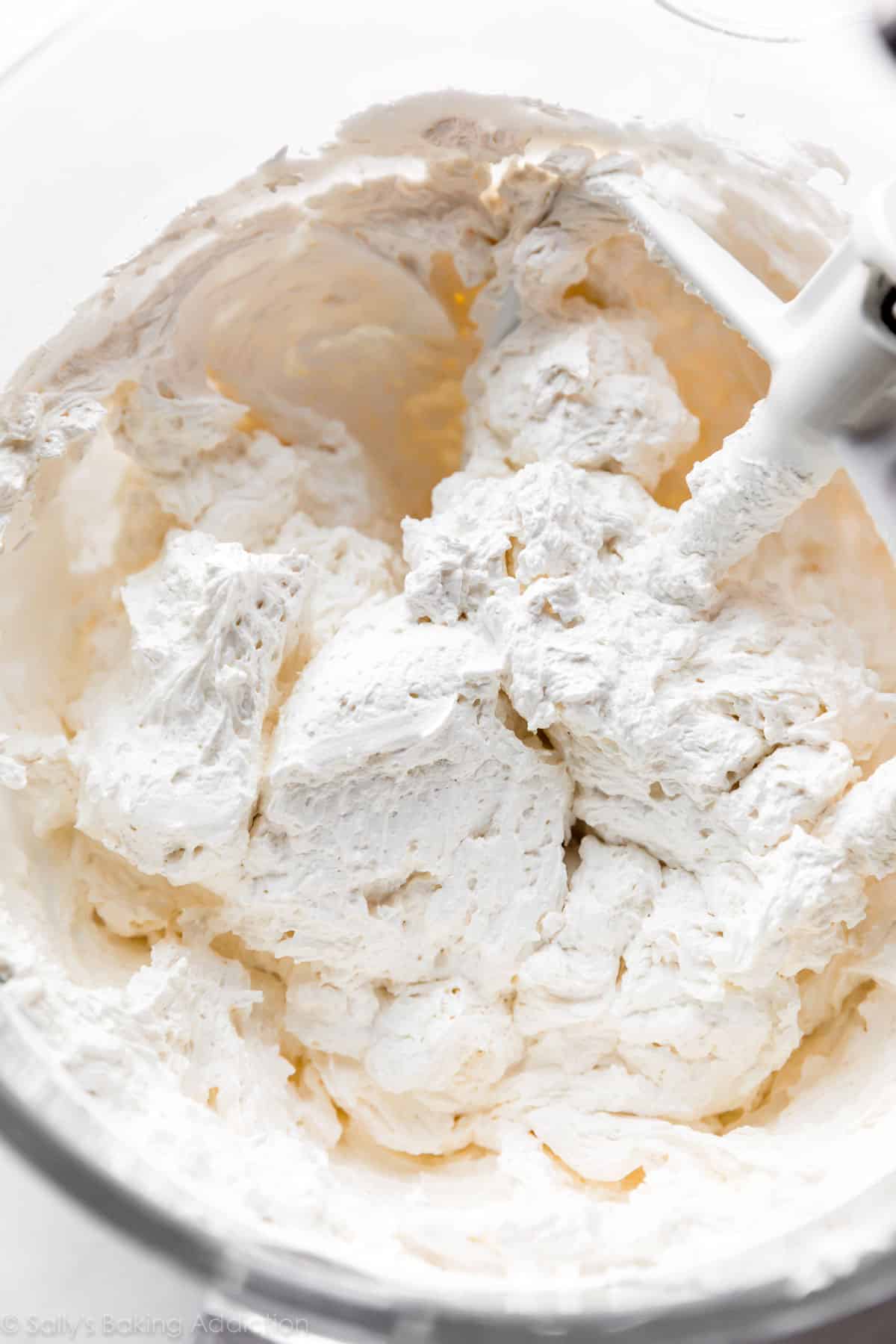
- Buttercream is Curdled/Too Thick: If your meringue has separated, curdled, or is too thick at any point after you mix in all of the butter, just keep beating because it will eventually come together. If it’s only getting thicker and chunkier, there’s a quick fix—and it’s my favorite. Place the mixture in your heat-proof bowl back over a pot of 2 inches of simmering water. Without stirring, let the edges of the meringue warm up and become liquid (the center of the meringue will still be solid), about 1-2 minutes. Remove from heat and return to the mixer. Beat meringue on low speed for 30 seconds, then switch to medium-high speed and beat until smooth, about 2 minutes. I have to do this 75% of the time, but I LOVE it because partially melting the SMBC then re-whipping actually creates a creamier frosting.
Pictured below: Curdled buttercream. See above.
I know it seems complicated, but as long as you remain patient, read through this post, watch the video, prepare yourself by reviewing the recipe before beginning, you will be rewarded with the most luscious, not-overly-sweet frosting ever.
How to Use It:
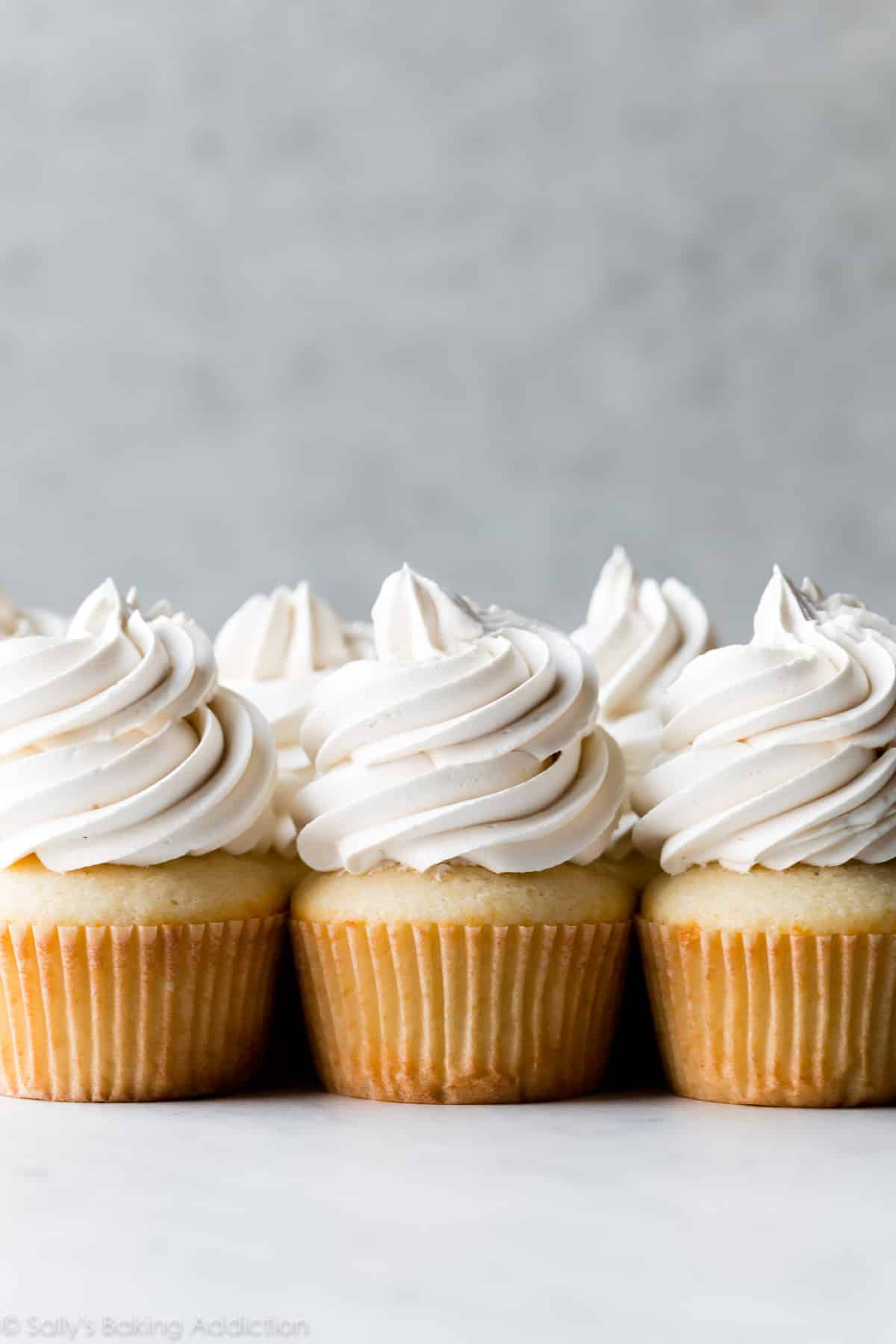
- Pipe it. My favorite piping tips and a video on how to use piping tips will be helpful to review.
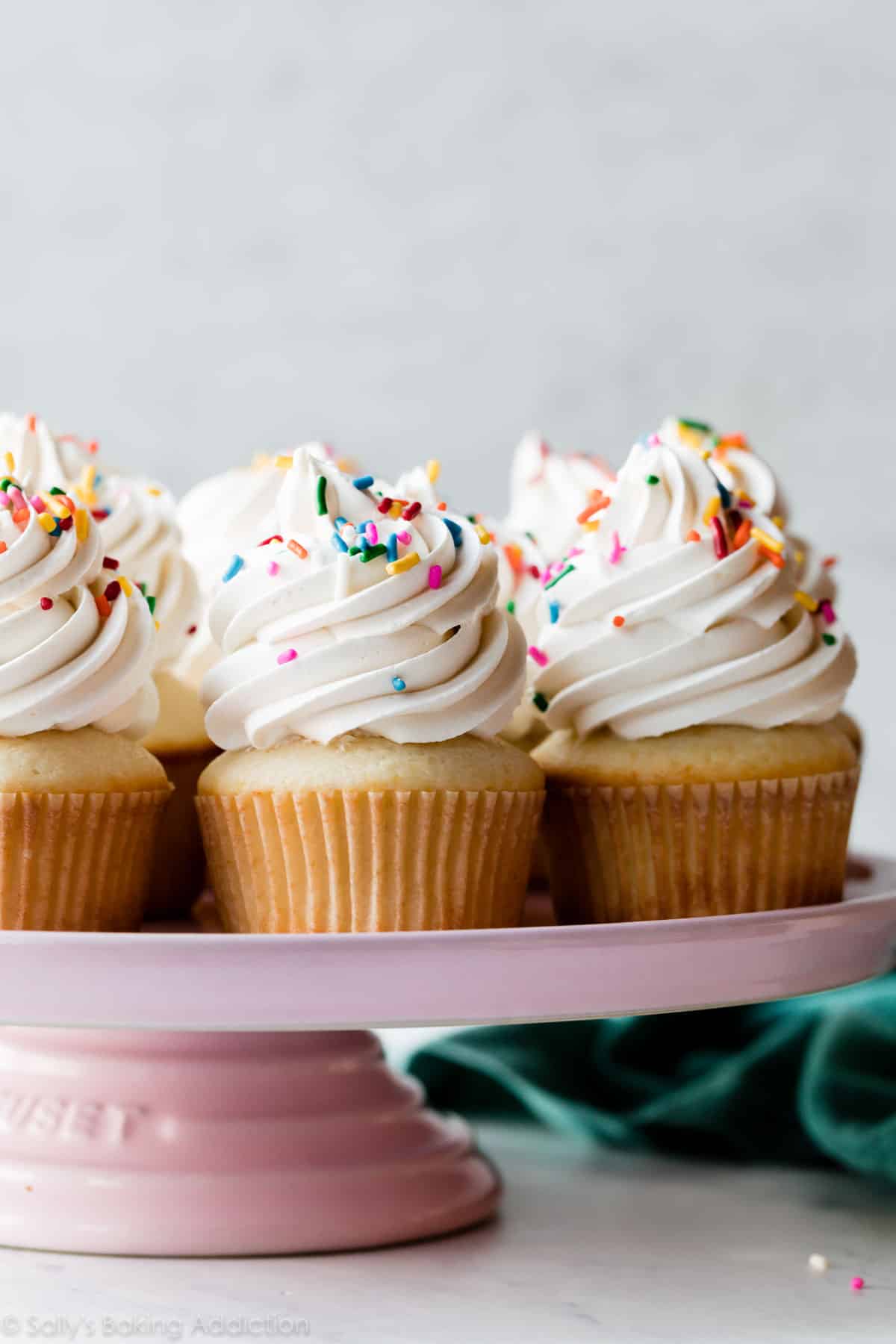
- Pictured: I used Ateco 849 and piped a tall swirl onto my vanilla cupcakes
- Try it on Yellow Cupcakes, Chocolate Cupcakes, or any of my cupcake recipes
- Use it as the frosting for White Cake, Yellow Cake, Carrot Cake, Vanilla Sheet Cake, or Chocolate Cake
- Pair it with citrus flavors on top of lemon blueberry cupcakes or citrus cake.
- As a filling for macarons or whoopie pies
- Instead of buttercream to decorate Halloween cupcakes.
- See “Yield” recipe note below for more ideas.

Swiss Meringue Buttercream
- Prep Time: 25 minutes
- Cook Time: 5 minutes
- Total Time: 30 minutes
- Yield: 5 cups
- Category: Frosting
- Method: Whipping
- Cuisine: European
Description
This is vanilla Swiss Meringue Buttercream perfection. It’s the ideal balance of sweet and creamy, without being as cloyingly sugary as American buttercream. (This is a far cry from how sweet that is!) Thick, sturdy, and perfectly pipe-able. This in-depth recipe sets you up for success on your 1st try.
Ingredients
- 6 large egg whites (approximately 180g)
- 2 cups (400g) granulated sugar
- 1 and 1/2 cups (340g) unsalted butter, softened but still cool and cut into Tbsp size pieces (*see note*)
- 2 teaspoons pure vanilla extract
- 1/8 teaspoon salt
Instructions
- Watch the video tutorial above, review the troubleshooting tips, and read the recipe in full before beginning. Make sure all the tools you are using are completely cleaned, dried, and grease-free. A quick wipe with a little lemon juice or white vinegar is very helpful.
- Separate the eggs: If you haven’t done so yet, separate the eggs first. Separate 1 egg white in a small bowl, then place the egg white in your heatproof mixing bowl. Repeat with the remaining egg whites. This way, if a yolk breaks in one of them, you don’t waste the whole batch.
- Whisk sugar into the egg whites, then set the bowl over a saucepan filled with just two inches of simmering water over medium heat. Do not let the bottom of the egg whites bowl touch the water. Whisk the whites and sugar constantly until sugar is dissolved and mixture has thinned out, about 4 minutes. The mixture will be thick and tacky at first, then thin out and be frothy white on top. To test that it’s ready, you can use your finger or an instant read thermometer. Lightly and quickly dip your finger (it’s very hot, be careful) and rub the mixture between your thumb and finger. You shouldn’t feel any sugar granules. If using a thermometer, the temperature should read 160°F (71°C).
- No need to let it cool down to start this next step—it’s important to begin mixing while it is still warm. Transfer mixture to the bowl of a stand mixer fitted with a whisk attachment (if you aren’t already using the metal bowl that comes with it). You can use a hand mixer instead, but this step takes awhile and your arm tires quickly. On medium-high speed, beat the mixture until stiff glossy peaks form and the meringue is no longer warm to the touch, at least 10-15 minutes. On particularly humid days, this has taken me up to 17-18 minutes. If it’s still not reaching stiff peaks, stop the mixer, place the bowl—uncovered—in the refrigerator for 10 minutes, then return to the mixer and continue beating until stiff peaks form. (This has always worked for me when it’s taking forever to reach stiff peaks.)
- If the bowl and meringue still feel warm, wait until both cool to room temperature (around 70°F (21°C)) before adding the butter in the next step. Feel free to place it in the refrigerator. A warm bowl and meringue will melt the butter.
- Switch the stand mixer to the paddle attachment. On medium-high speed, add the butter 1 Tablespoon at a time. Wait for the butter to fully mix in before adding the next Tablespoon. After all the butter has been added, turn the mixer down to medium speed and fully beat in the vanilla and salt, about 30 seconds.
- Your Swiss meringue buttercream should be thick, creamy, and silky smooth and is ready to use on any cake, cupcake, or other confection.
- Too Thick or Too Thin: If your meringue has separated, curdled, or is too thick at any point after you mix in all of the butter, place the mixture in your heat-proof bowl back over a pot of 2 inches of simmering water. Without stirring, let the edges of the meringue warm up and become liquid (the center of the meringue will still be solid), about 1-2 minutes. Remove from heat and return to the mixer. Beat meringue on low speed for 30 seconds, then switch to medium-high speed and beat until smooth, about 2 minutes. Works every time. If your mixture has become too thin and soupy after you add the butter, place the entire bowl in the refrigerator (covered or uncovered, doesn’t matter) for 20 minutes to cool down, then return it to the mixer and beat on medium-high speed until thickened. Any longer than this will solidify the butter, so only refrigerate in 20 minute spurts. If it’s still soupy, place back in the refrigerator for longer before re-whipping again. More troubleshooting tips in the post above.
Notes
- Make-Ahead, Storing, & Freezing Instructions: Swiss meringue buttercream is great left covered at room temperature for 1-2 days, but after that, refrigerate it for up to 5 days or freeze up to 3 months. If freezing, store in an airtight container, then thaw it at room temperature on the counter. Once completely at room temperature, about 72°F (22°C), place into the bowl of your stand mixer fitted with a paddle attachment and beat for 2-3 minutes until creamy again. If it separates or curdles, see step 8.
- Special Tools (affiliate links): Electric Mixer (Handheld or Stand) | Instant Read Thermometer | Egg White Separator | Whisk | Double Boiler
- Yield: This recipe yields about 5 cups of frosting, which is enough to fill and frost a two layer 9-inch cake with a generous amount, to fill and frost a three layer 9-inch cake with just enough frosting, to lightly frost 2 dozen cupcakes, to heavily frost 1 dozen cupcakes (I had just enough for the huge swirls on 12 of the pictured cupcakes), or a 9×13 inch sheet cake (with some frosting leftover).
- Egg Whites: For best success, I recommend using fresh eggs instead of carton egg whites. Here are all my recipes using leftover egg yolks. Eggs separate much easier when they’re cold. Separate the egg whites one at a time and place the egg white into a large heat-proof mixing bowl (or a double boiler or the metal mixing bowl from your stand mixer) before separating the next. This way, if a yolk breaks in one of them, you don’t waste the whole batch.
- There’s almost always a way to fix “ruined” Swiss Meringue Buttercream and it usually has to do with temperature. See step 8 as well as my troubleshooting tips in the post above.
- Butter: This buttercream will thin out and become liquid-y if the butter is too warm. Make sure you’re using butter that is slightly cooler than proper room temperature butter. Remove butter from the refrigerator and set it out for just 30-40 minutes before you need to add it to the meringue. Sometimes meringue takes longer than usual or it needs a break (see Troubleshooting above) and in that case, you should place the butter back into the refrigerator for a few minutes so it doesn’t get too warm sitting out. The butter should be cool to the touch. For accuracy, I recommend using an instant read thermometer. Butter should be 60°F (16°C).
- Flavors & Colors: For flavor ideas including chocolate, see my Can I add flavors? FAQ above. For coloring, it’s best to tint this frosting with gel food coloring so you aren’t adding a lot of extra liquid. Beat food coloring into the frosting on low speed after you add the vanilla extract and salt.
- Half or Larger Batch: You can halve this recipe. The egg white/sugar mixture won’t take as long to cook and the meringue won’t take as long to reach stiff peaks. I do not recommend making larger batches at a time because it will quickly overcrowd and wear out your mixer. If you need more batches, make them all separately.
Adapted from Martha Stewart. I found it needed less butter, 1 more egg white, and more sugar in order to stabilize properly.














Reader Comments and Reviews
Hi Sally! Was wondering if I can use a plant based butter block for this recipe? i’m making a cake for a friend and she needs it dairy free. Thanks!
Hi Kate, we haven’t personally tried a plant-based butter substitute here, so we can’t be sure. Let us know if you test anything!
I’ve tried this recipe multiple times. But my sugar never dissolves on the double boiler, I end up having to throw it way. Because even after 15-20 minutes the mixture us still gritty. Not sure if the measurement is off or not. But just thought I’d let you know
Love this recipe as the others I’ve done so far.
This one went great first time although the egg were still a bit warm when started adding the butter so I stopped and put it in the fridge for a moment while I’m writing this . Let’s see what happens. Thank you so much for yours recipes Sally. Xx
This is such a great recipe! I’ve noticed that after it sits for a few hours, it completely loses that bright white color and becomes much more off-white. Is that normal, or could I be doing something wrong?
Hi Nancy! The color will always depend on the particular butter you’re using. If you’d like a stark white buttercream, mix in a very tiny (super small!) drop of purple food coloring into the frosting. This will “clear” out any of that yellow. Hope this helps!
Hola Sally, estoy estudiando la receta de esta crema de mantequilla y me parece fabulosa, próximamente la estaré elaborando, mi pregunta es : para 180g de clara se adiciona 400 g de azúcar, le puedo bajar al azúcar un 20%, es decir quedaría en 320 g de azúcar, en casa no nos gusta mucho que sea tan dulce, lo más suave posible, tengo familiares con resistencia a la insulina y por eso bajo la cantidad de azúcar. Gracias
Hola, muchas gracias por tu mensaje y por probar la receta. En esta crema de mantequilla no recomiendo reducir el azúcar, porque no solo aporta dulzor, sino que también es fundamental para la estructura y estabilidad de la crema. Si se reduce demasiado, la textura puede quedar muy líquida o no montarse correctamente. Si prefieres un sabor menos dulce, una opción es añadir un poco más de sal o usarla junto con un pastel o relleno que no sea muy dulce para equilibrar los sabores. ¡Espero que la disfrutes!
Gracias por el concejo, excelente explicación.
I use this recipe for everything once I found it I have never gone back to any of my old recipes! I love it!
I’ve made this recipe twice now and both times it has been very thin with butter chunks. I mix it for at least 10 seconds after putting in each tablespoon of butter but it still doesn’t incorporate. What am I doing wrong?
Hi Claire! Have you tried the troubleshooting tips in the post above? We have some helpful hints to bring it back together!
This is a great recipe, I’ll definitely have to try it out soon. Thank you!!
I am wondering if I could pull out about 1/3 of the meringue at the stiff peak phase and use them to bake little meringue cookies, then adjust the amount of butter added? Or is the ratio of egg whites to sugar not the same as a baked meringue?
Thanks, love this recipe!
Hi Janna, I’m so glad you love it, thank you! I wouldn’t recommend pulling some off for baked meringues, because Swiss meringue buttercream uses a different ratio of sugar to egg whites than traditional baked meringue cookies. (More sugar.) It’s designed to be stable and silky once butter is added, not to dry out and crisp in the oven, so the texture (and sweetness) won’t be quite right for classic meringues. For best results, I’d suggest making a separate batch of meringue cookies with a recipe specifically developed for baking, and keeping this one dedicated to buttercream so the ratios stay balanced and predictable. If you’d like, here are my chocolate swirl meringue cookies.
I made this twice so far. I’m practicing for a baby shower I’ve been asked to bake for. The first time I had to use the troubleshooting tips and it turned out okay. The second time went better. But both times it was a bit thin – not soupy. Just thin. Should I refrigerate it to thicken it up before piping?
Also, I find the meringue is always around 90-93 degrees after whipping. Should I refrigerate it or just let it sit until it comes down to 70?
Hi Andrea, for Swiss meringue buttercream, the meringue should be completely cool before adding butter, ideally around room temperature (about 70°F/21°C). If it’s still 90–93°F, it’s too warm, and that warmth can make the finished buttercream thinner than it should be. You can refrigerate it. If the finished buttercream is slightly thin (but not soupy), you can refrigerate that, too, for 15–20 minutes, then rewhip if desired. It will usually thicken beautifully. Just be careful not to over-chill, or it can firm up too much and need additional mixing to smooth out. I hope this helps!
Hi Will this be okay if I add Color Mill oil based food coloring?
Thanks!
Hi MG, We typically recommend gel food coloring.
Oil-based colorings such as Colour Mill mix in much better into SMBC than gel-based colorings. With gel-based colorings, such as Americolor or Chefmaster, you will typically be left with streaks of color. This is because of the water content in gel colorings not being able to be easily broken down into butter-based frostings (water and fat don’t naturally mix). You can solve this problem with either the microwave or immersion blender method to break down the color so you won’t be left with streaks. Or you can just use Colour Mill.
Wow, you just answered a question I’ve had for ages and have no been able to find a clear answer on. Thank you!!
I was in a rush when I was making the buttercream, and I added the butter before I got stiff peaks, and now it’s all liquidy. Is there a way I can fix it?
Could I use cocoa powder instead of melted chocolate? I have made this recipe with the strawberry method and that worked wonderfully, so powdered flavoring should theoretically right?
Hi Jill, we’ve only tested a chocolate version of this using melted and cooled chocolate. We’re sure you can use cocoa powder, but we haven’t tested the perfect amount. Start by beating in 1 Tbsp at a time until you are satisfied with the flavor. Let us know how it turns out for you!
I was able to beat in about 6 ounces of homemade pistachio paste at the end and the consistency was perfect and the taste was amazing. If you don’t have a digital thermometer I think you should be prepared to have to use one of the troubleshooting methods listed. It’s just too difficult to judge the temperature of the meringue or the butter otherwise, and they really do matter. Fortunately the troubleshooting tips work great.
Would it be ok to use a few drops of orange flavoring as well as the vanilla in this recipe? Or possibly add a little grated orange peel? Thank you for your help.
Hi Doree, we haven’t tested it but you could try adding a small amount of orange extract along with the vanilla. Adding a little orange zest should be just fine, too! Let us know what you try!
Can I double this recipe to have 10 cups instead of 5?
Hi Carien, we do not recommend making larger batches at a time because it will quickly overcrowd and wear out your mixer. If you need more batches, make them all separately.
This is a really fool-proof swiss meringue buttercream recipe. It never fails me. The ratio of 6 egg whites to 2 cups sugar is perfect! I always get beautiful, silky stiff peaks. Where my buttercream sometimes falls apart is when I add the butter. I discovered that using the cheapest butter in the grocery store may have been the problem. It contains more water and less fat, and may have been the reason I often had clotting issues when I started adding the butter (even when the butter is at room temp). I started using 83% fat butter and now my buttercream is smooth as silk every time. I’m just using Plugrá, which is the least expensive of the higher fat, European-style butters. It works great and tastes delicious.
Sally, I usually love your recipes. But this one is a big miss. It does set up beautifully, but it tastes awful. The ratio of egg whites, sugar, and butter is off. I saw you”adapted” Martha Stewart’s recipe. Hers is better.
Also, this particular recipe has way too many sections to scroll through. It doesn’t translate well to reading it while making it.
Hi Katie, thank you for giving the recipe a try and for sharing such honest feedback. I appreciate it, even when the experience wasn’t what you hoped for. Swiss meringue buttercream is very technique-driven, and while this version works well for many bakers, taste is always subjective, so I understand preferring a different balance of sweetness or richness. I did adapt and test this recipe extensively in my own kitchen and with my team to land with the ratios here, but I completely respect that another version may better suit your preferences. Thank you for pointing out the frustrating experience with the layout, too; usability while baking are really important and something I continually try to improve on the site. Thank you again.
Can this be made with a dairy free alternative to butter? Would love to give this a go for a birthday cake but slightly scared of making a substitution!
Hi Alana, We haven’t tested this recipe with dairy-free butter so we’re unsure of the results. That said, some readers have reported success with using plant-based butter substitutes in this recipe. If you try it, please let us know how it goes!
Perfect stiff peaks, as I cooled it almost completely added butter and whipped with paddle then became grainy. Why?
Hi Diane, Was it grainy coming off the heat? If so try cooking it on the stove a little longer (past 160 degrees F). Constantly whisk. The sugar granules shouldn’t be detected much longer after that. (Sugar melts!) Once you’ve gotten to the end and you can still detect grains, re-whipping should *hopefully* smooth it out. Let us know if you try again!
To make the chocolate SMBC, what kind of chocolate? Baking chocolate (the pure cacao kind)? Would semisweet/bittersweet/dark chocolate work?
I’d really like to make a mocha SMBC. Could I dissolve instant espresso powder in a small amount of water and add it to the chocolate before mixing it into the SMBC?
Hi Joanne, see the FAQ section above for chocolate SMBC directions: For chocolate Swiss meringue buttercream, beat 8 ounces of pure melted and slightly cooled chocolate into the buttercream when you add the vanilla and salt. Make sure you’re using pure baking chocolate (the 4 ounce bars) like Baker’s or Ghirardelli brands found in the baking aisle. We would caution against adding extra liquid, but you could certainly try adding fine espresso powder. Let us know how it goes!
I was always intimidated to make Swiss meringue buttercream (I always made american buttercream). Made your recipe today and it was so good! Your video and instructions were spot on! Thank you ❤️