

These better-than-the-bakery blueberry scones are bursting with juicy blueberries. They’re buttery and moist with crisp, crumbly edges and soft, flaky centers. Crunchy coarse sugar and creamy vanilla icing are the perfect finishing touches!
I originally published this recipe in 2014 and have since added new photos and a video tutorial.

Scones. You either love them or hate them. I used to fall in the latter category, passing on them in favor of muffins or quick breads. Scones can taste pretty dry, comparable to lackluster triangles of cardboard. No, thanks.
But my opinion on scones took a total 180 a few years ago when I attended a cooking event in the Panera Bread test kitchen. Turns out that I’ve been eating all the wrong scones because when done right, these sweet treats tiptoe into a world of pastry perfection.
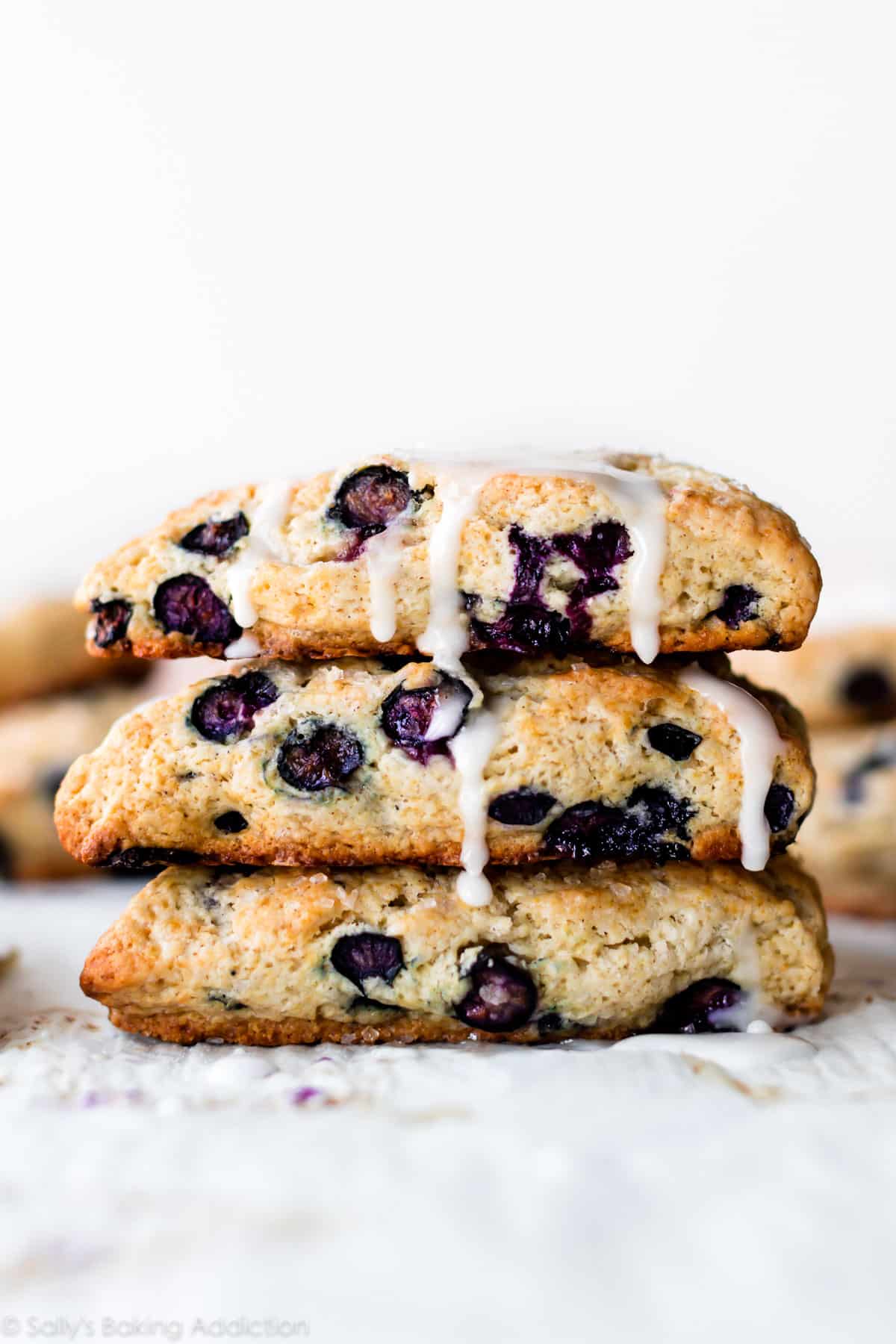
Since then, I mastered chocolate chip scones, apple cinnamon scones, ham & cheese scones, cinnamon scones, lavender scones, and strawberry lemon scones. I use the same master scone recipe for each flavor, a formula promising the BEST scone texture. By the way, I wrote an entire post devoted to my favorite base scones recipe. Today we’re making blueberry scones, which is definitely my favorite scone flavor.
There’s no denying these are the best blueberry scones on the planet. Strong statement, right? Trust me.
One reader, Rich, commented: “Sally, I would like to say thank you! These pastries were awesome. I was expecting a dry and pale flavor that I usually get from scones. These blueberry scones absolutely melted in our mouths. I can’t say enough about the recipe. One word for these—AWESOME! I am going to try more of your recipes, and I’m sure I won’t be disappointed. ★★★★★“
These Blueberry Scones Have:
- Crisp, crumbly edges
- Soft, moist centers
- Crunchy golden brown exterior
- Buttery rich flavor
- An overflow of blueberries
- Mega vanilla icing drizzles
Let’s make them!

Blueberry Scone Ingredients
Nothing but basic ingredients coming together to produce something extraordinary. 🙂
- Flour: 2 cups of all-purpose flour is my standard amount, but set extra aside for the work surface and your hands.
- Sugar: I stick with around 1/2 cup of sugar for this scone dough. Feel free to slightly decrease, but keep in mind that the scone flavor and texture will slightly change.
- Baking Powder: Adds lift.
- Salt, Cinnamon, & Vanilla Extract: Add flavor.
- Cold Butter: Besides flour, cold butter is the main ingredient in blueberry scones. It adds flavor, flakiness, crisp edges, and rise. More on butter below!
- Heavy Cream: For the best-tasting pastries, use a thick liquid such as heavy cream. Buttermilk works too! For a nondairy option, try using full-fat canned coconut milk. Avoid thinner liquids such as milk or almond milk—you’ll be headed down a one-way street to dry, bland, and flat scones.
- Egg: Adds flavor, lift, and structure.
- Blueberries: For best results, use fresh blueberries. If you must use frozen, do not thaw.
Before baking, brush the scones with heavy cream and sprinkle with coarse sugar. These extras add a bakery-style crunch and beautiful golden sheen. Highly recommended!
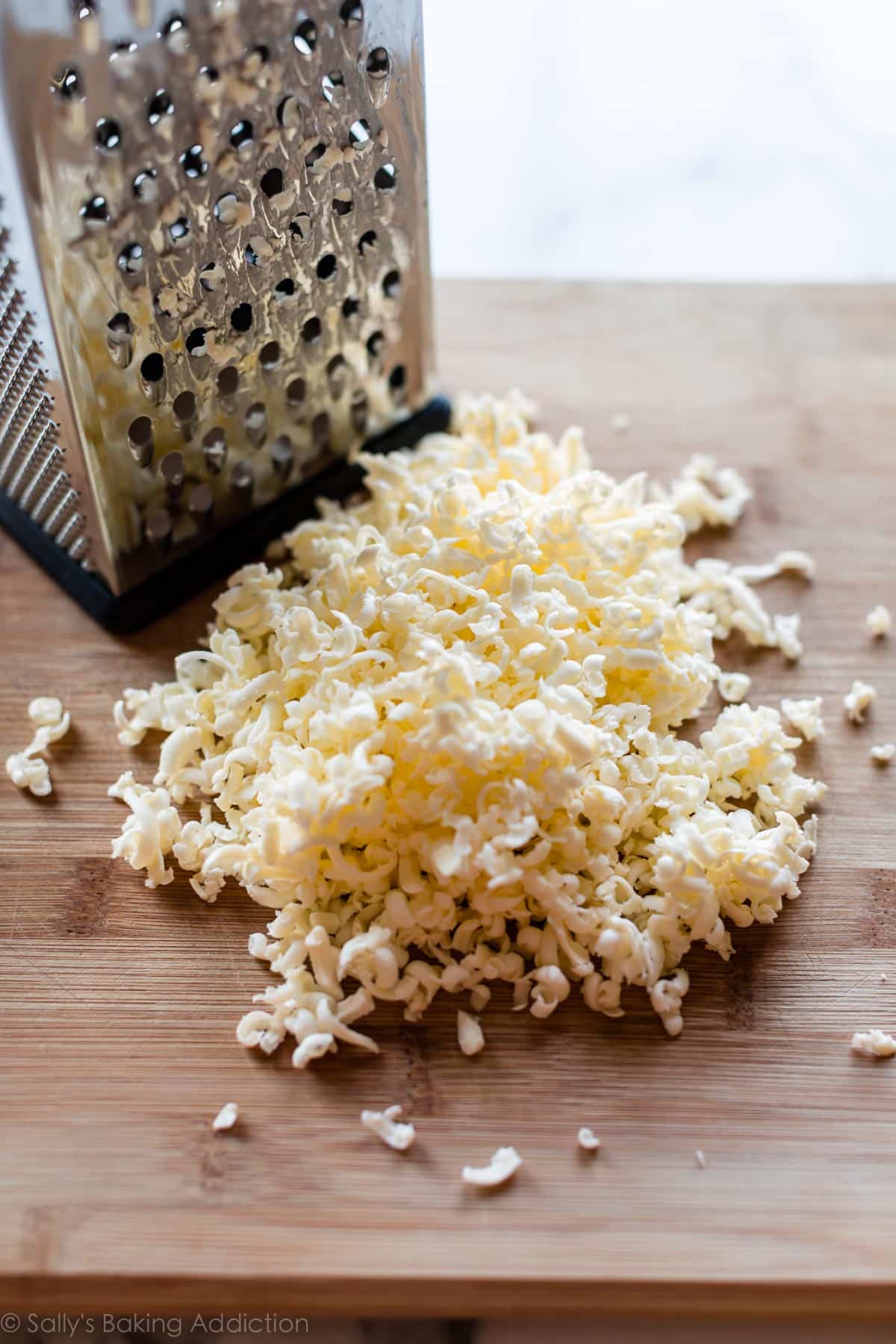
Frozen Grated Butter
Frozen grated butter is key to blueberry scone success.
Like with pie crust, work the cold butter into the dry ingredients. The cold butter coats the flour. When the butter/flour crumbs melt as the scones bake, they release steam and pockets of air. These pockets add a flaky center, while keeping the edges crumbly, crunchy, and crisp. Refrigerated butter might melt in the dough as you work with it, but frozen butter will hold out until the oven. And the finer the pieces of cold butter, the less the scones spread and the quicker the butter mixes into the dry ingredients. Remember, you don’t want to over-work scone dough.
I recommend grating the frozen butter with a box grater.
How to Make Blueberry Scones
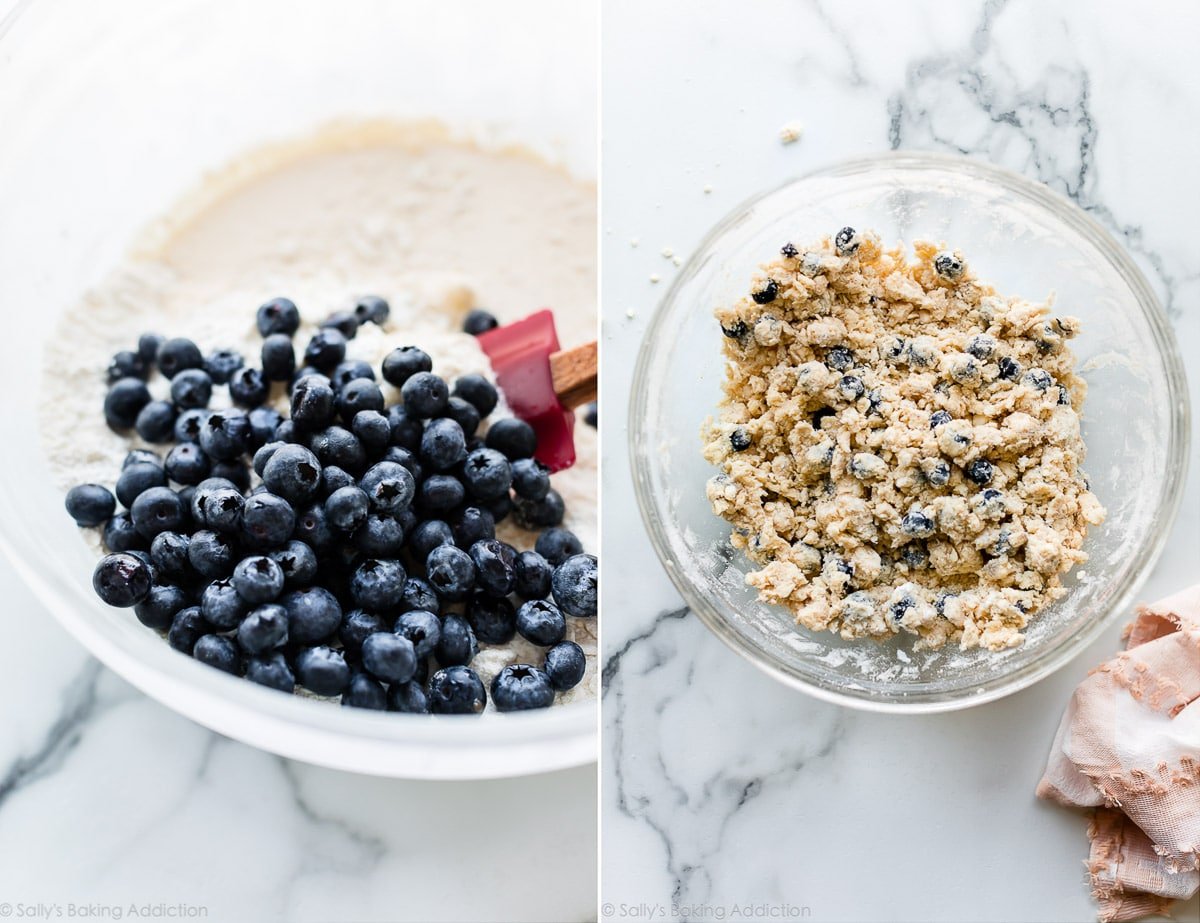
Blueberry scones are a quick and easy breakfast pastry recipe. Since there’s no yeast, they go from the mixing bowl to the oven relatively quickly. First, mix the dry ingredients together. You need flour, sugar, baking powder, salt, and cinnamon. Second, cut cold butter into the dry ingredients. You can use a pastry cutter, 2 forks, or your hands. A food processor works too, but it often overworks the scone dough. To avoid overly dense scones, work the dough as little as possible.
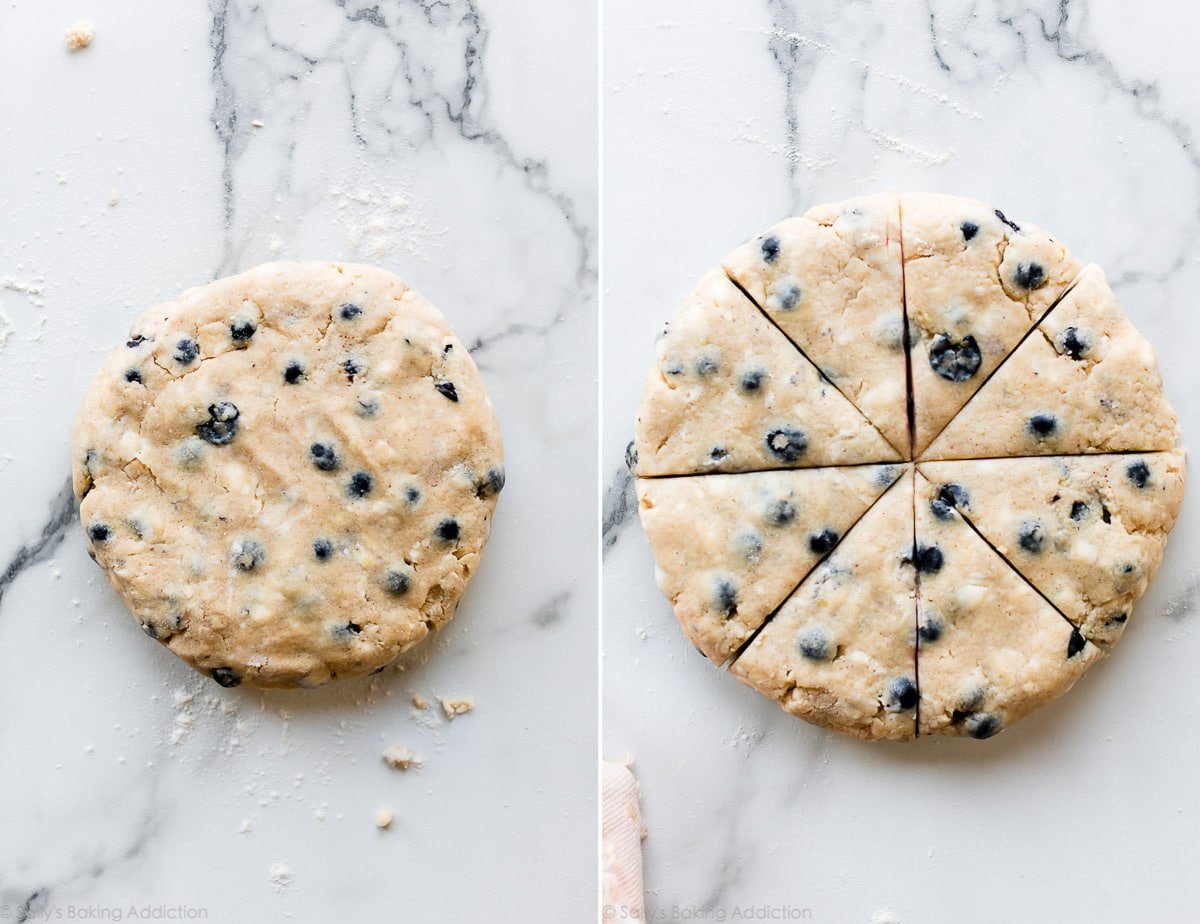
Next, whisk the wet ingredients together. You need heavy cream, 1 egg, and vanilla extract. Pour the wet ingredients into the dry ingredients, add the blueberries, then gently mix together. Form the dough into a disc on the counter, then cut into 8 wedges.
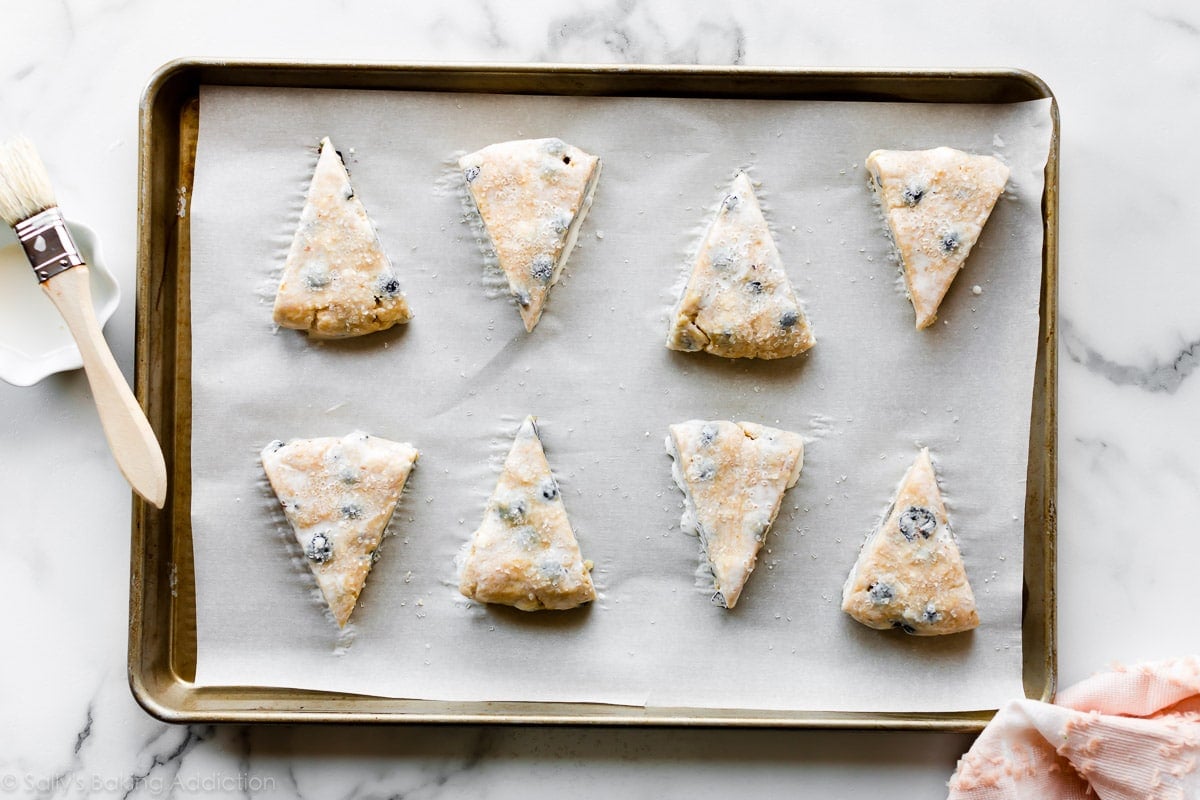
One of my tricks: To obtain a flaky center and a crumbly exterior, scone dough must remain cold. Cold dough won’t over-spread, either. Therefore, I highly recommend you chill the shaped scones for at least 15 minutes prior to baking. You can even refrigerate overnight for a quick breakfast in the morning.
After that, bake the scones until golden brown.
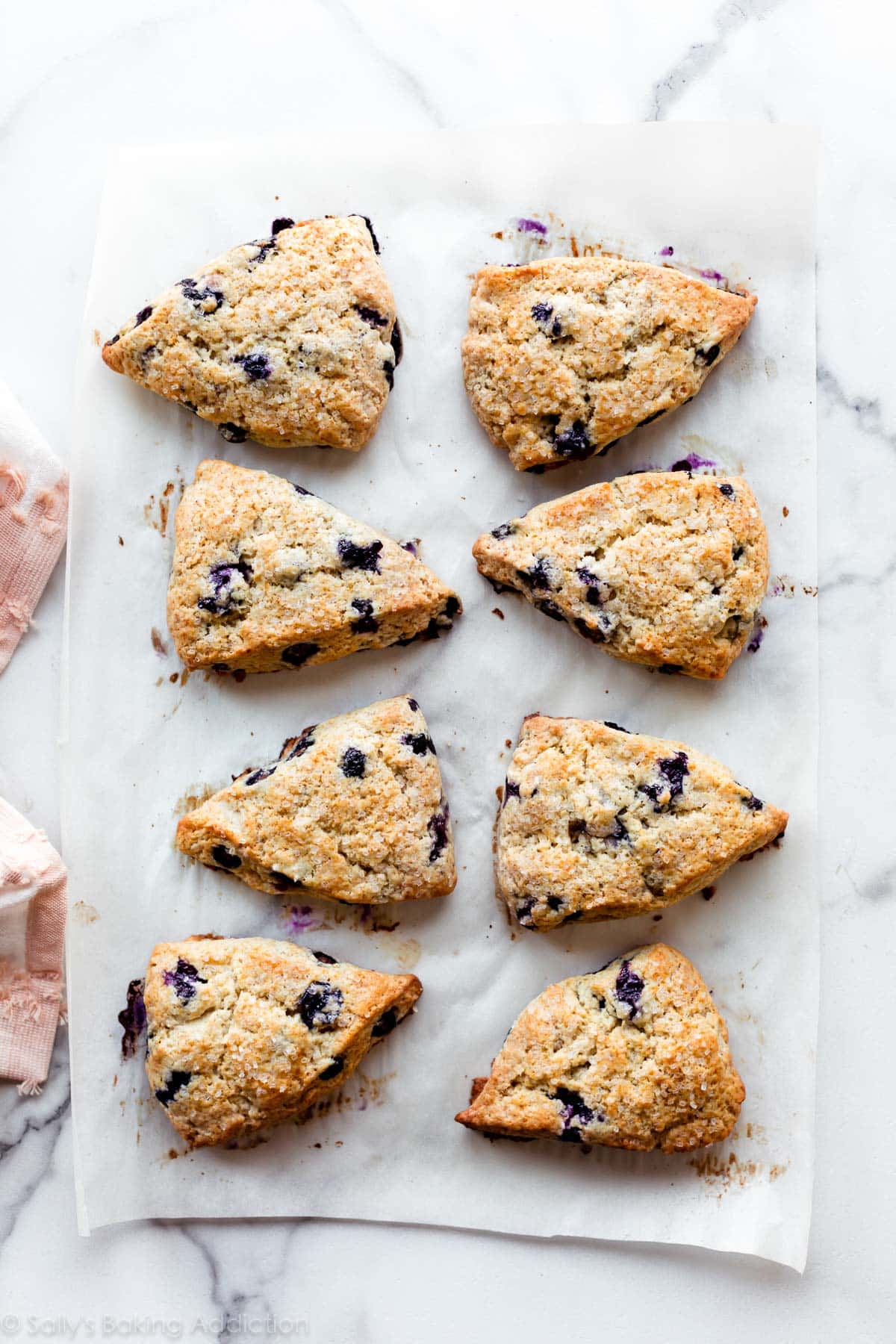


The scones are fantastic warm out of the oven, but taste even better with a drizzle of vanilla icing on top. The icing is totally optional, but you should never pass up the chance to accessorize! It seeps down into the cracks and crevices, adding even more sweet flavor. A dusting of confectioners’ sugar or pat of homemade honey butter is tasty, too!
More Essential Breakfast Recipes
Print
My Favorite Blueberry Scones
- Prep Time: 30 minutes
- Cook Time: 25 minutes
- Total Time: 1 hour
- Yield: 8 large scones
- Category: Breakfast
- Method: Baking
- Cuisine: American
Description
These better-than-the-bakery blueberry scones are bursting with juicy blueberries. They’re buttery and moist with crisp, crumbly edges and soft, flaky centers. Read through the recipe before beginning. You can skip the chilling for 15 minutes prior to baking, but I highly recommend it to prevent the scones from over-spreading.
Ingredients
- 2 cups (250g) all-purpose flour (spooned & leveled), plus more for hands and work surface
- 1/2 cup (100g) granulated sugar
- 2 and 1/2 teaspoons baking powder
- 1 teaspoon ground cinnamon
- 1/2 teaspoon salt
- 1/2 cup (8 Tbsp; 113g) unsalted butter, frozen
- 1/2 cup (120ml) heavy cream (plus 2 Tbsp for brushing)
- 1 large egg
- 1 and 1/2 teaspoons pure vanilla extract
- 1 heaping cup (140g) fresh blueberries
- for topping: coarse sugar and vanilla icing
Instructions
- Whisk flour, sugar, baking powder, cinnamon, and salt together in a large bowl. Grate the frozen butter using a box grater. Add it to the flour mixture and combine with a pastry cutter, 2 forks, or your fingers until the mixture comes together in pea-sized crumbs. See video for a closer look at the texture. Place in the refrigerator or freezer as you mix the wet ingredients together.
- Whisk 1/2 cup heavy cream, the egg, and vanilla extract together in a small bowl. Drizzle over the flour mixture, add the blueberries, then mix together until everything appears moistened.
- Pour onto the counter and, with floured hands, work the dough into a ball as best you can. Dough will be sticky. If it’s too sticky, add a little more flour. If it seems too dry, add 1–2 more Tablespoons heavy cream. Press into an 8-inch disc and, with a sharp knife or bench scraper, cut into 8 wedges.
- Brush scones with remaining heavy cream and, for extra crunch, sprinkle with coarse sugar. (You can do this before or after refrigerating in the next step.)
- Place scones on a plate or lined baking sheet (if your fridge has space!) and refrigerate for at least 15 minutes.
- Meanwhile, preheat oven to 400°F (204°C).
- Line a large baking sheet with parchment paper or silicone baking mat. After refrigerating, arrange scones 2–3 inches apart on the prepared baking sheet.
- Bake for 22–25 minutes or until golden brown around the edges and lightly browned on top. Remove from the oven and cool for a few minutes before topping with vanilla icing.
- Leftover iced or un-iced scones keep well at room temperature for up to 2 days or in the refrigerator for up to 5 days.
Notes
- Freeze Before Baking: Freeze scone dough wedges on a plate or baking sheet for 1 hour. Once relatively frozen, you can layer them in a freezer-friendly bag or container. Bake from frozen, adding a few minutes to the bake time. Or thaw in the refrigerator overnight, then bake as directed.
- Freeze After Baking: Freeze the baked and cooled scones before topping with icing. I usually freeze in a freezer-friendly bag or container. To thaw, leave out on the counter for a few hours or overnight in the refrigerator. Warm in the microwave for 30 seconds or on a baking sheet in a 300°F (149°C) oven for 10 minutes.
- Overnight Instructions: Prepare scones through step 4. Cover and refrigerate overnight. Continue with the recipe the following day.
- Special Tools (affiliate links): Glass Mixing Bowls | Box Grater | Pastry Cutter | Whisk | Silicone Spatula | Bench Scraper | Baking Sheet | Silicone Baking Mat or Parchment Paper | Pastry Brush
- Blueberries: For best results, use fresh blueberries. If you must use frozen, do not thaw.
- Over-spreading: Start with very cold scone dough. Expect some spread, but if the scones are over-spreading as they bake, remove from the oven and use a spatula to press back into shape, then return to the oven to finish baking.












Reader Comments and Reviews
Having trouble with the blueberries getting smashed when working the dough making it impossible to handle and get into a cohesive circular shape that isn’t soggy and falling apart. Any tips!
Hi Sonya, after adding the berries, you want to handle the dough very carefully! Some blueberries are more prone to breaking, especially if they’re a little over-ripe.
I have trouble with my scones spreading out and becoming kind of flat. I do all of the refrigerator steps. Any ideas why?
Thanks!
Connie
Hi Connie, We’re sorry you had trouble with this recipe; we’re happy to help troubleshoot. Make sure all of your ingredients are very cold. We recommend using frozen butter. You can even place your bowl of flour in the refrigerator. 15 minutes is the minimum we recommend chilling the dough but you can chill it longer–up to overnight. Expect some spread, but if the scones are over-spreading as they bake, remove from the oven and press back into its triangle shape using a silicone spatula. You can also try adding 2-3 extra Tbsp of flour to the dough as well. Hope this helps for your next batch!
My husband and I harvested our first blueberries of the season this morning, and I always try to make (or bake) something with what I grow in our garden (whether it be herbs, veges, etc.). This morning, it was these scones. (I’d bookmarked the recipe as one to try, but hadn’t yet.) I’ve been baking for a little while, and have just enough nerve to adjust recipes if/when necessary (I’ll substitute honey for granulated sugar when possible, for example). This time, it was using your buttermilk idea instead of heavy cream (1. Buttermilk is healthier – though I don’talways care… and 2. I didn’t have any heavy cream, so that was my option). NOTE: I used 1% milk! Not even whole! And they came out full and fluffy, perfectly cooked, light and not dry and heavy.
Now, as far as amounts of flour, etc… some are commenting on the dough, and texture, amounts, etc. Feel the dough as you work. If a recipe isn’t in grams (as all sourdough recipes are), start with a lower amount of flour and feel it as you go. It SHOULDN’T be stiff and heavy, or you’ll get dry scones. It’s a pastry dough, so it should be softer and lighter, not like bread dough. Start with the two cups, adding a little more at a time until the dough is no longer sticky, but is still soft. Also, grating the butter… I don’t have a “box grater” anymore (grew up with one, but they’re a pain in the behind to clean). I used my cheese shredder, with the big holes, and held the frozen – or very, very chilled in the freezer but maybe not quite frozen – stick of butter by the paper, until it was close enough that I had to discard the paper or add that as roughage to the scones…
I will add that I lived in England for a year many years ago, and…these scones were very close/almost as good as those I’d had for Tea, or fresh from the baker. (I say “very close or almost as good”, because in the years since I lived there, I’m certain that I have romanticized everything I ate there LOL. (Although, the English DO know their scones! And I think they would enjoy these!) They were excellent. If you struggled with the recipe, try it again. It will be worth it.
I’ve never been a scone fan, BUT this recipe is heavenly! I’m now convinced the few I’ve had in the past were made wrong. These scones were divine. I followed the recipe as written, and they turned out moist and full of flavor.
Can almond flour be used for gluten free scones?
Hi CeeGee, almond flour has very different properties than all-purpose flour in baking, so it’s not a 1:1 swap. You’d be better off trying a 1-for-1 gluten-free flour blend that’s meant to be a substitute for all-purpose flour. That said, we haven’t tested this recipe with any gluten-free flours so we’re uncertain of the results. If you give anything a try, we’d love to know how it turns out for you.
Loved the recipe! Scones always seemed like an out of reach pastry for me to make, but this made it so simple and they’re absolutely delicious.
Has anyone tried to make mini/smaller portion? How did the baking time adjust?
Can I use buttermilk in place of the heavy cream?
Hi Sarah, yes, that will work here.
Can I use a food processor to mix in the butter?
Thanks!
Hi Brenda, you can use a food processor. Just be careful not to overwork the butter into the flour. Enjoy!
My first time baking scones and it certainly won’t be my last! They came out beautifully. Thanks for another excellent recipe, Sally!
These blueberry scones are beyond awesome! Only thing I did different was to put the blueberries in the dry ingredients before pouring in the wet ingredients. Coated the blueberries better…I’m going to shared some with my neighbor!! I love all of your recipes!!!! Thanks!!
MAKE SURE YOU HAVE HEAVY CREAM OR YOU ARE DONE!!
SERIOUSLY!!!
IT WILL BE VERY STICKYYYYYY!!!!!