

Become a better baker by learning the similarities and differences between baking powder vs. baking soda. In this article and accompanying video tutorial, you’ll learn why and when to use one or the other (or both!), in easy-to-understand language—no chemistry degree required!

If you’ve ever wondered about the difference between baking powder and baking soda, and why some recipes call for one or both, you’ve come to the right place. Understanding the science behind this simple question is essential to your baking recipes turning out as expected.
The main difference between baking powder and baking soda is that baking soda is pure sodium bicarbonate and requires an acidic ingredient to activate, while baking powder already contains both an acid and a base and only needs liquid to work. Both are leavening agents that help baked goods rise, but they are not interchangeable.
Can I Substitute Baking Powder for Baking Soda (& Vice Versa)?
One of the most common baking questions I’m asked is whether you can substitute baking powder for baking soda. The simple answer is no. They’re both leaveners, whose primary function is to make baked goods rise in the oven, but they are chemically different.
If there is one thing that you take away from today’s lesson, let it be this: baking powder and baking soda are not the same, and you should not substitute one for the other in a recipe.
5 Min. Video: Baking Powder vs Baking Soda
What Are Leaveners?
Baking powder and baking soda are both chemical leavening agents. You use leavening agents—or leaveners—in baking because they help the dough or batter to rise and expand. These two white powders are both made from the chemical sodium bicarbonate, which, when combined with an acid, produces carbon dioxide (CO2). That gas is what lifts up your baked goods in the oven.
(FYI: Some examples of natural leavening agents are yeast, eggs, sourdough starter, and steam.)
What Is Baking Soda?
Let’s start with baking soda, aka bicarbonate of soda.
Baking soda is pure sodium bicarbonate, with nothing else added.
Do you remember the model volcano experiment from grade school science class, where you mix baking soda with vinegar and get an eruption of bubbles? When you mix baking soda, a BASE (pH value above 7), with vinegar, an ACID (pH value below 7), you get a chemical reaction: an eruption of bubbles. A product of this reaction is carbon dioxide.
The same reaction happens in our cookies, cakes, and muffins. When a recipe calls for baking soda, it usually calls for some type of ACID. Common acidic ingredients include buttermilk, brown sugar, yogurt, vinegar, cream of tartar, molasses, applesauce, honey, natural cocoa powder (not Dutch-process cocoa), and lemon juice.
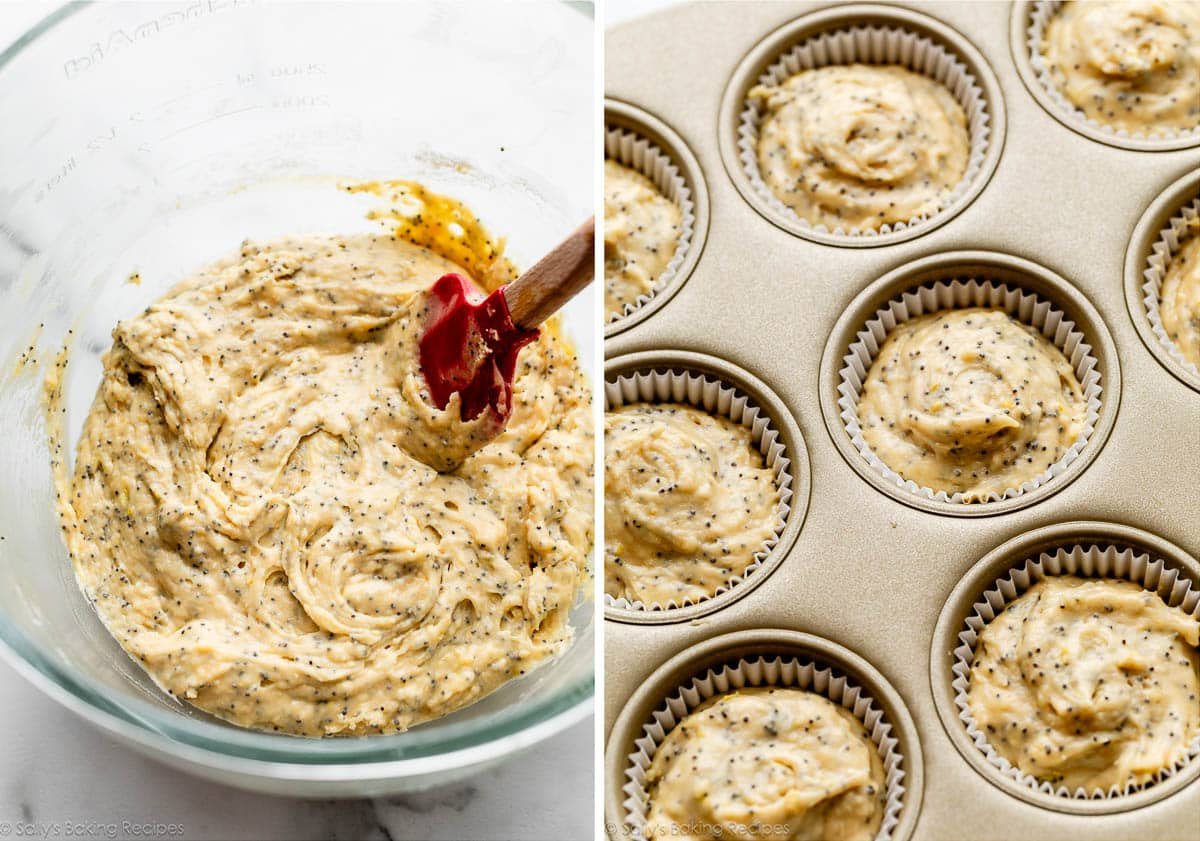
You need this ACID in the recipe to react with the baking soda, which creates carbon dioxide and allows your baked good to rise. Like this no-yeast bread (soda bread), which gets all its lift from the chemical reaction between baking soda and buttermilk.
Baking soda also helps baked goods brown better by raising the pH level of the batter. Creating a more alkaline environment speeds up the chemical reaction that happens between sugars and amino acids in the presence of heat, which causes browning and develops flavor. In fact, it’s part of the reason we boil homemade soft pretzels in a baking soda bath before baking. Pale pretzels aren’t nearly as appetizing!
Baking soda is about 3–4 times stronger than baking powder, so you don’t need as much. More baking soda in a recipe doesn’t necessarily mean more lift. You want to use *just enough* to react with the amount of acid in the recipe. Too much baking soda and not enough acid to neutralize it will give your baked goods a metallic, soapy aftertaste.
A good rule of thumb for baking is to use around 1/4 teaspoon of baking soda per 1 cup (125g) of flour.
What Is Baking Powder?
Now let’s talk about baking powder.
Baking powder is a mix that contains baking soda, as well as a dry acid to neutralize it—typically cream of tartar—and sometimes cornstarch (a drying agent).
Because baking powder already contains an acid to neutralize its sodium bicarbonate, it is most often used when a recipe does not call for an additional acidic ingredient, like sugar cookies or scones.

However, this isn’t always the case. You can still use baking powder as the leavening agent in recipes calling for an acidic ingredient, particularly when you want the flavor of the acidic ingredient to shine through, like in a lemon pound cake.
Because it’s a mix, baking powder isn’t as strong as baking soda. A good rule of thumb is to use around 1 teaspoon of baking powder per 1 cup (125g) of flour.
What Is Double-Acting Baking Powder?
Most baking powder sold today is “double acting.” This means that the first leavening occurs when baking powder gets wet—like when you combine the dry and wet ingredients in the recipe.
The second leavening occurs when the baking powder is exposed to heat. This is why it’s usually best to bake a batter right away—because the baking powder has already been activated.
An exception to this rule is pancakes, when I recommend letting the batter sit for a few minutes before cooking. You want to give the first activation a little time to start working before you add heat, to get those bubbles going so your pancakes rise up nice and fluffy in only a few minutes on the hot griddle.

Why Do Some Recipes Call for Both Baking Soda and Baking Powder?
The simplest answer is that sometimes you need more leavening than you have acid available.
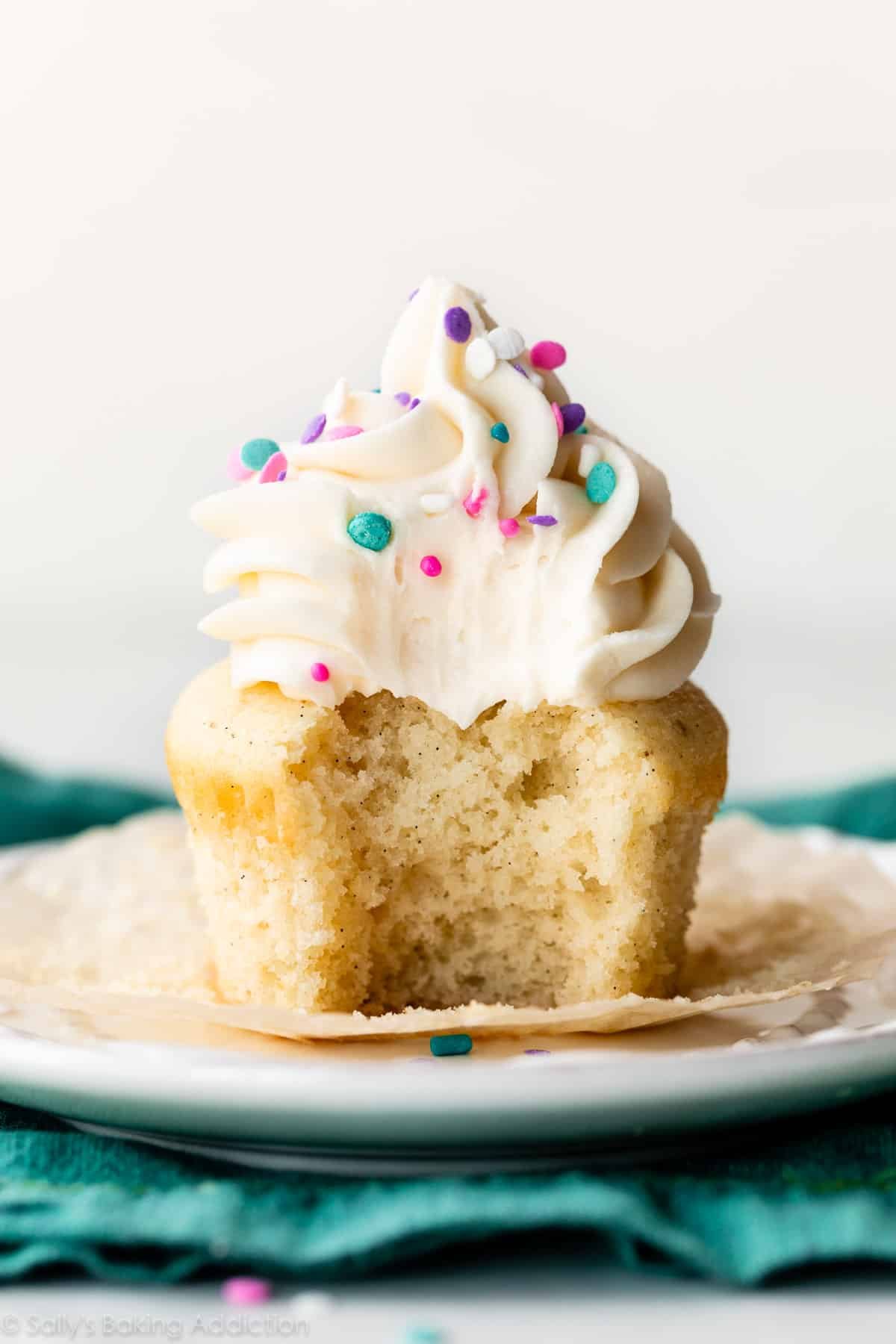
If a recipe contains an acid, like the sour cream in my vanilla cupcakes recipe, but the carbon dioxide created from the acid + baking soda is not enough to leaven the volume of batter, we need to add baking powder as well, for necessary lift.
Another example for using both is my buttermilk pancakes recipe. In this recipe, you use buttermilk partly for its tangy flavor. If we used only baking soda, it could neutralize all of the buttermilk’s acid and we’d lose that tanginess! However, by including baking powder as well (which has its own acid), some of the buttermilk’s flavor is left behind, and there is still enough leavening for fluffy pancakes.

Another reason to use both baking powder and baking soda is because in addition to causing the baked good to rise and expand, they also affect both flavor and browning.
Let Me Show You the Difference
To demonstrate the importance of using the right amount and type of leavener in your baking recipes, I made 3 batches of vanilla cupcakes.

- I made the cupcakes as written, with 3/4 teaspoon of baking powder and 1/4 teaspoon of baking soda, which is the perfect balance for this batter.
- I made the cupcakes with 1 teaspoon of baking powder. It didn’t brown enough, and it baked up short and squat because it didn’t rise enough because baking powder isn’t as strong as baking soda. The texture was gummy and dense.
- I made the cupcakes with 1 teaspoon of baking soda. You can see that it browned too much, and also sank in the middle because the baking soda is too strong and there wasn’t enough acid in the batter to neutralize it. And—you’ll have to take my word for this—it tasted AWFUL!

Follow the recipe as written with the combination of baking powder and baking soda for simply perfect vanilla cupcakes. 🙂
Make Sure They’re Fresh
No matter which leavener you’re using in your baking recipe, I recommend replacing baking powder and soda every 3 months, to make sure they’re fresh.
If you don’t bake often, you may need to test your baking powder and soda for effectiveness before using.
How to Test Baking Powder for Freshness
To test baking powder, pour 3 Tablespoons of warm water into a small bowl. Add 1/2 teaspoon of baking powder. Give it a stir. The mixture should moderately fizz if the baking powder is effective.
How to Test Baking Soda for Freshness
To test baking soda, pour 3 Tablespoons of white distilled vinegar into a small bowl. Add 1/2 teaspoon of baking soda. Give it a light stir. The mixture should rapidly bubble if the baking soda is effective.
Common Baking Soda vs. Baking Powder Mistakes
- Using baking soda without enough acid = metallic taste
- Using baking powder instead of baking soda = poor rise
- Using expired leaveners = flat baked goods
- Too much baking soda = soapy or bitter flavor, excessive browning
- Too much baking powder = chemical taste or collapsed baked goods

Key Takeaways:
- Baking soda is pure sodium bicarbonate. Use baking soda when the recipe calls for an acidic ingredient.
- Baking powder contains baking soda, plus other ingredients, including a dry acid. Use baking powder when there’s no additional acidic ingredient in the recipe.
- If your recipe calls for both baking soda and baking powder, there’s a reason for that, so be sure to follow the recipe.
- Both leaveners are initially activated when combined with wet ingredients, so bake right away, unless your recipe instructs otherwise.
- Keep it fresh: Replace your leaveners 3 months after opening.
Remember that baking is science and it takes practice, trial and error, and the willingness to learn in order to succeed. If you’re interested in learning more, head on over to the Baking Tips section of my website. Here are just a few of the many helpful articles and video tutorials you will find there:












Reader Comments and Reviews
Not boring at all! Fascinating! I’ve been perplexed why some of my cakes don’t rise as expected and this is a possible explanation. Could I ask you to review your recipe for Lemon Blueberry Cake? It calls for buttermilk and baking powder, but I think that baking soda would be a better levening agent, based on your explanation. Iill probably repeat the recipe but use a combination of baking powder and baking soda to ensure that there’s some ‘tang’ left after baking.
Hi Ellen! We love the slightly denser texture of our lemon blueberry cake, but if you want more height, try reducing the baking powder down to 2 and 1/2 teaspoons and adding 1/2 teaspoon baking soda. Hope this is helpful!
Your article on Baking Powder vs. Baking Soda was fantastic! Thank you! I am a Food Tech teacher of teenagers and this will help explain the difference in simple terms to them. It will also allow me to demonstrate different tests and uses where they can see the different effects! Thank you!
So glad to read this, Emma-Lee!
So just to clarify, if I’m making dough ahead of time and want to freeze it, it’s NOT a good idea to do this with a recipe in which I used double acting baking powder? Thanks!
Hi Mandy! Generally, yes, that is correct.
Sally, by God, you may turn me into a baker after all!!!
Miraculous
I adore your site. Thank you!
ANYTHING but bored..trying to understand based in what you wrote one of my favorite bread loaf recipes uses only baking soda and no acid? Hmmm (I loved science class)
THANKS for all you do!
https://www.kingarthurbaking.com/recipes/english-muffin-toasting-bread-recipe
Hello Sally, thank you for this helpful article. Your explanation is clear and interesting. No boredom here, only happy reading!
Thanks so much for clearing up the difference between baking powder/soda
Hi,
The only cake flour we have in the UK is self-raising. When using it for your recipes that call for cake flour, how do I adjust the baking powder and baking soda ingredients?
Hi Vanille, We don’t recommend using self rising flour in our recipes. It would take additional recipe testing for us to ensure accurate results. Instead, you can make your own cake flour substitute for most recipes that call for it.
You did Not bore me at all! I am so happy to read the “Why” of cooking ingredients and methods! Thank you for sharing your knowledge and super terrific recipes…..I am obsessed with homemade cookies too!
Hi Sally, had to leave a comment just because you ended the article with: That’s it for today! Did I completely bore you? Hello?
So I must chime in that you absolutely didn’t! Not only did I find this absolutely fascinating, I now understand why, when taxed with finding a new buttermilk biscuit recipe since I lost mine… and combing through to find one that didn’t call for baking soda in addition to powder because I didn’t have it and didn’t want to keep it on hand, my biscuits did NOT turn out. (I also overworked them but that’s besides the point ) now I understand the science if it! Thank you Sally!
This article and the article comparing dutch to regular cocoa were wonderful. Years ago I received a cookbook called the Cake Bible by Rose Levy Beranbaum. In it she talked about the same type of things for how and why her recipes were the way they were, science and specifically chemistry. Her book and your articles make me a better baker, not professional by any stretch, but a better enthusiast. Thank you very much.
thanks for educating us on the difference in baking soda and baking powder
I made a humming bird cake. The layers turned out flat and dry. Any Suggestions?
Hi Earline, we have some troubleshooting tips on this post about how to prevent a dry or dense cake. Hope the next one turns out better!
Off topic, I love you. Any time I need a recipe for anything baked I come to your site, and I now make the absolute best biscuits around (and cakes and muffins and cookies).
Thanks so much for the well written article. It really explained everything succinctly and just wanted to make my appreciation known! I’ve always been so confused about the two and found baking daunting because of all the terms and long list of ingredients but thank you for making things understandable!
I found this article very informative. I wanted to have a copy for my collections but can’t figure out how to print one off without loosing some of the content. Is there a way to simply get a version to ‘print’? Or can you tell me which one of her cookbooks will have this info in it?
Hola sally’s me gustaría saber si el bicarbonato de sodio
hace que se desmigue el pastel… por que he notado que la receta de pastel de chocolate se desmiga bastante
O sucede esa reacción que se desmiga cuando una receta lleva ambos ingredientes juntos bicarbonato y polvo de hornear?
¡Hola! Estoy usando un traductor, así que lo siento si mi traducción no es buena. El bicarbonato de sodio no necesariamente hace que un pastel se desmorone. Usar demasiado de cualquiera de los dos podría ser el culpable, pero también podría ser demasiado horneado o incluso demasiada harina.
This might be one of the most usefully informative articles I’ve read. Fantastic job!
Hallo Sally, I don’t like using cups or spoons (I’m Dutch :-). Can you tell me how many grams is one teaspoon of bakingpowder and baking soda? There are too many sites and too many answers.
Hi José, One teaspoon of baking powder should weigh 4g and one teaspoon of baking soda should weigh 6g.
Do you have a printable version of this article: Baking Basics: Baking Powder vs Baking Soda. I would really like to have a copy of it to have for reference. I don’t cook/bake often but it seems like my recipe for my mother’s molasses cake never turns out like it did when she made it. (Unfortunately she’s no longer here to help me.) Or do you have a specific cookbook that contains this information?
Hi Marcia, We do not have a printable version of this page, but it’s a great idea and we hope to have something to print off for this post in the future!
Thank you so much for your time, your effort to make us understand the cooking
Process .
I love to bake, I have learned A lot from
Sally.
The tip to frees the dough when making cookies is the best , it makes a big difference .
Thanks
I have a recipe for New Northland cookies that has no acidic ingredients but calls for baking soda (you can Google this) Should I substitute baking powder?
I think I read that brown sugar serves as the acid. I’m not sure why but that was one of the ingredients in the article so I think you’re good to follow the recipe!
Baking powder is normally comprised of aluminum, I was kind of surprised to see that wasn’t mentioned in your description of it. I have completely stopped using it and instead “make my own” with baking soda, cream of tarter and cornstarch. It might be nice for the information about aluminum to be included in your post, as many people don’t realize that this neurotoxin is found in so many baked goods because of the baking powder. Reducing aluminum intake wherever possible is a good thing.
Hi Sally,
I also thank you for this great information. I did not know this.
My problem is I need to reduce the sodium. Both Baking Pwd. and Baking Soda are quite high and I have some recipes (a apple cake for example) I like and would like to try to reduce the amount of sodium so I can still eat this wonderful cake.
Which product would I be able to reduce most successfully? Or should I try reducing both by the same percentage and would this work without reducing the yogart or apples?
DJ
Hi Deb, Without knowing the exact recipe you are using, it’s difficult to say how you can adjust the ingredients. You can certainly experiment with reducing the leaveners in your apple cake but know that it may not rise as much. If you don’t wish to use your time and ingredients testing your recipe, you may wish to find one that is written specifically to be low in sodium.
I have a cake recipe that calls for adding the baking soda directly to the buttermilk, but this seems odd to me. Intuition tells me the baking soda should be mixed in with the dry ingredients, then add the buttermilk. What do you think?
That’s how we usually add it (with the dry ingredients) but without seeing the recipe it’s hard to say what the authors intention for that order is!
I find this article and the reviews very interesting. I just used the chocolate cake recipe on the back of the Swans Down cake flour. This recipe calls for baking soda, no the baking powder, however, it has a cup of sour cream, brown sugar instead of white sugar. I added 1 1/2 tsp. of baking powder anyway since I know cakes need baking powder to give that high lift. I also add a 1 1/4 teaspoon of freeze dried coffee to enhance the chocolate flavor. I looks like it rose very well. I hope it taste as good as it looks.
Thanks alot. Love the explanation, quite easy to understand.
Hi Sally + team
I made muffins today. The recipe had 2 ¼ cups flour, 2 tsp baking powder and ¼ tsp baking soda. I thought ¼ tsp b.soda for 2 cups flour would be the right amount but apparently not. The muffins came out beautifully soft and fluffy but they had a *very slight* metallic taste. Do you think I should reduce the baking soda? (The recipe also has yogurt hence the b.soda)
Hi Al! Usually the metallic taste will come from the baking powder – we recommend searching for an aluminum free baking powder or reducing the baking powder next time. Let us know how it goes!
Hi Sally
I have a question about baking powder
I’m from Australia and I stumbled on to to your website after learning about “double acting baking powder” (DABP) as I had just made a batch of muffins and of course once you start researching the WEB you pretty much bounce around from site to site.
Now, DABP isn’t common in our supermarkets but it is available if you look. I believe i do have an understanding of how baking soda and BP work, but what I don’t understand is what the difference in the “aluminium free” (AF) DABP besides the metal taste of course. My research was going well right up to “AF”, I got confused because I want to trial chilling my muffin batter overnight in the fridge and to my understanding (and please accept my apologies in advance if I got it wrong) if it’s AF then it doesn’t work as well? I rephrase my question another way just in case I’m not asking the correct question. If I’m chilling muffin batter does “DABP” work the same way as “DABP AF”, which do I use?
Hi Sophia, we never recommend making muffin batter ahead of time with either kind of baking powder. It will activate too early and the muffins won’t rise properly when baked. It’s best to bake quick breads and muffins right after mixing the batter.
When substituting black pearl cocoa for regular cocoa in a chocolate Guinness cake, which calls for 2 1/2 top baking soda, how do I adjust? The cake takes 1 1/2 hours to bake with soda instead of 45mins to 1 hr. Do I add baking powder or and more acid (vinegar) to the mix? Using black pearl cocoa and regular cocoa gives it a lovely color and taste. Looks just like Guinness.
I read this and your explanation about natural cocoa v. “Dutch” cocoa, too, and I want to compliment you for the interesting and very useful information you share. I will now be able to use your teaching in my ongoing exploration of how to make GF vegan baked goods. Many thanks!
I love the way you explained the differences between different ingredients n the reasons behind the usage.
Excellent explanation. About time that i learn whats the difference. Thnks Sally.
I’m baking chocolate chip cookies at high altitude 8200 feet). I’ve made the usual elevation adaptations but they’re still a bit flat and not chewy enough. Can I add a bit of baking powder to the recipe (I’ve reduced the 1tsp baking soda to 3/4 tsp already)?
Hi Linda, we wish we could help, but we have no experience baking at high altitude. Some readers have found this chart helpful: https://www.kingarthurflour.com/learn/high-altitude-baking.html If you do decide to experiment with adding baking powder, feel free to comment back about how it worked — other bakers at high altitude may find it helpful!