These homemade garlic knots are extra soft and flavorful, and use a dough similar to this reader-favorite pizza dough. Top with garlic herb butter before AND after baking for the tastiest knots!
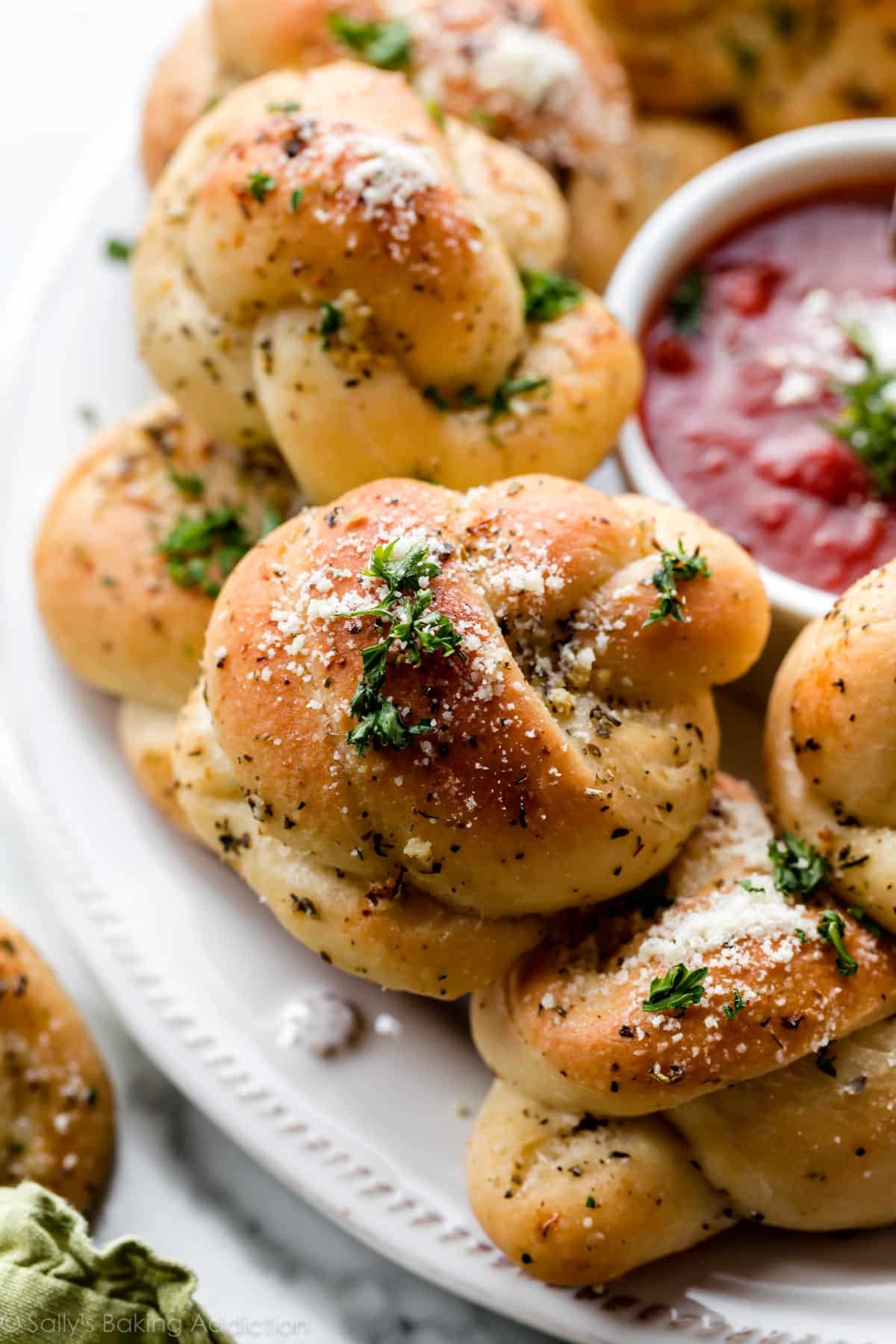
I originally published this recipe in 2020 and have since made a few changes to improve the texture and flavor of the dough, which are reflected in the recipe below. This recipe is brought to you in partnership with Red Star Yeast.
Tell Me About These Garlic Knots:
- Made from an easy homemade dough
- Leftovers freeze beautifully
- Super soft and fluffy
- Golden brown
- Extra garlic butter
And I know you’ll appreciate this too: You can use the entire batch of dough for 16 knots OR you can use half of the dough to make a pizza or stromboli, and then have 8 knots on the side. Perfect for pizza night—no delivery required.
One reader, Michelle, commented: “These were perfect! Brushing on the garlic butter before baking makes such a difference. These are near foolproof! So fluffy and delicious! ★★★★★“
One reader, Catie, commented: “My husband agrees—best garlic knots ever! This recipe works! ★★★★★“
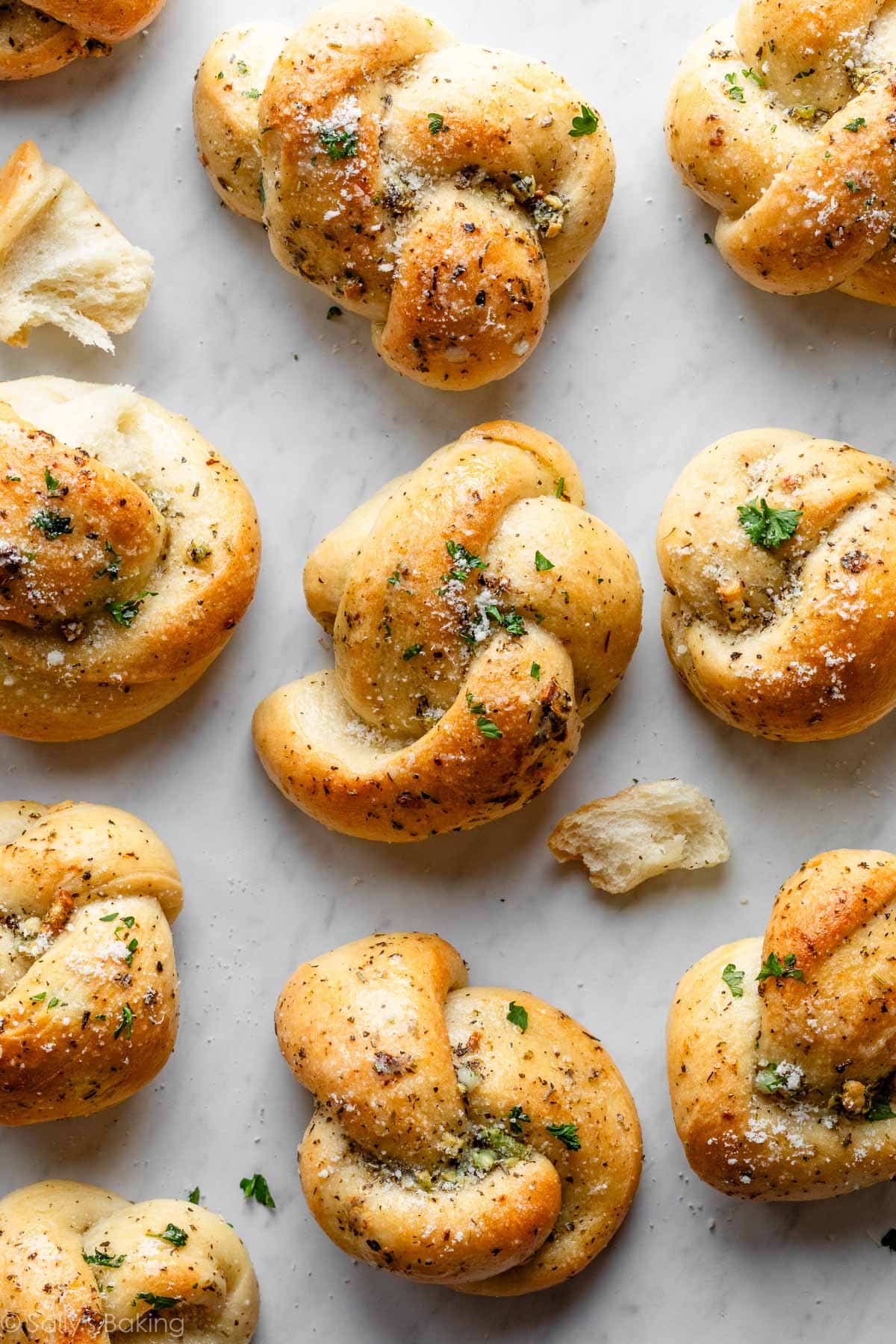
Garlic Knots From Pizza Dough
You can make these garlic knots with 1 or 2 pounds of store-bought or homemade pizza dough. Today’s dough is very similar to my homemade pizza dough, which yields about 2 pounds of dough. You can make 16 knots or 1 pizza + 8 knots. If you only need about 8 knots, freeze the other half of dough for another time. You will want to make these garlic knots again.
- Besides garlic knots and pizza, you can use this dough for cheesy breadsticks, pepperoni pizza rolls, and ham & cheese pockets too! So versatile.
Compared to my pizza dough, I reduced the water so the dough is easier to handle when shaping into knots. I add 1 extra Tablespoon of olive oil for a little extra flavor and richness, and include garlic powder too. Sometimes for extra flavor I use butter instead, similar to what I do when making homemade breadsticks. Either one works. (Melted butter in the dough is convenient because you also need melted butter for the topping.)
Even though store-bought dough is convenient, I encourage you to try homemade dough. The dough requires so few ingredients!
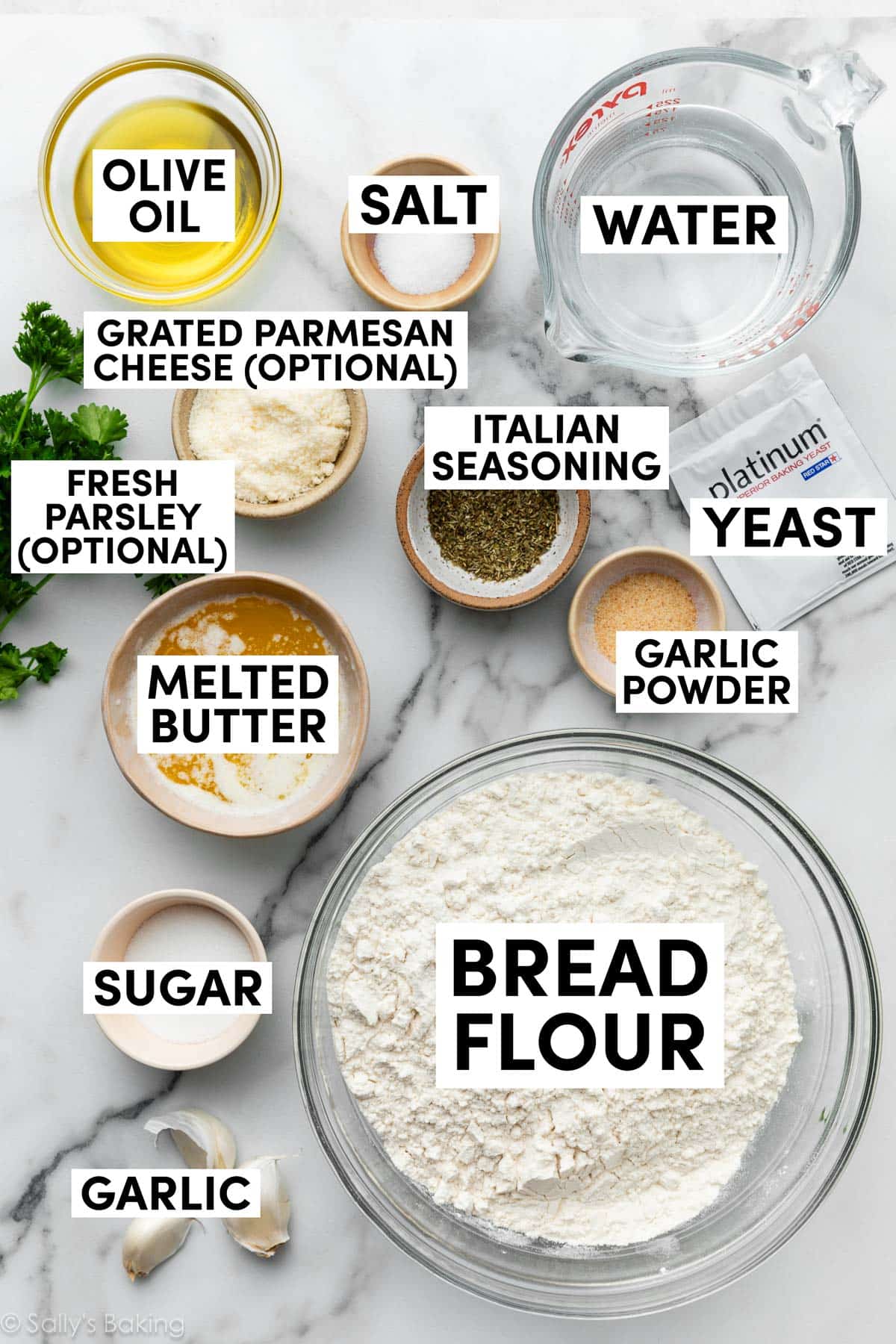
Ingredients You Need:
- Water: Use warm water here, to activate the yeast.
- Instant Yeast: I always use Platinum Yeast from Red Star. If you’ve been baking my yeast breads for a while, you know I swear by it! Its careful formula strengthens dough and makes working with yeast simple. You can use active-dry yeast instead; the rise time may be a bit longer.
- Sugar: To feed the yeast.
- Olive Oil: Or melted butter.
- Salt: Can’t make flavorful bread without salt!
- Garlic Powder: We’ll top the knots with fresh minced garlic, but you can use garlic powder in the dough.
- Bread Flour: The original recipe called for all-purpose flour, but we find that bread flour makes for a better texture. If you don’t have any, you can use all-purpose instead.
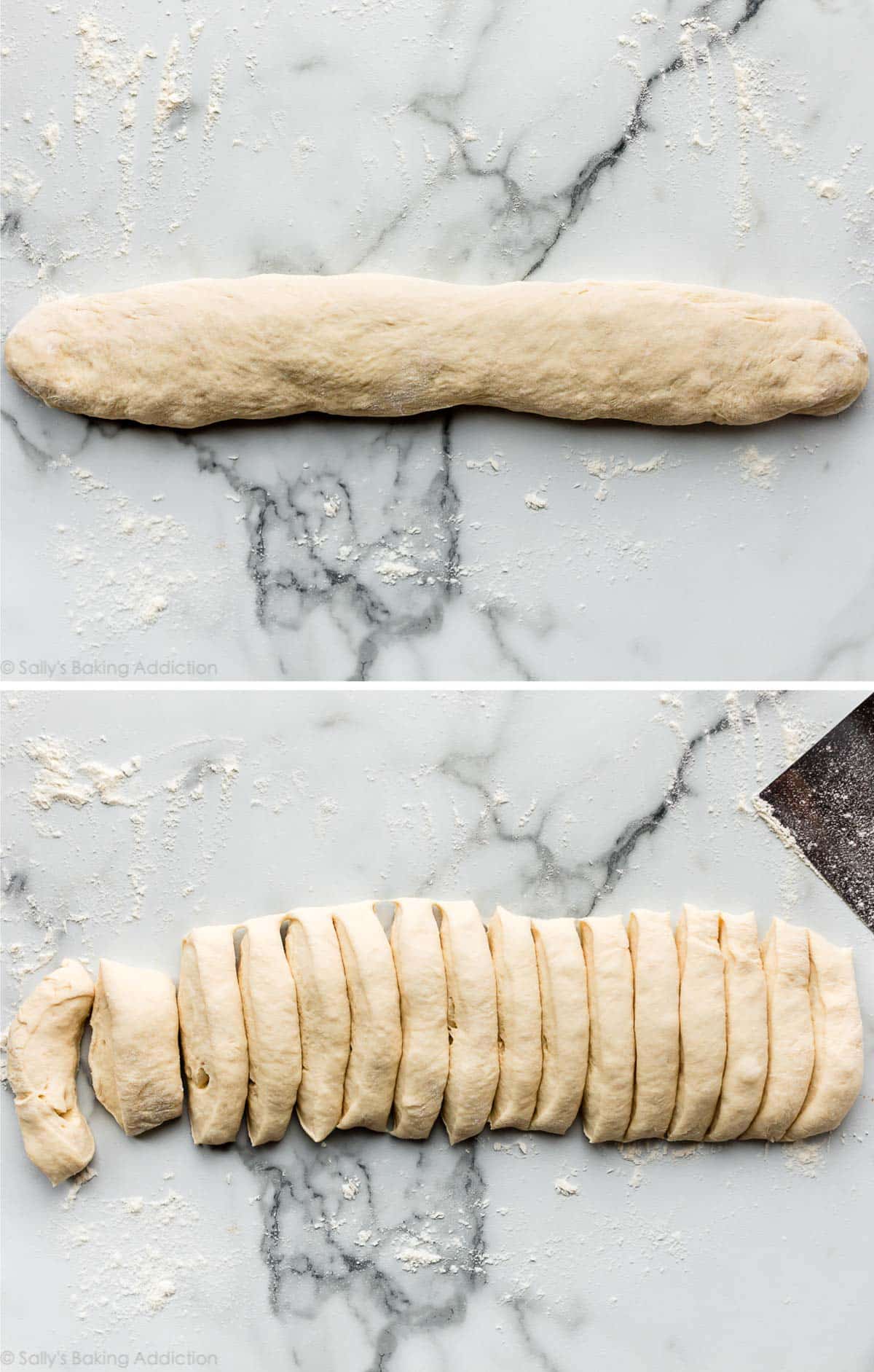
Let Me Show You How to Shape Garlic Knots
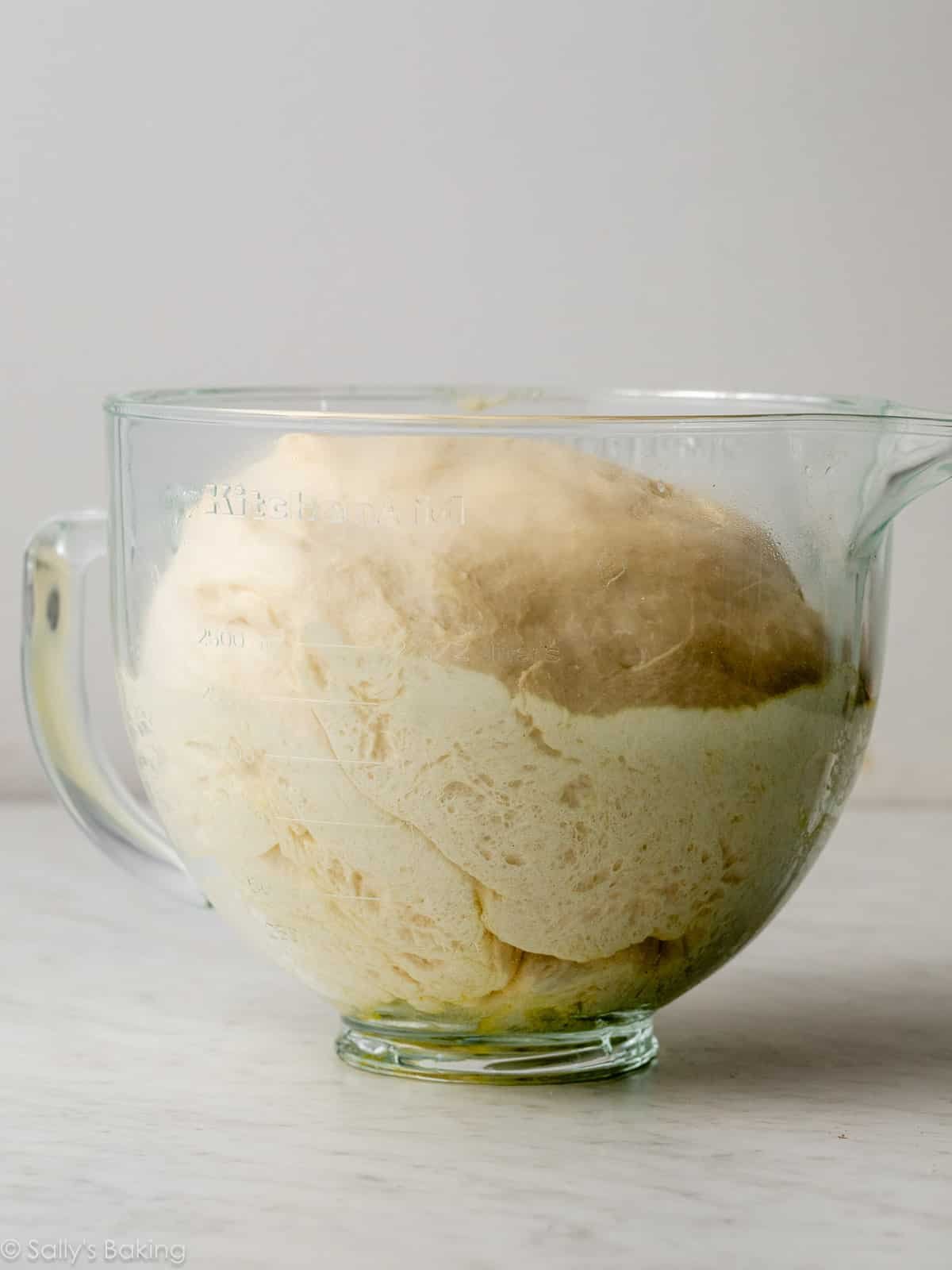
After the dough rises, punch it down to release the air. Then begin shaping the dough. If you know how to tie a knot, you can shape garlic knots.
- Shape into a 16-inch log: Using your hands, shape the dough into a 16-inch log. No need to use a rolling pin because this doesn’t need to be perfect.
- Cut into 16 pieces: Cut the log into 16 1-inch sections of dough.
- Roll each piece into an 8-inch rope.
- Tie the rope into a knot.
Here are step-by-step pictures of the shaping process. It’s a lot easier than it sounds, and you don’t need any special tools.
Shape each rope into a knot:
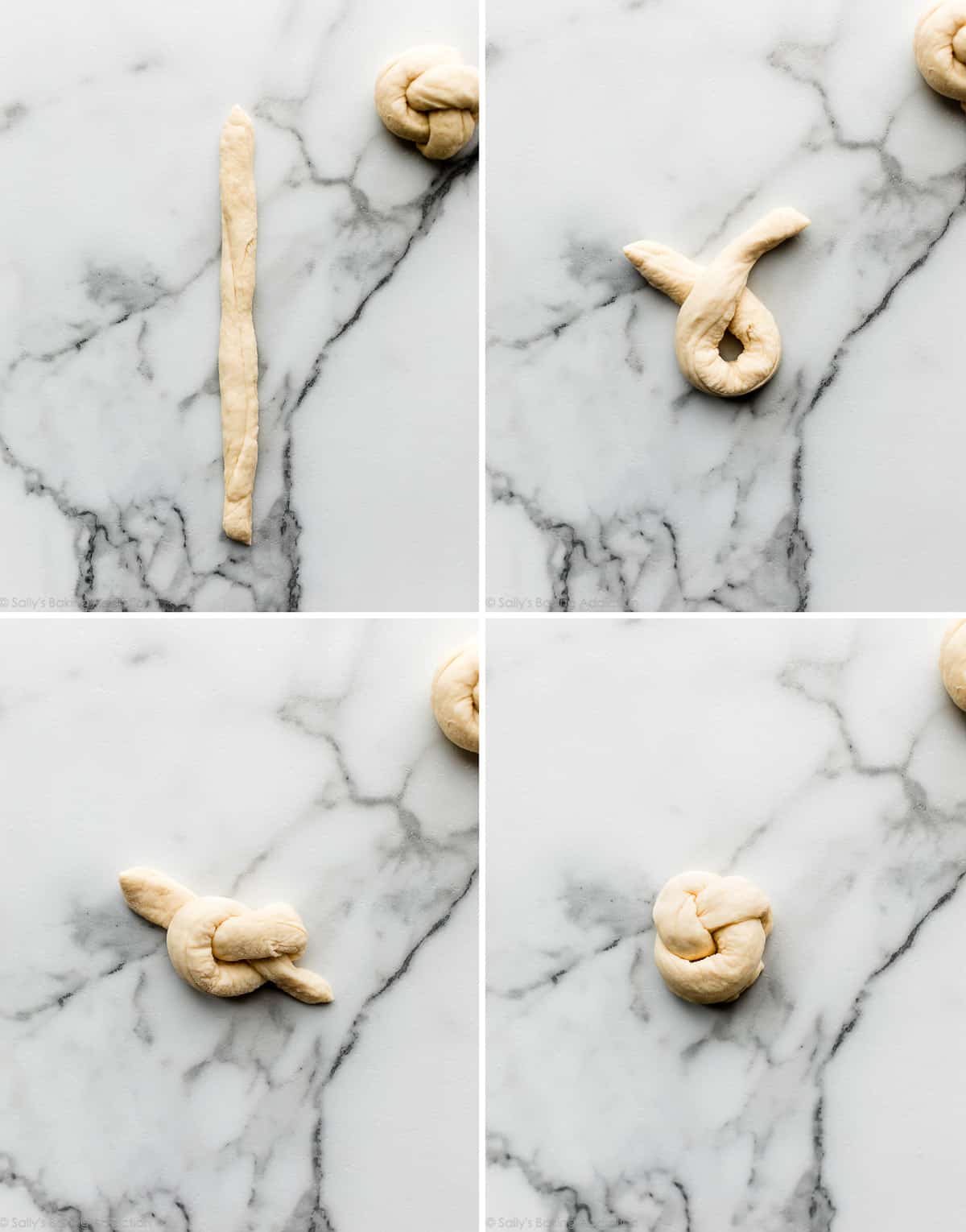
You can tuck the ends underneath the knot or leave them out—that’s totally up to you. The ropes are longer when making soft pretzel knots, but tying the knot is the same.
Let the shaped knots rest for about 30 minutes before brushing with garlic butter and baking.
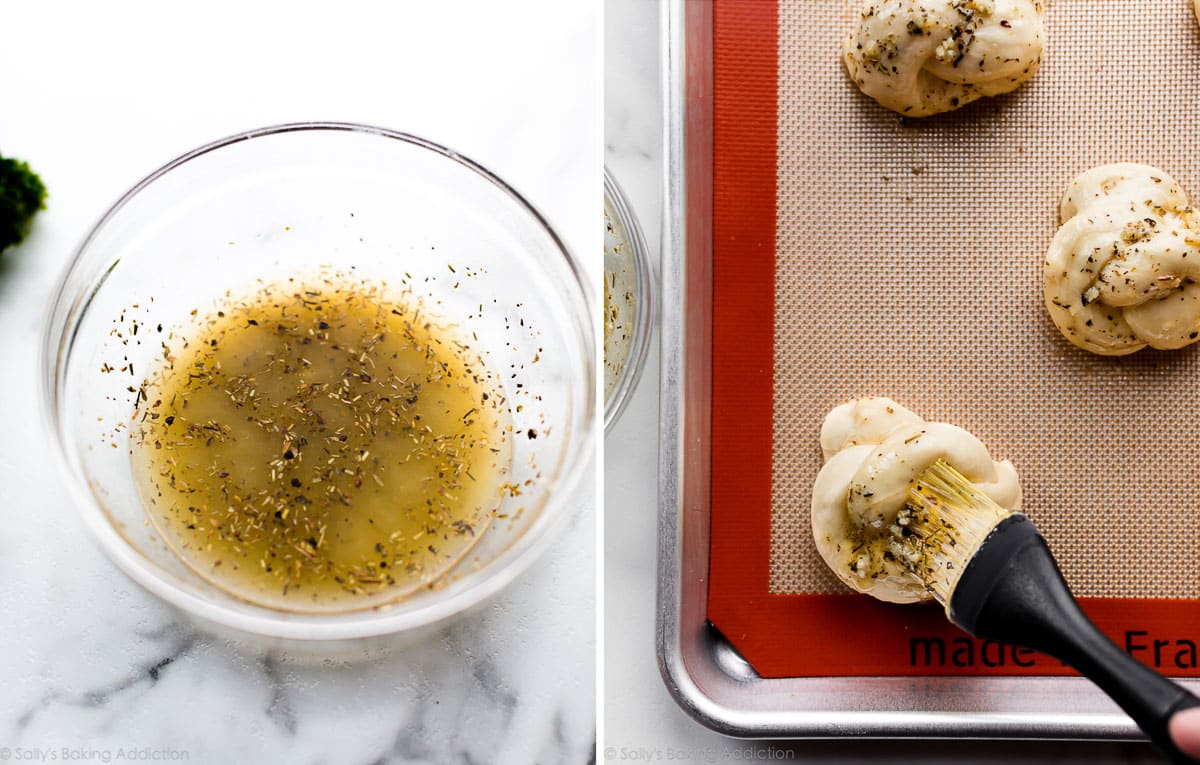
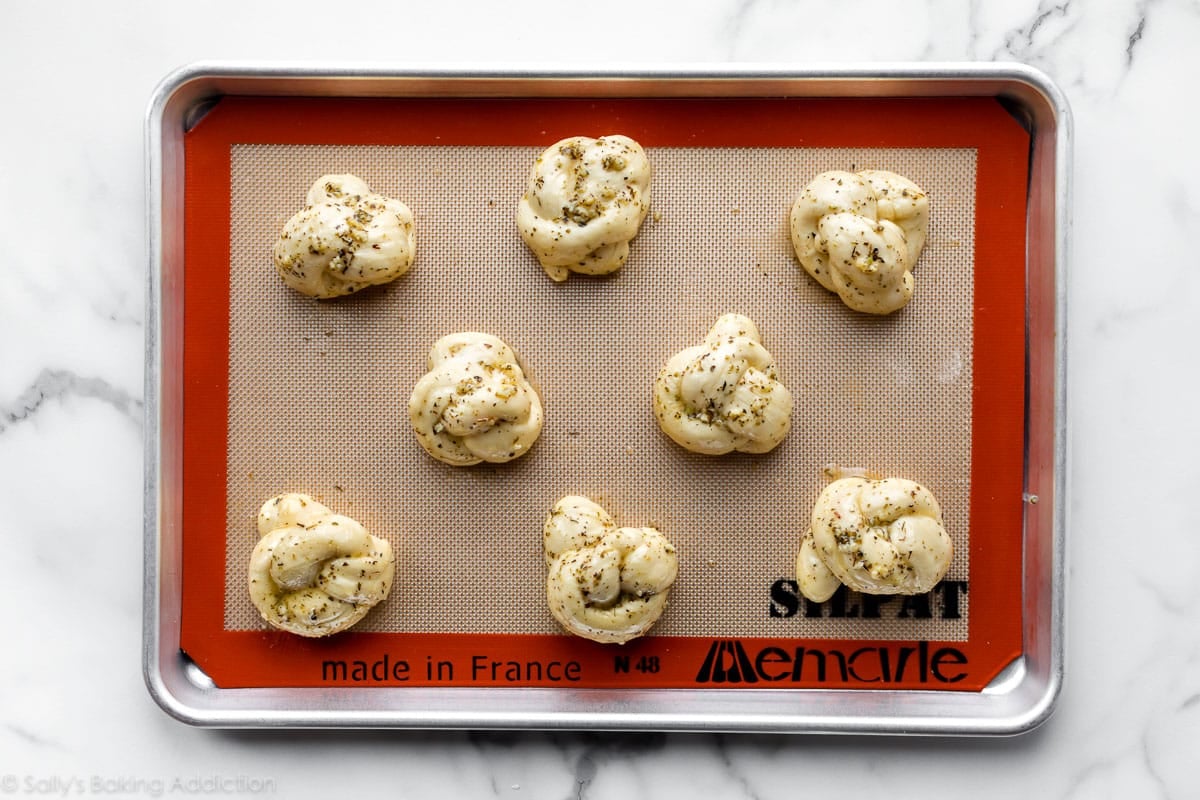
Garlic Herb Butter
Right before baking, generously brush the knots with garlic herb butter. Simply combine melted butter, fresh minced garlic or garlic powder, Italian seasoning, and salt.
If you can’t find an herb mixture labeled “Italian Seasoning” in the spice aisle of the grocery store, use dried oregano, dried basil, and/or dried parsley instead.
Bake the knots until golden brown and experience the lofty smell of garlic throughout the kitchen. Everyone (maybe even your neighbors) will know what’s on the menu tonight!
Flavor Tip: Save some of the garlic butter to brush onto the knots as they come out of the oven, then top each with fresh parmesan and chopped parsley. The parmesan and parsley are completely optional, but make a fabulous garnish.
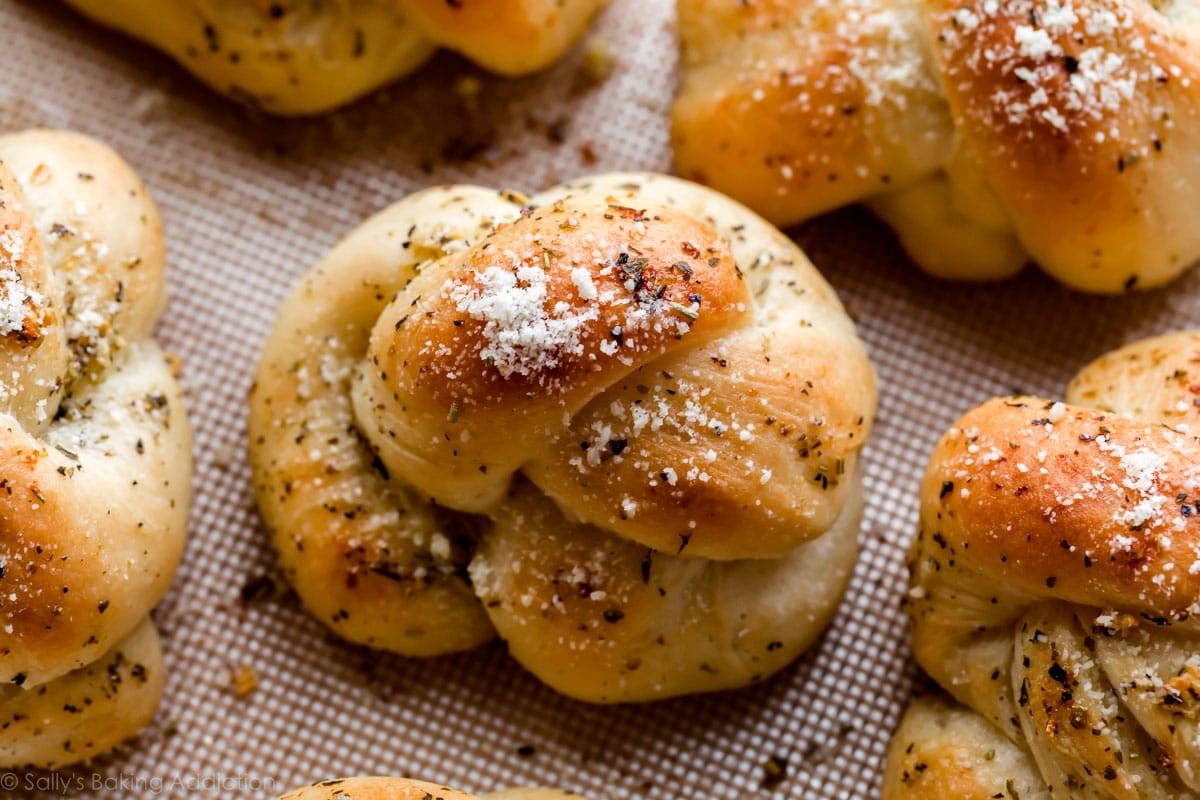
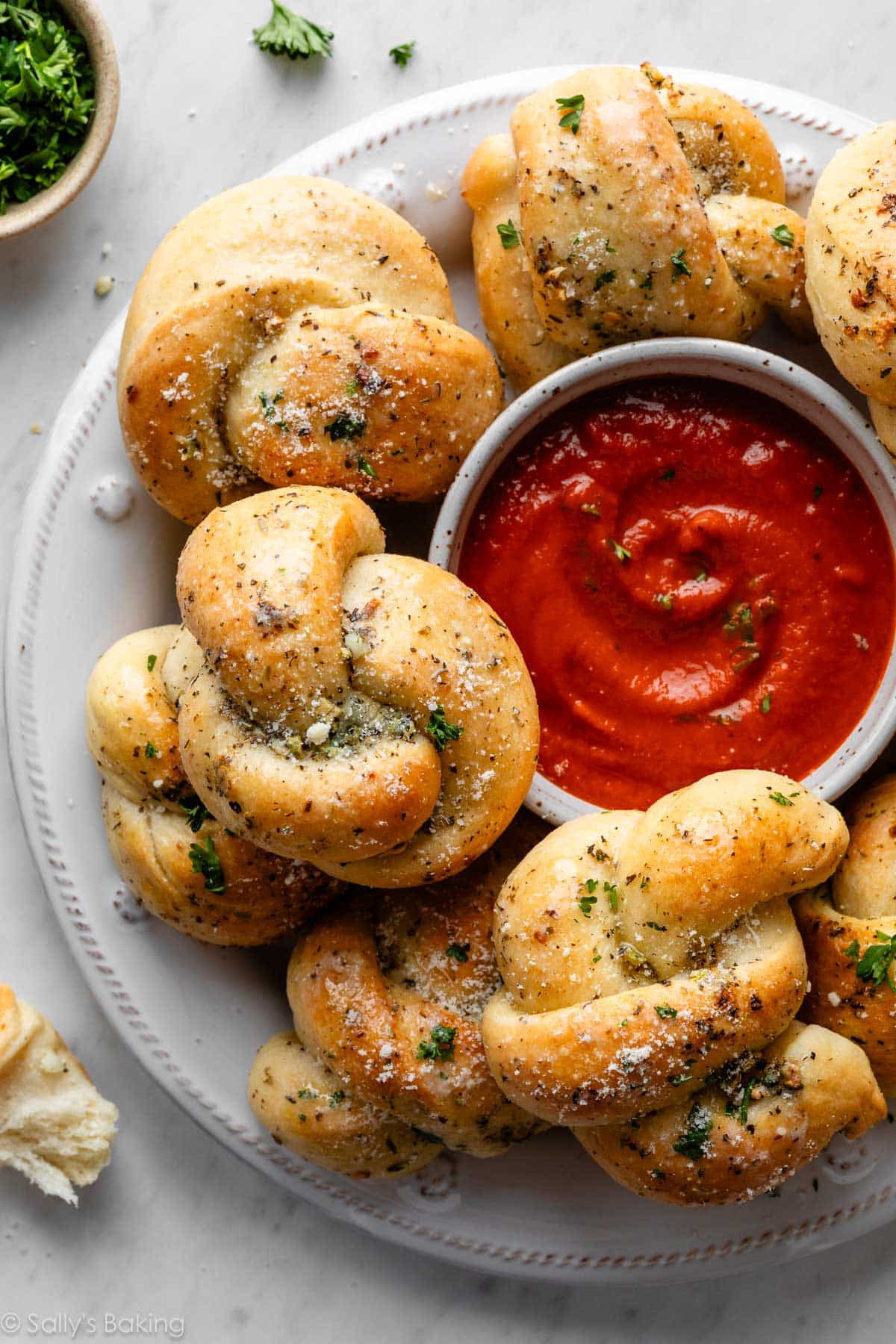
Serve the garlic knots warm, with a side of warm marinara sauce or homemade tomato soup for dipping. This is your happy place!*
*Unless you’re a vampire.



Homemade Garlic Knots
- Prep Time: 3 hours (includes rising)
- Cook Time: 20 minutes
- Total Time: 3 hours, 25 minutes
- Yield: 16 knots
- Category: Dinner
- Method: Baking
- Cuisine: Italian
Description
These homemade garlic knots are extra soft, fluffy, and packed with flavor thanks to a buttery garlic-herb topping brushed on before and after baking. Made from an easy homemade dough similar to my reader-favorite pizza dough, they freeze beautifully and are perfect for pizza night—no delivery required.
Ingredients
Homemade Dough
- 1 cup + 2 Tablespoons (270g/ml) warm water (between 100–110°F/38–43°C)
- 2 and 1/4 teaspoons (7g) Platinum Yeast from Red Star instant yeast (1 standard packet)*
- 1 Tablespoon (13g) granulated sugar
- 3 Tablespoons (43g/ml) olive oil or melted butter
- 1 teaspoon salt
- 1 teaspoon garlic powder
- 3 and 1/3 cups (433g) bread flour* (spooned & leveled), plus more for hands and work surface
Topping
- 5 Tablespoons (71g) unsalted butter, melted
- 3 garlic cloves, minced; or 1/2 teaspoon garlic powder
- 1 teaspoon Italian seasoning*
- 1/4 teaspoon salt
- optional after baking: 1/4 cup (25g) grated Parmesan cheese
- optional after baking: 2 Tablespoons chopped fresh parsley
Instructions
- Proof the yeast: Whisk the warm water, yeast, and sugar together in the bowl of your stand mixer fitted with a dough hook or paddle attachment. Cover and allow the mixture to sit for about 5 minutes, or until foamy on top. *If you do not own a stand mixer, you can do this in a large mixing bowl and, in the next step, mix the dough together with a large wooden spoon or silicone spatula. It will take a bit of arm muscle. A hand mixer works, but the sticky dough can repeatedly get stuck in the beaters. Mixing by hand is the better choice.
- Make the dough: Add the olive oil (or butter), salt, garlic powder, and about half of the bread flour. Beat on low speed for 30 seconds. Scrape down the sides of the bowl and add the remaining flour. Beat on low speed for 2 minutes, or until a soft dough forms and pulls away from the sides of the bowl. Dough will be very soft, but should not be overly sticky. If it seems too sticky and clings to the sides of the bowl instead of forming a rough mass around the dough hook, add more flour, 1 Tablespoon at a time, and continue to mix until the dough pulls away from the sides of the bowl but is still moist and tacky. If it feels dry and crumbly, add more water, 1 teaspoon at a time, mixing well after each addition.
- Knead the dough: Keep the dough in the mixer (and switch to the dough hook if using the paddle) and beat for an additional 5 full minutes, or knead by hand on a lightly floured surface for 5 full minutes. (If you’re new to bread-baking, my How to Knead Dough video tutorial can help here.) If the dough becomes too sticky during the kneading process, sprinkle 1 teaspoon of flour at a time on the dough or on the work surface/in the bowl to make a soft, slightly tacky dough. Do not add more flour than you need because you do not want a dry/tough dough. After kneading, the dough should still feel a little soft. Poke it with your finger—if it slowly bounces back, your dough is ready to rise. You can also do a “windowpane test” to see if your dough has been kneaded long enough: tear off a small (roughly golfball-size) piece of dough and gently stretch it out until it’s thin enough for light to pass through it. Hold it up to a window or light. Does light pass through the stretched dough without the dough tearing first? If so, your dough has been kneaded long enough and is ready to rise. If not, keep kneading until it passes the windowpane test.
- 1st rise: Lightly grease a large bowl with oil or nonstick spray—just use the same bowl you used for the dough. Place the dough in the bowl, turning it to coat all sides in the oil. Cover the bowl with aluminum foil, plastic wrap, or a clean kitchen towel. Allow the dough to rise in a relatively warm environment for 2 hours or until double in size. (I always let it rise on the counter and it takes about 2 hours. For a tiny reduction in rise time, see my answer to Where Should Dough Rise? in my Baking with Yeast Guide.)
- Line two baking sheets with parchment paper or silicone baking mats.
- Shape the dough: Use the step-by-step photos in the blog post as your guide for this step. When the dough is ready, punch it down to release the air. Using floured hands on a lightly floured work surface, shape the dough into a 16-inch (41cm) log. Using a very sharp knife, pizza cutter, or bench scraper, slice the log into 16 1-inch sections. Roll each piece of dough into an 8-inch rope. Tie each rope into a knot. You can tuck the 2 ends of the knots underneath or leave them out. Arrange the knots on the prepared baking sheets.
- 2nd rise: Lightly cover the shaped knots and let them rest for 30–45 minutes. They will slightly puff up during this time, producing softer rolls.
- Towards the end of the rise time, preheat the oven to 400°F (204°).
- Make the topping: Stir the melted butter, garlic, Italian seasoning, and salt together. Brush on the knots. Reserve some of the topping for when the knots come out of the oven.
- Bake for about 20–23 minutes or until golden brown on top. Remove from the oven and brush the warm knots with remaining garlic butter. Sprinkle with parmesan cheese and/or parsley, if using.
- Serve warm, plain or with marinara sauce for dipping.
- Cover and store leftover knots at room temperature for up to 2 days or in the refrigerator for up to 1 week. Reheat as desired.
Notes
- Freezing Dough: After the dough has its 1st rise and you punch it down to release the air, lightly coat all sides of the dough ball with olive oil. Place the dough into a freezer zipped-top bag and seal tightly, squeezing out all the air. Freeze for up to 3 months. Thaw in the refrigerator overnight. Once thawed, remove the dough from the refrigerator and allow to rest for 1 hour on the counter, then continue with step 6.
- Freezing Unbaked Shaped Knots: Instead of freezing the dough as a whole, you can freeze the shaped knots before baking them. Shape the knots as directed in step 6. Arrange on a lined baking sheet. Freeze, uncovered, for 1–2 hours. Remove from the freezer. At this point, knots should be frozen and no longer sticky. Place them into a freezer-friendly container or zipped-top bag. Freeze for up to 3 months. Thaw in the refrigerator or on the counter. Bring to room temperature, arrange on 2 lined baking sheets, cover lightly, and allow to rest/rise for 1 hour before continuing with step 8.
- Special Tools (affiliate links): Electric Stand Mixer or Glass Mixing Bowl and Wooden Spoon or Silicone Spatula | Dough Scraper | Pizza Cutter | Baking Sheets | Silicone Baking Mats or Parchment Paper | Pastry Brush
- Halving the Recipe: This recipe yields about 2 pounds of dough, which is enough for 16 knots or 1 pizza + 8 knots. If you want to make just 8 knots, punch the dough down as directed in step 6. Cut in half. Use the other half of the dough however you’d like or freeze for later. Shape into an 8-inch log and cut into 8 1-inch strips. Continue with the recipe as directed.
- Yeast: Platinum Yeast from Red Star is an instant yeast. You can use active dry yeast instead. The 1st rise time may take a little longer. Reference my Baking With Yeast Guide for answers to common yeast FAQs.
- Italian Seasoning: If you can’t find Italian seasoning in the spices section of the grocery store, use a mix of dried oregano, dried basil, and/or dried parsley instead.
- Recipe Updates in 2026: Based on reader feedback, we retested and updated the dough recipe as written above. If you prefer the original version, increase the water to 1 and 1/3 cups (320ml), use all-purpose flour instead of bread flour, and reduce the garlic powder to 1/2 teaspoon.