

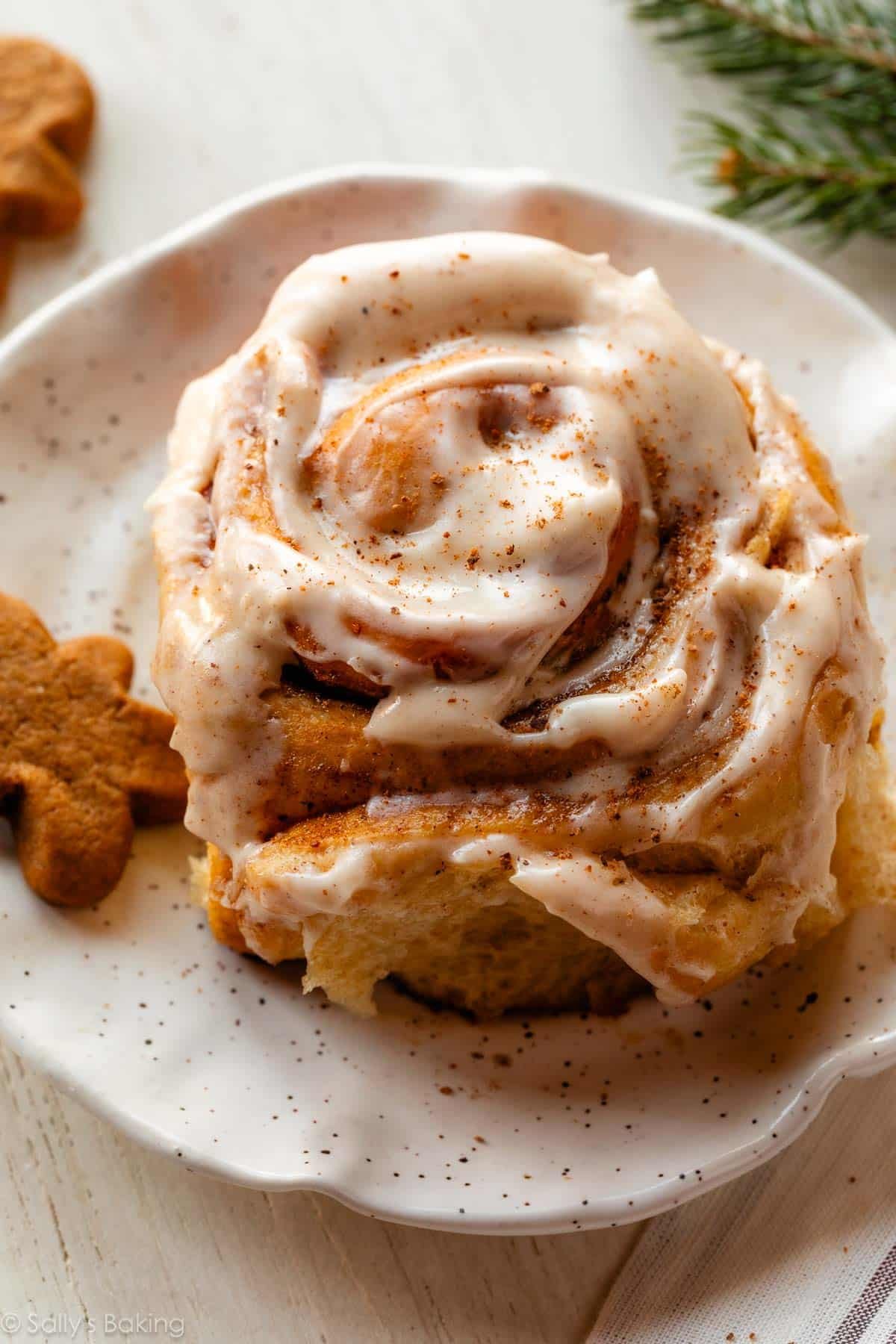
These soft gingerbread cinnamon rolls combine a rich homemade dough with a brown sugar molasses swirl and just the right amount of spice. Like my classic homemade cinnamon rolls, they’re soft, buttery, and sweet, but with a seasonal gingerbread-flavor twist. Just wait till you smell them baking!
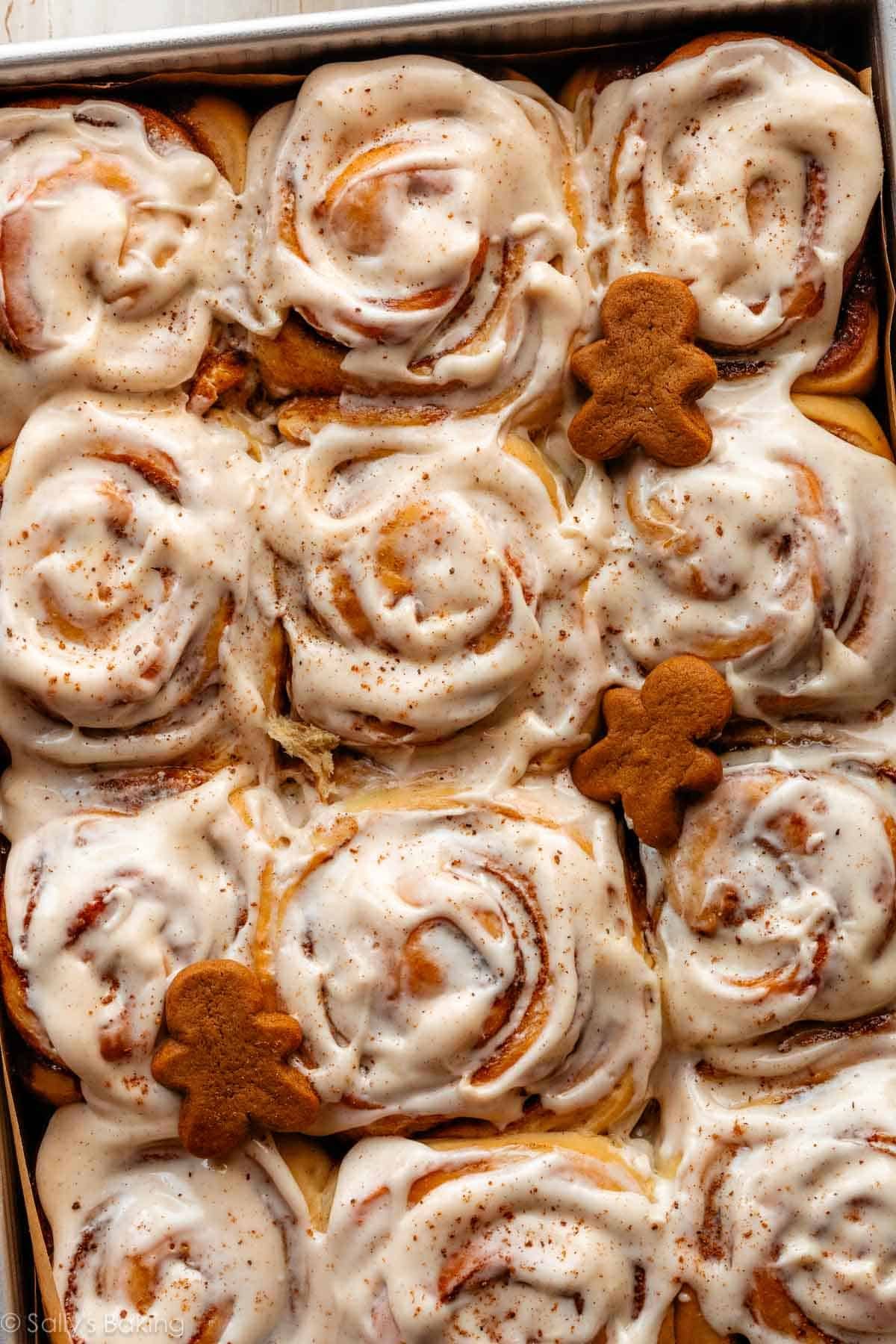
A Cozy, Indulgent Holiday Brunch Recipe
Here it is: the holiday brunch recipe you’ve been asking for (or didn’t know you wanted)! Over the years, I’ve had many readers ask me if I have a gingerbread cinnamon roll recipe. Well, ’tis the season of giving, and today I’m giving you what you asked for! …Or at least, what some other people asked for. 😉
Here’s Why You’ll Love Them
- Warm spices and molasses lend the cozy flavors of gingerbread cookies to the gooey filling
- Extra-soft, rich dough that stays tender for days
- Gooey brown sugar filling with cozy holiday spices
- Cinnamon cream cheese frosting melts into every swirl
- Perfect for Christmas morning, brunch, or make-ahead baking
This Is a Straightforward Dough Recipe
We’re using the same dough as these reader-favorite chocolate sweet rolls. Just look at all of those 5-star reviews! Readers have LOVED this dough. It’s a bit more buttery and easier to work with than my classic overnight cinnamon rolls dough.
This is a rich dough, which means that it’s prepared with fat like milk, butter, and eggs. Rich doughs make soft breads such as dinner rolls, pull-apart bread, and glazed doughnuts. Lean doughs, on the other hand, are made without much fat and produce crusty bread like homemade bagels, artisan bread, and pizza dough.
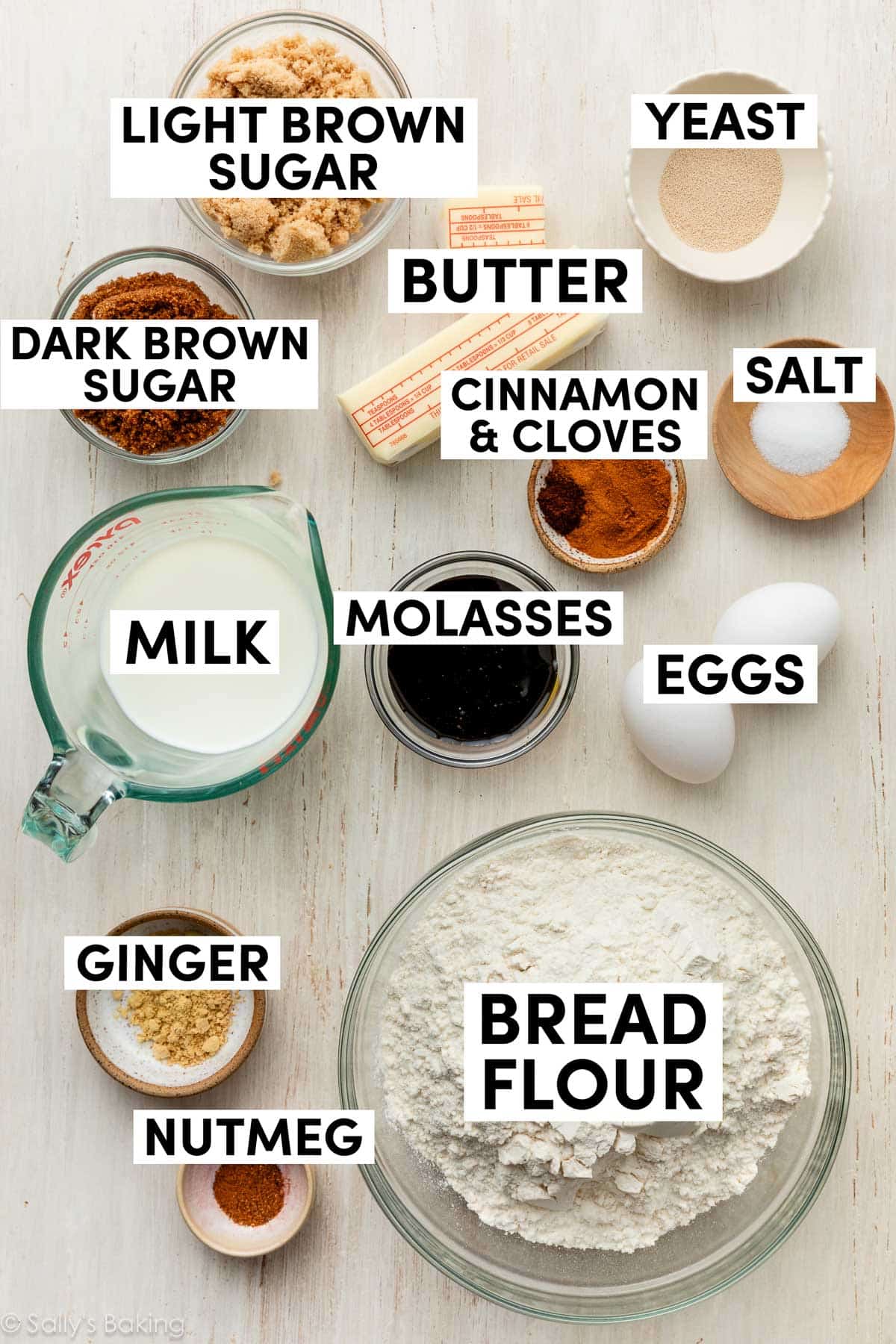
I recommend using bread flour for these gingerbread cinnamon rolls, but all-purpose flour works too. The texture of the rolls are a little more chewy and flaky when using bread flour, but they’ll be soft and fluffy either way.
- Instant Yeast or Active-Dry? You can use instant yeast or active-dry yeast in this dough. I usually use instant yeast and still take the time to quickly proof the yeast in step 1. Proofing the yeast means mixing it with a little sugar and the warm liquid to prove that it’s active; the mixture will look foamy on top. This step is not usually required when using instant yeast, but it only takes 5 minutes and you can prep your other dough ingredients as you wait.
Let Me Show You How to Make Them
If you’ve made homemade cinnamon rolls before, this process isn’t anything new. Proof the yeast, make the dough, let it rise, punch it down, roll it out, add the filling, roll up jelly-roll style, cut into rolls, let them rise until puffy, then bake.
This rich dough is supposed to be very soft, so don’t add more flour than absolutely needed. Embrace the softness and a sticky work surface because if you don’t mind the mess, you’ll be rewarded with the richest, flakiest gingerbread cinnamon rolls.
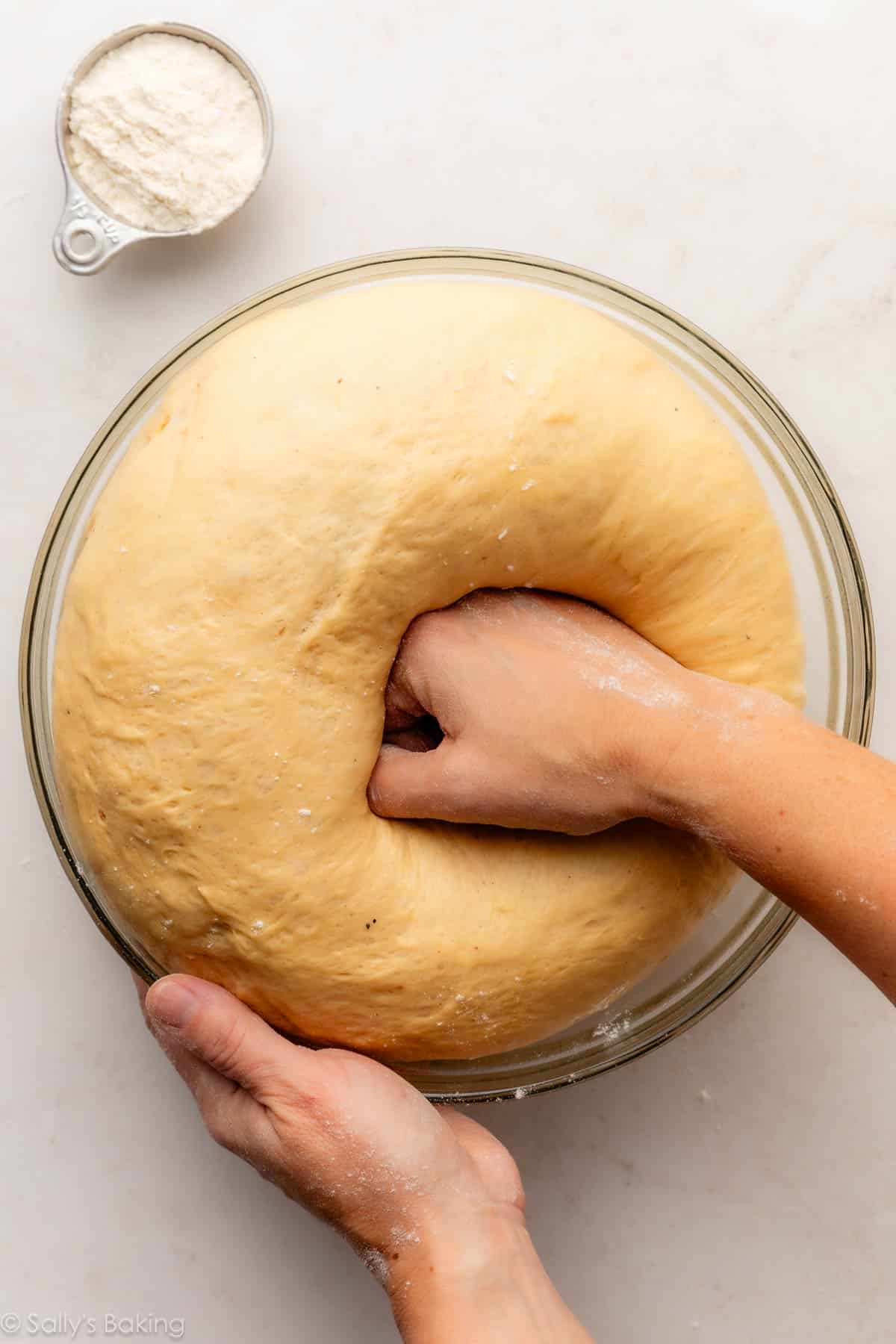
Here’s the dough as we’re kneading it:
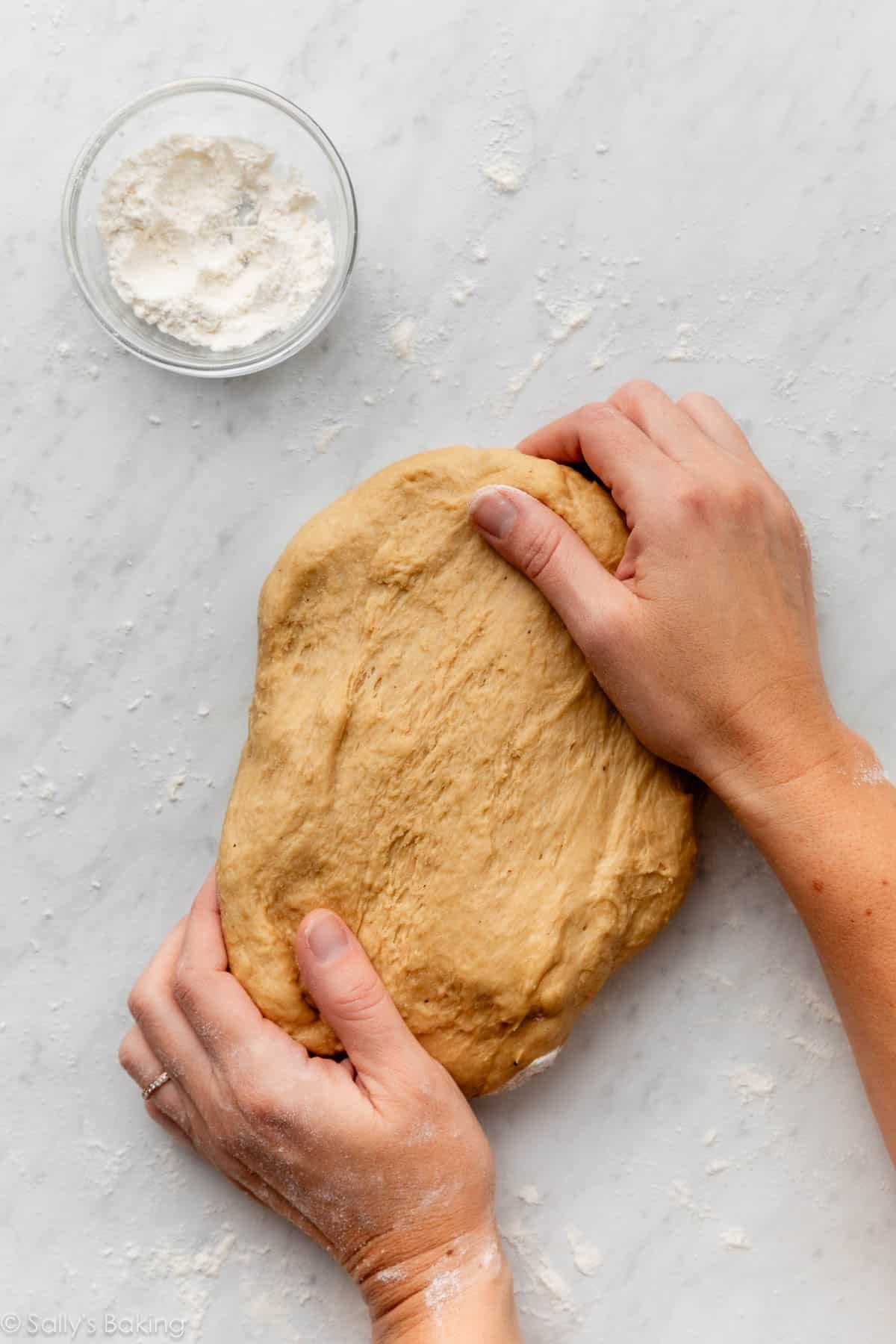
After kneading, the dough will be extra soft and stretchy. Cover it in a bowl and let it rise until doubled in size, about 2 hours. Then, punch it down and shape it:
Gingerbread Cinnamon Rolls Filling
For the molasses-enhanced cinnamon roll filling, it works best to do it in 2 parts.
- Mix wet ingredients—super-soft butter + molasses—and spread on rolled-out dough.
- Mix dry ingredients—brown sugar + spices—and sprinkle all over.
*In testing, my team and I tried mixing it all together and then spreading the mixture on, but it became super gloopy. Gooey cinnamon roll filling is delicious. Gloopy cinnamon roll filling is… not. Keeping the wet and dry filling ingredients separate worked better.*
Note on molasses: Do not use blackstrap molasses, it’s too strong and bitter. Use molasses labeled as “unsulphered” or “dark.” I usually use Grandma’s brand “original” with the yellow label.

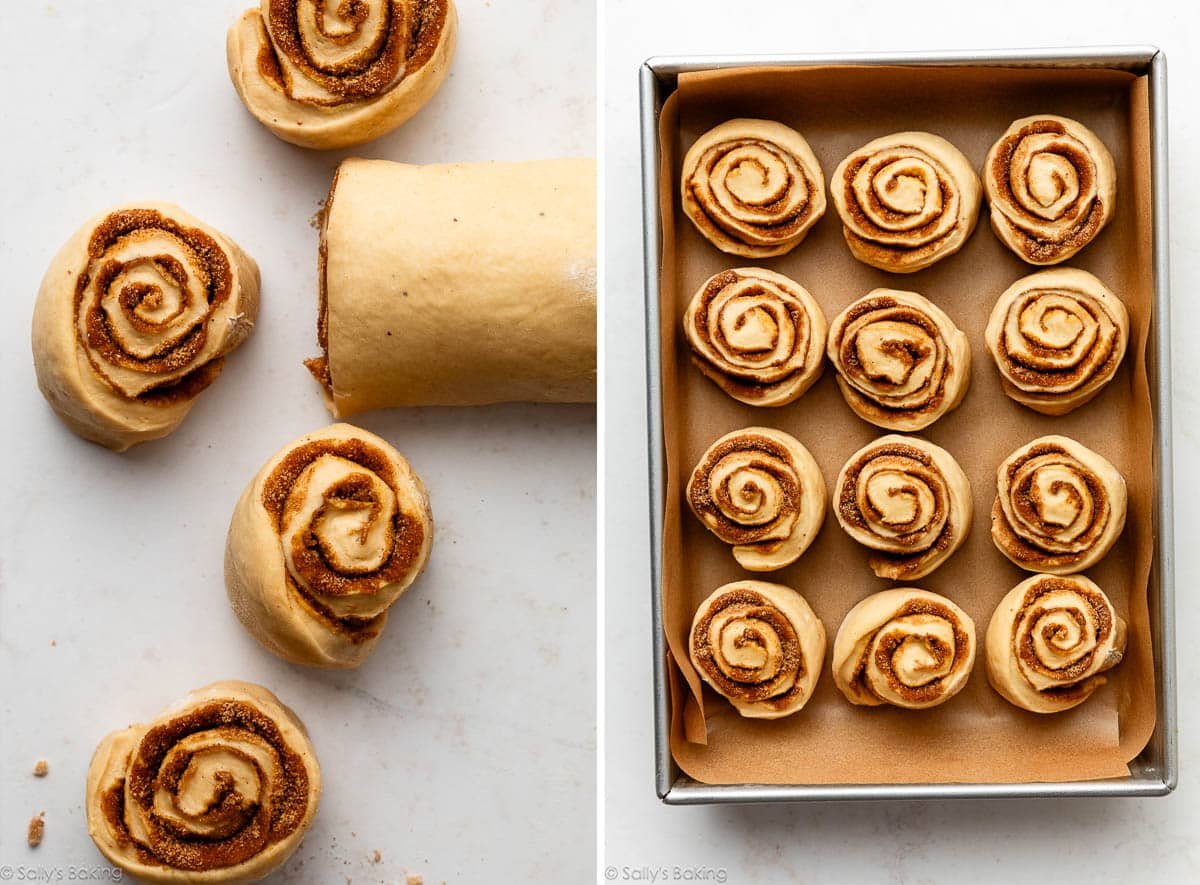
Roll up the dough into a 16-inch log, and then cut into 12 equal pieces. Arrange in a greased or lined 9×13-inch baking pan:
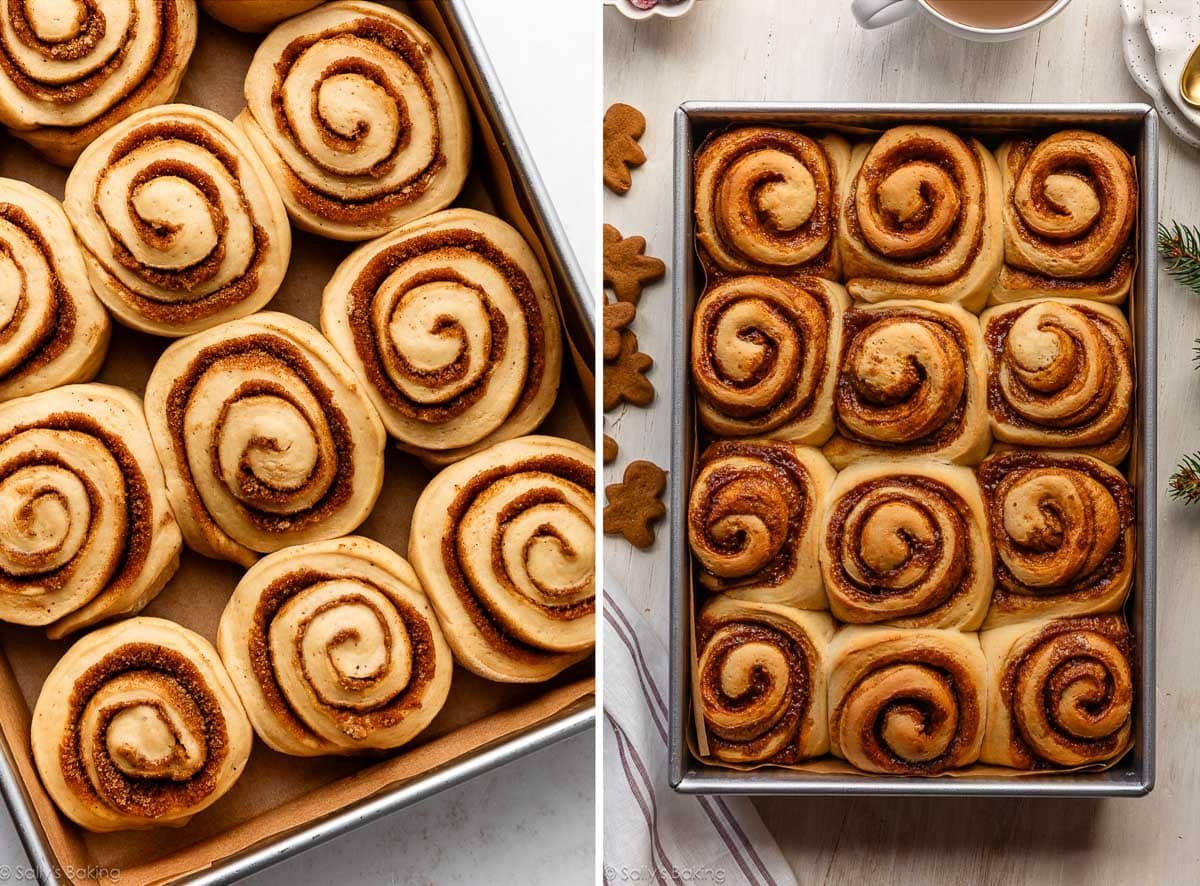
Let the shaped rolls rise for about 1 hour, and then bake until toasty and golden:
Cinnamon Cream Cheese Frosting & Other Topping Options
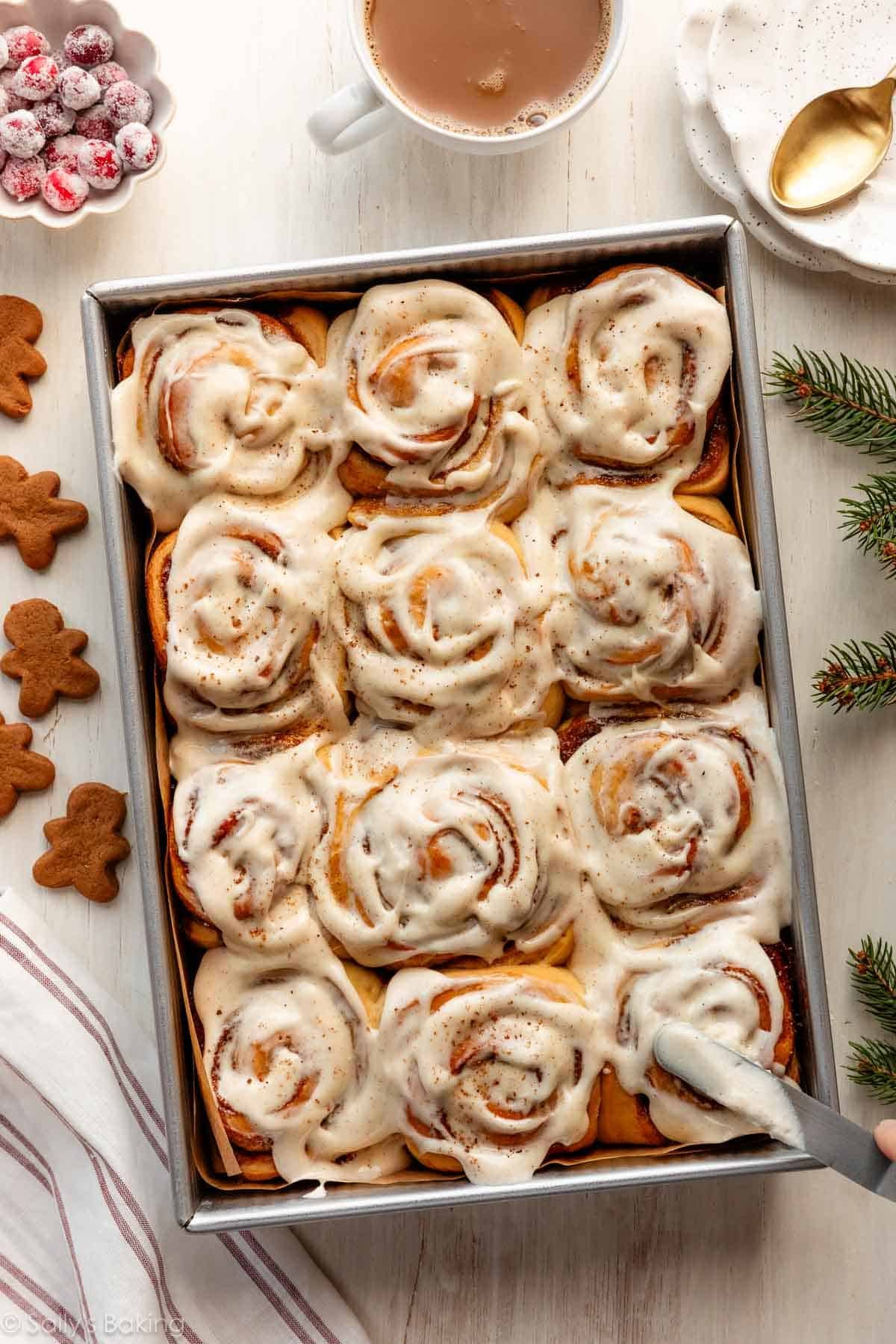
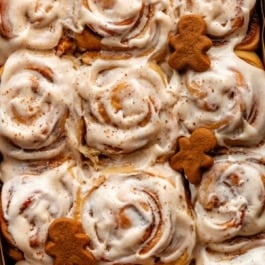
Who’s here for the cream cheese icing? *Raises hand.* A cinnamon cream cheese frosting is just what these spiced rolls need. You can also top them with little gingerbread cookies (store-bought or homemade if you’re prepping the dough for cookies!), and/or sugared cranberries.
If you’re not into this topping, here are other options:
- Simple vanilla icing
- Plain cream cheese icing from these easy cinnamon rolls
- Orange icing from these orange sweet rolls
- Maple icing from pumpkin cinnamon rolls
- Caramel icing from apple cinnamon rolls
- Espresso icing from these chocolate sweet rolls
Gingerbread Cinnamon Rolls Make-Ahead & Freezing Options
You can absolutely prepare these gingerbread cinnamon rolls the night before. After shaping and slicing the rolls, arrange them in the baking pan, cover tightly, and refrigerate for up to 16 hours. The next morning, remove from the refrigerator and allow the rolls to rise at room temperature until puffy (about 1–2 hours), then bake as directed.
This overnight option makes them especially perfect for Christmas morning or holiday brunch—fresh, warm cinnamon rolls without the early-morning prep.
There are a few methods you can use to freeze these gingerbread cinnamon rolls. Fully baked (frosted or unfrosted) rolls freeze well for up to 3 months. Thaw overnight in the refrigerator, then warm gently before serving. You can also freeze the rolls unbaked or par-baked; see the detailed freezing instructions in the recipe below for those options.
Molasses is key for the gingerbread flavor. Without it, the rolls will taste more like classic cinnamon rolls with spice: not bad, but not gingerbread. I don’t recommend skipping it.
Yes, for a milder spice profile, reduce or skip the cloves and nutmeg. Cinnamon and ginger provide most of the primary flavor.
Absolutely. Bread flour creates slightly chewier, flakier rolls, but all-purpose flour still produces soft, fluffy results.
Yes, see make-ahead & overnight options.
More Gingerbread Recipes
- Gingerbread Muffins
- Upside-Down Pear Gingerbread Cake
- Gingerbread Cake
- Homemade Gingerbread House
- Gingerbread Loaf
Soft Gingerbread Cinnamon Rolls
- Prep Time: 3 hours, 30 minutes (includes rises)
- Cook Time: 25 minutes
- Total Time: 4 hours (or overnight)
- Yield: 12 rolls
- Category: Breakfast
- Method: Baking
- Cuisine: American
Description
Ultra-soft gingerbread cinnamon rolls with a molasses-spiced brown sugar filling and cinnamon cream cheese frosting. A cozy holiday breakfast or brunch recipe that can be made ahead, refrigerated overnight, or frozen for later. If you’re a yeast bread beginner, see my Baking With Yeast guide for extra guidance and success tips.
Ingredients
Dough
- 1 cup (240ml/g) whole milk, warmed to about 100°F (38°C)
- 6 Tablespoons (75g) packed light or dark brown sugar, divided
- 1 Tablespoon (9g) active dry or instant yeast
- 5 Tablespoons (72g) unsalted butter, melted and slightly cooled
- 2 large eggs, at room temperature
- 1 teaspoon salt
- 1/4 teaspoon ground ginger
- 1/4 teaspoon ground nutmeg
- 4 cups (520g) bread flour (spooned & leveled), plus more as needed for hands/work surface
Gingerbread-Flavored Filling
- 5 Tablespoons (72g) unsalted butter, softened to room temperature
- 2 Tablespoons (43g) unsulphured or dark molasses (do not use blackstrap; I prefer Grandma’s brand)
- 1/2 cup (100g) packed light or dark brown sugar
- 2 teaspoons ground cinnamon
- 1 teaspoon ground ginger
- 1/4 teaspoon ground nutmeg
- 1/8 teaspoon ground cloves
Cinnamon Cream Cheese Frosting
- 4 ounces (113g) full-fat block cream cheese, softened to room temperature
- 2 Tablespoons (30g) unsalted butter, softened to room temperature
- 2/3 cup (80g) confectioners’ sugar
- 1/2 teaspoon pure vanilla extract
- 1/8 teaspoon ground cinnamon
- optional garnishes: sugared cranberries & gingerbread cookies
Instructions
- Proof the yeast: Whisk the warm milk, 2 Tablespoons of the brown sugar, and the yeast together in the bowl of your stand mixer fitted with a dough hook or paddle attachment. Cover and allow the mixture to sit for about 5 minutes, or until foamy on top. *If you do not own a stand mixer, you can do this in a large mixing bowl and, in the next step, mix the dough together with a large wooden spoon or rubber spatula. It will take a bit of arm muscle. A hand mixer works, but the sticky dough can repeatedly get stuck in the beaters. Mixing by hand is the better choice.
- Make the dough: Add the remaining brown sugar, melted butter, eggs, salt, ginger, nutmeg, and 1 cup (about 130g) of the flour and beat on medium speed for 1 minute. Scrape down the sides of the bowl with a silicone spatula. Add 3 cups (about 390g) flour, reduce mixer speed to low, and beat until a soft dough forms and pulls away from the sides of the bowl. Dough will be very soft, but not overly sticky. If it seems too sticky and clings to the sides of the bowl instead of forming a rough mass around the dough hook, add more flour, 1 Tablespoon at a time, and continue to mix until the dough pulls away from the sides of the bowl but is still moist and tacky. If it feels dry and crumbly, add more milk, 1 teaspoon at a time, mixing well after each addition.
- Knead the dough: Keep the dough in the mixer (and switch to the dough hook if using the paddle) and beat for an additional 6–8 minutes, or knead by hand on a lightly floured surface for 6–8 minutes. (If you’re new to bread-baking, my How to Knead Dough video tutorial can help here.) If the dough becomes too sticky during the kneading process, sprinkle 1 teaspoon of flour at a time on the dough or on the work surface/in the bowl to make a soft, slightly tacky dough. After kneading, the dough should still feel a little soft. Poke it with your finger—if it slowly bounces back, your dough is ready to rise. You can also do a “windowpane test” to see if your dough has been kneaded long enough: tear off a small (roughly golfball-size) piece of dough and gently stretch it out until it’s thin enough for light to pass through it. Hold it up to a window or light. Does light pass through the stretched dough without the dough tearing first? If so, your dough has been kneaded long enough and is ready to rise. If not, keep kneading until it passes the windowpane test.
- 1st Rise: Lightly grease a large bowl with oil or nonstick spray. Place the dough in the bowl, turning it to coat all sides in the oil. Cover the bowl with aluminum foil, plastic wrap, or a clean kitchen towel. Allow the dough to rise in a relatively warm environment for 2 hours or until double in size. (I always let it rise on the counter and it takes about 2 hours. For a tiny reduction in rise time, see my answer to Where Should Dough Rise? in my Baking with Yeast Guide.)
- Make the filling: In a medium bowl using a handheld or stand mixer fitted with a paddle attachment, beat together the softened butter and molasses on medium-high speed. In a small bowl, using a whisk or a fork, mix together the brown sugar, cinnamon, ginger, nutmeg, and cloves.
- Grease the bottom and sides of a 9×13-inch glass baking pan or metal baking pan, or line with parchment paper. Punch down the dough to release the air.
- Roll out the dough: Place dough on a lightly floured work surface and, using a lightly floured rolling pin, roll dough into a 10×16-inch rectangle. Make sure the dough is smooth and evenly thick. If the dough keeps shrinking as you roll it out, stop what you’re doing, cover it lightly, and let it rest for 10 minutes to relax the gluten. When you return to the dough, it should stretch out much easier.
- Fill the rolls: Spread the butter-molasses mixture on top of the rolled-out dough. Sprinkle the sugar-spice mixture all over the dough. Tightly roll up the dough to form a 16-inch-long log. With a sharp knife or bench scraper, cut into 12 even rolls, between 1–1.5 inches wide each. Arrange in the prepared baking pan. If some filling spilled out of the rolls as you were shaping, sprinkle it on top of the rolls.
- 2nd Rise: Cover the rolls tightly and allow to rise until doubled in size, about 1 hour. (Or use the overnight option below.)
- Bake the rolls: Preheat the oven to 350°F (177°C). Bake rolls for 25–28 minutes or until lightly browned on top. (Glass pans may require an additional 2–3 minutes.) After about 15 minutes, tent a piece of aluminum foil loosely over the top of the pan to prevent the tops from browning too quickly. If you want to be precise, the rolls are done when an instant-read thermometer inserted into the center registers 195–200°F (91–93°C).
- Remove pan from the oven and place pan on a cooling rack for about 10 minutes as you make the icing.
- Make the icing: In a medium bowl using a handheld or stand mixer fitted with a paddle or whisk attachment, beat the cream cheese on high speed until smooth and creamy. Add the butter and beat until combined and smooth, then beat in the confectioners’ sugar, vanilla, and cinnamon until combined. Using a knife or icing spatula, spread the icing over the warm rolls and serve immediately. Feel free to garnish with sugared cranberries & gingerbread cookies.
- Cover leftover frosted or unfrosted rolls tightly and store in the refrigerator for up to 5 days.
Notes
- Make-Ahead Instructions – Overnight: To prepare the night before serving, prepare the rolls through step 8. Cover the rolls and refrigerate for 8–12 hours. (16 hours max. 8–12 hours is best, but 16 hours is OK if absolutely needed. Do not exceed 16 hours.) The next morning, remove from the refrigerator, keep covered, and allow to rise for 1–2 hours at room temperature before continuing with step 10.
- Make-Ahead Instructions – Freezing: You can freeze cinnamon rolls for up to 3 months, and I recommend a few different methods for freezing cinnamon rolls. The first method is to freeze them after shaping, before they’ve had their 2nd rise (step 8). Thaw in the refrigerator overnight, then let rise for 1.5–2 hours at room temperature before baking. The second method is to par-bake the risen rolls for 10 minutes, let cool completely, then cover and freeze. Thaw in the refrigerator overnight, then let sit at room temperature for 30 minutes before baking. Finish baking for 15–20 minutes. You can also freeze fully baked cinnamon rolls. See How to Freeze Cinnamon Rolls for more details about all of these methods.
- Special Tools (affiliate links): Stand Mixer or Large Glass Mixing Bowl with Silicone Spatula or Wooden Spoon | Rolling Pin | 9×13-inch Glass Baking Pan or Metal Baking Pan | Cooling Rack
- Milk: I recommend using whole milk for the best, richest-tasting dough. You could also use buttermilk. Reduced-fat, low-fat, or nondairy milk works in a pinch. Do not use nonfat milk.
- Yeast: Make sure you use 1 Tablespoon of yeast, which is a little more than 1 standard packet. You can use active dry or instant yeast in this recipe. Follow all of the same instructions. If using active dry yeast, the rise times are usually *slightly* longer, but not much. Reference my Baking with Yeast Guide for answers to common yeast FAQs.
- Best Flour to Use: For best texture, I recommend bread flour. The same amount of all-purpose flour works and the rolls will still be wonderfully rich and soft. The rolls are a little more chewy and flaky when using bread flour.
- Molasses: Do not use blackstrap molasses, which is too bitter for this recipe. Use molasses labeled as “unsulphered” or “dark.” I usually use Grandma’s brand “original” with the yellow label.
- Other Icing Options: Instead of spiced cream cheese icing, you can use simple vanilla icing, the plain cream cheese icing from these easy cinnamon rolls, orange icing from these orange sweet rolls, maple icing from pumpkin cinnamon rolls, caramel icing from apple cinnamon rolls, or espresso icing from these chocolate sweet rolls.
- Gluten Free: We have not tested this recipe with gluten-free flour, so we are unsure of the results.












Reader Comments and Reviews
2 questions:
I’d like to try without molasses. Can I substitute with the filling from another cinnamon roll recipe? (I made these at Christmas and the freeze and thaw method worked well so I’d like to do that again.)
Can I make these smaller? Maybe half the size. I assume the baking time will be shorter but any impact on the freeze and rise time?
Hi Janell, you can use the simple butter and cinnamon sugar filling from our cinnamon rolls recipe if you prefer, yes. You can make these smaller, but we’re unsure of changes needed to the freeze and thaw times. Let us know what you try!
Can I use homemade maple honey in this im out of molasses
Hi Pearly, Molasses is key for the gingerbread flavor. Without it, the rolls will taste more like classic cinnamon rolls with spice: not bad, but not gingerbread. We don’t recommend skipping it.
how long it take
Hi Mason, the recipe takes 4 hours (or overnight) from start to finish, to include rising and rest times.
What a wonderful holiday treat! So delicious!
Hello! Can I use a bread maker dough function to make the dough?
Hi Lauren, we have not tried it, but think that should work just fine! Let us know if you give it a go.
If you want your house to smell like Christmas, this recipe is for you. Christmas eve I assembled these beauties, followed directions for night before baking and they were some of the best cinnamon buns I’ve had.
I made these for Christmas morning using the overnight method. These were soft and delicious. The added molasses and spices brought the cinnamon rolls to a new level. These were a hit with my whole family and will likely become a Christmas morning tradition.
These were perfect for Christmas morning and reheated nicely the next day. I really appreciated starting with melted butter and skipping the tedious step of kneading butter into the dough one tablespoon at a time.
Made these today and they were incredible! We all agreed this would be our new go-to cinnamon roll.
You’ve done it again, Sally! I love your regular cinnamon roll recipe but this exceeds even those! They were a hit for Christmas Eve brunch. When we make these again we’ll probably double the icing. Thanks for always being a great part of our holidays!
This is a fabulous recipe. This could be one of those traditional seasonal favorites for my family. Thank you.
These were amazing! With picky kids in the house, I was worried that they would say something about the gingerbread flavor. However, the gingerbread in these is not overbearing. These were perfect, and the kids loved them!
I totally rushed these because I wanted them for Christmas morning. Even with that, these were the best cinnamon rolls I have ever made (or eaten). My husband made the orange icing on Sally’s website since we didn’t have ingredients for the cheese icing. I’m already ready to do another batch with the cream cheese icing for New Year’s morning and other special days in 2026. Thank you Sally for all your amazing recipes!
These are delicious. Flavorful and tender. Love all of your recipes!
What temperature for the oven?
350°F (177°C)
Another great recipe with clear, easy to follow directions. I knew I needed to make these as soon as I saw the title. We love all those warm gingerbread flavors! They are everything you’d want in a cinnamon roll and then some- lucious, creamy frosting, a soft bite of sweet, yeasty bread and a lovely molasses-y caramel in the middle. These may become our go-to Christmas morning treat! (Though, today, on Christmas Eve, we had them for lunch… couldn’t wait any longer!)
These are SO good. Really soft and the flavor brings cinnamon rolls up a notch. The perfect breakfast for the season.
Hey, I was wondering what you used for the small Gingerbread Cookie decorations on top of the cinnamon rolls in the image. They look much more doughy and soft than regular gingerbread cookies. Did you use a different cook time for them?
Hi Emryn, they are these gingerbread cookies. They were a little under-baked by accident which is why they look a bit denser than usual!
AMAZING!!! So soft, incredible flavor! Just in time for Christmas! Thanks Sally!:)
I couldn’t wait for Christmas morning to make these cinnamon rolls. I made these this morning, and they are stupendous!! The texture is amazingly soft and fluffy, and the spiced cream cheese icing is the perfect complement to the gingerbread flavor!! My husband, a connoisseur of cinnamon rolls, really enjoyed them!
Made for a holiday brunch – they’re very good and got many compliments. Gingerbread flavor is not overwhelming and dough is soft and delicious. Loved the cinnamon icing!
This sounds amazing for Christmas morning!!! I’ll be testing them with vegan butter alternatives for my husband though. I’ve done your cookie recipes with vegan butter so he can enjoy the treats as well (he usually misses out due to allergies)
Do you happen to know the nutritional value for this?
Thank you!!
Hi Michelle, We don’t usually include nutrition information as it can vary between different brands of the same ingredients. Plus, many recipes have ingredient substitutions or optional ingredients listed. However, there are many handy online calculators where you can plug in and customize your exact ingredients/brands. Readers have found this one especially helpful: https://www.verywellfit.com/recipe-nutrition-analyzer-4157076
Do these bake at 350 degrees. I cannot find temp on the recipe. Might just have completely missed it.
Hi Lisa, yes, 350°F (177°C). It looks like that somehow (not sure how!) was missing… the most important instruction! Sorry about that.
Ooh, this looks good. I think I’ll definitely be trying this for Christmas!
Hi Sally! Do you think I could sub sourdough starter for the yeast? (If not, no worries just curious!)
Hi Romie, we have not tested that ourselves but would love to hear how it goes if you try!
Do you think I could make these egg free or use a flax egg?
Hi Aline, we haven’t tested this recipe with any egg substitutes, so we’re unsure what might work best. Let us know if you do any experimenting.
gosh these look incredible, I may try them w/the espresso frosting to make gingerbread “latte” rolls! any tips on adjusting the measurements for baking at altitude? i live near Denver (5000 ft). I do have a food scale at least so can do measurements in grams so that might help with precise adjustments
We wish we could help, but we have no experience baking at high altitude. Some readers have found this chart helpful: https://www.kingarthurflour.com/learn/high-altitude-baking.html
I live at 7500’ in Steamboat and I follow CSU Extension recommendations for fragile baked goods like cakes, but I have never had any problems making bread recipes as written. I have made cinnamon rolls from Sally’s, King Arthur and Curly Girl Kitchen (high altitude), all with similar great results.
thanks so much Marci – I LOVE Steamboat! typically i’m more of a cake baker, but want to start playing with bread. I appreciate your advice, it’s nice to hear I don’t have to change anything!
For the gingerbresd cinnamon rolls, can i use self rising flour? That’s all i have.
Hi Teresa, no, we don’t recommend self-rising flour since it has leavening agents that can impact how the dough will rise. It’s best to use bread flour or all-purpose flour here.
Hi Sally. Can I make the dough in my bread machine? My machine has a dough mixing and rising function. Would there be any necessary changes to the recipe? Thank you!
Hi Jessica, I’m sure that you can but I have not personally tested it. I wouldn’t think any changes to the dough would be necessary.