

Make this simple 4-ingredient sweet salted caramel sauce at home with ease—no candy thermometer required! Ready in just 10 minutes, this rich homemade caramel is perfect for drizzling over cakes, cupcakes, cookies, pound cake, ice cream, cheesecake, scones, salted caramel apple pie, and more!
I originally published this recipe in 2013 and have since added new photos, a video tutorial, and additional success tips. This recipe is such a fan favorite, that it deserved a spot in print! You’ll also find this recipe in my cookbook, Sally’s Baking 101.

What once intimidated me became the subject of my 2nd cookbook: Sally’s Candy Addiction. As it turns out, homemade candy isn’t all that difficult. And salted caramel sauce is one of the easiest. There’s only 4 ingredients required: sugar, butter, heavy cream, and salt.
This salted caramel is a reader favorite recipe, consistently marking its spot in the top 10 most popular recipes on my website and published in 2 of my cookbooks. It’s sweet, buttery, and tastes phenomenal on anything it touches. (Though you really only need a spoon to enjoy.)
Trust me, after trying this 1 time, you’ll be hooked like the rest of us!
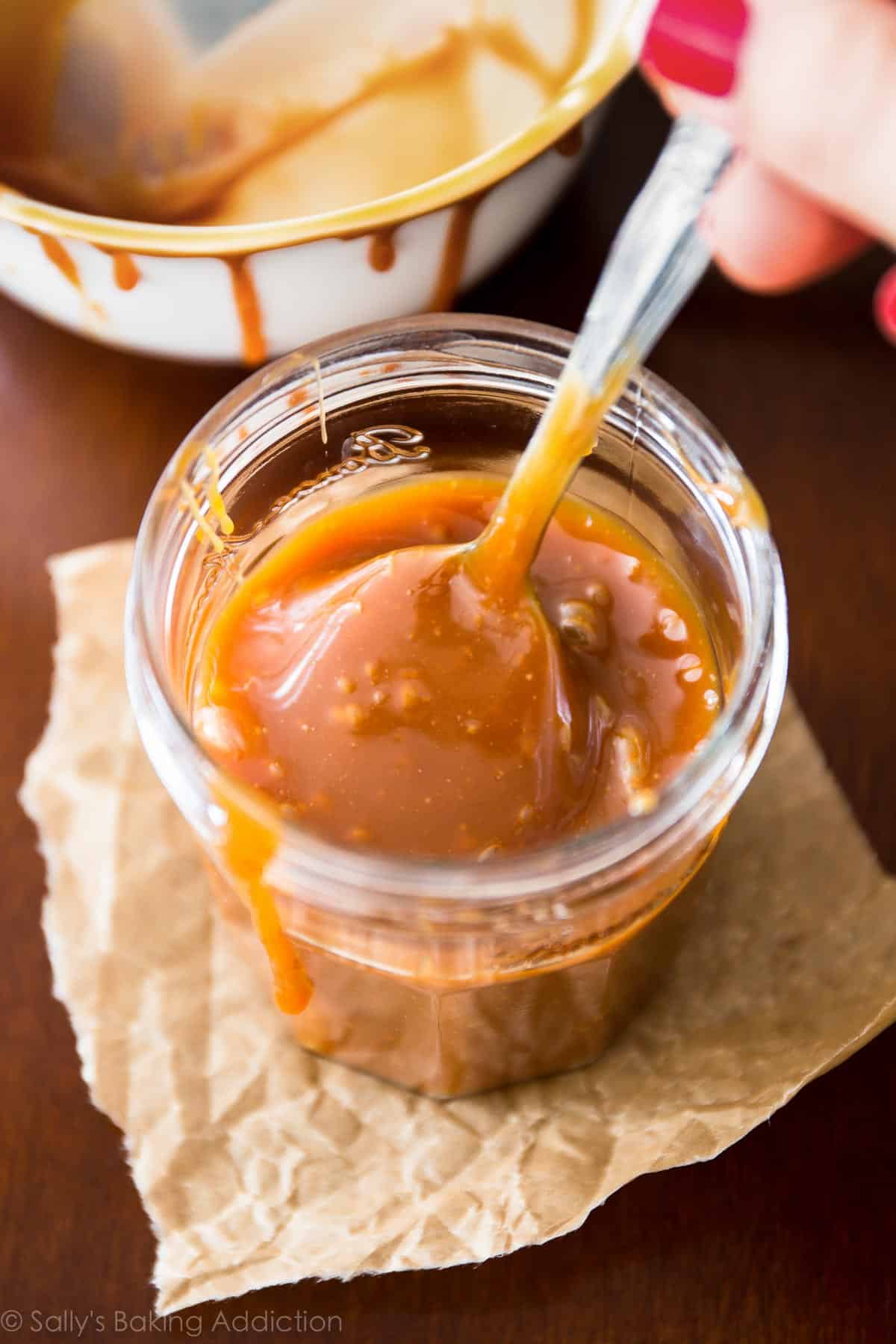
How to Make Salted Caramel
Use the written out instructions below, but here’s the basic process: The first step is to melt sugar, which is called caramelization. This requires 1 small (stainless steel, not nonstick) pot/saucepan and a wooden spoon. Stir until melted and caramelized. Stir in butter, then stir in heavy cream and let it boil for 1 minute. Finally, add the salt.

That’s it, the caramel is done.
As always, use caution when cooking over the stove because the hot liquid, butter, and cream may splatter. If needed, kitchen gloves come in handy.

No Candy Thermometer Required
Unlike most caramel recipes, this salted caramel doesn’t require a candy thermometer. Instead, I encourage you to follow the recipe and use your eyes to determine when to add the next ingredient. If you’d like to be precise and use a candy thermometer, the temperature will rise to about 220°F (104°C), and that’s when the caramel is done on the stove.
The caramel thickens as it cools.
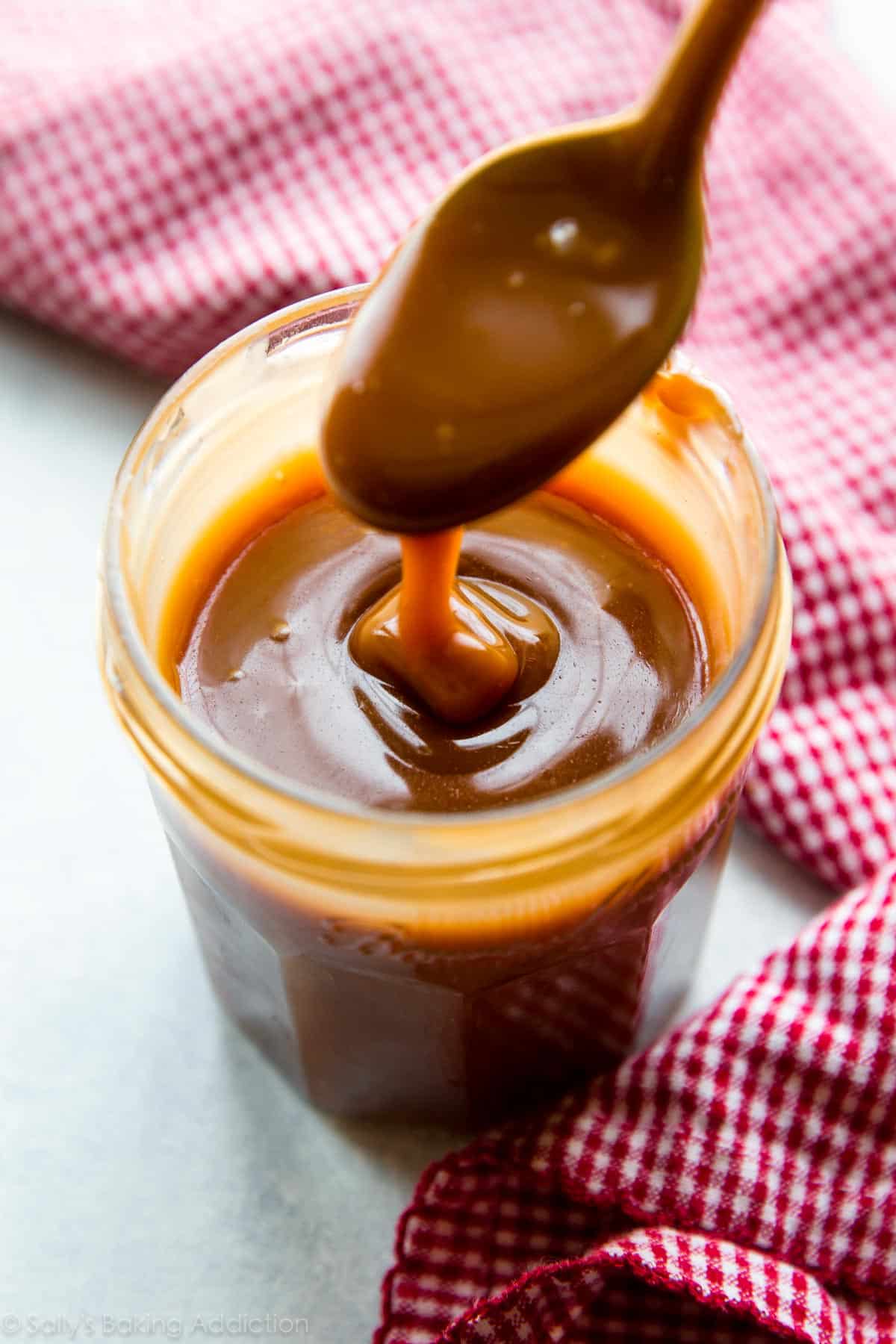
What to Eat With Salted Caramel?
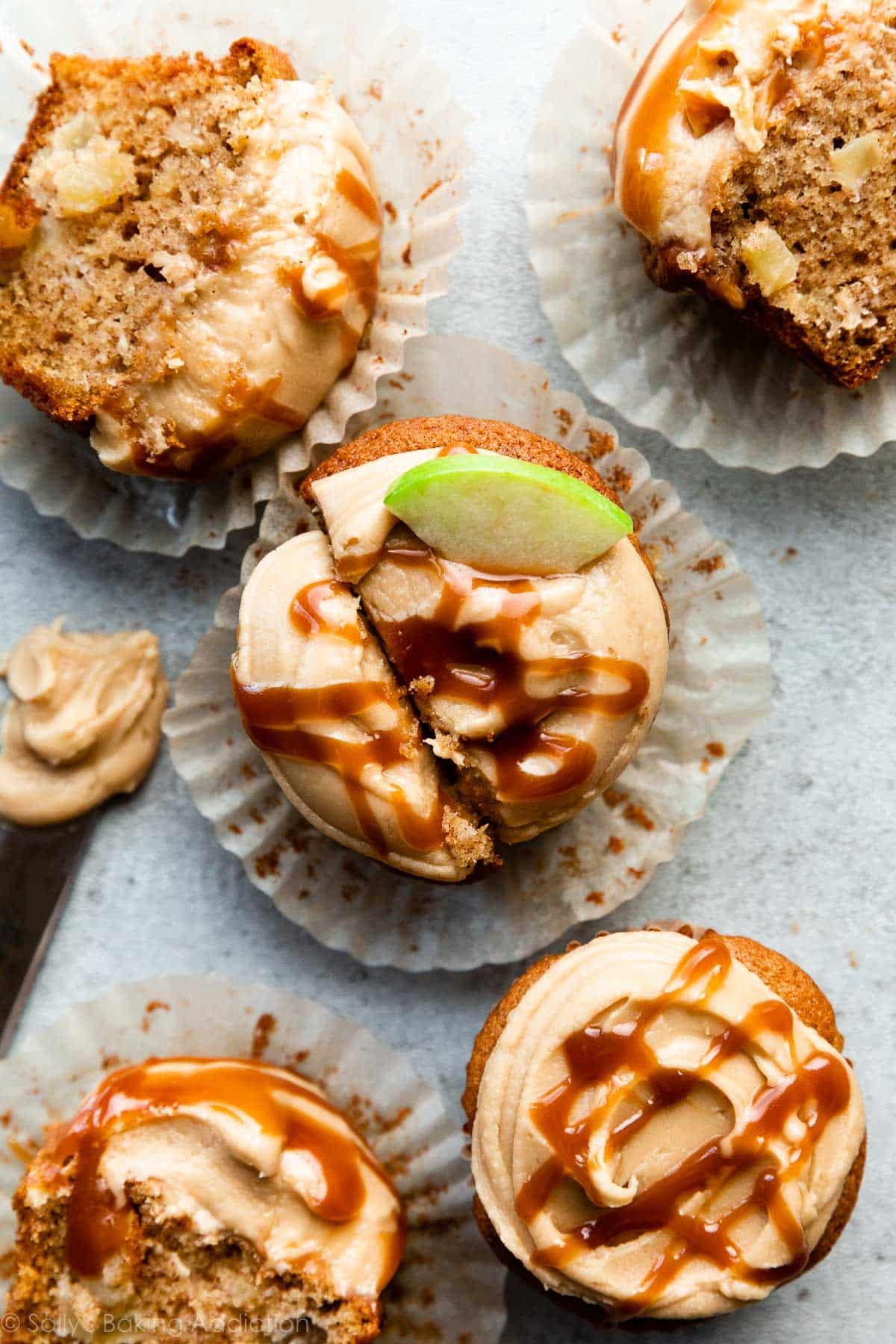
You will love homemade salted caramel with sweets like cinnamon rolls, cheesecake, and apple pie bars. Use it as a dip for apples, spoon over ice cream, or pour into decorated jars and gift it for the holidays.
The possibilities for salted caramel are endless:
- Turtle Brownies
- Burnt Sugar Caramel Cake
- Caramel Apple Cheesecake Pie
- Caramel Coconut Macaroon Thumbprints
- Chocolate Caramel Toffee Icebox Slice & Bake Cookies
- Butterscotch Pudding
- Snickers Caramel Tart
- Apple Cupcakes (pictured above)
- Caramel Dipped Pretzels
- Pumpkin Swirl Cheesecake
- Salted Caramel Apple Pie & Apple Cake
- Cheesecake Pie
- Chocolate Bread Pudding
- Apple Turnovers
- Caramel Turtle Cheesecake
- Apple Cider French Toast
- Dutch Baby Pancake
- Cake Mix Chocolate Cupcakes
- Skillet Brownie
- Apple Cobbler
- Apple Cinnamon Scones
- Topping for Homemade Eclairs
- Drizzled on cookies like Shortbread, Brownie Cookies, and Snickerdoodles
- As a filling for your favorite cupcake recipe (see my How to Fill Cupcakes post for all the details)
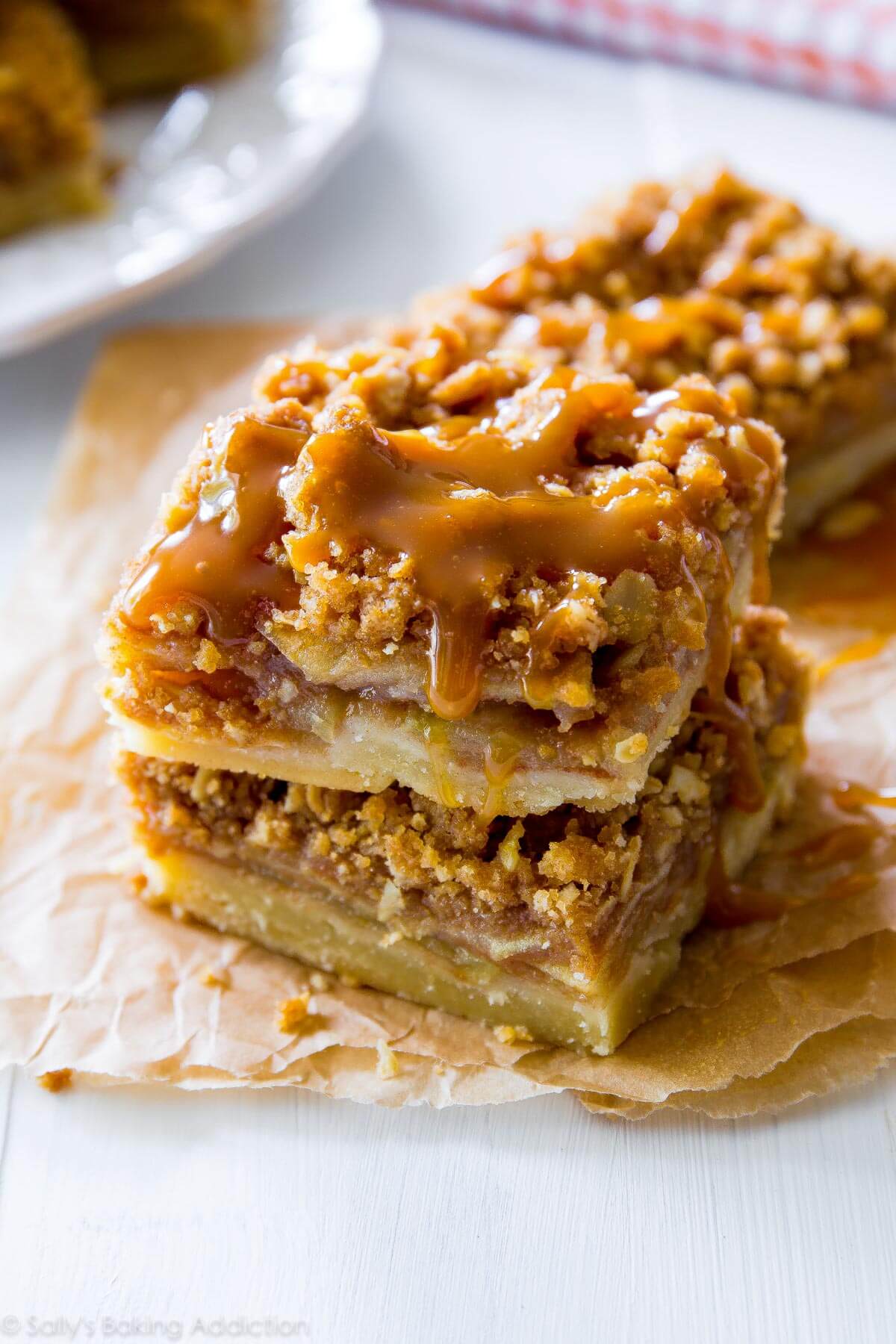
- Butterscotch Pie & Apple Pie Bars (both pictured below)

What Is the Consistency Like?
The caramel is liquid as it comes off heat. As the caramel cools, it solidifies into a chewy texture. After refrigerating, the caramel is hard and you must heat it up to bring it back to a liquid consistency. Do you need a thinner caramel? Feel free to add 2 more Tablespoons of heavy cream to the recipe.
Can I Skip the Salt to Make Regular Caramel?
If you’re looking for a sweet caramel, rather than a salted caramel, you can still use this recipe. Do not cut out the salt completely because the caramel’s sweetness will be overpowering. Instead, reduce the salt to 1/2 teaspoon.
No. You can’t really turn this sauce into a homemade wrapped candy. Instead, try my soft caramel candies recipe which is a little different.
This caramel is not thick enough to coat apples for caramel apples. Instead, I recommend my homemade caramel apples recipe.
Yes. When the caramel is done, it’s thin and liquid. As the caramel cools, it thickens. After refrigerating, it thickens even more and must be reheated to thin out and use as a topping or dip.
This caramel isn’t ideal to layer between cake layers because it will just spill out the sides under the weight of top layers. However, it’s great as a filling for cupcakes, such as these chocolate caramel coconut cupcakes. See How To Fill Cupcakes for more info!
How to Store Salted Caramel
After the caramel cools down, pour it into a glass jar or container. Refrigerate for up to 1 month. The caramel solidifies as it cools, but you can reheat in the microwave or on the stove so it’s liquid again. You can freeze the salted caramel, too. Freeze in an airtight container for up to 3 months. Thaw in the refrigerator or at room temperature, then warm up before using.
Print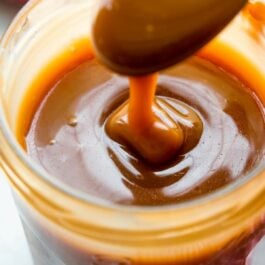
Homemade Salted Caramel Recipe
- Prep Time: 5 minutes
- Cook Time: 15 minutes
- Total Time: 20 minutes
- Yield: 1 cup (290g)
- Category: Dessert
- Method: Cooking
- Cuisine: American
Description
Made from only 4 simple ingredients, this homemade caramel is salty, sweet, and irresistibly buttery. No candy thermometer required and the possibilities for serving are endless. (Though just a spoon is acceptable!) Use caution as the cooking caramel may splatter. Stand back and wear kitchen gloves if desired. Review recipe notes prior to beginning. This recipe is also in my cookbook, Sally’s Baking 101.
Ingredients
- 1 cup (200g) granulated sugar (make sure it’s labeled “pure cane”)*
- 6 Tablespoons (85g) unsalted butter, at room temperature and cut into 6 pieces
- 1/2 cup (120g/ml) heavy cream, at room temperature
- 1 teaspoon salt
Instructions
- In a medium heavy-duty stainless steel saucepan (do not use nonstick) over medium heat, cook the sugar, stirring constantly with a wooden spoon or heat-safe silicone spatula. Sugar will form clumps and eventually melt into a thick brown, amber-colored liquid as you continue to stir. On my stove, this takes about 6 minutes. Stir constantly, especially around the bottom edges, and be careful not to let it burn.

- Once the sugar is completely melted, reduce the heat to low and stir in the butter. Be careful in this step because the caramel will bubble rapidly when the butter is added. (If you’re nervous for splatter, wear kitchen gloves.) Cook and stir constantly until the butter is melted and well combined. If you notice the butter separating or if the sugar clumps up, remove the pan from heat and vigorously whisk to combine it again. Keep whisking until it comes back together, even if it takes 3–4 minutes. It will eventually—just keep whisking. Return to heat when it’s combined again.

- Very slowly and carefully pour in the heavy cream, stirring constantly. Since the heavy cream is colder than the hot caramel, the mixture will rapidly bubble and steam when added. When all of the heavy cream has been added, stop stirring, increase the heat to medium, and let it boil for 1 minute. It will rise in the pan as it boils. If you’d like to be precise and use a candy thermometer, the temperature should reach 220°F (104°C).

- Remove from heat and stir in the salt. The caramel will be a thin liquid at this point. Allow to slightly cool and thicken before using. Caramel thickens considerably as it cools.

- Cover tightly and store in the refrigerator for up to 1 month. Caramel solidifies in the refrigerator. Reheat in the microwave or on the stove to desired consistency.


Notes
- Make Ahead & Freezing Instructions: You can make this caramel in advance. Make sure it is covered tightly and store it for up to 1 month in the refrigerator. Warm the caramel up for a few seconds before using in a recipe. See “What Is the Texture of This Salted Caramel?” in the post above. This caramel is OK at room temperature for a day if you’re traveling or gifting it. You can freeze the salted caramel, too. Freeze in an airtight container for up to 3 months. Thaw in the refrigerator or at room temperature, then warm up before using.
- Special Tools (affiliate links): Medium Heavy-Duty Saucepan (do not use nonstick) | Wooden Spoon | Candy Thermometer (like this one or this one)—optional
- Sugar: This recipe is most successful using granulated sugar that’s labeled “pure cane” on the packaging. I usually use and recommend Domino brand regular granulated sugar which says “pure cane granulated” on the packaging.
- Heavy Cream: Heavy cream (approximately 36% milk fat) may also be sold as whipping cream. Light whipping cream (30% milk fat), or double cream (48% milk fat) may be substituted. Do not use half-and-half or milk. Room-temperature cream is best.
- Salt: Use regular table salt or kosher salt. If using larger flaky salt, add 1 teaspoon, taste, then add more if desired. This recipe works with 1 teaspoon of any variety of salt. You can always add 3/4 teaspoon, taste, then add more if desired.
- Caramel Candies: This caramel is great as a sauce, topping, or filling, but won’t set up properly to make soft caramel candies. Here is my soft caramels recipe.
- Regular Caramel Sauce: If you want to make regular caramel, reduce salt to 1/2 teaspoon. Do not leave it out completely.
- Larger Batches: Avoid doubling or tripling this recipe. The added volume could prevent the sugar from melting evenly and properly. Make multiple batches instead.










Reader Comments and Reviews
Can I use salted butter!
You can use salted butter and reduce the added salt depending on how salty you would like the caramel.
The proportions of caramelized sugar, butter, cream and salt were great. I started with a wet mixture – 1 cup sugar and 1/3 cup water. Cooked over medium heat until all sugar was dissolved, then increased to medium high and boiled without stirring (gently swirled the pan only) until I had a deep amber caramel. Then added butter and stirred to combine, then did the same with the cream and the salt. Voila!
The key for caramel is not to let it boil until all sugar is dissolved/liquid. One crystal will provide the scaffold for another and your caramel will crystallize when you add the butter and cream! I found that lower heat at the beginning and then higher heat when you’re trying to caramelize the sugar works well.
Another tip – don’t walk away from that bubbling sugar as you can lose control pretty quickly! A wet caramel gives you a little bit more leeway in the process.
Can’t wait to try this on the pumpkin Bundt cake I just made (a Sally recipe, of course).
It turned out great, and I usually don’t have a great deal of luck. I think watching the temperature when adding the butter is the trick. Perhaps turning it down a bit as you proceed
This is a fabulous caramel sauce recipe! Easy peasy, even though many traditional caramel recipes do not “dry cook” the sugar. Keep stirring until the sugar melts on itself. A saucier pan is ideal. Instapen thermometer is helpful in determining doneness.
Thank you, Sally!
So, so delicious. My kids were licking the jar.
Made the caramel sauce. Delicious. Served over a chocolate ganache cake.
I made the salted caramel twice and it didn’t work out and i followed it to the T. The sugar and butter combo was the problem. I ended up blending it in the magic bullet to smooth out and it worked out. Not sure if i will use this recipe again as it is finicky.
How to avoid sugar buildup on sides of pot
Hi Dana, You can try running a water-moistened pastry brush around the sides of the pan helps prevent this from happening.
Could I make this caramel then transfer into crock pot for dipping apples?
Hi Jessica, we’d recommend trying the caramel from our caramel apples instead.
I had a lot of trouble with this. Tried it 2x, first time it crystallized when I stirred, second time it didnt cook evenly despite using a large cast iron skillet and without stirring, it didnt cook evenly and got overcooked before all the sugar melted. Tried again adding 1/4 cup of water so it was a wet caramel, and then followed the rest of the recipe. came out great!
I made this for the first time, big mess, hot butter everywhere, burned my thumb and it was all worth it! Came out beautifully.
Hey Sally, I was wondering if bourbon could be added to the caramel sauce?
Hi Connie, a splash of bourbon is a delicious addition here, but I haven’t tested it. What I would try first is stirring in about 1 Tablespoon after removing the caramel from the heat, once it’s finished cooking. The caramel will be a little thinner, but it will thicken as it cools.
Ok, first of all, I need to say that I have a tendency to jump right in to recipes and then go back and read things…which isn’t to my benefit lol, but I did ok.
I didn’t read not to use nonstick until after I’d already started – it all worked ok anyway (phew!)
I also used cold heavy cream (whoops!) and it took some finesse to get it all to recombine, but even with all of my mistakes, this turned out lovely and I can’t wait to use this in my apple cinnamon rolls!!
Turned out beautifully! Followed the instructions exactly except I used regular white sugar. So so yummy!!
Delicious and super easy to make! Having never made caramel sauce before, I was a bit worried by the comments that said their sugar didn’t melt, so I followed the instructions very carefully, using a stainless steel pot (which I purchased specifically for this recipe) and stirring constantly. It took about 8 minutes for the sugar to totally melt. The butter got incorporated pretty quickly and never separated. The cream didn’t bubble excessively either. I had to whisk it for a few minutes at the end though to even out a bit of clumps, but after that the caramel became very smooth and uniform. Going to try this with the salted caramel apple pie bars! Thanks so much for the recipe and simple instructions!
This salted caramel sauce was absolutely delicious! It was smooth, rich, and perfectly balanced between sweet and salty. I loved making it and will be using it on everything from ice cream to cakes!
Absolute WORST Recipe I’ve ever tried in my life. It failed three times. First time it burnt, sure, my fault. Second time I put it on medium low heat, it took an entire hour to melt even halfway with constant stirring and it was somehow burnt before it even liquified?
Third attempt I tried adding water, which worked better, until I added the room temperature butter and cream, and it hardened up like toffee and didn’t even mix! Every other recipe I’ve tried has been easy and took no more than 20 minutes, this was a total waste of money and 4 hours. So disappointed.
Hi Amber, we’re so sorry you were disappointed in this recipe. It sounds like an issue with the heat. When the heat is too high, it will cause burning. If you lower the heat and still find that the butter us separating or if the sugar clumps up (which may have been what happened with your second batch), remove the pan from heat and vigorously whisk to combine it again. Did you use a heavy-duty stainless steel saucepan, or was your pan nonstick by chance? We highly recommend to not use nonstick, as the results can vary. Thanks again for giving this one a try.
Tastes amazing
I tried this and my sugar melted, then just turned to paste. It never turned liquid. I tried a lower heat, then a higher heat. So disappointed. Really wanted to make this.
Excellent recipe and instructions, delicious results.
Not only was this tasty, but it was super easy to make. Thanks for sharing.
I need to know what the picture of the square apple crumble thing with the caramel on top is. I need to know and I need to make it. It’s under the picture of the pie. Please and thank you!
Hi Priscilla, those are our salted caramel apple pie bars!
mine did not work. sugar went into small balls but when butter was added they hardened like rocks. where did I go wrong?
Hi Abby! The sugar needed to cook for longer before adding the butter. It should be melted!
Hi, I made this and the consistency was terrific. However, upon tasting it has a very slight burnt caramel taste. Is this normal? If not, would the burning have likely occurred in the 1st step (sugar melting) or the last step (cooking caramel for 1 minute) ? I did notice in the first step that the sugar 95% melted but there were these tiny granules left I kept trying to dissolve and it might have darkened too much. The color at the end was perfect though.
Hi Jimmy! The burnt flavor is likely from the first step.
Same thing happened to me, slight burnt taste. I didn’t notice it burning as the sugar melted. How do you avoid this?
You can try cooking the sugar over a lower heat, Jody.
Hey Jimmy, I had exactly the same result and for the same reason! Everything seemed good, just when the sugar was melting, I had a few tiny granules left when most of the sugar melted. I didn’t think it was an issue because every other step went swimmingly and the colour and consistency were just like the pictures. It tastes great too, with the caveat of that slight burnt caramel taste. It adds complexity I guess. Maybe next time we’ll leave those granules alone and proceed with the rest of the recipe?
It takes way more time than what it says. I’ve been standing at my stove for way over 30 minutes and it’s not even dark brown…it’s more like barely beige. If I would have known that, I would have not bothered doing it. I’m sure it’ll taste amazing but as for now, I’m disappointed.
Hi Danielle, is your heat down too low by chance? Exact time can vary by stovetop, but it shouldn’t take quite that long. You can try turning up your burner a bit to help the process along.
I was worried that I burnt the sauce, but it turned out lovely. Absolutely delicious!
Hi Sally! I learned to make scones with your recipe and they are amazing. I’ve also purchased your newest cookbook and I’m ready to learn more! I attempted to make this sauce to drizzle over your apple cinnamon scones and I followed the recipe exactly. My sugar didn’t state it was cane sugar, so I bought organic pure cane sugar. It isn’t white, like the usual sugar, but kind of a light brown and a little coarser. It took at least 20 minutes before the sugar even started to clump, and much, much longer before it started to melt. I used a stainless saucepan on an induction cooktop, so I can very accurately control the heat. I persevered and got it to melt into smooth amber liquid, but when I added the room temperature butter, the butter immediately separated and when I tried to whisk it in, it splashed terribly because the caramel began to harden on me. I had to abandon this attempt and then had to clean the rockhard caramel from my whisk and pan (boiling water did the trick). The only factor I can think of is the sugar, so I am going to try it again with regular white cane sugar (like C&H). Do you have any experience with this or idea of why this would happen? I read an older comment that seemed to have the same issue I did with the organic sugar. Sorry for the long comment/question but this was very frustrating after reading so many positive comments about how easy this was.
Hi Renee, thank you so much for the kind words and for picking up a copy of Sally’s Baking 101! You’re exactly right about the sugar. Organic cane sugar is coarser and contains more molasses, so it melts unevenly and can seize when the butter’s added. Since I’ve heard about this happening a few times, I’m going to add a note to help clarify. Regular white granulated cane sugar (like C&H or Domino) works best here. If you try it with either option, let me know how it goes.
I’ve made caramel and caramel sauce a million ways: this is the best.
Hi there! In your photo of salted caramel, you show a pie and a square. I would like to make the square vs. the pie. What recipe did you use as I wold love to make it. I read many of the comments but nobody asked for the recipe for the square. Thanks a bunch!
Hi Rachelle, those are our salted caramel apple pie bars!
Very tasty but I’m so glad I only put in 1/2 the salt. Next time I will only use 1/4 or even none if I’m using salted butter. Recipe worked exactly as the instructions said it would, very easy.