

Use this page to learn how to blind bake a pie crust, whether that’s fully blind-baking before adding a no-bake filling, or partially baking (par-baking) the crust before returning to the oven with a filling. Many pie recipes require par-baking pie crust and this tutorial provides step-by-step instructions, as well as a helpful video tutorial and plenty of success tips.
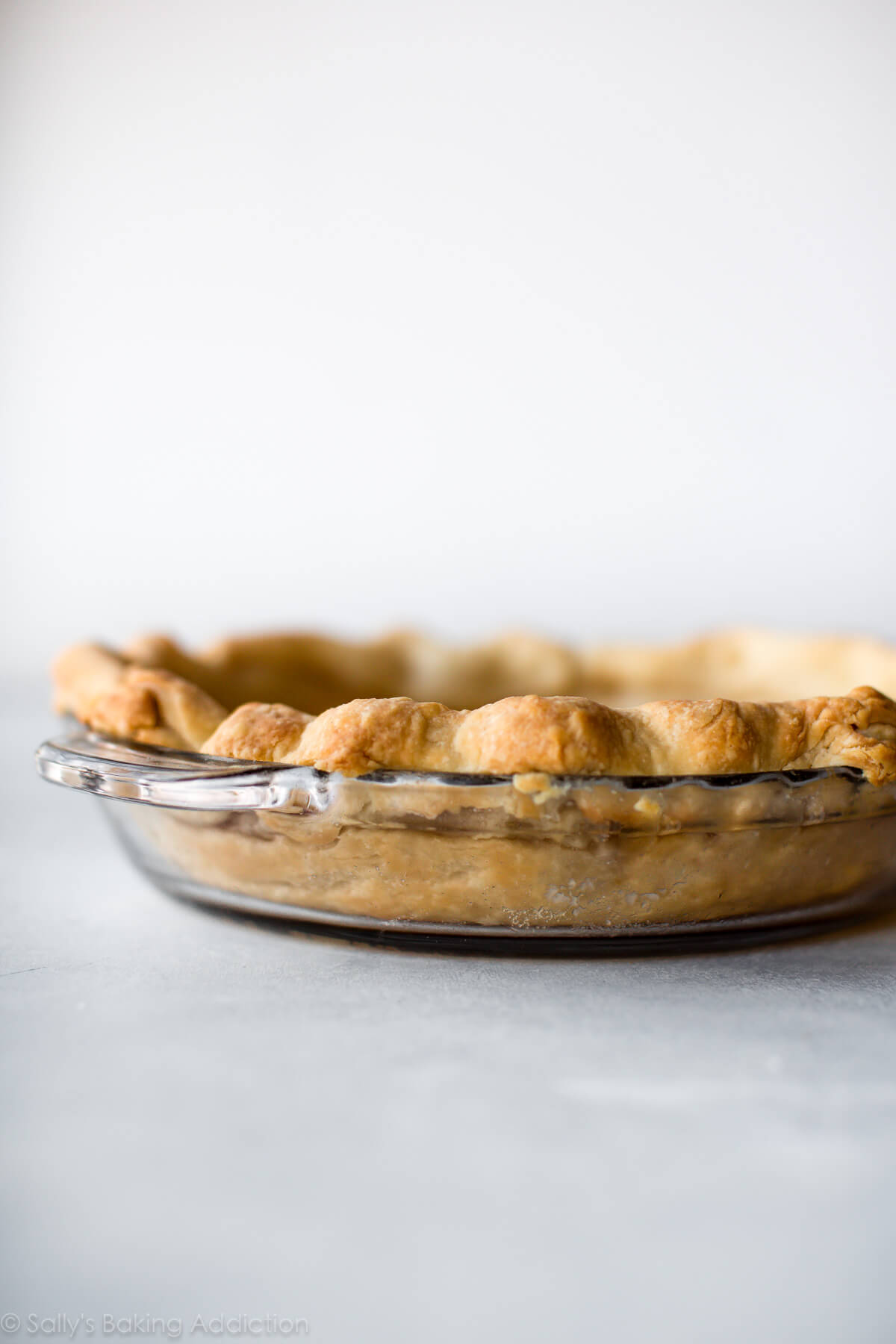
I originally published this tutorial in 2018 and have since added new photos, a video tutorial, and a few more success tips.
Par-baking (which can also be called blind baking) is an integral step in many pie recipes and a basic baking technique to have in your back pocket. Classic recipes such as coconut cream pie, pumpkin pie, and lemon meringue pie require some sort of blind baking.
Par-baking pie crust sounds pretty intimidating, especially if you’re already nervous about making pie from scratch. I’m here to tell you (and show you!) that blind baking pie crust is simple, and I have a few tips to help guarantee success.
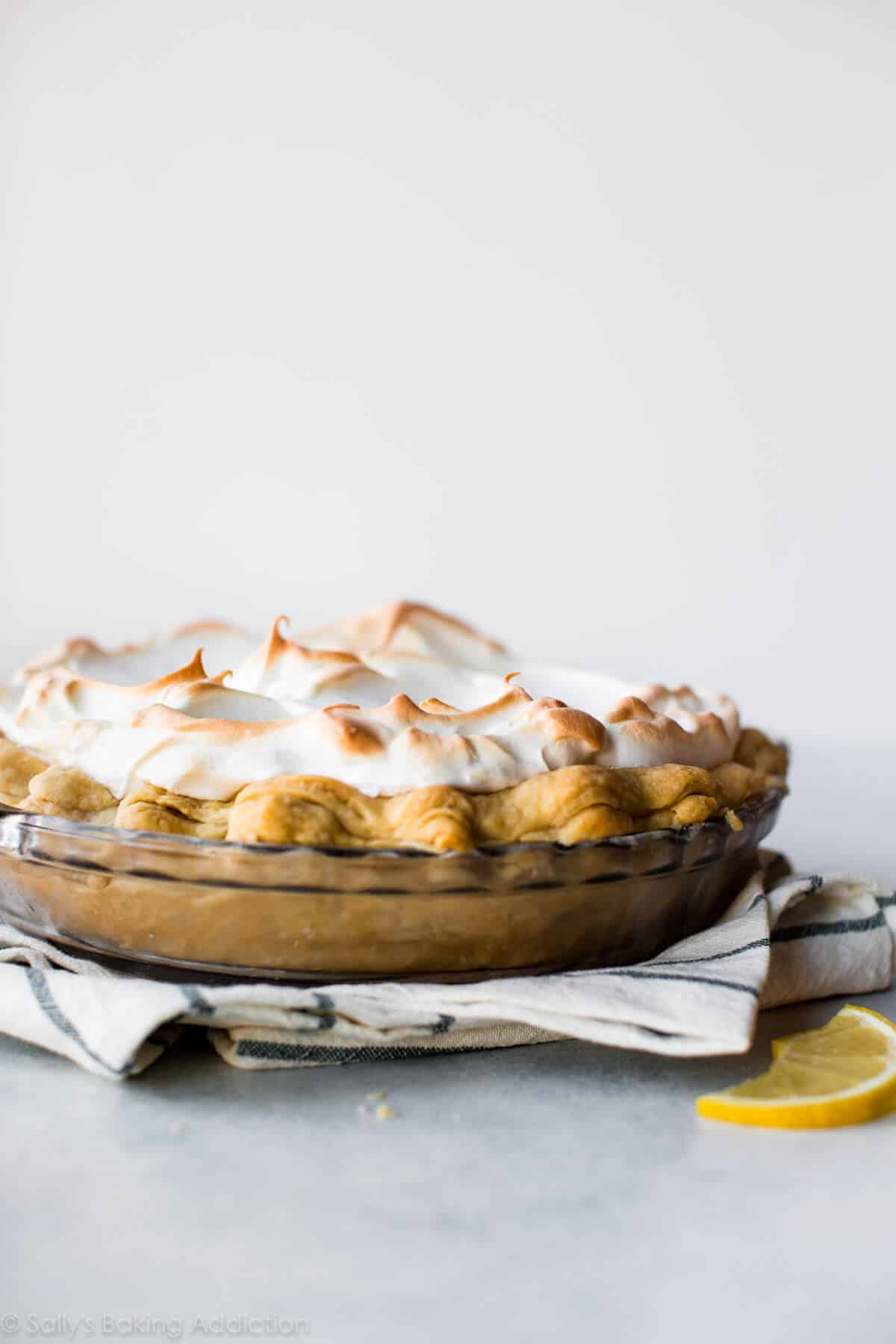
Why Par-Bake?
Why would you bake pie crust without a filling? There are a few instances, actually. You need a par-baked or fully baked crust if you’re making quiche, no-bake pie, custard pie, cream pie, pudding pie, or simply want an extra-crisp pie crust. If you’re making a pie that doesn’t require a baked filling, you still need a baked crust. Or if you’re baking a pie with a liquid-y filling that sets quickly in the oven, like pumpkin pie, your crust may need a baking headstart.
One reader, Marylou, commented: “I made 2 par-baked crusts for pumpkin pies. They turned out perfectly. Well worth the extra step. No mushy bottom crust! ★★★★★“
Fully Blind Baked vs. Partially Baked
If your pie recipe calls for a baked pie shell, such as butterscotch pie, you need to fully bake it. But some recipes require a partially baked pie crust and those recipes will typically include “pre-baking,” “partially baking,” or “par-baking” the crust in the instructions. I’ll show you both methods below.
Whether you’re fully blind baking or partially blind baking pie crust, the process is exactly the same; it’s the bake time that differs. Fully baked pie crusts bake for longer than partially baked pie crusts.
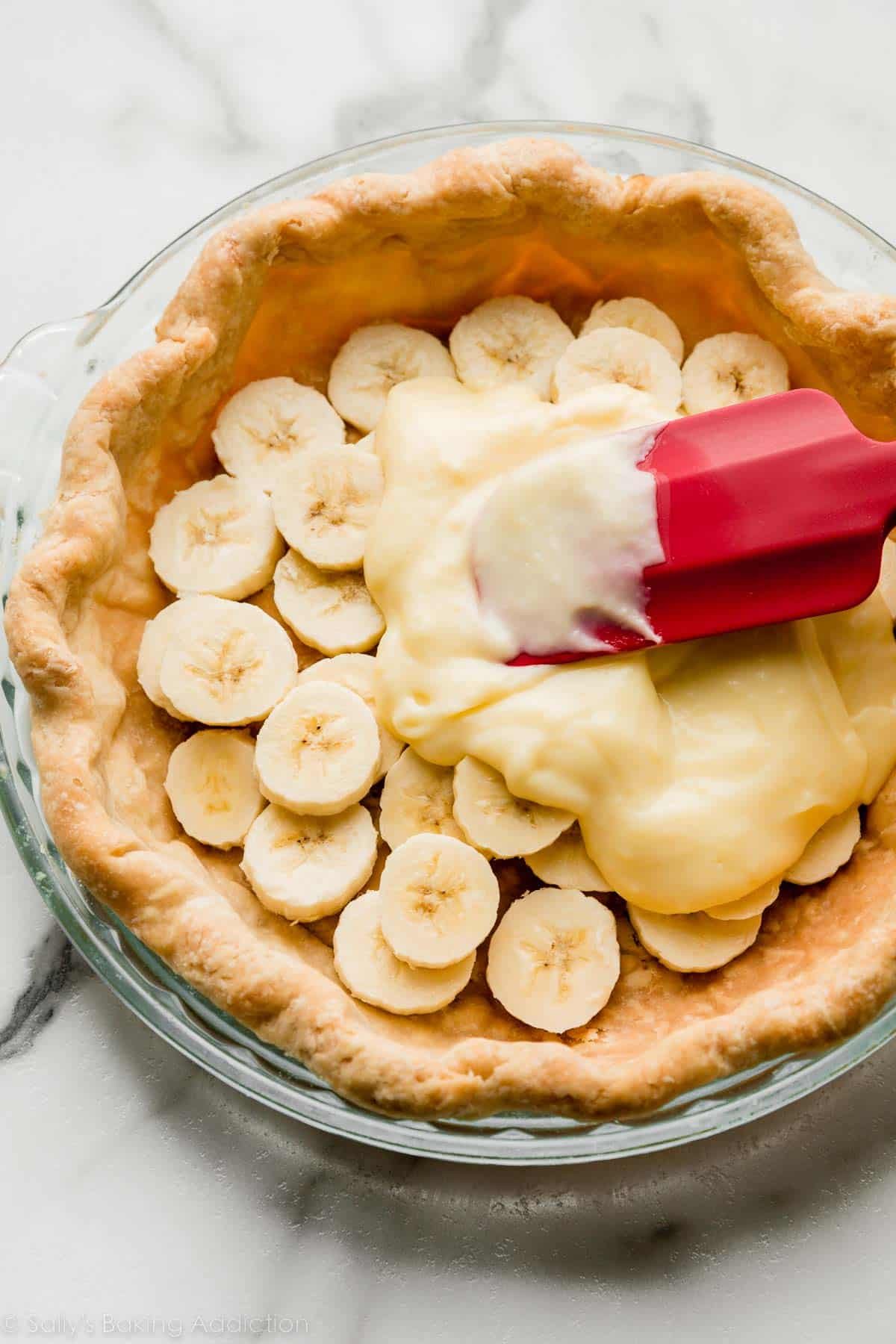
- Fully blind bake a pie crust if you’re making no-bake pie like coconut cream pie.
- Partially bake a pie crust if your crust needs longer in the oven than the pie filling, such as brownie pie or quiche. And if you want an extra-crisp pie crust for your apple pie, you can partially blind bake the crust before adding the filling.
How to Par-Bake Pie Crust
While the idea of baking pie crust is quite simple, there’s more to it than just throwing pie dough in a pie dish and baking.
Here’s our problem: As the pie dough bakes, the fat melts. This causes the pie crust to shrink down the sides of the pie dish. And as the fat melts, it creates steam. Steam is both good and bad. It creates DELICIOUS layers and flakes, but also causes the pie dough to puff up when there’s no heavy filling weighing it down.
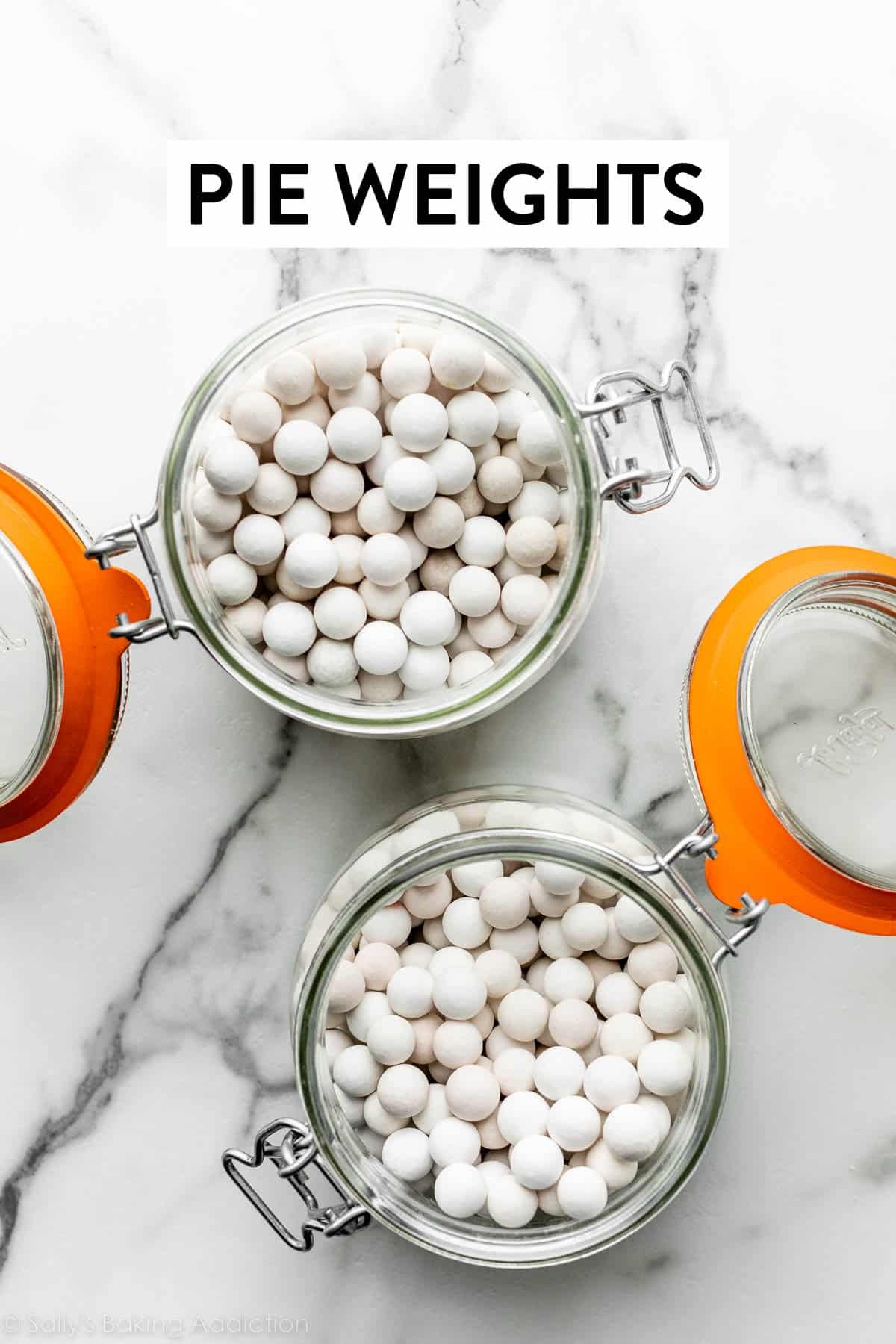
Here’s our answer: Weigh down the pie crust with something so it doesn’t puff up in the center or shrink down the sides. Carefully line the pie dough with parchment paper first, then add some weight. You can purchase special pie weights or you can use dry beans. I’ve also seen the use of granulated sugar and even pennies. I just stick to pie weights. Note: 2 packs of these pie weights is definitely needed!
You’ll bake the pie crust with pie weights until the edges set, or lightly brown, which is about 15 minutes.
One reader, J.D., commented: “Finally had a pie crust that didn’t shrink or melt down the sides. Great instructions, thank you! ★★★★★“
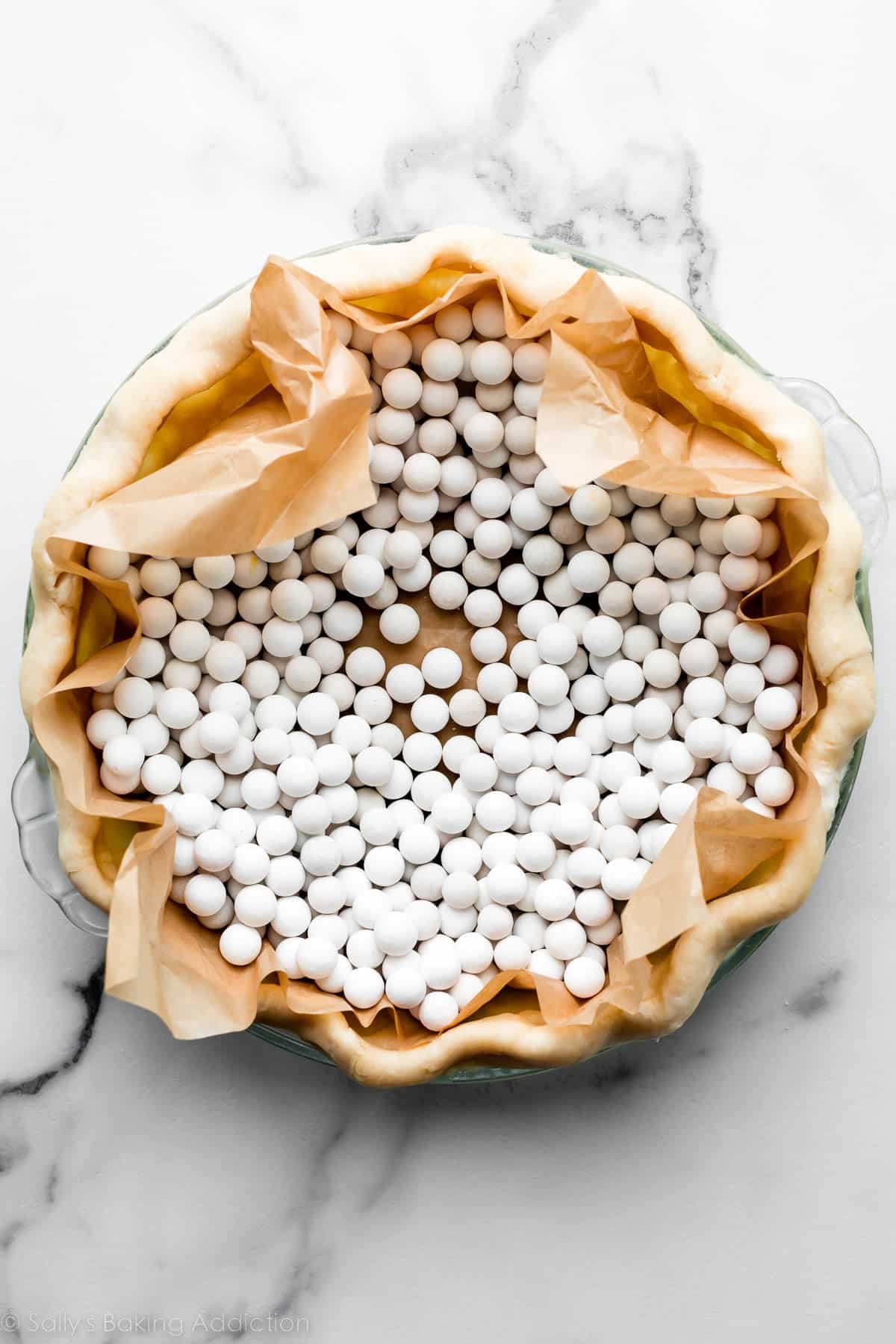
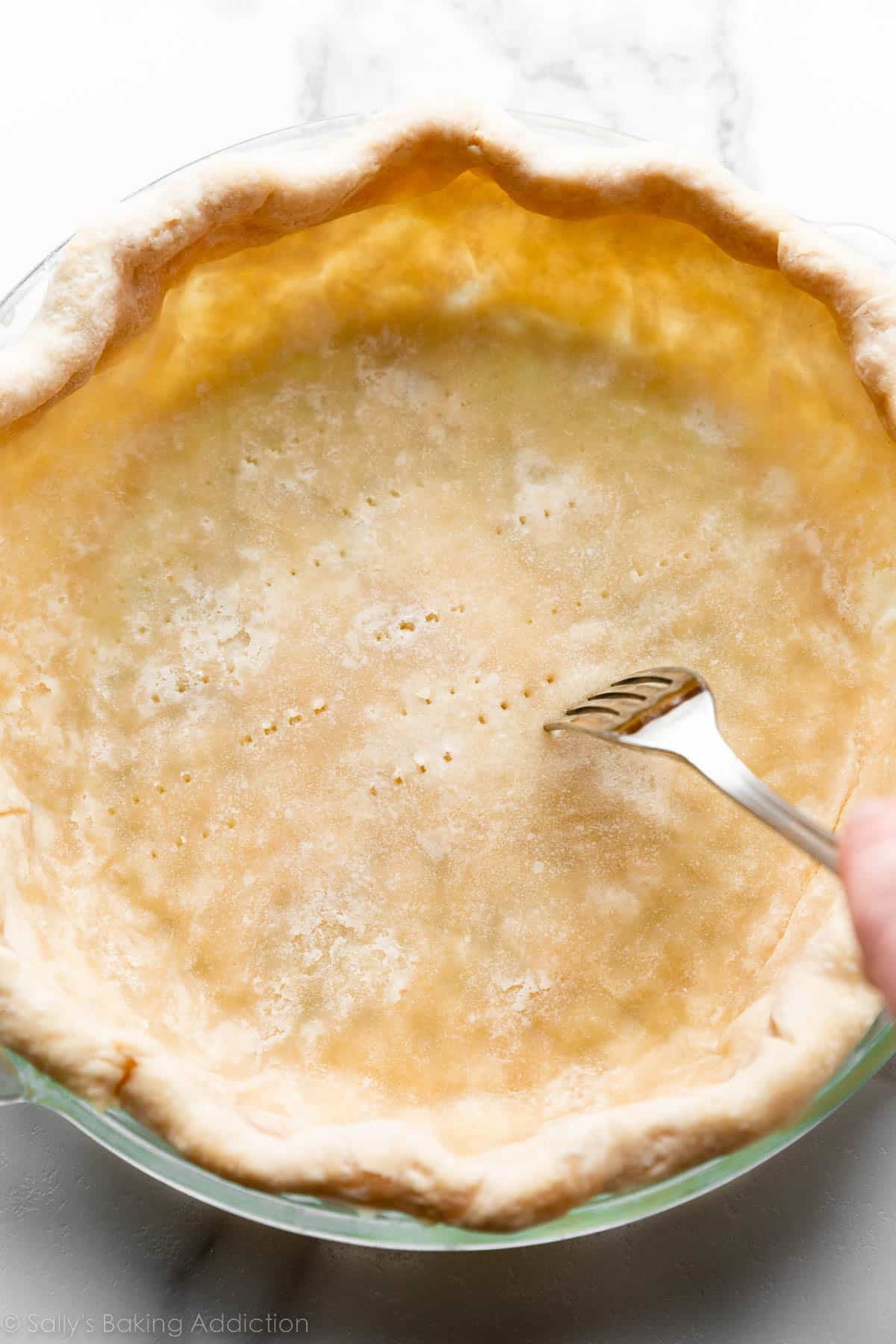
Because it’s covered with weights, the bottom of the pie crust doesn’t cook. You have to return it to the oven after the edges have set. But first, dock it with a fork:
How to Dock Pie Crust
Once the crust is brown around the edges, carefully remove the parchment paper + weights, then let the crust cook a little longer on its own. The amount of time the “weight-free” pie crust bakes depends on if you need a partially baked crust or a fully baked crust.
Before returning to the oven without the weights, you need to prick the bottom crust with a fork to prevent it from puffing up. Pricking holes in pie crust is also called “docking” the pie crust.
Some bakers skip the pie weights and just dock the pie crust from the beginning, but I’ve never had luck this way. The sides of my pie crust still shrink down. So I always use pie weights, remove them after the edges begin to turn brown, dock the crust with a fork, then return it to the oven so the bottom cooks.
How Long Does the Pie Crust Bake After Removing the Weights?
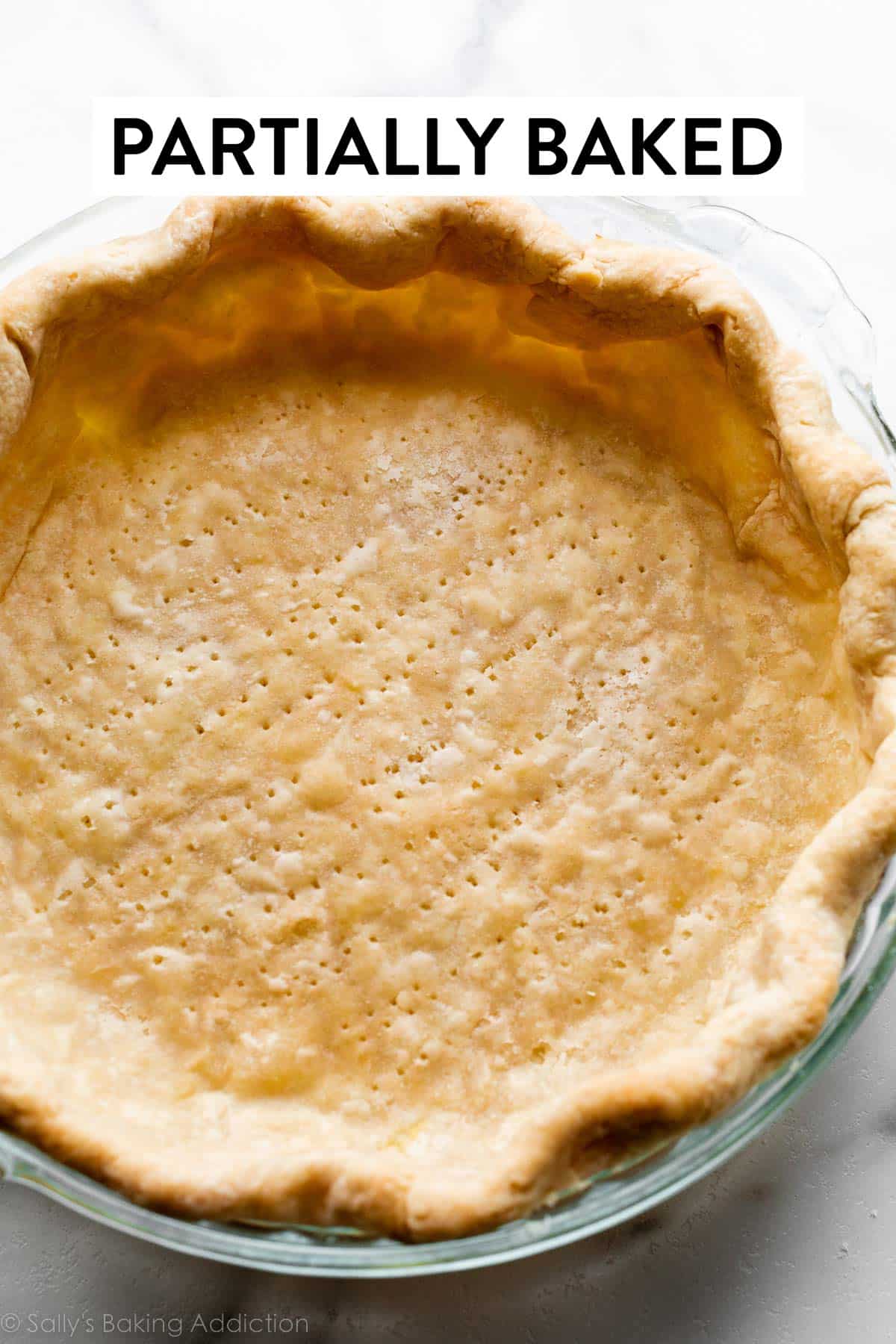
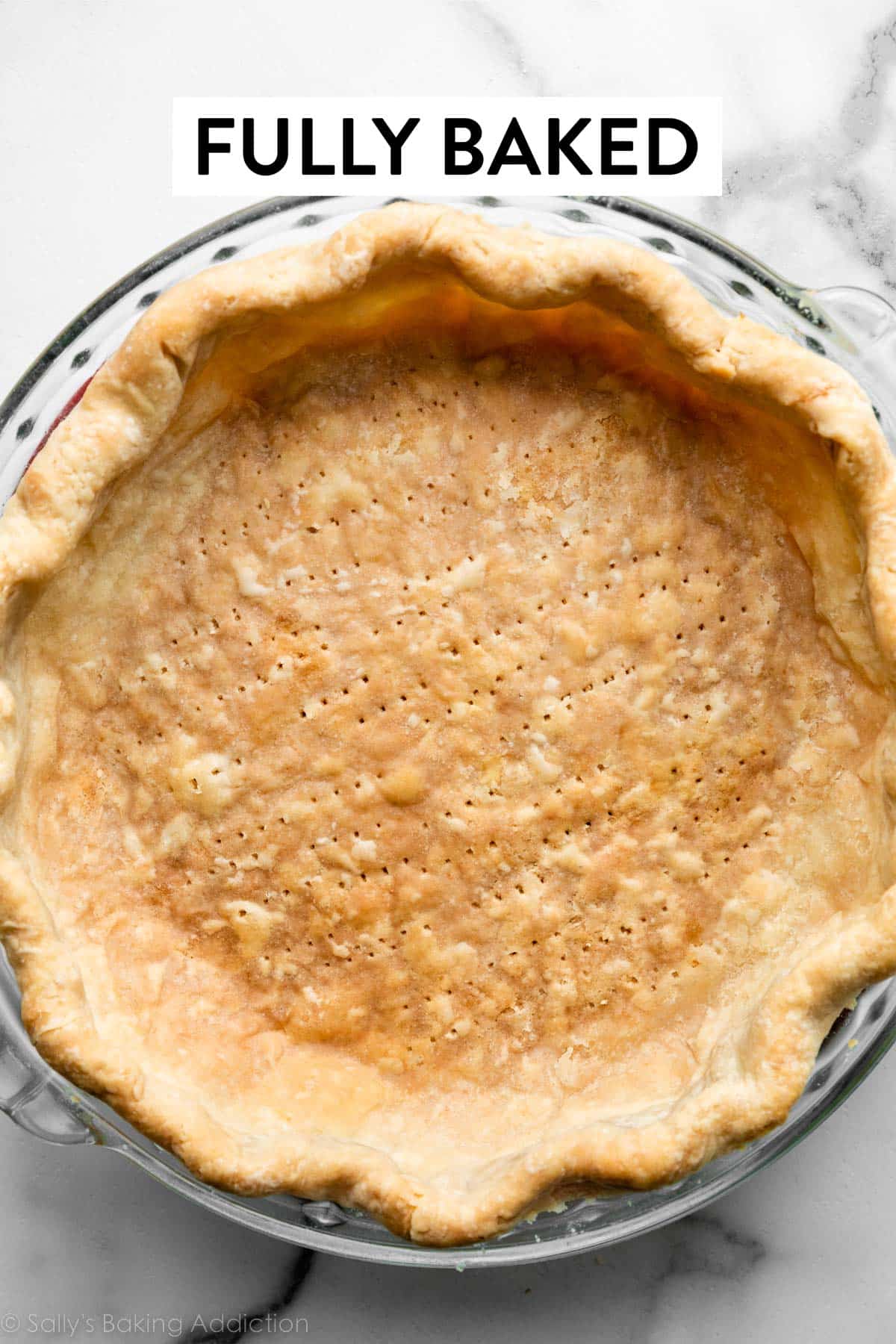
The remaining oven time depends on whether you want a partially blind baked pie crust or a fully blind baked pie crust. For a partially baked pie crust, bake until the bottom just begins to brown, usually about 7–8 more minutes. To fully bake a pie crust, bake until the bottom and edges are browned and cooked through, about 15 more minutes.
Partially baked means your crust is just barely brown and the pie will return to the oven with a filling:
Fully baked means your pie dough is 100% cooked and ready for a no-bake filling:
Like banana cream pie:
FAQ: Do I Need to Par-Bake a Store-Bought Pie Crust?
If your recipe calls for a baked or par-baked pie crust, and you are using store-bought pie dough, you still need to par-bake it. For example, if using store-bought crust in this brownie pie recipe, you still need to follow the par-baking instructions in that recipe (which are the same instructions you find below).
FAQ: Can I Add an Egg Wash?
Many pie recipes call for brushing the crust with an egg wash, and typically the recipes will tell you when to do that. If you aren’t sure when, and you need to par-bake the crust, you can brush the crust’s edges with an egg wash after par-baking with pie weights, and before returning to the oven to bake without the weights. This is what we do for my chai pumpkin meringue pie recipe. An egg wash is 1 egg beaten with 1 Tablespoon of milk or water. Use a pastry brush.
FAQ: How Can I Apply a Top Crust to Par-Baked Bottom Crust?
Blind-baking is usually required for custard-type pies, where there generally isn’t a top crust. Adding a top crust, such as lattice pie crust or other beautiful pie crust designs is possible though. I’ve always found Erin McDowell’s tutorial for this helpful. A lot of it is tucking the top dough edges under the par-baked bottom crust edge, and then crimping the pie crust edges together.
How to Prevent Pie Crust From Shrinking
Pie weights prevent the bottom crust from puffing up and help prevent the sides from shrinking down, but up until recently, I still had trouble with the sides losing shape. It was so frustrating. I played around with some techniques and now my pie crusts never shrink. I have a nice thick crust with a beautifully fluted or crimped shape around the pie dish. And you can too!
2 TRICKS THAT HELP:
- Make sure you chill your pie shell before par-baking.
- Make sure you have a thick crust on the sides using my “dough strip” technique.
Chilling the pie shell before par-baking doesn’t need much explanation, so let me show you how I create thick edges.
DOUGH STRIP TECHNIQUE
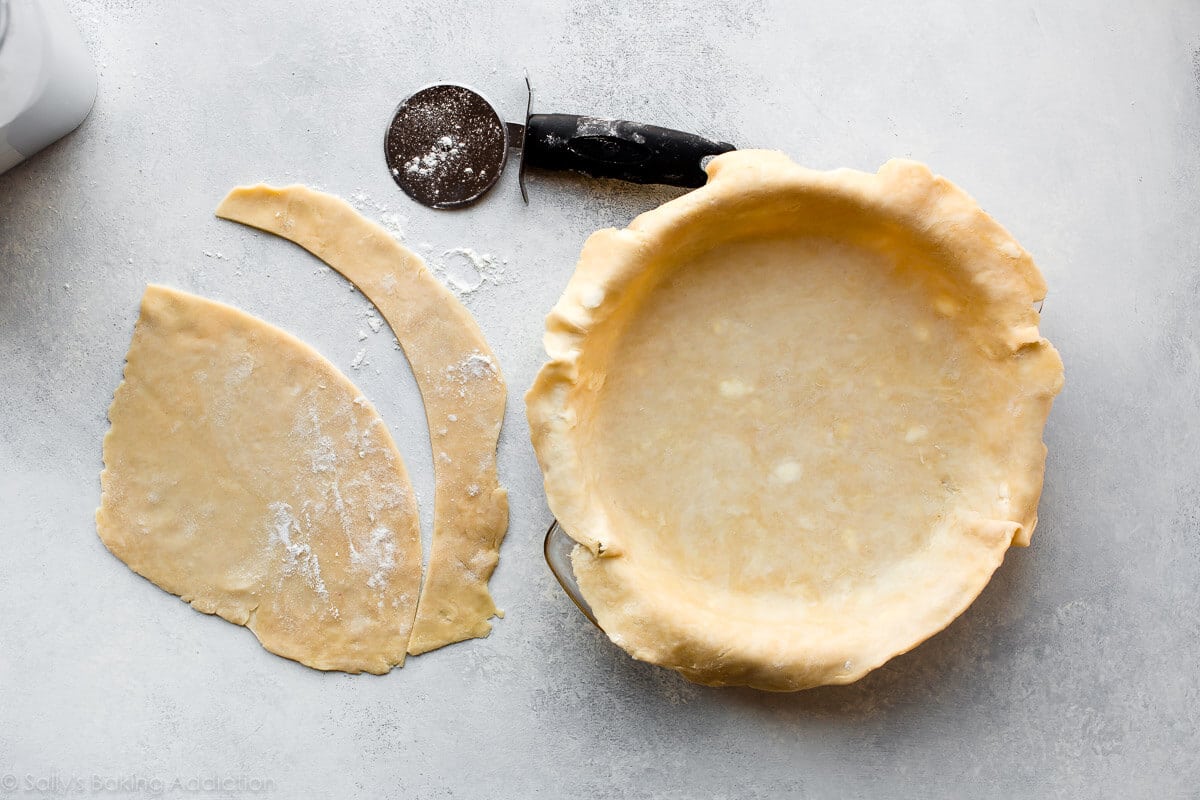
Roll out your pie crust dough and fill your pie dish. Grab some extra pie dough, cut into strips, and meld the strips around the edges.
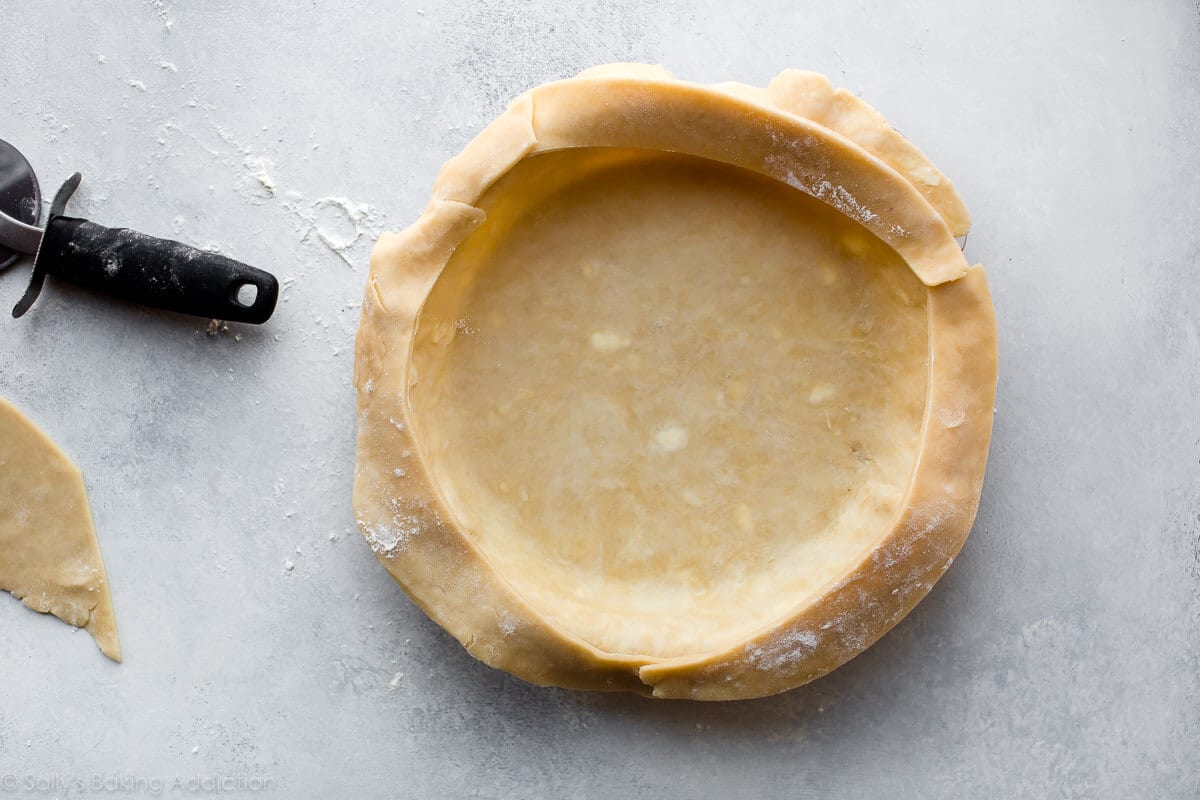
Use your fingers to work the extra strips of dough into the edges.
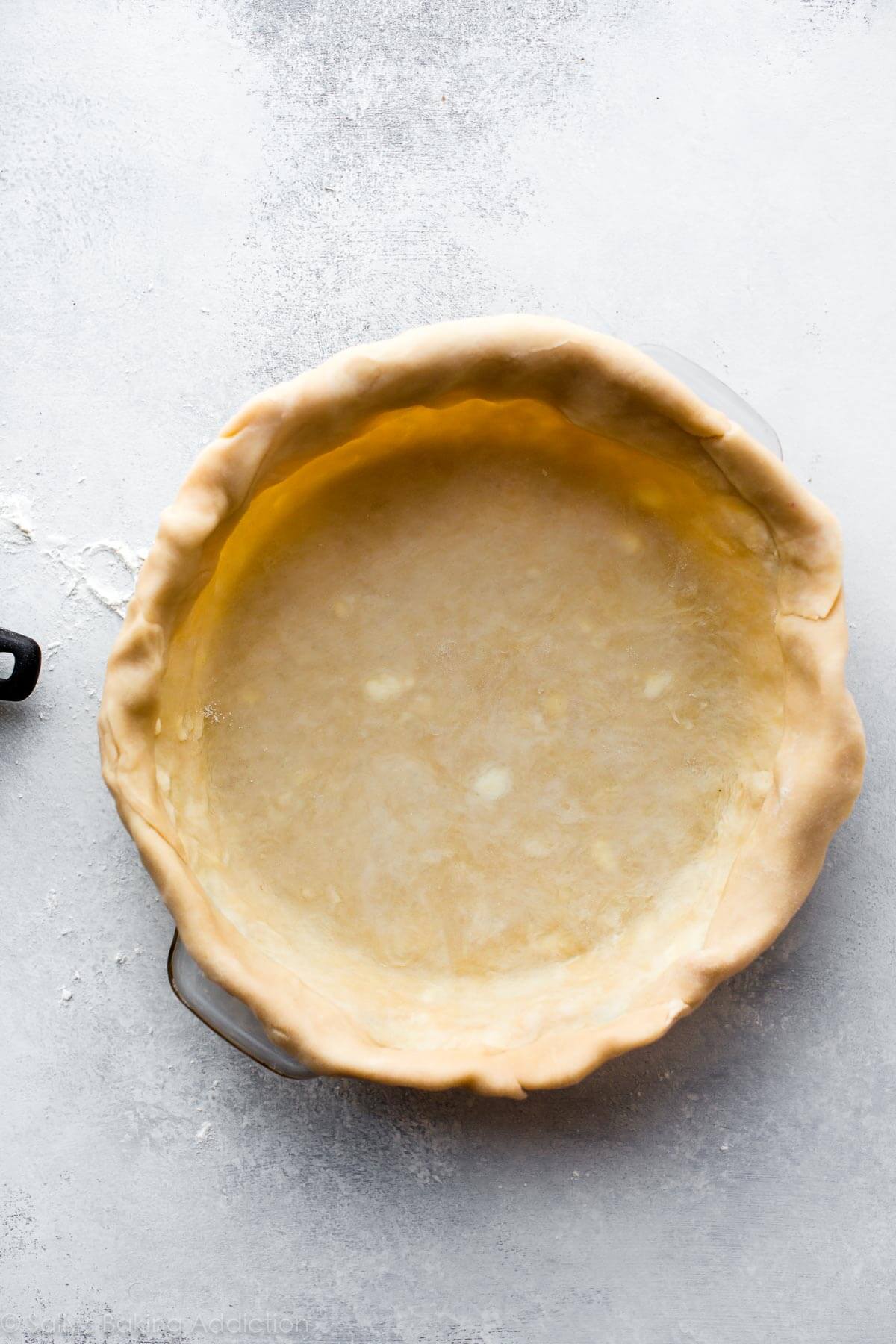
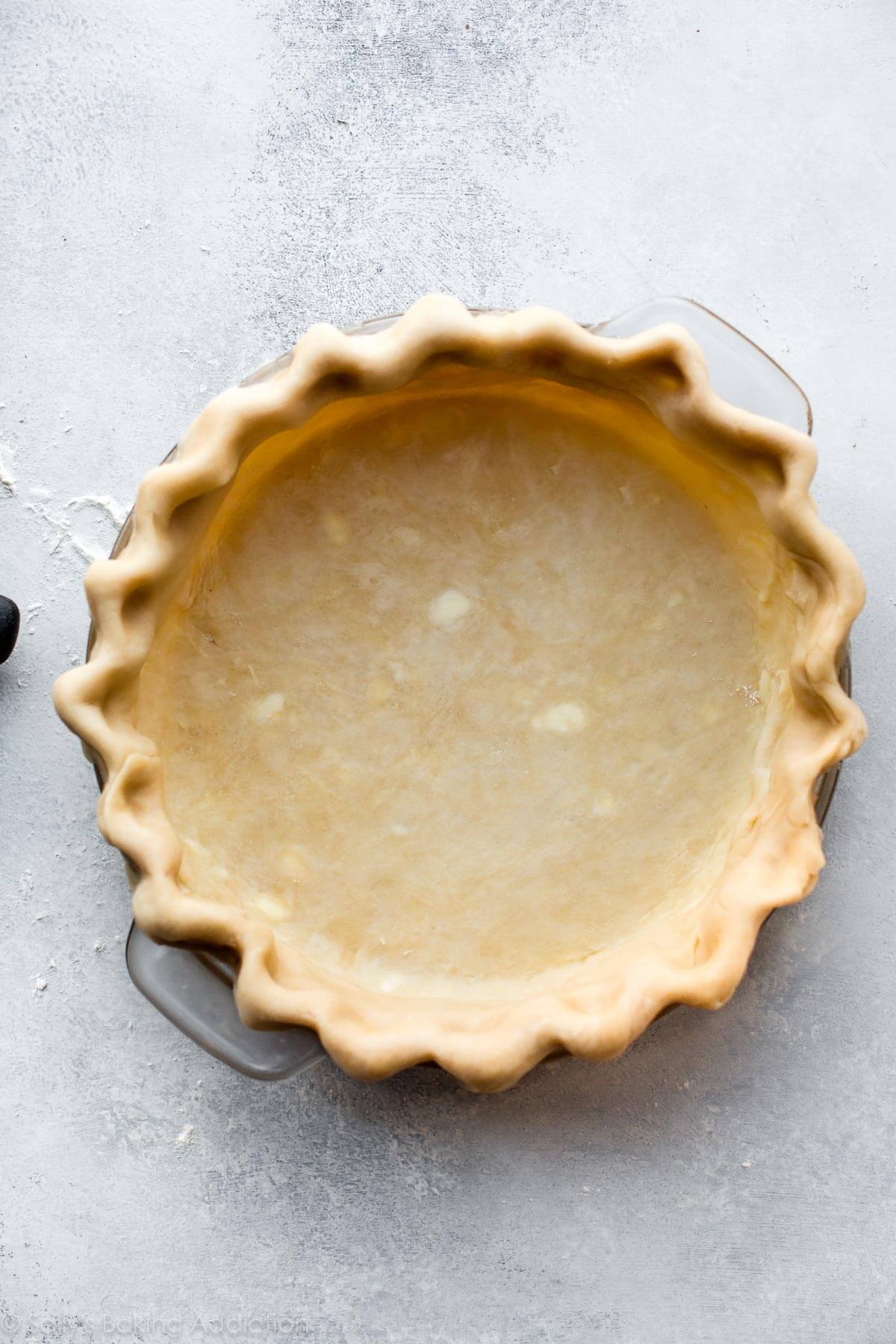
Now it’s all 1 uniform crust with extra thick and sturdy edges. My dough strip technique uses about 1 and 1/2 pie crusts. No big deal since my pie crust recipe makes 2 crusts. You’ll have 1/2 pie crust leftover for the next time you need dough scraps.
If you need extra help with the shaping, review my how to crimp and flute pie crust tutorial.
One reader, Shannon, commented: “FINALLY—my crust didn’t shrink on the sides or lose its shape! This was always my problem—and it was so frustrating—until I tried the dough strip technique. THANK YOU! ★★★★★“
That was a lot of information thrown at you, but I promise it’s manageable! And if you need it, I also have a list of my top 10 pie baking tools.
Print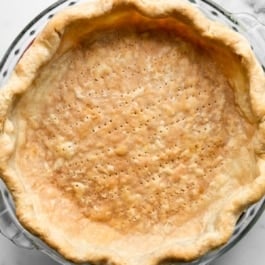
How to Blind Bake Pie Crust
- Prep Time: 2 hours 45 minutes
- Cook Time: 30 minutes
- Total Time: 3 hours 15 minutes
- Yield: 1 pie
- Category: Pie
- Method: Baking
- Cuisine: American
Description
Use this tutorial to learn how to blind bake a pie crust, whether that’s fully blind-baking before adding a no-bake filling, or partially baking (par-baking) the crust before returning to the oven with a filling.
Ingredients
- pie dough such as homemade pie crust (recipe makes 2 crusts)
- pie weights (you need 2 packs)
- all-purpose flour, as needed for rolling out dough
Instructions
- Make the pie dough: Prepare and chill your pie dough for at least 2 hours. If using the linked recipe, prepare pie crust through step 5.
- Roll out the chilled pie dough: On a floured work surface, roll out one of the discs of chilled dough (keep the other one in the refrigerator until you need it). Turn the dough about a quarter turn after every few rolls until you have a circle 12 inches in diameter. Carefully place the dough into a 9-inch pie dish. Tuck it in with your fingers, making sure it is completely smooth.
- Dough strip technique: This step is optional, but will help prevent the sides from shrinking down as well as promise a thick and sturdy crust. Remove the 2nd pie dough disc from the refrigerator. Roll out the same way you rolled out the first one. Using a pizza cutter, slice rounded 1- or 2-inch strips, and arrange around the edges. Use your fingers to meld the dough together. What you’re basically doing here is adding another layer of crust to just the edges. Crimp or flute the pie crust edges. They should be nice and thick now. Wrap up any leftover pie dough to use for next time. Freeze it for up to 3 months.
- Refrigerate: Chill the shaped, unbaked pie crust in the refrigerator for at least 30 minutes and up to 5 days. Or freeze for up to 3 months. Cover the pie crust with plastic wrap if chilling for longer than 30 minutes or if you’re freezing it. If you freeze it, let it thaw for a couple hours in the refrigerator before continuing.
- While the crust is chilling, preheat oven to 375°F (190°C).
- Fill with weights: Line the chilled pie crust with parchment paper. (Crunch up the parchment paper first so that you can easily shape it into the crust.) Fill with pie weights or dried beans. I like to push the weights up against the sides of the pie crust to help ensure the sides don’t shrink down.
- Bake: Bake until the edges of the crust are starting to brown and appear set, about 15–16 minutes. Remove pie from the oven and carefully lift the parchment paper (with the weights) out of the pie. With a fork, prick holes all over the bottom crust. Return the pie crust to the oven.
- If you need a fully baked pie crust, bake until the bottom crust is golden brown, about 14–15 minutes longer. For a partially baked pie crust (if you’re baking the pie once it is filled, like a quiche), bake until the bottom crust is just beginning to brown, about 7–8 minutes.
- If you’re making a no-bake pie, let the baked crust cool completely before adding the filling unless your pie recipe states otherwise. For pies that will go back in the oven, like quiche or pumpkin pie, the crust can still be warm when you add the filling. (Again, unless your recipe states otherwise.)
Notes
- Make Ahead Instructions: You can make pie dough and freeze it for up to 3 months. See my pie crust recipe for details. If you want to shape the pie dough ahead of time, see step 4 above.
- Special Tools (affiliate links): Rolling Pin | 9-inch Pie Dish | Pizza Cutter | Pie Weights
- Egg Wash: Many pie recipes call for brushing the crust with an egg wash and, typically, your pie recipe will tell you when to do that. If you aren’t sure when, and you need to par-bake the crust, you can brush the crust’s edges with an egg wash after par-baking with pie weights (step 7), and before returning to the oven to bake without the weights (step 8). An egg wash is 1 egg beaten with 1 Tablespoon of milk or water. Use a pastry brush.
- How Can I Apply a Top Crust to Par-Baked Bottom Crust? Blind-baking is usually required for custard-type pies, where there generally isn’t a top crust. Adding a top crust, such as lattice pie crust or other beautiful pie crust designs is possible, though. I’ve always found Erin McDowell’s tutorial for this helpful. A lot of it is tucking the top dough edges under the par-baked bottom crust edge, and then crimping the pie crust edges.












Reader Comments and Reviews
I was wondering if you have a picture of the pie crust partially baked when the pie weights are lifted out. My pie crust bottom seemed doughy. Is that normal?
Hi Patty, the photo in the post of the fork docking the crust is after the weights have been removed. It’s going to look a little greasy and doughy.
I love this site. But somehow this recipe is a failure for me. Crust shrinks dow side on second bake.
Help! Why is my pie crust bottom puffing up during the second bake? I’ve pricked it a million times!
Hi Danielle, it can still happen. Perhaps the pricked holes melded back together. Not a big deal, you can deflate the bottom with a toothpick when it comes out of the oven.
Hi Sally. Love your website. Question regarding putting pie crust in a glass plate into fridge to chill 30 minutes+ before baking. I read online that you shouldn’t do that with a glass plate as it can crack or shatter. Every recipe I see says to do this but I’m still concerned. Thanks
Hi Maggie, I think it depends on the quality of your glassware, and whether it can withstand changes in temperature. Sally and I usually use these pie dishes, and it’s never been an issue!
SALLY, your recipes are the best. Always pick yours to try first.
Where does it show the temperature to bake the crust? Could not find it.
Hi Kathy, see step 5: “While the crust is chilling, preheat oven to 375°F (190°C).”
Wow such great information!! Where have you been my whole life?!:;) You are my go to now for everything. Seriously thank you
I made 2 par baked crusts for pumpkin pies. They turned out perfectly. Well worth the extra step. No mushy bottom crust! Yay
I made 2 par baked crusts for pumpkin pies. They turned out perfectly. It was I par baked 2 crusts for pumpkin pies. Well worth the extra step. No mushy bottom crust! Yay
Amazing. Pumpkin pie with a par bake crust is divine. Your instructions are perfect.
Disaster!!
Followed the directions and my pie crust is burned to a crisp!
FINALLY — my crust didn’t shrink on the sides or lose its shape! This was always my problem –and it was so frustrating! –until I tried the dough strip technique. THANK YOU! Additionally, I saw a reply to a comment in another pie recipe that helped. Someone needed to make a larger pie and it was recommended to try 1.5x the normal crust recipe. Since I needed 2 crusts for Thanksgiving pies, and I would need extra crust for the dough strips, I did 1.5x the recipe. Both crusts turned out beautifully.
Please help! I prepared and par-baked my butter pie crust per your instructions. When I removed the crust from the oven after baking with the pie weights there was a pool of bubbling butter. I poked holes in the crust and put it back in the oven to complete the pre-bake. When I took it out this time the sides had shrunk down and there was still a ton of bubbling butter in the bottom. What did I do wrong? Thanks 🙂
Hi Courtney, was your pie crust cold before going into the oven? A cold crust is key for ensuring the pie dough keeps its shape. The section titled “How to Prevent Pie Crust From Shrinking” will be helpful for troubleshooting as well. We hope this helps and thank you for giving our pie crust a try!
Quick question. Do you chill the pie crust before baking (doing a full bake) and if so with the ceramic weights in it? ( I know my past error has been only one container of ceramic weights. :/ Ordering another set now)
Thank you for your always quick replies!
Hi Ann! We do not refrigerate the pie crust with the pie weights in it. Just place the dish right in the refrigerator; cover the pie crust with plastic wrap if chilling for longer than 30 minutes or if you’re freezing it. Then add the parchment paper and pie weights before blind baking. Hope this helps!
Every pie crust tutorial I’ve read, and there were many, left me with questions. This tutorial answered them all and provided info I didn’t even know I needed. So satisfying! Thank you!
I’m glad you found it helpful. Thank you!
I have never had luck making a pie crust from scratch, so I don’t try anymore, I use Pillsbury pre-made. So why am I posting here? The last few times, after MANY years of just filling the crust, I am following your par-baking instructions. This has elevated the store bought crust so much, it turns out flakey not doughy! Thank you. One of these I may venture into making your pie crust.
I have always been confused about how to pre-bake a pie shell for cream pies. I have pie pans from my great aunt with holes in the bottom. I am going to pre-bake without weighing them down. It’s going to be a hit and miss, but I needed to know what temperature and how long to bake them. I am anxious to try this out. If it doesn’t work, I will know to get weights the next time. Thank you for your input.
I like adding pie crust cookies on top (leaves, pumpkins, etc) which have scored lines/designs in them. I find that when I use egg wash, the design gets filled/gummy as I apply wash and gets a little lost. I’ve tried brushing only around the scored lines, but then I don’t get an even color. Do I need to par bake these cookies for a few minutes before applying egg wash? Or is there another trick to keep the scored design distinct?
Hi Lawrence, I know just the issue you are running into. What I usually do is apply the egg wash as usual and then go over the scored lines/designs with a toothpick. You’ll deepen the scoring that way, and it’s after you add the egg wash. I find the designs hold better during/after baking when doing this.
Finally had a pie crust that didn’t shrink or melt down the sides. Great instructions, thank you!
Perfect crust!!! No soggy bottom! Thank you!
I have used this before and I worked great. But I just moved and I don’t have any parchment paper. What can I use instead?
Hi Lexee, we haven’t tested this with anything other than parchment paper. Best to wait until you have some on hand, if you can!
Aluminum foil works.
Par baking the crust and several times at trying, there are several holes in the base of the crust which the filling leaked under and made a mess. I have tried patching, chilling and freezing. What could I be doing incorrectly? Using the butter/shortening pie crust on this website.
Hi Zoe! If the butter/fat chunks are a little too big, the melted butter will create holes in the crust. Try working in the fats just a little bit more next time.
Hi there! Can i do a partial blind bake and refrigerate overnite until ready to use?
Hi Bridget, yes! You can partially blind-bake a crust up to 3 days ahead of time. Cover and store in the refrigerator (without weights) until ready to use.
Don’t you have to wet the edges to make the strips stick together.
Hi Johna, since the crust isn’t baked all the way through for a par-bake, the top crust will still stick (and you can use a very tiny bit of water if needed to help do so).
When I return the crust to the oven after removing the pie weights how long do I put it in for? Is the temperature the same?
Hi Maia, yes the temperature is the same. See instruction #8: If you need a fully baked pie crust, bake until the bottom crust is golden brown, about 14–15 minutes longer. For a partially baked pie crust (if you’re baking the pie once it is filled, like a quiche), bake until the bottom crust is just beginning to brown, about 7–8 minutes.
I don’t know what I did wrong but this technique but it was a total fail for me. I used your layering technique to reinforce the edges and made a nice scalloped edge, chilled the crust for 30 mins in the fridge and even set the oven to 200c but the crust still melted and pieces dropped off of the side and I had to take a fork during the blind baking process to scoop up my crust from the rack and press it back onto the pie dish.
HI Marz! Perhaps the dough was too hydrated? Make sure to only add water until it comes together – try less next time. And make sure not to use too much crust with the extra dough strips so that it isn’t hanging over the edge too much. You want it mostly contained to the pie dish so it can’t fall off during baking.
Kudos! Simplest and best pie pastry ever, and I’ve been hassling with more recipes and for more years than I like to think about. Note: I find that it’s easier to cut the half-frozen butter into 1/8 inch chunks and quickly work it and the shortening into the dough with my fingers. Also, roll the dough on a sheet of parchment paper — dough doesn’t stick to it’s easier to maintain a consistent shape and thickness because you can turn the paper which ever way while you roll.
Very simple procedure dispersed among thousands of words of garbage. Algorithm baiting trash, not a very good technique either
I believe you are outnumbered, Moua Pao.
Thank you, Sally for your detailed instructions. Excellent recipe.
Blind baking has always eluded me. Until your process, I had resigned myself with a skinny crust as it would slip down the sides every time. Just made a lemon meringue pie, and so happy to see a full crust on my pie. Thank you!
Chocolate Silk Pie Delicious and Presentation is Awesome
Followed the recipe and used good quality semi sweet chocolate
The first time I used this guide for par-baking, my crust turned out very pale, and I was really confused. But the second time (today), I read through the whole post super carefully and realized I had mistook step 7 as only being for fully baking crusts, but it was actually for par-baked crusts as well! I had taken off nearly half the baking time the first time The (properly) baked crust turned out as described in the recipe card!