

These 9 crucial baking tips help prevent a dry or dense cake. Applying these lessons in your kitchen helps promise a soft and moist cake!

Dry or overly dense cakes have absolutely no room in this world. However far too often, a seemingly innocent looking cake can fall victim to one or both of these texture tragedies. It’s happened to me approximately 3,520,958x and I’m always working to save my cake (and myself!) from the dense or dry cake catastrophe again.
There are ways to prevent and avoid these unfavorable textures. I’ve been practicing with cake recipes for several years and have learned a lot in the process. I wrote 9 crucial lessons that will help us the next time we’re baking a from-scratch cake.
I promise you SOFT & MOIST cakes!
1. Use Cake Flour
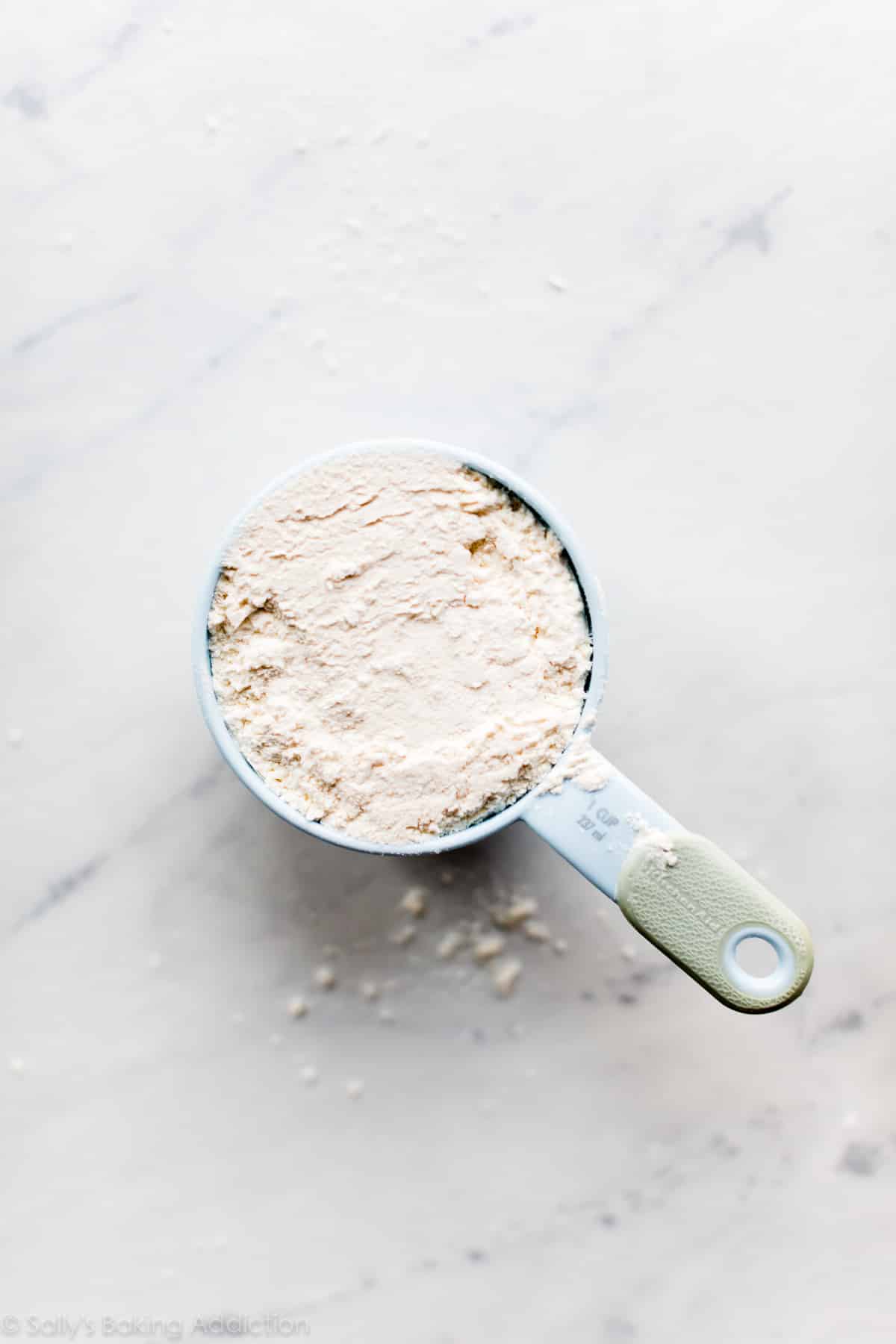
Reach for cake flour instead of all-purpose flour. Cake flour is a low protein flour that’s milled into a superfine consistency. This soft, tender texture directly translates into your cake. However, this isn’t an ALL or NOTHING rule. Some recipes simply cannot withstand cake flour’s fine consistency. Chocolate cake, for example, already has cocoa powder, which is a soft dry ingredient and takes the place of some flour in the recipe. More often than not, the combination of cake flour and cocoa powder results in a flimsy cake. Likewise, carrot cake and banana cake contain additional wet ingredients (the fruits or veggies), so cake flour isn’t ideal because it’s not strong enough.
However, when making vanilla cake, white cake, red velvet cake, vanilla cupcakes, and other cakes/cupcakes where a fluffy texture is favorable, try using cake flour. I’ve also been successful substituting cake flour for all-purpose flour to create softer pineapple upside-down cake and 1-layer sprinkle cake. (Make a 1:1 substitution with no other changes to the recipe. My pineapple upside down cake recipe has been updated to include it!)
Swans Down and Softasilk are my preferred cake flour brands (not sponsored!). I use unbleached when I can find it, otherwise I just stick with bleached. Both brands provide quality results for a decent price. Find cake flour in the baking aisle next to the all-purpose flour. If you can’t get your hands on cake flour, use this cake flour substitute.
2. Add Sour Cream
To help prevent a dry, dense cake, let’s add a creamy and light wet ingredient. Milk is usually required in a cake recipe to thin out the batter and lighten up the crumb, but sour cream is often overlooked. In addition to milk, add a Tablespoon or 2 of sour cream. Of course this depends on the recipe, but you’ll find that a lot of my cake recipes call for sour cream. Don’t underestimate the power of this ingredient! I even add it to my classic cheesecake, cheesecake pie, and no-bake cheesecake recipes. Plain yogurt is a fine substitution.
3. Room Temperature Butter / Don’t Over-Cream
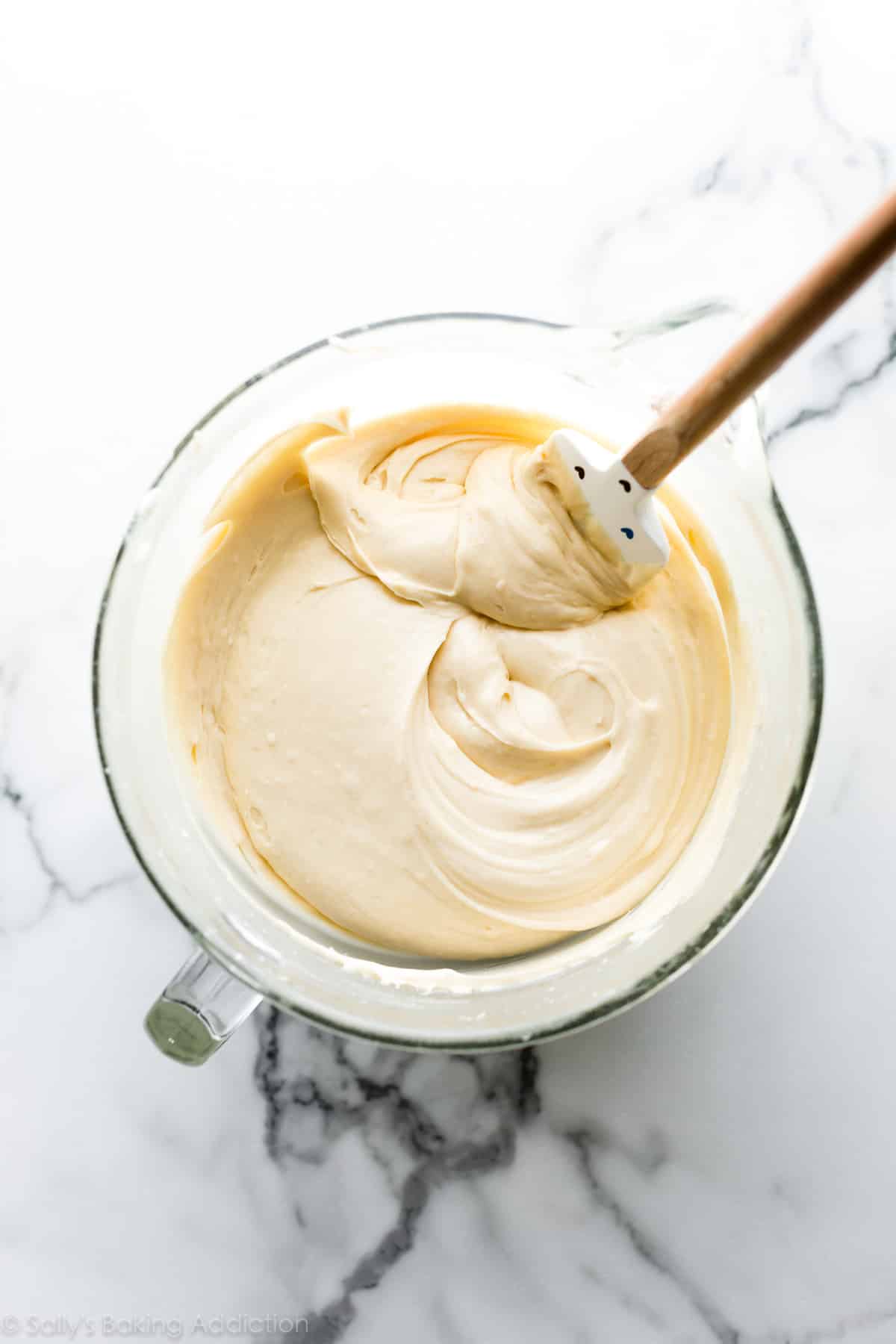
I sound like a broken record on this one, especially if you’re a regular reader. But when a recipe calls for room temperature butter, use room temperature butter. Most cakes begin with creaming butter and sugar together. Butter is capable of holding air and the creaming process is when butter traps that air. While baking, that trapped air expands and produces a fluffy cake. No properly creamed butter = no air = no fluffiness. Aka a dense cake.
But let’s say your butter was at the proper room temperature. You began creaming it with sugar, but then left the mixer running. There’s a big chance your butter and sugar will over-cream, meaning the butter will trap more air than it should. As the batter bakes, that extra air will deflate and leave you with an overly dense cake.
For best results, cream butter and sugar together for about 3-5 minutes. Here is my full tutorial on how to cream butter and sugar, including a helpful video and photos.
Additionally, the cake recipe may call for room temperature sour cream, milk, and/or eggs. Make sure they’re each at room temperature. Room temperature ingredients bond together easier and quicker since they’re warmer, thus reducing over-mixing. Over-mixing = dense cake. (See tip #6.)

4. Add a Touch of Baking Powder or Baking Soda
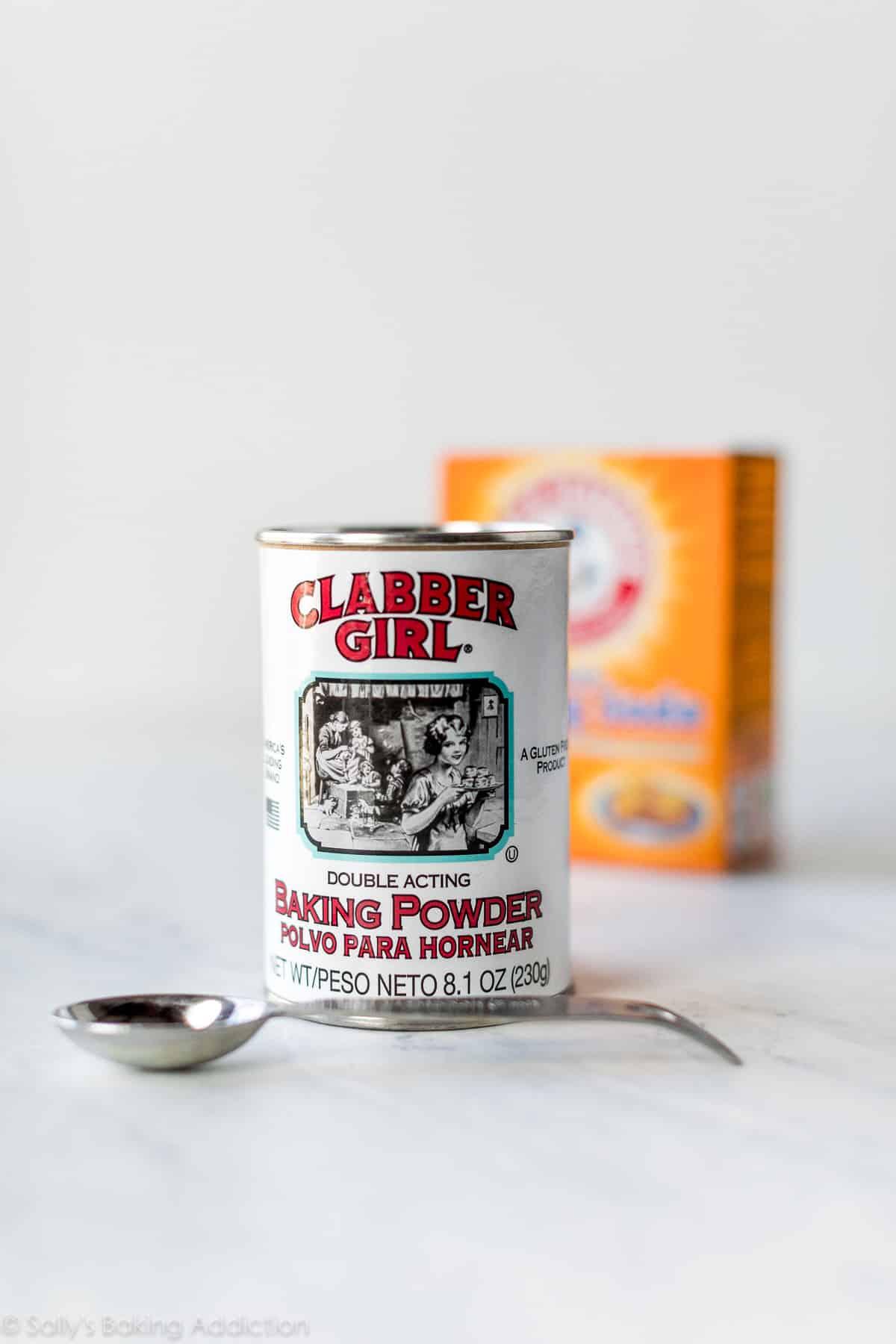
When a cake is too dense, one might think that adding extra flour will soak up more moisture and lighten up the crumb. However, that’s not usually the case. The cake likely needs more leavening support from baking powder or baking soda. This tip isn’t exactly a cakewalk (ha!) because these two ingredients are scientifically particular. If a recipe includes a lot of acid such as lemon juice and buttermilk and isn’t lifted with enough baking powder, the cake will taste dense. In that case, you may need the addition of baking soda which will react with the acid and create a fluffier crumb. Depending on the recipe, adding more baking powder or soda could leave a bitter aftertaste… so don’t go overboard.
This depends on the recipe, but I generally use around 1/4 teaspoon of baking soda per 1 cup of flour or 1 teaspoon of baking powder per 1 cup of flour. Remember the differences in baking powder vs baking soda and why we use both in some recipes?
5. Add Oil
The ratio of wet to dry ingredients determines a cake’s moisture level. If there’s simply too much flour and not enough butter, a cake will taste dry. On the other hand, if there’s too much milk and not enough flour, a cake will taste too wet. Finding the right balance between wet and dry ingredients is key. If you notice that a cake tastes too dry, add a little oil the next time you make it. My strawberry shortcake cake kept tasting a little too dry no matter what I did, so I added 2 Tablespoons of vegetable oil to the batter. It’s so moist!
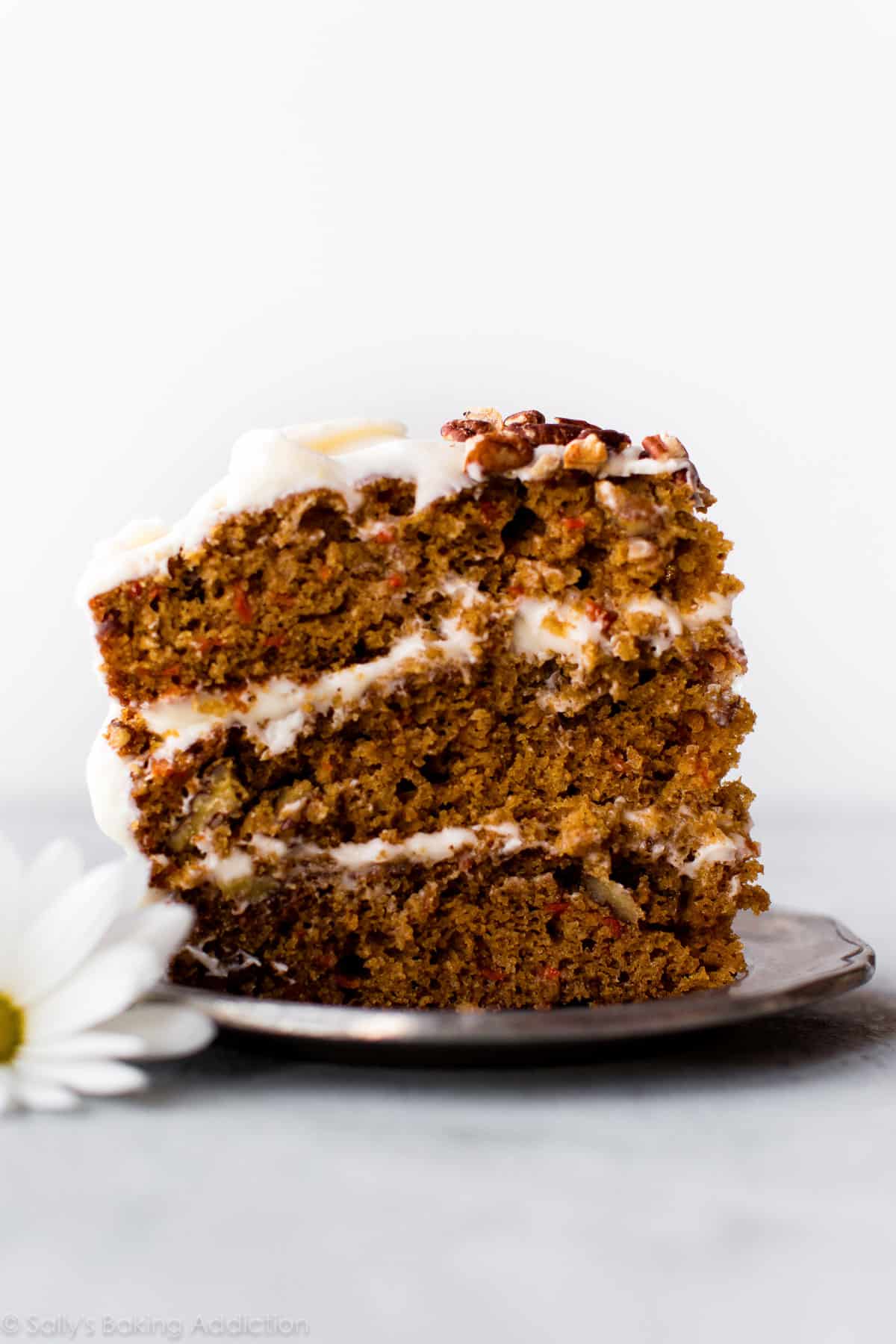
Some cakes use oil instead of butter. This is because there’s another flavorful ingredient in the recipe and butter’s flavor isn’t necessary. See my carrot cake and pumpkin cake.
6. Don’t Over-Mix
As mentioned in tip #3, over-mixing cake batter produces too much air. That trapped air expands then deflates in the oven. A deflated cake is a dense cake! Only mix the wet and dry ingredients together JUST until combined. I usually run a whisk or spatula through the batter a couple times at the very end to ensure there are no large lumps at the bottom of the bowl. Whether you’re using a mixer or mixing by hand, don’t over-mix.
7. Don’t Over-Bake
If you’re looking for a dry cake, simply over-bake it!
In all seriousness though, over-baking cakes dry them out. It could only be a 30 second window between perfectly baked and over-baked, so make sure you’re keeping an eye on the cake. Begin checking it 1-2 minutes before the recipe instructs.
Use these as indicators that your cake is done:
- Cake should be very slightly pulling away from the side of the pan.
- A toothpick inserted in the center of the cake will come out clean or with a couple lightly moist crumbs.
- Gently press down on the cake. If the cake bounces back completely, it’s done. If your finger left a dent in the cake, it needs more time.
8. Brush With Simple Syrup/Other Liquid
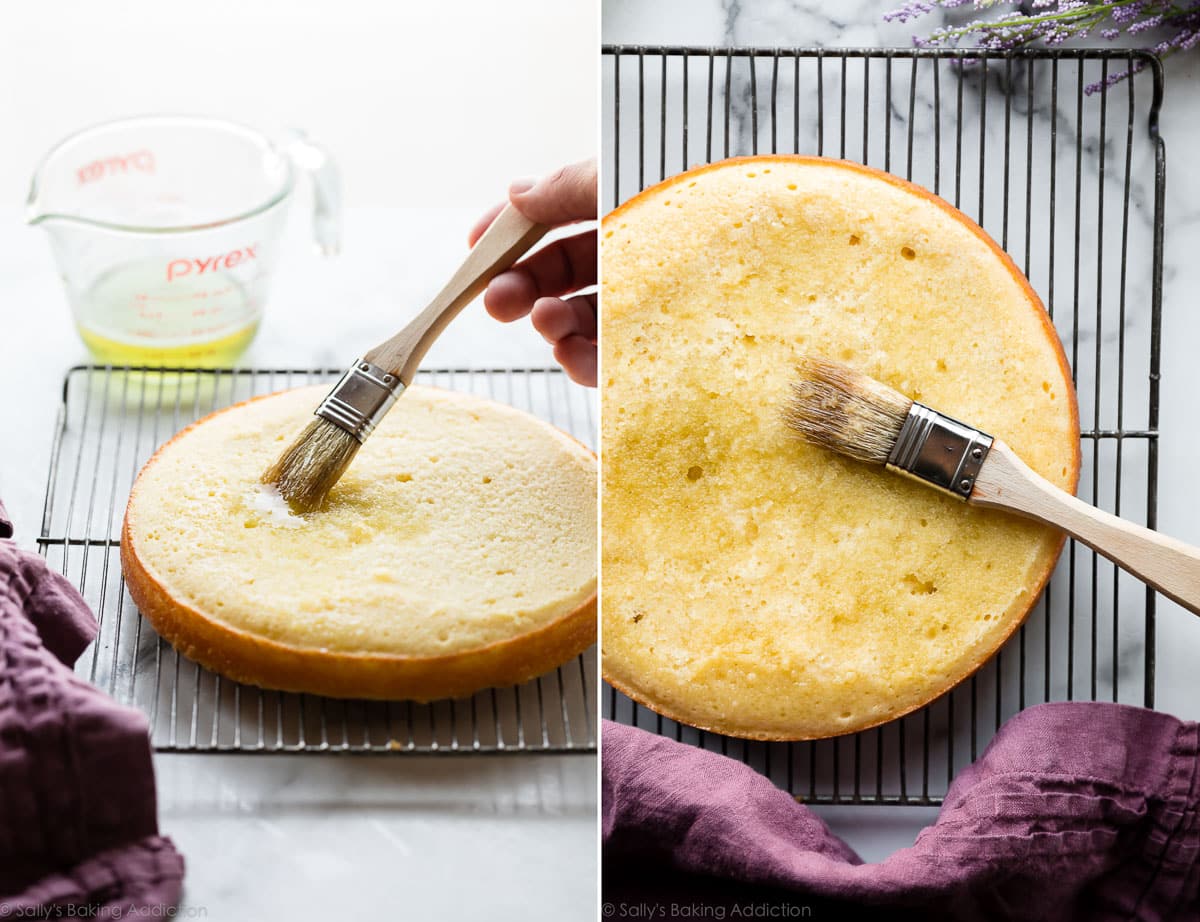
When things go totally awry and you have a dry cake on your hands, all is not lost. A quick brush of simple syrup adds moisture. When the cake has completely cooled, brush a thin layer of simple syrup on top. Instead of simple syrup, you can even use Sprite (yes, I’m serious).
To make simple syrup, boil equal parts granulated sugar and water together until the sugar dissolves, then let it cool before brushing it onto your cake. Use a pastry brush. You can flavor the syrup, too. When the simple syrup comes off the stove, stir in a touch of vanilla extract, prepared coffee, lemon juice, Amaretto, or other liqueur. Let it cool before using. You could even place some vanilla bean, lemon peel, or culinary lavender in the cooling syrup. Once cool, strain out the chunks/add-ins using a fine mesh sieve.
It’s a very thin layer of syrup, so it won’t make your cake too sweet.
9. Don’t Double the Recipe
For absolute BEST taste and texture, never double a cake recipe. Make the batter twice instead. Doubling the recipe risks over-creaming (tip #3), over-mixing (tip #6), or under-mixing. And the baking powder and/or soda may not completely distribute which could leave bitter aftertastes in sections of the cake.
Only work with the amount of batter the recipe instructs. When I need extra cake batter, I make the batter twice—separately.
More Baking Tips
I have more lessons for you!
- 6 Inch Cake Recipes (chocolate cake pictured above)
- My 10 Best Baking Tips
- 10 Cake Baking Tips for Perfect Cakes
- 14 Best Baking Tools That Every Baker Needs
- Baking Powder Vs Baking Soda
- Room Temperature Ingredients
- Buttermilk in Baking 101














Reader Comments and Reviews
Thank you Sally!
These tutorials are a wonderful aid in helping me find the right touch in my baking journey! They are as valuable as your recipes are!
I had a dense cake in January. They made me the one to make all the birthday cakes at the family party. I was so embarrassed. Your tutorial will help for March birthday.
I just baked a carrot cake from your recent post. It is one of the best that I have cooked so far. I did not have apple sauce so I replaced it by sour cream as per your recipe. The result was phenomenal. It was soft but crunchy too due to pecan pieces.
Thanks for sharing your culinary wisdom.
Thanks, Sally!
You are ALWAYS my go-to girl for all things baking!
I have tried so many of your recipes over and the past 2 years and they are always a hit!
Keep baking, yall!!
I made a pretty little chocolate cake last night, Chocolate Domingo cake, from The Cake Bible. ((Sorry for cheating on you). The cake looks good but it is dry. I did everything you said in your lists of how to prevent a dry or dense cake except adding oil
Do you think I can add oil to a one layer cake with 14 tablespoons of butter?
I won’t cheat on you again.
Hi Brenda, sorry you had trouble! Unfortunately we can’t offer advice on a recipe other than our own, as we haven’t tested it. Our best tips to prevent a dry cake would be included in this post!
I’ve been baking cakes since I was twelve years old.
Around the same time I started collecting Cookbooks and cake recipes.
I’m seventy-one now and baking the ultimate cake(s) has been a lifelong passion.
I say all this to say this: I’m ecstatic I found you!
I’m over the moon.
I really enjoy your recipes, thoughts and comments.
Thank you for sharing your love for the perfect cake.
Take a bow Ms. Sally.
Hi! Which recipe is used for the chocolate cake featured in the photo at the very top of this post?
Hi Laura, that is a 6-inch chocolate cake, also pictured here on this post about how to make a 3-layer 6-inch cake. It’s made from this recipe for chocolate cupcakes.
Can you add extra oil & sour cream or is it one or the other?
Hi K, usually you would start with adjusting just one ingredient at a time.
Thank you Sally
Is it possible to prepare cake batter, in this case chocolate cake batter, and leave it in the refrigerator overnight or for a couple of days and then bring it to room temperature before you actually pour it into the cupcake cups? I’m working with a chocolate cupcake recipe with Rollo candies inside and it would be pretty yummy to cook them the day of and have them be a little soft inside. But it’s a big party so I don’t want to be making the batter that morning.
Hi Stacey! It is best to bake cake batter right away. If made ahead of time, it likely won’t rise properly. Here’s our guide to freezing cakes to make ahead!
I just made the red velvet cake. It did not turn red cause I used food colouring and it was not enough. I have since ordered the paste to try. The cake was also dense but I wanted a fluffier cake. I have read your tips and will retry it. Thank you
I always use 3 bottles of coloring
Thanks for signing me up to receive cake recipes. I recently baked an orange cake using vegetable oil and orange juice. The cake was tasty but dry. Can you help me. The proportion was oil 1/3 cup and flour 2 cups
Thanks for your help
Hi Evangeline, did you use one of the recipes on the site for your orange cake? We’d be happy to help troubleshoot one of our recipes. How did you measure your flour? Be sure to spoon and level (or use a food scale) to measure your flour, so that there isn’t too much in the batter. Here are our best tips to prevent dry or dense cakes . Hope this helps!
Thanks for these tips to avoid a dense cake. I have an unusual question!
Thank you for recipes that bake by weight, a method I greatly prefer.
I recently made the best ever carrot cake and sadly, it was not the best ever. The flavor was great but it was so dense and compact.
I used home made applesauce and I wonder if you have done any experimenting with it to evalute how it performs. It was defrosted for a few days, well stirred and I weighed the correct amount. I use my home made applesauce in your recipe for fresh apple cake and that cake turns out so delicious and has a nice texture. I’d appreciate your thoughts!!
Hi Patricia, we’re happy to help troubleshoot. Our carrot cake recipe is quite dense/heavy, but if it seemed excessively so, it could be from overmixing the batter. We haven’t tested it with homemade applesauce, but did yours seem especially wet/thin? We wonder if the defrosting added more liquid to the applesauce which translated into the already very wet/heavy batter. If you decide to give it another try, please do let us know how it goes!
Thank you for helping me to learn to make a delicious, moist cake. I love cake and I’m always looking for sayvto make it better.
Re: not doubling the recipe. How about when I need to make 10 cakes? Am I really needing to make them all 1 at a time?
Would appreciate the ability to print this.
I tried but it put a block in the middle of each page.
Hi Linda, are you using the print button at the top of the the gray recipe card? That will bring you to a printable version with just the ingredients, recipe instructions, and recipe notes.
Thanks for the tips. I will use some of these in my baking
Thanks for all the great tips on how to make a dry cake moist and how to make a cake more moist in the baking!
Do you have any high altitude cake baking tips? I just moved from MN to CO and am having big baking difficulty!
Hi Lynn, we wish we could help, but we have no experience baking at high altitude. Some readers have found this chart helpful: https://www.kingarthurflour.com/learn/high-altitude-baking.html
thank you for these tips 🙂 how much milk would you recommend adding to a cup of flour? 1 tbsp of milk per cup of flour?
Hi Cheryl, every recipe will be a bit different! It really depends on the specific cake and desired outcome. Most cake recipes will specifically call for it.
I’ve recently made your lemon blueberry cake and also snickerdoodle cake. They taste so great after baking-crumbly, moist, fluffy, all the good adjectives. After I refrigerate and serve a day or two later, totally dense and dry. Is there something to do to try to fix that? Can I just leave a cake out on the counter for a couple days to try to prevent?? Thanks!
Hi Caroline, when a cake has been in the refrigerator, let it sit at room temperature for about 15 minutes or more before serving, to bring it back to room temp. It tastes much less dry and dense then. And are you storing the cake in something like a cake carrier, or just lightly covering it? Also, I haven’t personally tried this with a cake, but I have used this trick with cookies and it’s amazing: store a slice of bread with it in the container it’s in. The bread will get stale and hard and the baked goods stay soft. Hope these suggestions help!
Thank you for all the helpful hints. I am an avid baker and didn’t realize that you can cream the butter and sugar “too” much! I will use all of these tips. Thanks again.
Thank you for your help,I seem to always make a bad pound cake, not any more.♥️