

With step-by-step pictures, a full video tutorial, and plenty of helpful tips, learn how to make simple white sandwich bread using a few baking ingredients like flour, water, yeast, salt, and milk. Bread flour promises a super soft interior with an extra chewy crust. This recipe yields 1 loaf, so it’s perfect if you only have 1 loaf pan.
If you’re new to working with yeast, reference my Baking with Yeast Guide for answers to common yeast FAQs. This recipe is brought to you in partnership with Red Star Yeast.
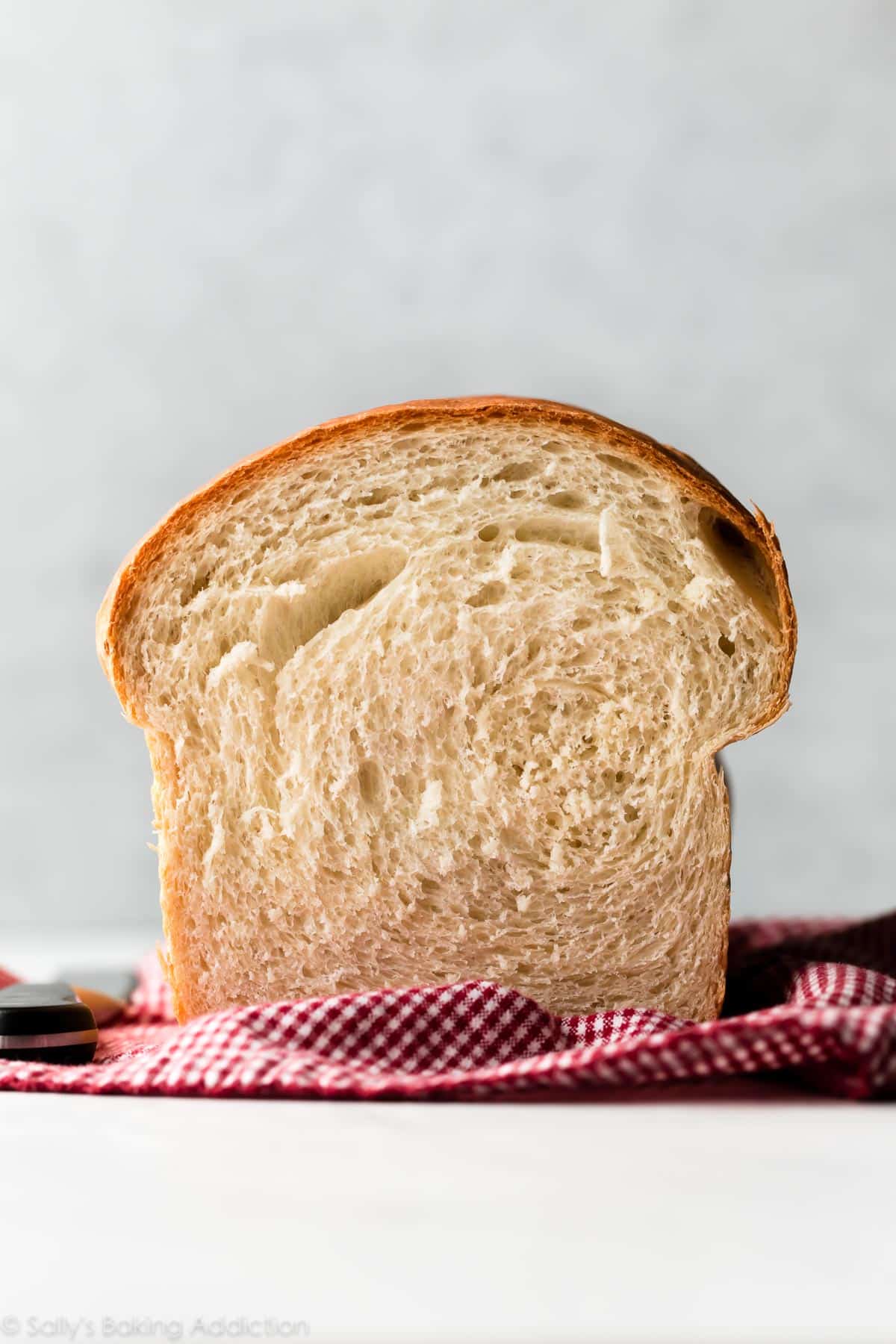
Let’s make homemade sandwich bread. This is a basic staple in any bread baker’s repertoire, but it’s also a recipe that shouldn’t be overlooked. There’s nothing on earth quite like homemade bread and my recipe is loaf perfection—rising tall, tasting buttery-soft, and making the most epic sandwiches. It’s truthfully the best homemade bread I’ve ever tasted and it all comes from just 7 ingredients. And if you’re nervous to bake with yeast, I guarantee you will finally feel confident with this no-fuss recipe.
This Sandwich Bread Is:
- Soft white bread with an extra chewy exterior
- Crisp right out of the oven!
- Made from 7 easy ingredients
- Golden brown with a super impressive rise
- Extraordinary on its own or as the base of a sandwich
- Simple to make
- Easy to make ahead or freeze
Looking for a no yeast alternative? Here’s my no yeast bread.
Just 1 Loaf of Bread
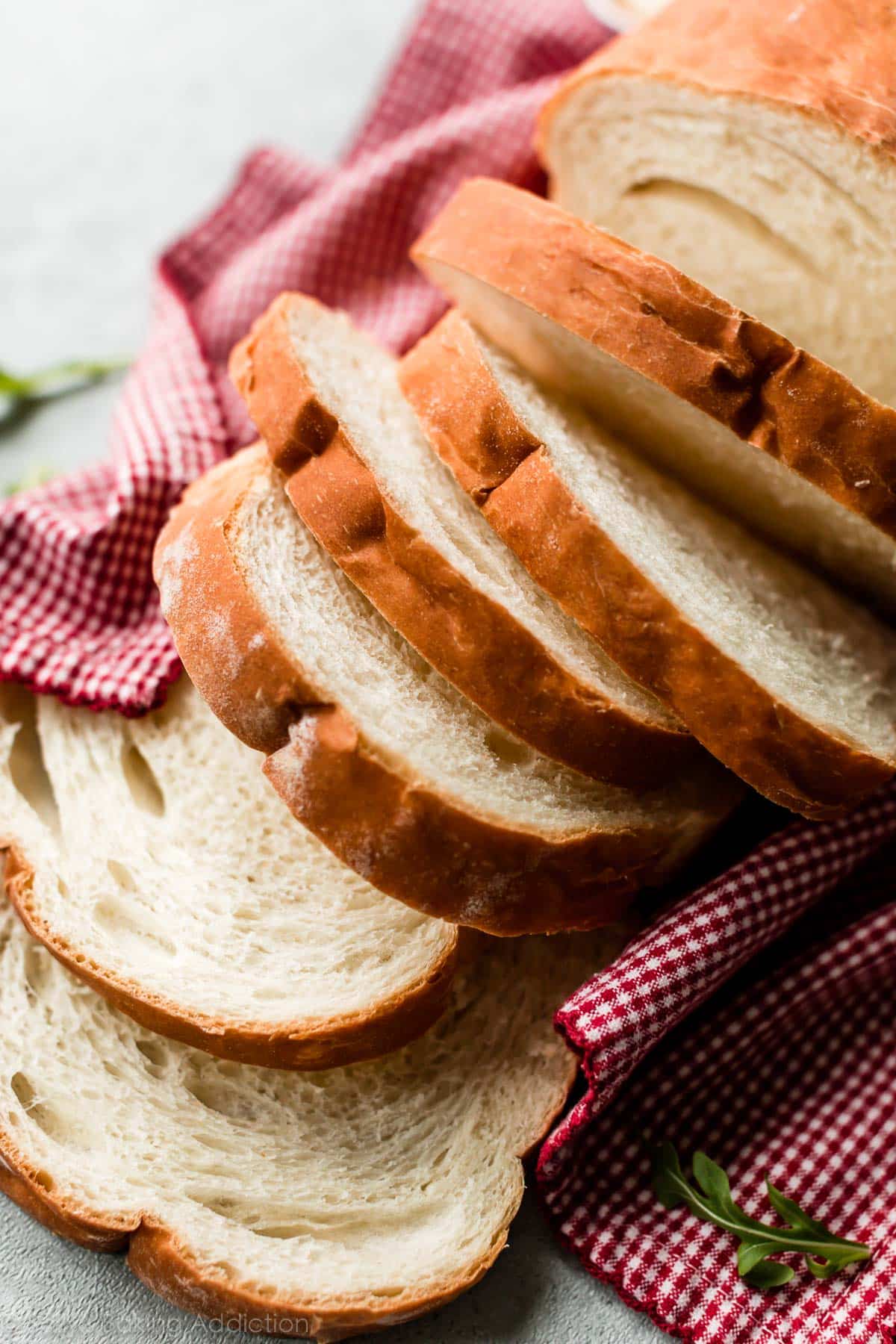
Besides the simplicity of the process, you’ll appreciate that this sandwich bread recipe yields just 1 loaf. You don’t need a crazy amount of flour, multiple loaf pans, and you’re not left with 2-3 leftover loaves on your hands. (Which wouldn’t necessarily be a bad thing.) Just 1 loaf to prepare, rise, shape, and bake—convenient, approachable, and straightforward. My recipes for multigrain bread, homemade cinnamon swirl bread, and honey oat bread both produce just 1 loaf as well.
Overview: How to Make Sandwich Bread
- Make the dough. Continue below to learn more about this dough recipe.
- Knead the dough. Reference my How to Knead Dough video tutorial for extra help with this step.
- Cover the dough and let it rise. The dough rises in about 1-2 hours in a relatively warm environment.
- Punch down the dough to release the air.
- Shape the dough into a large rectangle, then roll it into loaf.
- Let the loaf rise for about 1 hour.
- Bake for 30-34 minutes until golden brown.
As shown in the video tutorial below, the dough comes together with a mixer. You can use a paddle attachment or a dough hook. You can also make the dough by hand, but it requires a bit of arm muscle. After the dough comes together in the mixing bowl, it’s time to knead. You can continue beating the dough with the mixer for this step or you can knead the dough by hand. If you’re new to bread baking, my how to knead dough post and video can help with this step.
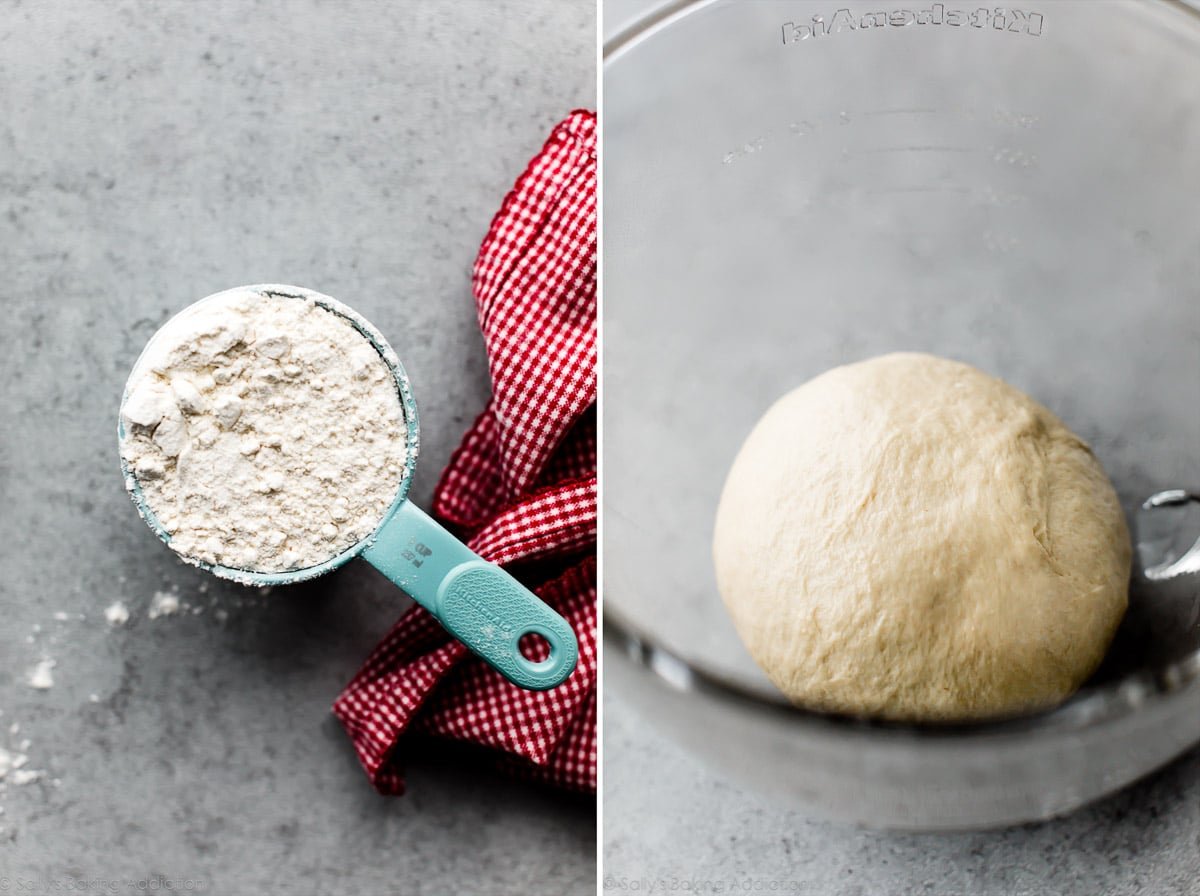
Sandwich Bread Ingredients
You need 7 ingredients—practically the same as my homemade cinnamon swirl bread but less sugar. Likewise, they’re basically the same ingredients as my soft dinner rolls too, but in order to bake a bread that rises tall and has legitimate structure, we’ll leave out some of the fat. Swap some of the milk for water and leave out the egg.
- Water: Liquid activates yeast. I use mostly water in this dough because we need a bread that has structure. Using all milk, like I do for my dinner rolls, would yield a flimsy bread without much texture.
- Milk: To make a soft bread, you need fat in the dough so make sure 1/4 cup of the liquid is milk. Low fat milk works too, but whole milk produces phenomenal texture.
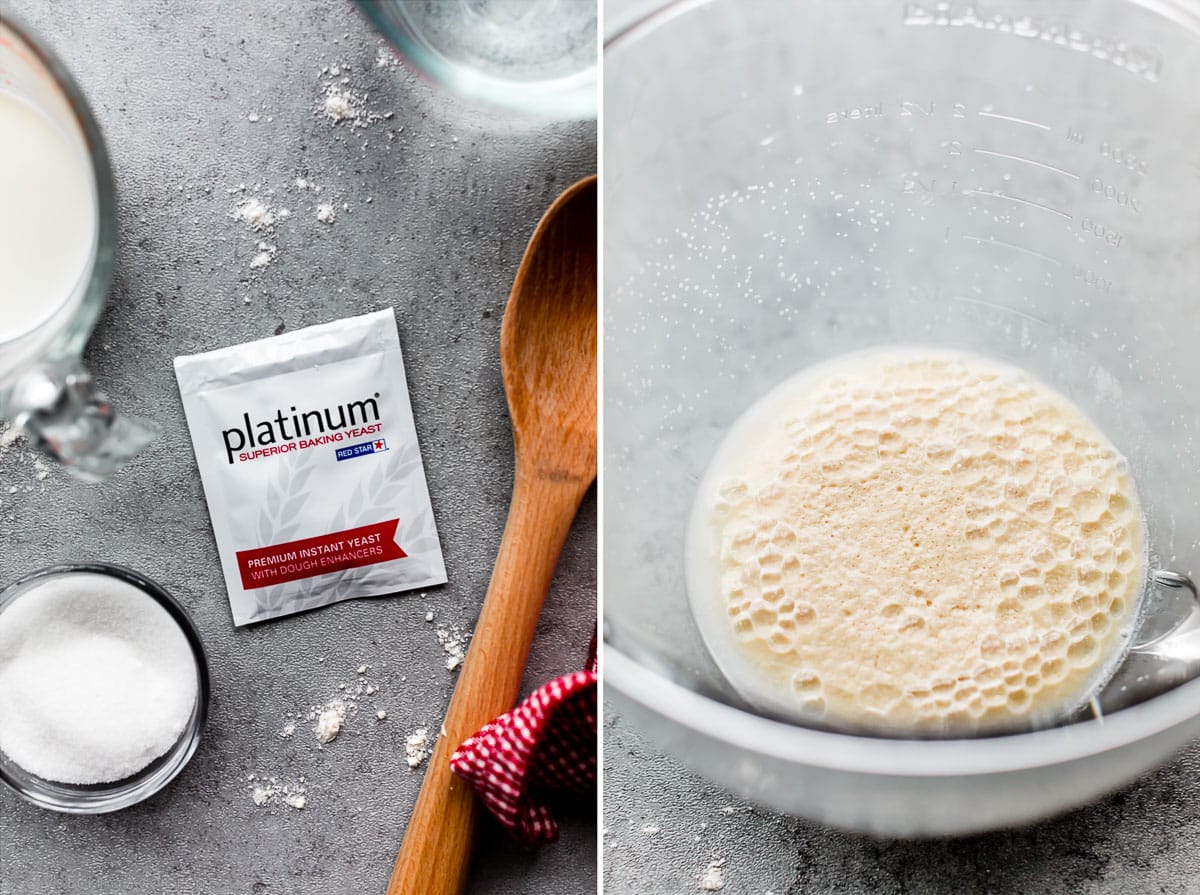
- Yeast: You can use active dry yeast or instant yeast. If using active dry, the rise times will be a bit longer. I recommend Platinum Yeast from Red Star, which is an instant yeast blended with natural dough improvers. It’s my go-to for all bread.
- Sugar: Sugar feeds the yeast, increases its activity, and tenderizes the dough.
- Butter: Butter promises a flavorful loaf. I tested this recipe with melted butter, softened butter, and even olive oil. We liked the loaf made with softened butter the best because it had pronounced buttery flavor and a softer (yet still sturdy) interior.
- Salt: You can’t make flavorful bread without salt!
- Flour: You can use all-purpose flour or bread flour. All-purpose flour is convenient for most, but bread flour produces a chewier crust. There are no other changes to the recipe if you use bread flour. For best taste, I highly recommend bread flour. It’s what I always use when I make artisan bread. If you wish to use whole wheat flour, follow my recipe for whole wheat bread instead.
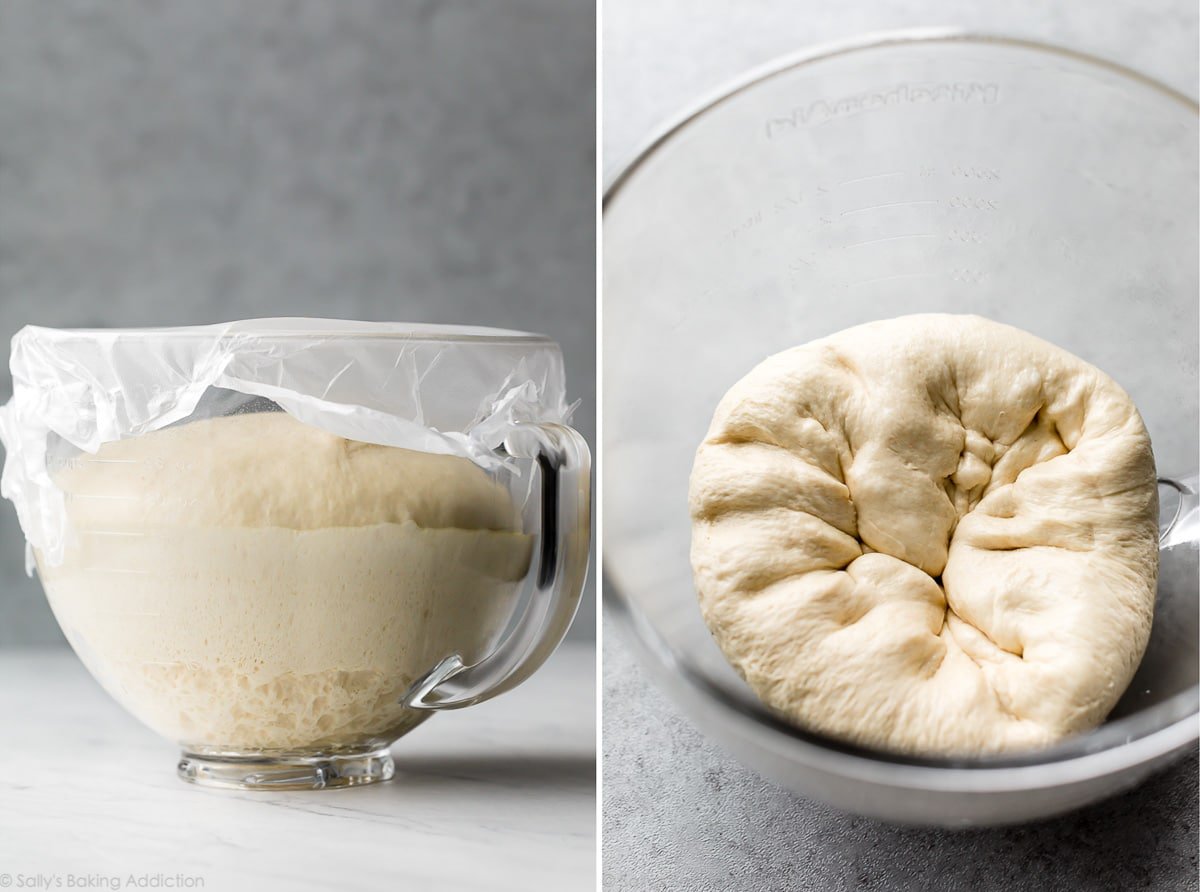
After you make and knead the dough, let it rise. Then, punch it down to release the air:
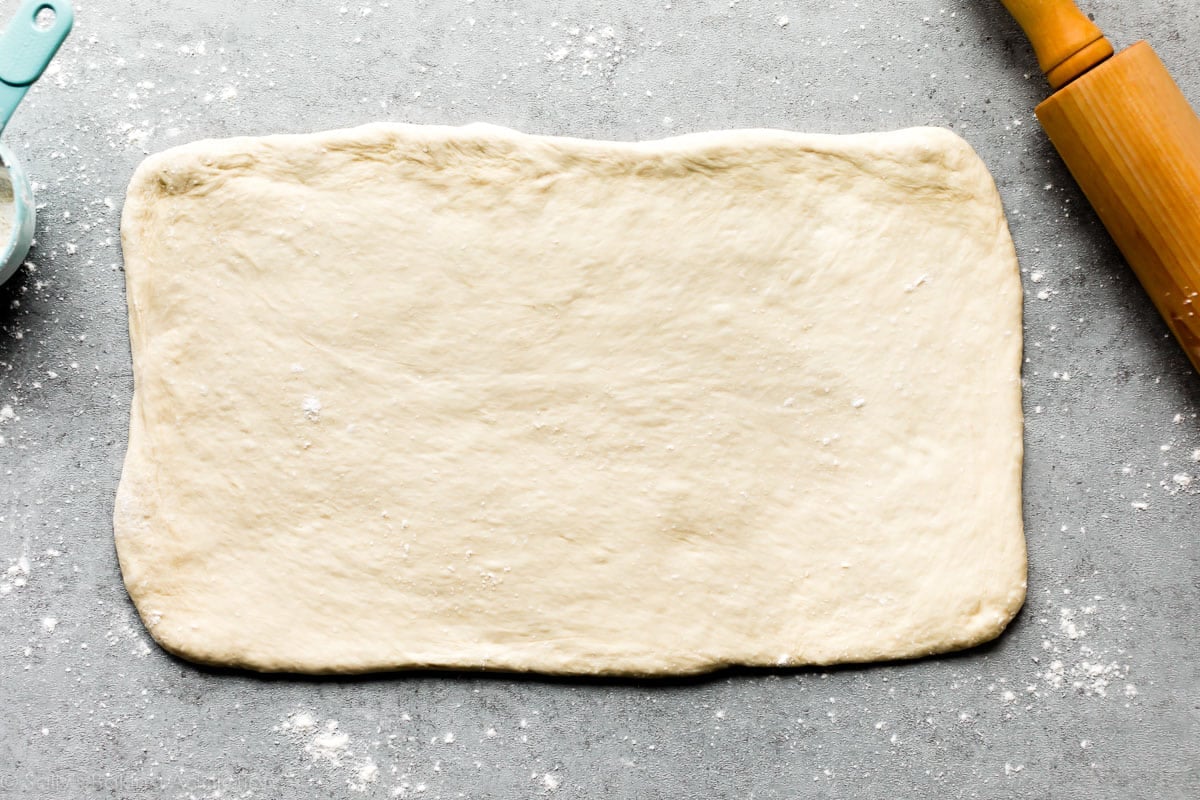
Roll it out into an 8×15-inch rectangle:
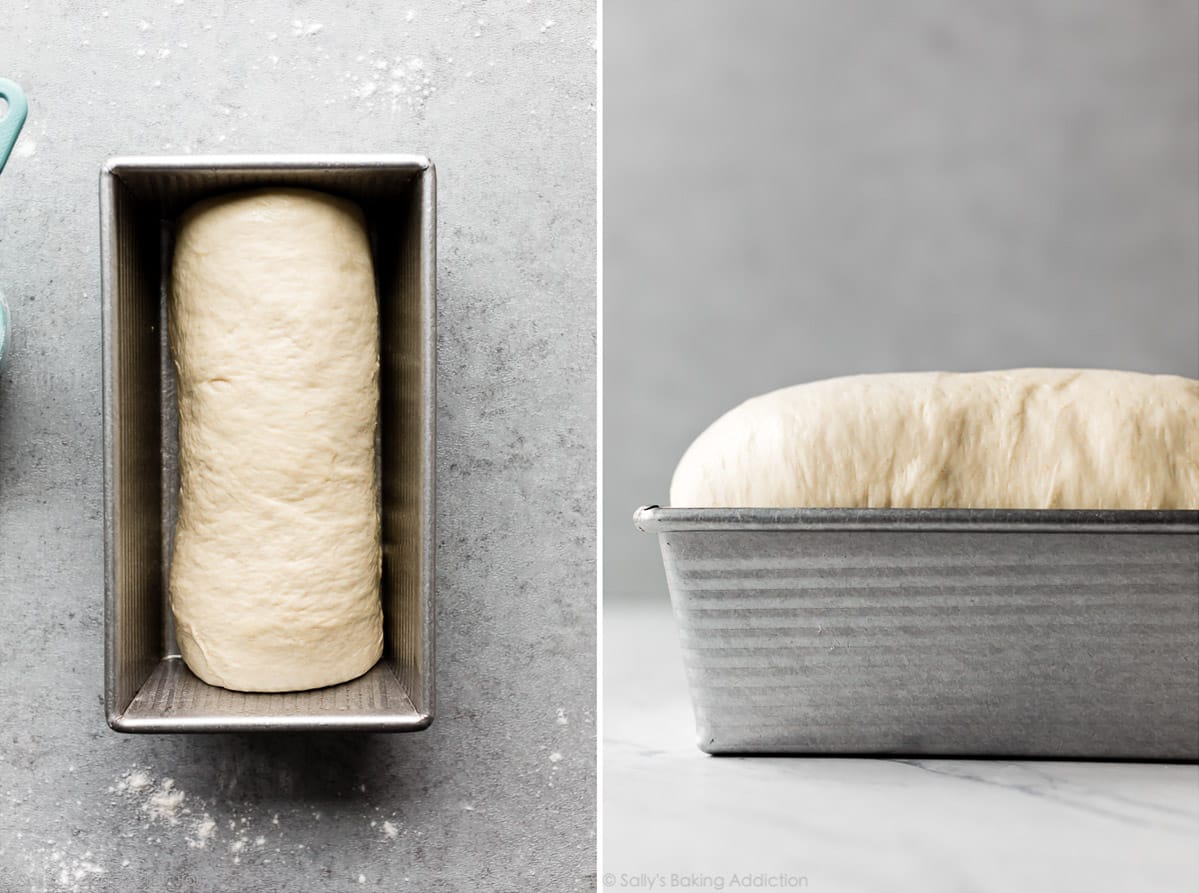
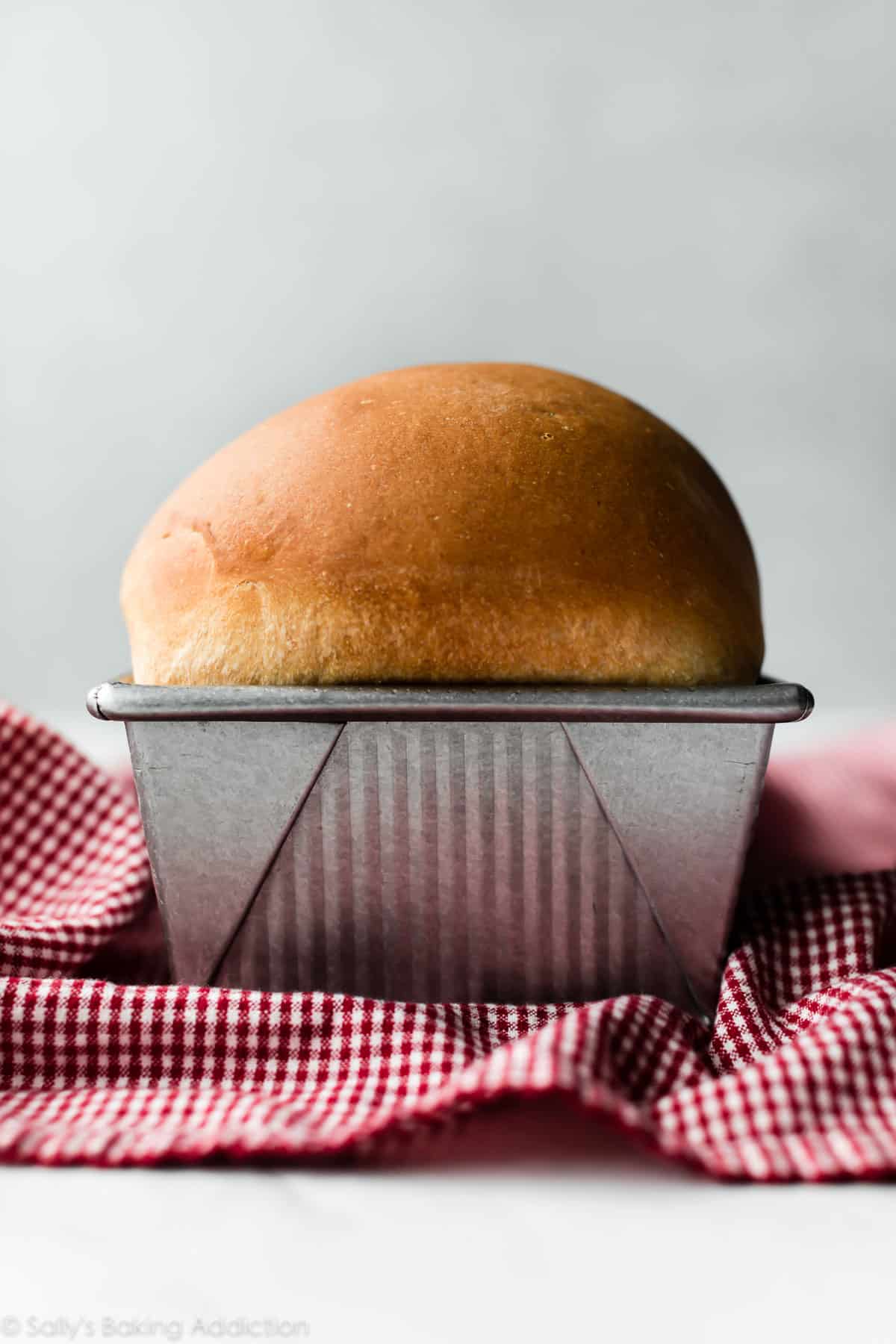
Roll it up tightly starting with the 8-inch side, so you have an 8-inch roll to fit into your 9×5-inch loaf pan. (Unlike cinnamon rolls where you roll up the dough starting with the larger side.) Let it rise until it’s 1 heaping inch above the rim of the pan:
Bake until golden brown, about 30-34 minutes.
Uses for Homemade Sandwich Bread
- Any sandwich. Like the Ross Geller’s Turkey Moist-Maker Sandwich 🙂
- BLT or grilled cheese
- Avocado toast or bacon & egg sandwiches
- Soup dipper
- Make croutons
- French toast or Blueberry French Toast Casserole
- Or in savory recipes like Breakfast Casserole and Sausage & Herb Stuffing
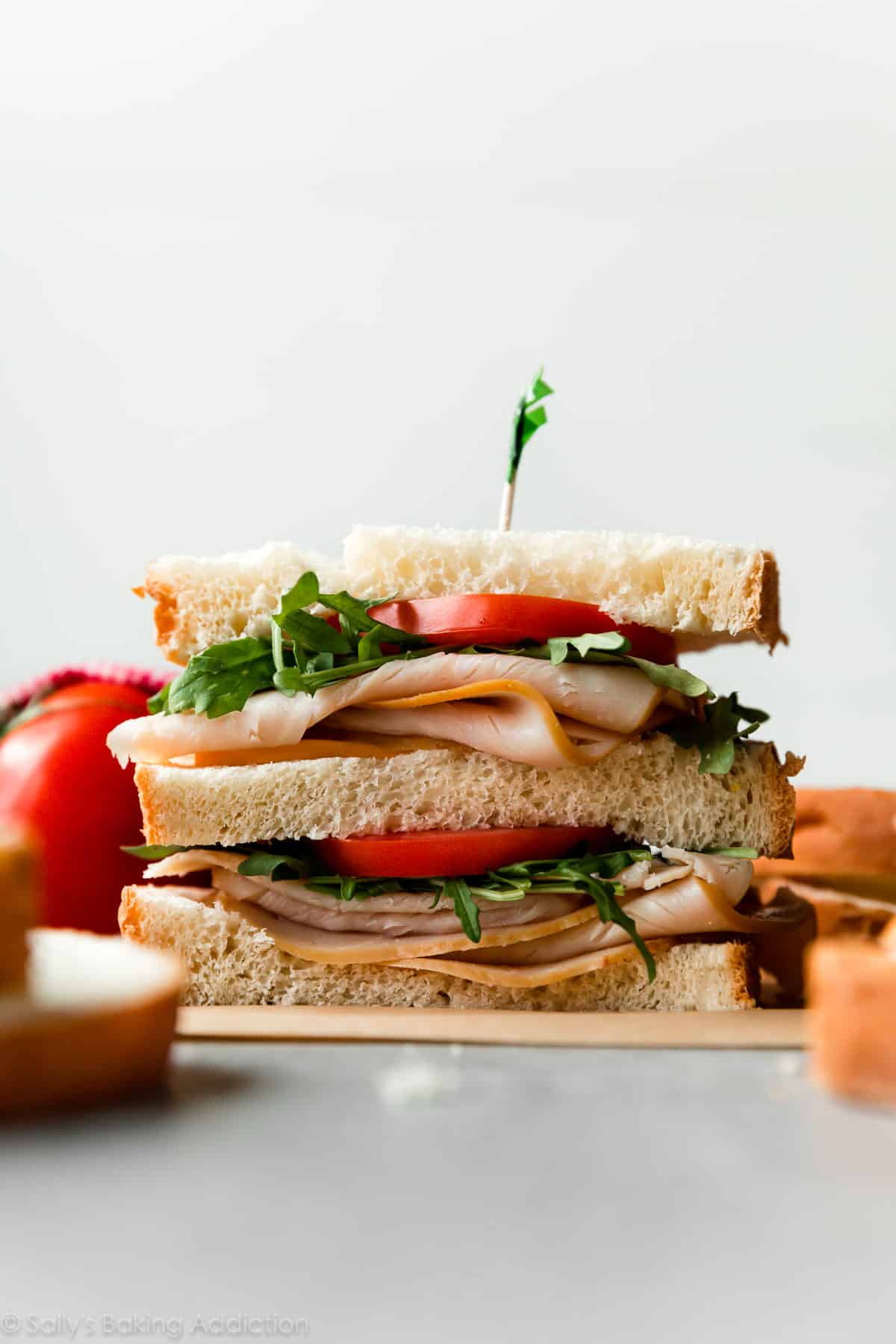
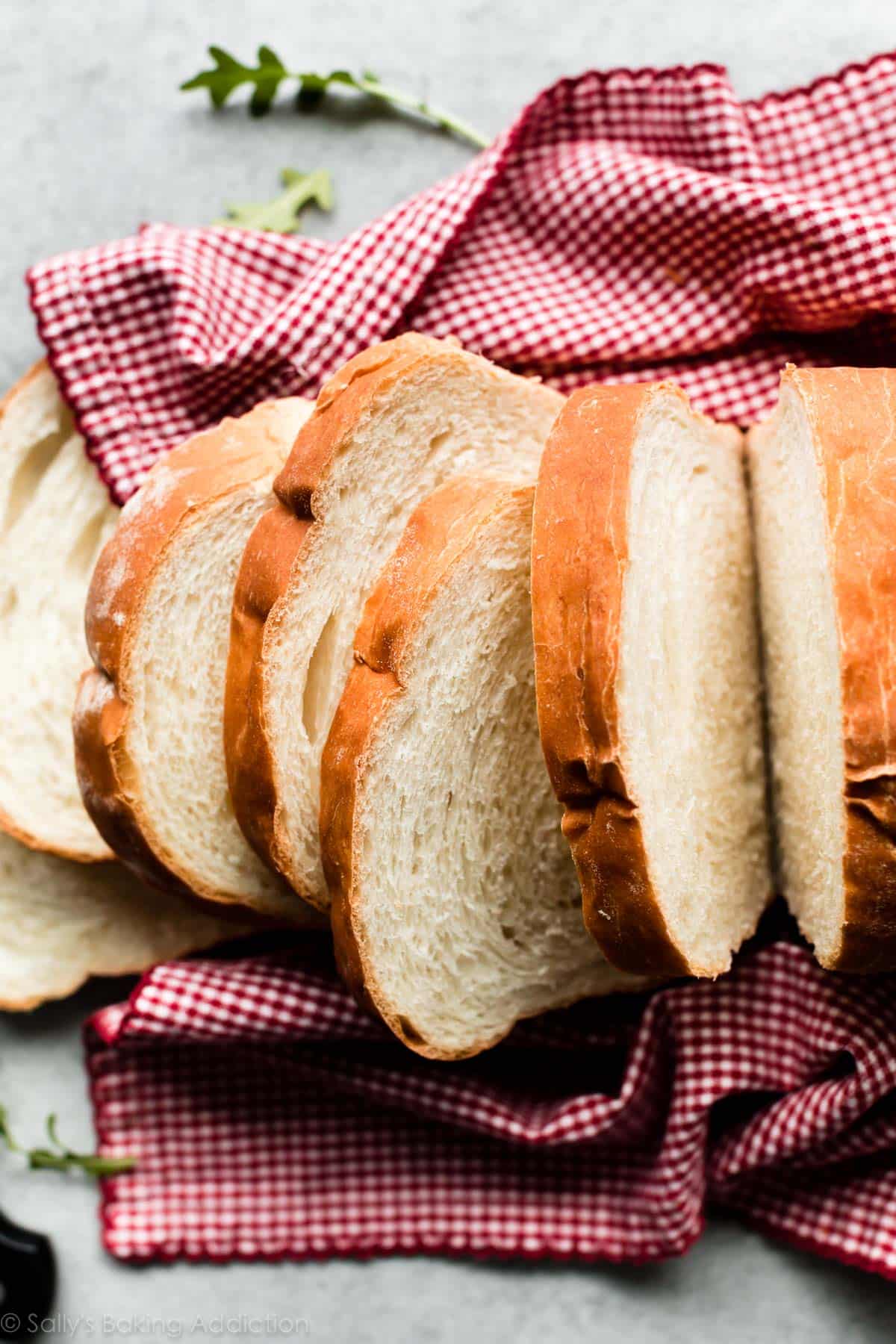
But our favorite way is simply warm toast with regular butter or honey butter & jam. Honestly, toast made from mass-produced bread doesn’t even compare. You can actually taste the soft and buttery toasty crumbs here. Or make an easy turkey sandwich—store-bought bread can’t make a sandwich taste as PERFECT as this.
I understand there’s a major convenience with store-bought bread and I’m not asking you to only make homemade bread for the rest of you life, but try it at least once. It takes a few hours one afternoon and most of the work is hands-off while the dough rises. Fresh-baked sandwich bread smells incredible, tastes even better, and I’m confident there’s no better baked good than this perfect loaf. You won’t regret trying this.
More Easy Bread Recipes
- Focaccia
- Multigrain Bread
- Artisan Bread
- Cheesy Breadsticks
- Pizza Crust
- Homemade Soft Pretzels
- Bread Bowls
- Homemade Breadsticks
- Olive Bread
- Cranberry Nut No-Knead Bread
Sandwich Bread
- Prep Time: 3 hours, 20 minutes
- Cook Time: 32 minutes
- Total Time: 4 hours
- Yield: 1 loaf
- Category: Bread
- Method: Baking
- Cuisine: American
Description
You only need 7 ingredients to make this simple sandwich bread. Soft and buttery with a chewy/crisp crust, this fresh loaf of bread will quickly become a staple in your kitchen. See recipe notes for freezing and overnight instructions. You can also reference my Baking with Yeast Guide for answers to common yeast FAQs.
Ingredients
- 1 cup (240ml) water, warmed to about 110°F (43°C)
- 1/4 cup (60ml) whole milk, warmed to about 110°F (43°C)
- 2 and 1/4 teaspoons (7g) Platinum Yeast from Red Star instant yeast (1 standard packet)
- 2 Tablespoons (25g) granulated sugar
- 4 Tablespoons (1/4 cup; 56g) unsalted butter, softened to room temperature
- 1 and 1/2 teaspoons salt
- 3 and 1/3 cups (about 420–430g) all-purpose flour or bread flour (spooned & leveled), plus more as needed
Instructions
- Prepare the dough: Whisk the warm water, warm milk, yeast, and sugar together in the bowl of your stand mixer fitted with a dough hook attachment. Cover and allow to sit for 5 minutes.
- Add the butter, salt, and 1 cup flour. Beat on low speed for 30 seconds, scrape down the sides of the bowl with a silicone spatula, then add another cup of flour. Beat on medium speed until relatively incorporated (there may still be chunks of butter). Add the remaining flour and beat on medium speed until the dough comes together and pulls away from the sides of the bowl, about 2 minutes. *If you do not own a mixer, you can mix this dough with a large wooden spoon or silicone spatula. It will take a bit of arm muscle!*
- Knead the dough: Keep the dough in the mixer and beat for an additional 5–8 full minutes, or knead by hand on a lightly floured surface for 5–8 full minutes. (If you’re new to bread-baking, my How to Knead Dough video tutorial can help here.) If the dough becomes too sticky during the kneading process, sprinkle 1 teaspoon of flour at a time on the dough or on the work surface/in the bowl to make a soft, slightly tacky dough. Do not add more flour than you need; you do not want a dry dough. After kneading, the dough should still feel a little soft. Poke it with your finger—if it slowly bounces back, your dough is ready to rise. You can also do a “windowpane test” to see if your dough has been kneaded long enough: tear off a small (roughly golfball-size) piece of dough and gently stretch it out until it’s thin enough for light to pass through it. Hold it up to a window or light. Does light pass through the stretched dough without the dough tearing first? If so, your dough has been kneaded long enough and is ready to rise. If not, keep kneading.
- 1st Rise: Lightly grease a large bowl with olive oil or nonstick spray. Place the dough in the bowl, turning it to coat all sides in the oil. Cover the bowl and allow the dough to rise in a relatively warm environment for 1-2 hours or until double in size. (I always let it rise on the counter. Takes about 2 hours. For a tiny reduction in rise time, see my answer to Where Should Dough Rise? in my Baking with Yeast Guide.)
- Grease a 9×5-inch loaf pan.
- Shape the bread: When the dough is ready, punch it down to release the air. Lightly flour a work surface, your hands, and a rolling pin. Roll the dough out into a large rectangle, about 8×15 inches. It does not have to be perfect—in fact, it will probably be rounded on the edges. That’s ok! Roll it up into an 8 inch log and place in the prepared loaf pan.
- 2nd Rise: Cover shaped loaf with aluminum foil, plastic wrap, or a clean kitchen towel. Allow to rise until it’s about 1 inch above the top of the loaf pan, about 1 hour. (See video and photo above for a visual.)
- Adjust oven rack to a lower position and preheat oven to 350°F (177°C). (It’s best to bake the bread towards the bottom of the oven so the top doesn’t burn.)
- Bake the bread: Bake for 32-36 minutes or until golden brown on top. If you notice the top browning too quickly, loosely tent the pan with aluminum foil. (I usually add aluminum foil over the loaf around the 20 minute mark.) To test for doneness, if you gently tap on the loaf, it should sound hollow. For a more accurate test, the bread is done when an instant-read thermometer reads the center of the loaf as 195–200°F (90–93°C).
- Remove from the oven and allow bread to cool for a few minutes in the pan on a cooling rack before removing the bread from the pan and slicing. Feel free to let it cool completely before slicing, too.
- Cover leftover bread tightly and store at room temperature for 6 days or in the refrigerator for up to 10 days.
Notes
- Freezing Instructions: Prepare recipe through step 6. Place shaped loaf in a greased 9×5-inch loaf pan or disposable loaf pan, cover tightly, and freeze for up to 3 months. On the day you serve it, let the loaf thaw and rise for about 4-5 hours at room temperature. Bake as directed. You can also freeze the baked bread loaf. Allow the bread to cool completely, then freeze for up to 3 months. Thaw in the refrigerator or at room temperature, then reheat as desired.
- Overnight Instructions: Prepare the recipe through step 6. Cover the shaped bread tightly and refrigerate for up to about 15 hours. At least 3 hours before you need the bread the next day, remove from the refrigerator, keep covered, and allow to rise on the counter for about 1-2 hours before baking. Alternatively, you can let the dough have its 1st rise in the refrigerator overnight. Cover the dough tightly and place in the refrigerator for up to 12 hours. Remove from the refrigerator and allow the dough to fully rise for 2 more hours. Continue with step 5.
- Special Tools (affiliate links): Electric Stand Mixer or Large Glass Mixing Bowl with Wooden Spoon / Silicone Spatula | 9×5-inch Loaf Pan | Rolling Pin
- Yeast: Platinum Yeast from Red Star is an instant yeast. Any instant yeast works. You can use active dry yeast instead. Rise times will be slightly longer using active dry yeast. Reference my Baking with Yeast Guide for answers to common yeast FAQs.
- Flour: You can use all-purpose flour or bread flour. All-purpose flour is convenient for most, but bread flour produces a chewier loaf of bread and I highly recommend it. The bread is still soft no matter which you use. Either flour is fine and there are no other changes to the recipe if you use one or the other. I don’t recommend whole wheat flour because it doesn’t have the same baking properties as white flour or bread flour (the gluten levels are different). If you wish to use whole wheat flour, try my recipe for whole wheat bread instead.
- Doubling this recipe: For best results, I recommend making two separate batches of dough. However, if you want to double the recipe all in 1 mixing bowl, double all of the ingredients except for the yeast and butter. Use 3 and 1/4 teaspoons yeast and 6 Tablespoons of butter.
- Bread Machine Questions: I don’t own a bread machine so I have not tested it, but some readers in the comments section have had success.
- Adapted from Homemade Cinnamon Swirl Bread













Reader Comments and Reviews
Hi there, I made this loaf a day or two ago and found it extremely nice. Only thing we didn’t like so much was the sweetness. Can I reduce the sugar and still get same bread ( I’m a Newby to breadmaking). Thank you Sally.
Hi Jackie! Sugar feeds the yeast, increases its activity, and tenderizes the dough. We haven’t tested it, but you could try reducing the sugar; we wouldn’t recommend leaving it out entirely.
I. Made. Bread. Cue shock and awe! Thanks for a great recipe and detailed notes. Question -is the sugar for taste or to activate the yeast? Unlike others, I found the bread a bit sweet to my liking and would prefer a more savoury (salty) profile. Also, to make it a little less soft without getting to dense, what tweak should I focus on for my next batch? Many thanks!!
Hi Kelly, thank you so much for giving our sandwich bread recipe a try! Sugar feeds the yeast, increases its activity, and tenderizes the dough. We haven’t tested it, but you could try reducing the sugar; we wouldn’t recommend leaving it out entirely. You could also substitute honey for sugar here. Let us know what you try!
This recipe is my favorite to make! The first time I made it, it was gone in just a few hours, I would definitely recommend this to anyone who wants to make bread it’s so simple and tastes amazing!
Great bread, just always takes some tweaks to get there. I use 3 1/2 cups of flour. Second rise never takes an hour, I almost always need to finish it an additional hour with the oven method. I think my home may be cooler so I really should stay with the oven method. But it always bakes up great!
Can I use half bread flour and half AP flour?
That should work just fine!
Yum!!! It was so easy and delicious! My Mom and I couldn’t wait for it to cool before slicing a piece to try! Many thanks, Sally!!! Will be making this quite often, and will try with oatmilk and honey next time!