

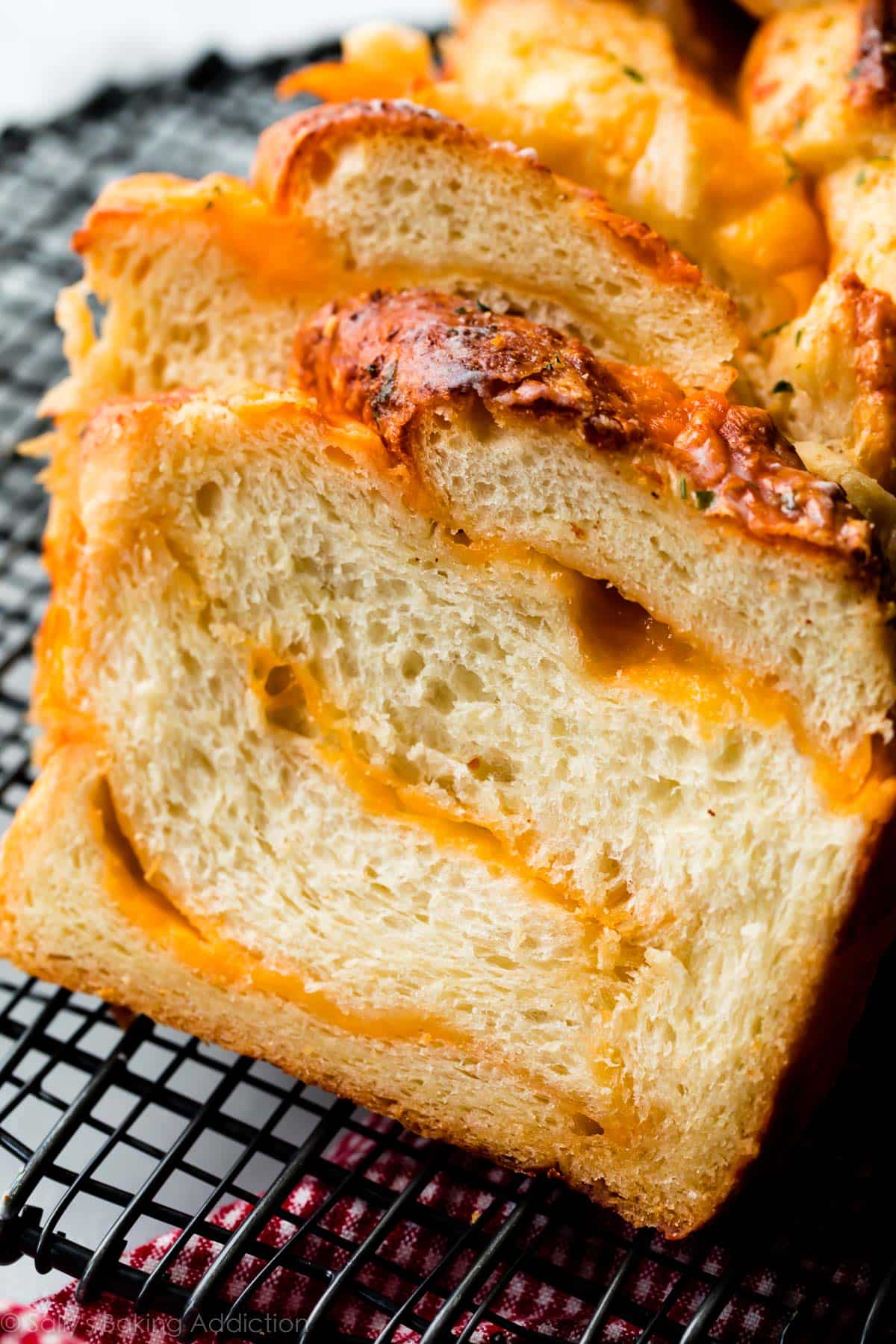
It’s surprisingly easy to make homemade cheese bread. This soft buttery yeasted bread is twisted up with cheddar cheese, but you can use any cheese variety you love. Bake the bread in a loaf pan, then slice it to reveal the 2 cups of swirled cheese inside. For a sweet version, try our cinnamon crunch bread.
This recipe is brought to you in partnership with Red Star Yeast.
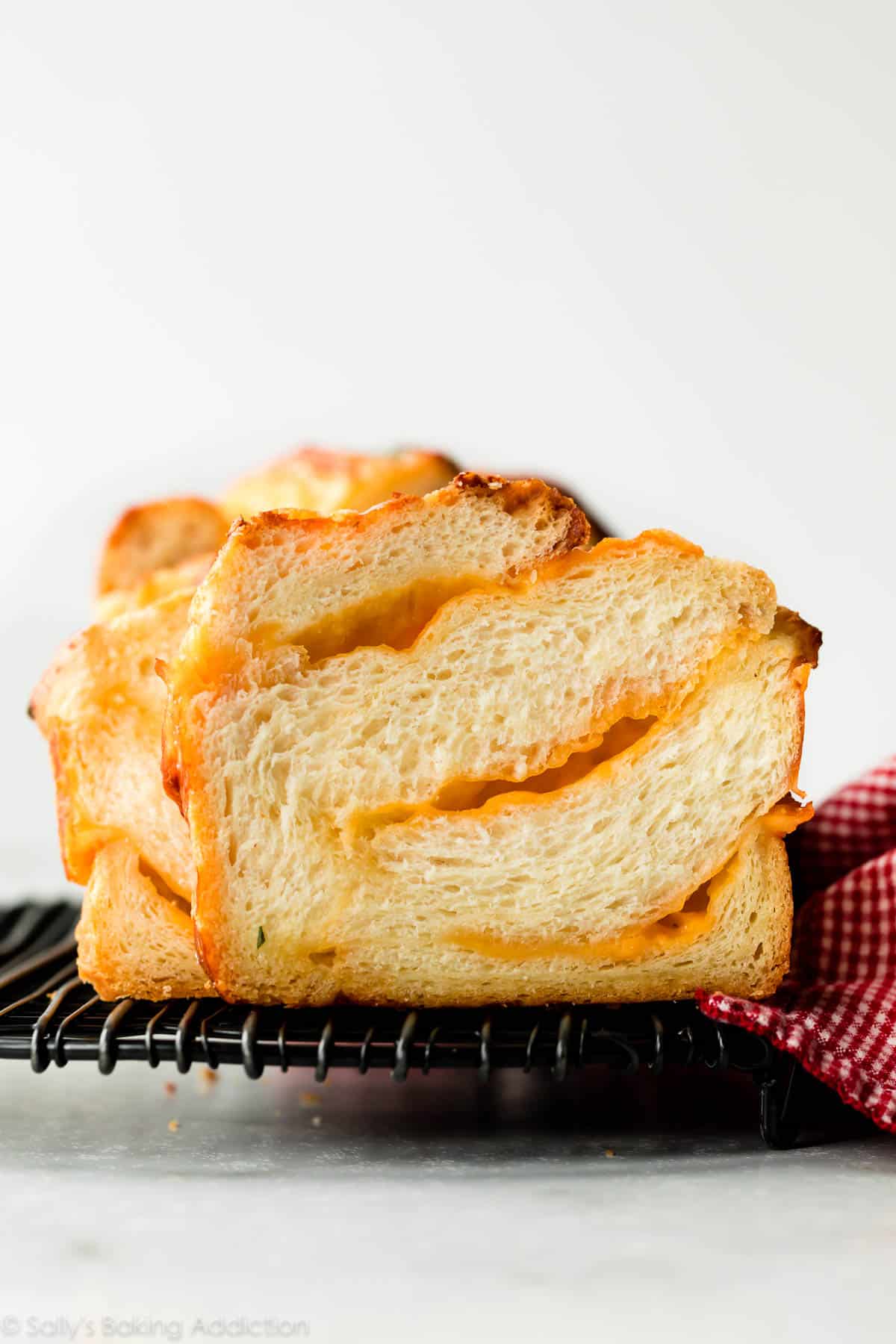
The inspiration behind this recipe comes from a local bakery, where I’ve picked up DOZENS of cheese bread loaves. Each of us love it, my almost 2 year old being the biggest fan. ♥
Cheese and bread. It’s obviously the greatest loaf of all time.
So I decided to make it myself. Brace yourself for impact!
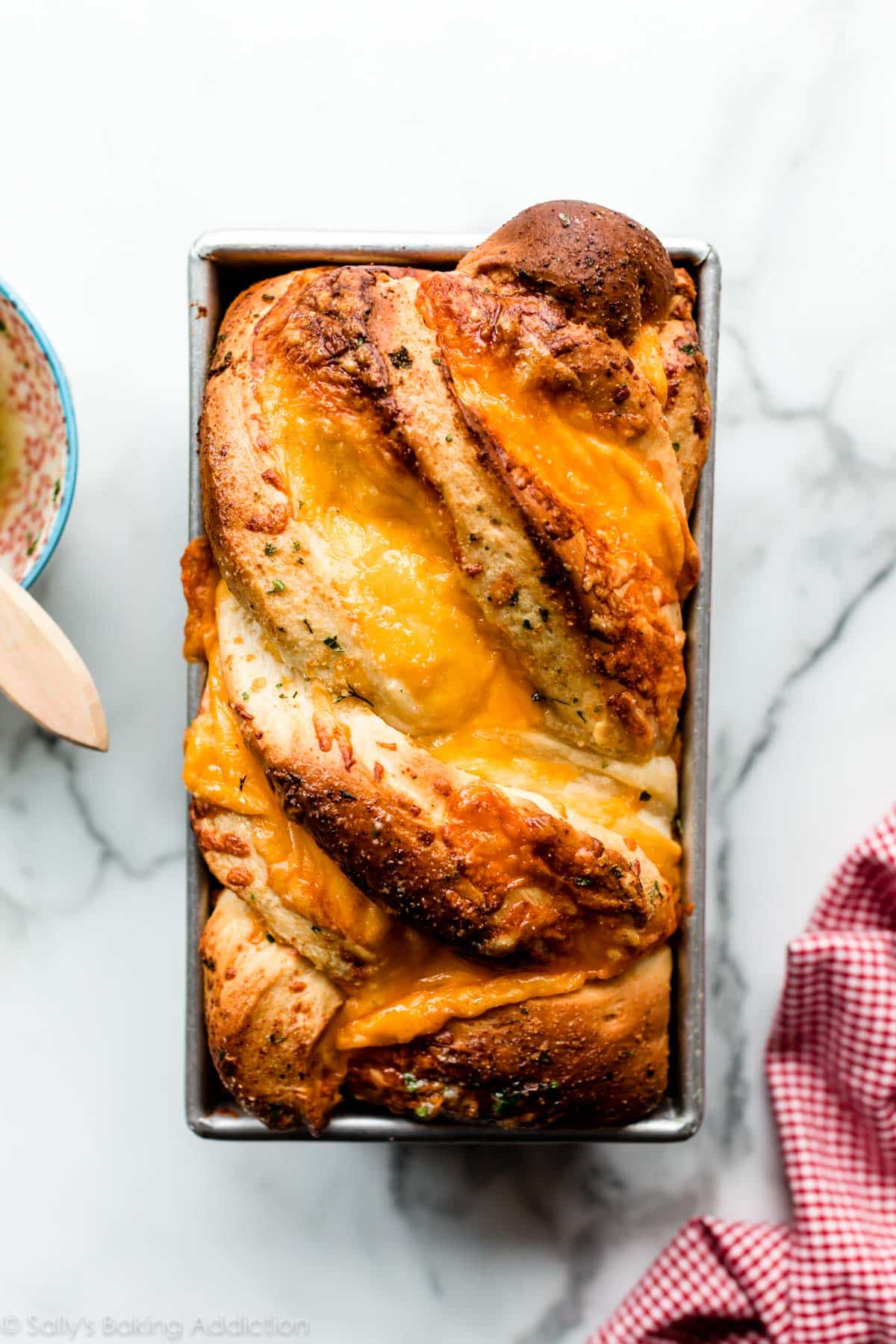
What is Cheese Bread?
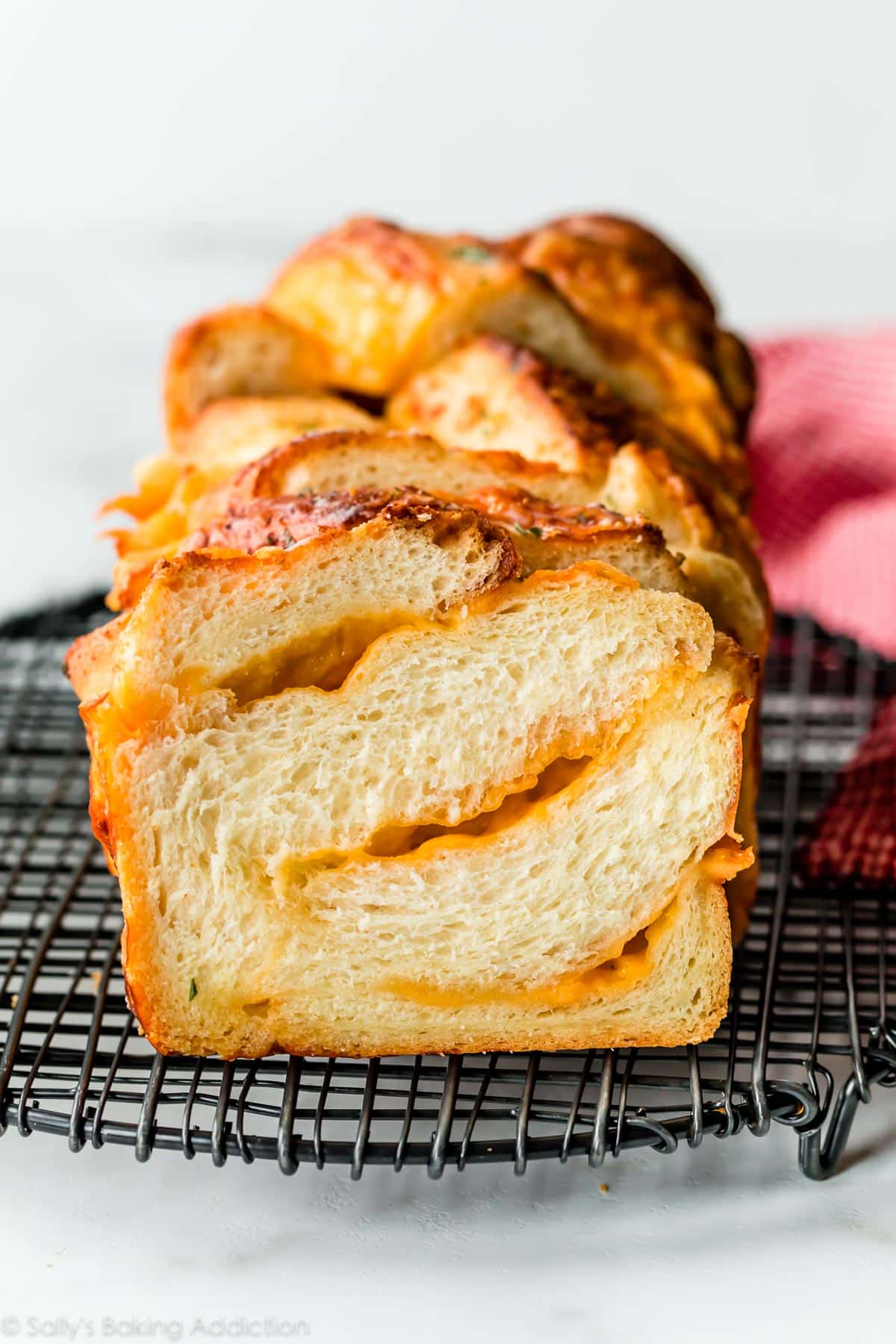
Let’s back up. This cheese bread is homemade bread swirled with real cheese. It’s a simple yeasted dough that I adapted from my sweeter homemade homemade cinnamon swirl bread and my basic sandwich bread. Each slice is extra soft with a chewy crust and ribbons of melted cheese throughout. For extra flavor, brush the top of the unbaked bread with garlic herb butter. The cheese on top crisps up, while the garlic butter infuses down into the bread.
I have 3 loaves in the freezer right now. Things would become dangerous if there wasn’t a constant stash of cheese bread in our house.
Video Tutorial: Cheese Bread
Let’s walk through each step.
Ingredients in Cheese Bread
- Buttermilk: Liquid activates the yeast. For soft, flavorful, and chewy cheese bread, use a combination of buttermilk and water. Nondairy, whole, or low fat milks work too, but buttermilk produces phenomenal flavor and texture.
- Water: Although you could use all milk as the liquid in this dough, I preferred a mix of water and buttermilk. All milk made this taste more like an overly soft dessert bread.
- Yeast: You can use active dry yeast or instant yeast. If using active dry yeast, the rise times will be a little longer. I recommend Platinum Yeast from Red Star, which is an instant yeast that is blended with natural dough improvers.
- Sugar: Sugar feeds the yeast, increases its activity, and tenderizes the dough.
- Melted Butter: Butter promises a soft and flavorful bread. Use melted butter. I found that room temperature butter produced a cakey-er and less flavorful end product.
- Egg: 1 egg provides structure and flavor.
- Salt: Bread would be seriously lacking flavor without salt!
- Garlic Powder: Garlic powder adds incredible flavor to the dough AND to the topping. If using fresh garlic, use 1 finely minced clove in the dough and 1 teaspoon minced garlic in the topping.
- Bread Flour: Higher protein flour like bread flour is best for this bread recipe because of its strong gluten formation and high rise. All-purpose flour will yield a flimsy bread.
- Cheddar Cheese: I recommend cheddar cheese, but you can use another harder cheese such as pepper jack, gouda, or colby cheese. Avoid very soft cheeses. For best taste and texture, shred the cheese off the block yourself with a cheese grater.
Did You Know?
The crustier and chewier the bread, the less fat in the dough—aka a lean dough. Chewy focaccia and my artisan bread are made from lean dough. The softer and richer the bread, the more fat in the dough—aka a rich dough. Monkey bread and cinnamon rolls are made from rich dough. This homemade cheese bread is somewhere in between. It’s chewy, super soft in the center, and a little crisp on top.
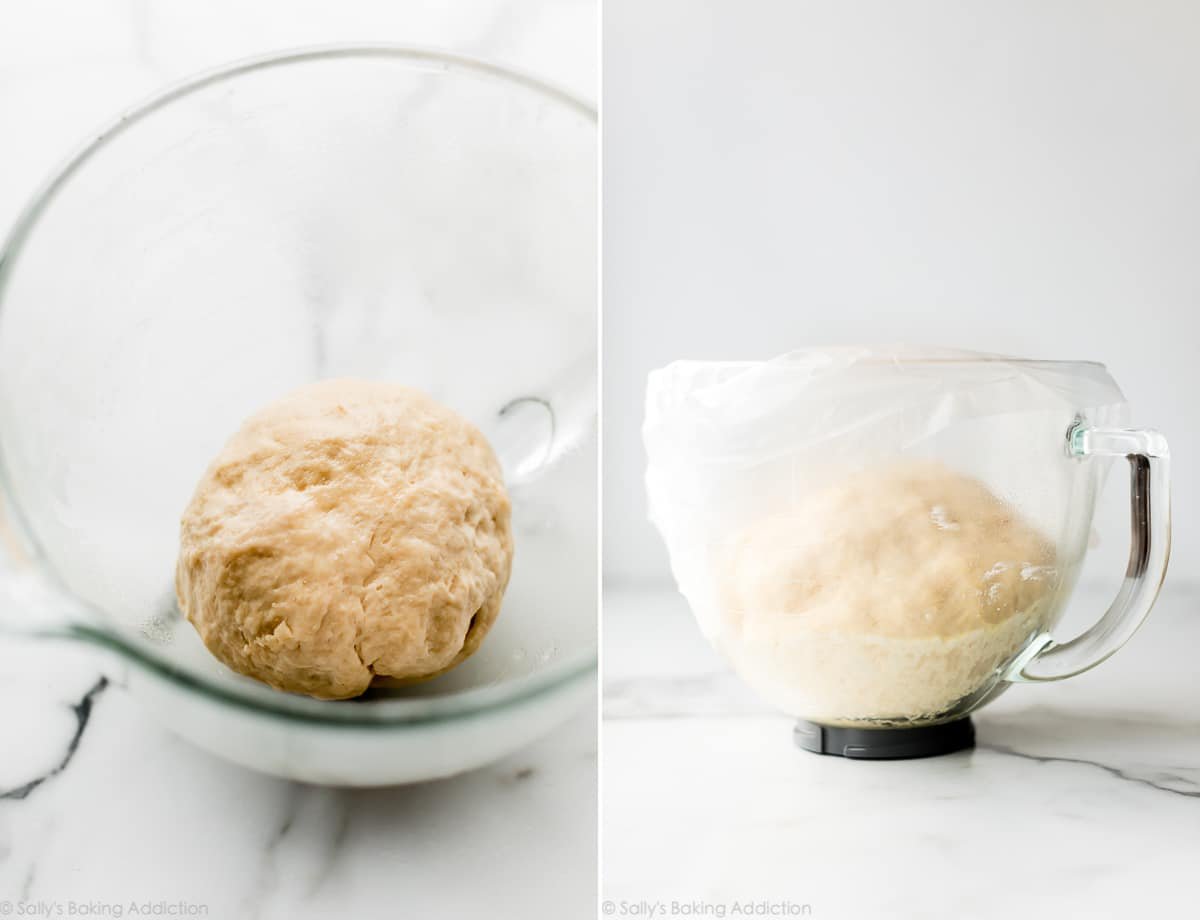
Make and knead the dough, referencing my How to Knead Dough video tutorial if necessary. After the dough comes together, let it rise for about 1 and 1/2 – 2 hours. After that, punch it down and begin assembling the cheese bread.
Baking with Yeast Guide
Reference this Baking with Yeast Guide whenever you work with baker’s yeast. I include practical answers to all of your common yeast questions.
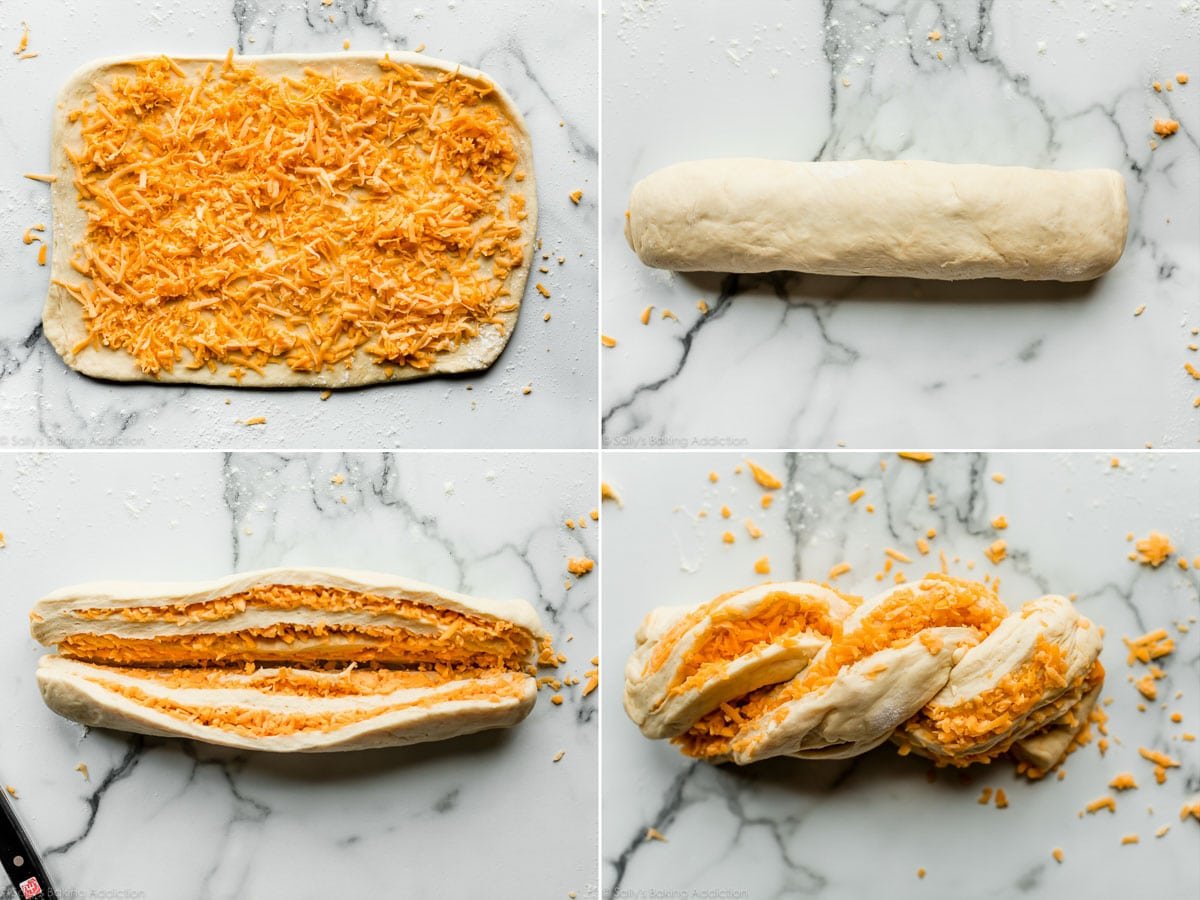
How to Shape & Assemble Cheese Bread
Remember Nutella babka and cinnamon crunch bread? We’re doing the same thing here. Pictures and explanations can only do so much, so make sure you watch the video tutorial above before assembling.
- Punch down the risen dough. Roll out into a 9×15-inch rectangle.
- Sprinkle cheese all over the top.
- Tightly roll the dough into a 15-inch log. Place the log on its seam.
- Using a sharp knife, cut the log in half lengthwise.
- Criss-cross one half, cut side down, on top of the other half– forming an X. Tightly twist the two together.
- Pinch the outer edges to seal as best you can.
By the way, there’s 2 cups of cheese stuffed inside this bread. 🙂
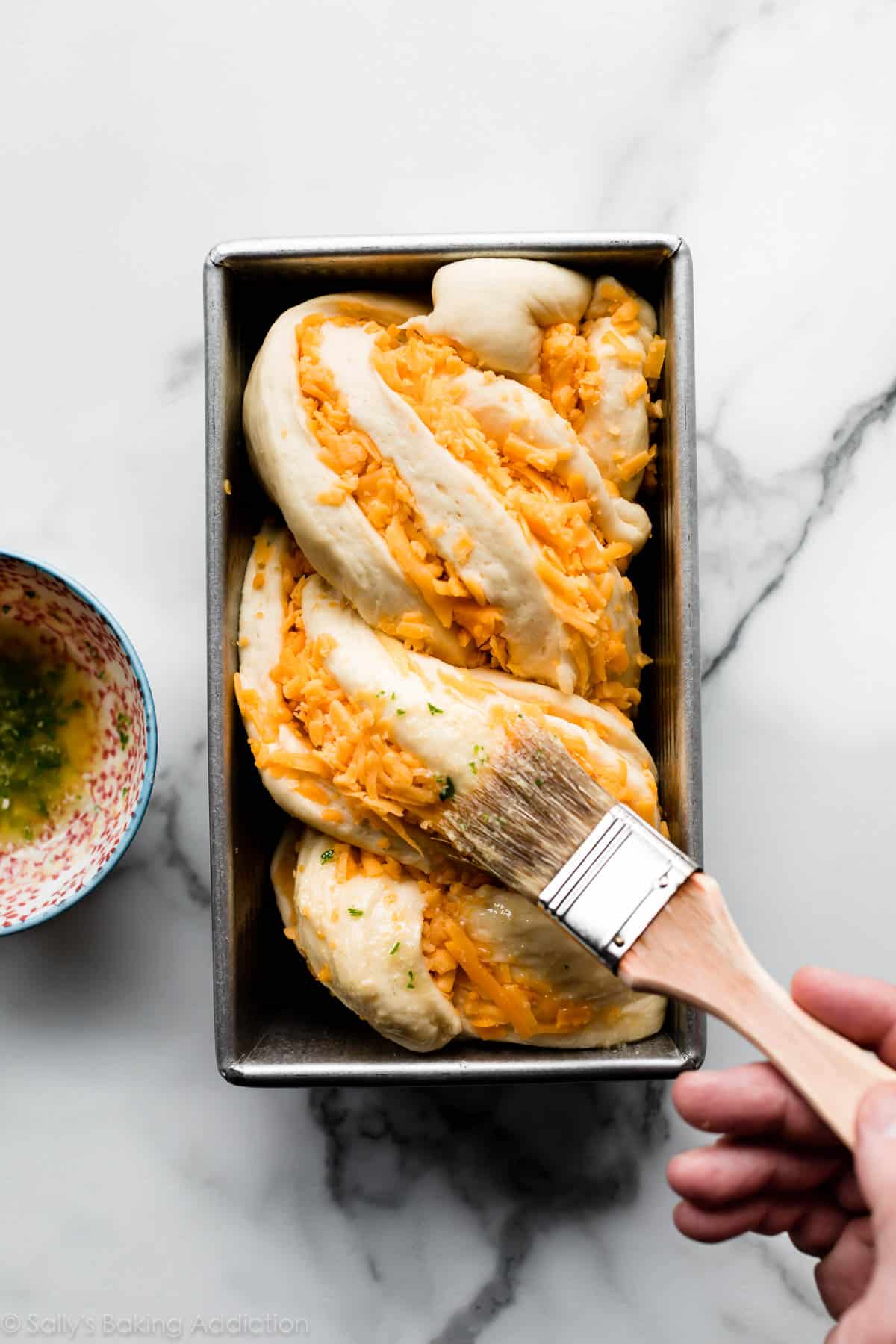
After it’s shaped, loosely cover the bread and let it rest for about 30 minutes. During this time, preheat the oven. Right before baking, brush the shaped dough with melted butter, garlic powder, and chopped parsley. Chopped basil would be excellent, too!
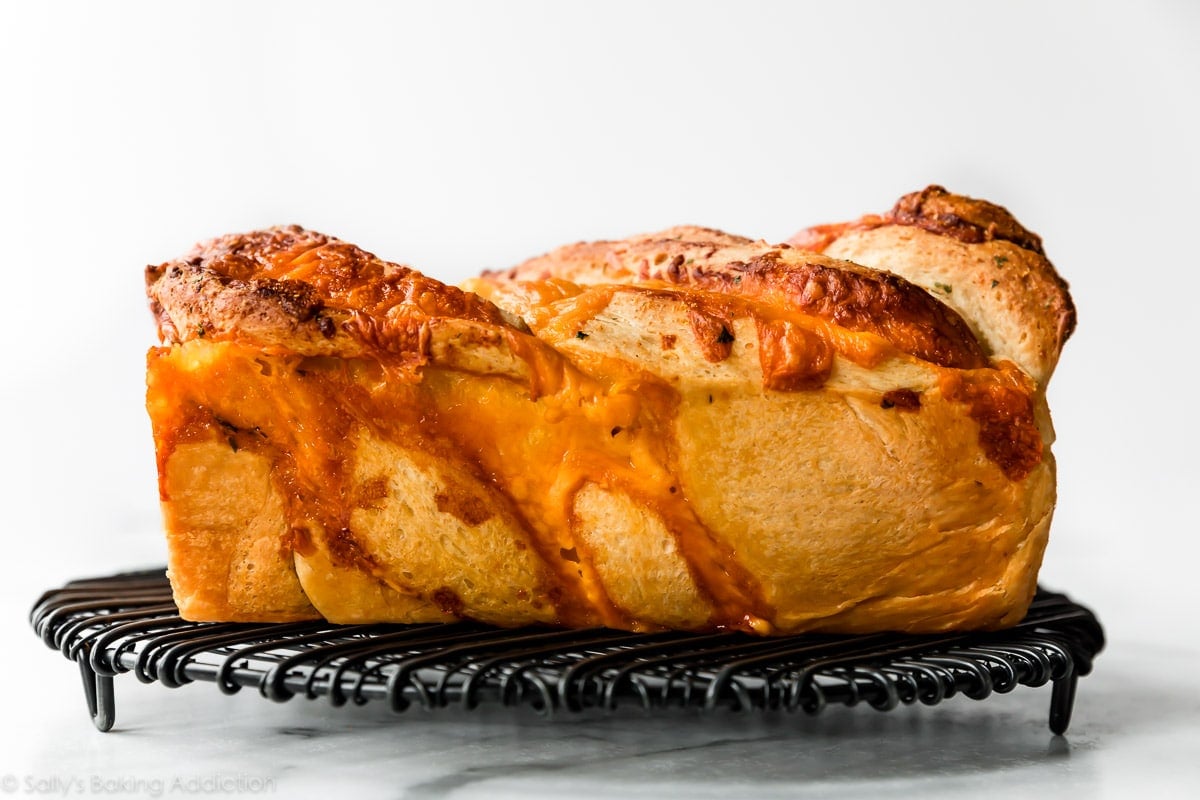
There is no sight more beautiful. No smell more heavenly. No taste more paralleled!
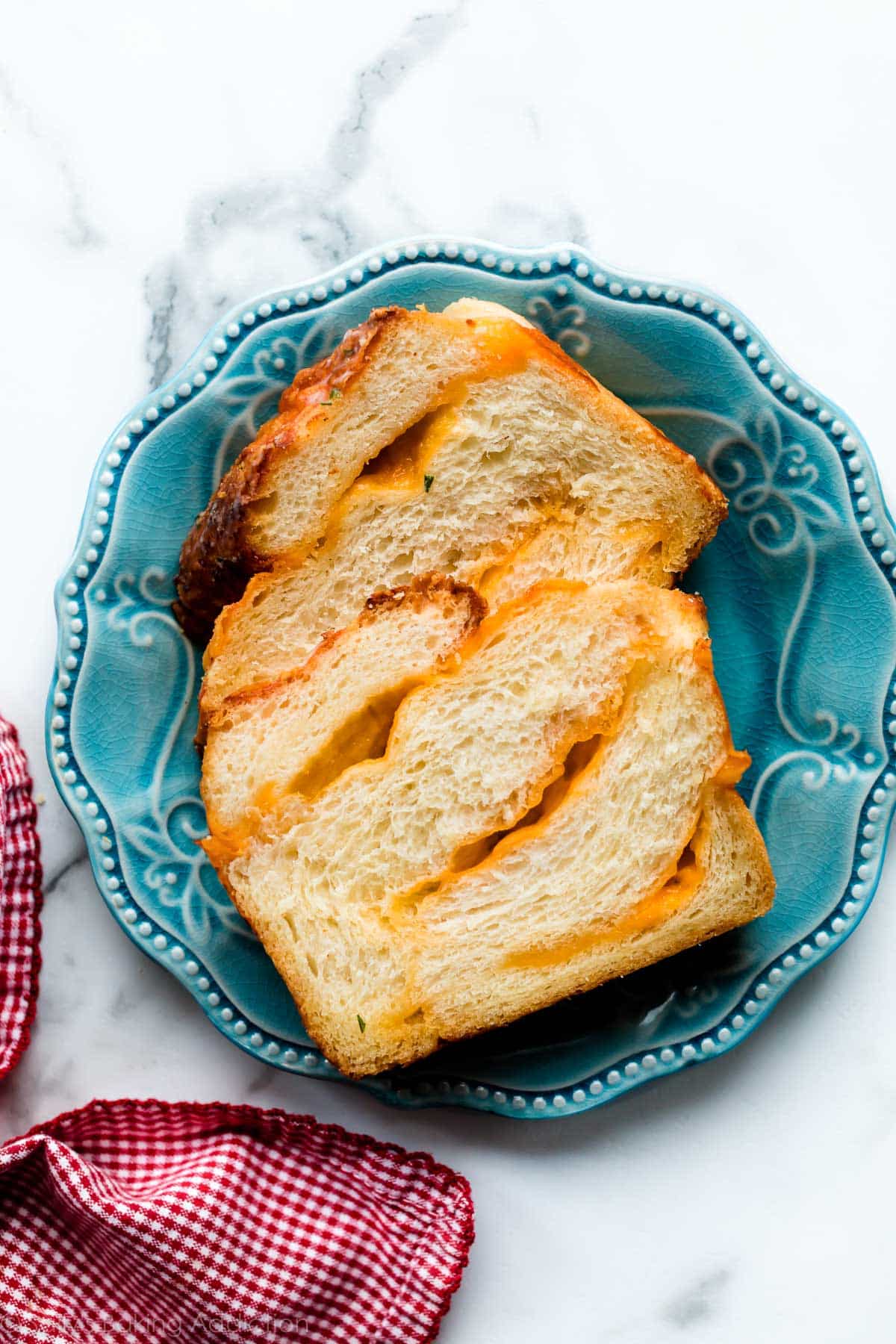
The best part, besides that first cheesy bite, is slicing into the loaf to reveal all those swirls of real melted cheese. Like I said, this is obviously the greatest loaf of all time.
If you’re looking for an equally cheesy bread without any shaping and twisting, try my asiago-crusted skillet bread instead!
More Easy Homemade Bread Recipes
- Focaccia
- Artisan Bread
- Pizza Crust (great for beginners!)
- Homemade Soft Pretzels
- Cinnamon Rolls
- Pizza Pull Apart Rolls
- Cheddar Biscuits
- Sandwich Bread & Whole Wheat Bread
See Your Homemade Cheese Bread!
Many readers tried this recipe as part of a baking challenge! Feel free to email or share your recipe photos with us on social media. 🙂
Print
Homemade Cheese Bread – Extra Soft
- Prep Time: 3 hours
- Cook Time: 50 minutes
- Total Time: 4 hours
- Yield: 1 loaf
- Category: Bread
- Method: Baking
- Cuisine: American
Description
You only need a handful of basic ingredients to make homemade cheese bread. This soft buttery yeasted bread is twisted up with cheddar cheese, but you can use any cheese variety you love. Bake the bread in a loaf pan, then slice it to reveal the 2 cups of swirled cheese inside. See recipe notes for make ahead and freezing instructions.
Ingredients
- 1/2 cup (120ml) buttermilk, warmed to about 110°F
- 1/3 cup (80ml) water, warmed to about 110°F
- 2 and 1/4 teaspoons Platinum Yeast from Red Star (1 standard packet)
- 2 Tablespoons (25g) granulated sugar
- 5 Tablespoons (71g) unsalted butter, melted + slightly cooled
- 1 large egg, at room temperature
- 1 teaspoon salt
- 3/4 teaspoon garlic powder
- 3 cups (390g) bread flour (spooned & leveled), plus more as needed and for hands/work surface*
- 2 cups (250g; 8 ounces) shredded cheddar cheese (see note)
Topping
- 2 Tablespoons (28g) unsalted butter, melted
- 2 teaspoons chopped fresh parsley (or your favorite dried or fresh herb)*
- 1/4 teaspoon garlic powder
Instructions
- Prepare the dough: Whisk the warm buttermilk, warm water, yeast, and sugar together in the bowl of your stand mixer fitted with a dough hook or paddle attachment. Cover and allow to sit for 5 minutes.
- Add the butter, egg, salt, garlic powder, and 1 cup flour. Beat on low speed for 30 seconds, scrape down the sides of the bowl with a silicone spatula, then add the remaining flour. Beat on low speed until the dough comes together and pulls away from the sides of the bowl, about 2 minutes. *If you do not own a mixer, you can mix this dough with a large wooden spoon or silicone spatula. It will take a bit of arm muscle!*
- Knead the dough: Keep the dough in the mixer and beat for an additional 5 full minutes, or knead by hand on a lightly floured surface for 5 full minutes. (If you’re new to bread-baking, my How to Knead Dough video tutorial can help here.) If the dough becomes too sticky during the kneading process, sprinkle 1 teaspoon of flour at a time on the dough or on the work surface/in the bowl to make a soft, slightly tacky dough. Do not add more flour than you need because you do not want a dry dough. After kneading, the dough should still feel a little soft. Poke it with your finger—if it slowly bounces back, your dough is ready to rise. You can also do a “windowpane test” to see if your dough has been kneaded long enough: tear off a small (roughly golfball-size) piece of dough and gently stretch it out until it’s thin enough for light to pass through it. Hold it up to a window or light. Does light pass through the stretched dough without the dough tearing first? If so, your dough has been kneaded long enough and is ready to rise. If not, keep kneading until it passes the windowpane test.
- 1st Rise: Lightly grease a large bowl with oil or nonstick spray. Place the dough in the bowl, turning it to coat all sides in the oil. Cover the bowl with aluminum foil, plastic wrap, or a clean kitchen towel. Allow the dough to rise in a relatively warm environment for 1.5-2 hours or until double in size. (I always let it rise on the counter. Takes about 2 hours. For a tiny reduction in rise time, see my answer to Where Should Dough Rise? in my Baking with Yeast Guide.)
- Grease a 9×5-inch loaf pan.
- Shape the bread: Punch down the dough to release the air. Place dough on a lightly floured work surface and with a floured rolling pin, roll the dough out into a 9×15-inch rectangle (approximately). Sprinkle cheese all over the top, leaving a 1/2 inch border uncovered.
- Watch the video above to see exactly how I do this step. Tightly roll the dough into a 15-inch log. Place the log on its seam. Using a sharp knife, cut the log in half lengthwise. I find a serrated knife works best. Criss-cross one half, cut side down, on top of the other half—forming an X. Tightly twist the two together. Pinch the outer edges to seal as best you can. If you have any leftover cheese, cut a few small squares and tuck into the dough as shown in the video above. This is optional and simply for extra cheesy pockets! Place in prepared loaf pan and cover with aluminum foil, plastic wrap, or a clean kitchen towel. (This step can get a little messy.)
- Allow the covered loaf to rest for 30 minutes. It will slightly rise during this time.
- Adjust the oven rack to the lower third position. Place a baking sheet on the lower rack to catch any cheese or butter that may drip down. Preheat the oven to 350°F (177°C).
- Topping: Whisk the melted butter, herbs, and garlic powder together. Drizzle or brush on top of dough.
- Bake: Bake until golden brown and, when gently tapped, the top of the loaf sounds hollow, about 45-55 minutes. If you find the top of the loaf is browning too quickly as it bakes, tent with aluminum foil. (I usually place foil on top after about 25 minutes.) Remove bread the oven and place on a wire rack. Cool for 10 minutes in the pan, then remove from the pan and cool loaf on the wire rack.
- Slice and serve. Cover and store leftovers at room temperature for 2 days or in the refrigerator for up to 1 week. Leftover slices taste delicious when warmed in the microwave for 10 seconds.
Notes
- Make Ahead Instructions – Overnight: Prepare the dough through step 3. Place into a greased bowl as directed in step 4. Cover the dough tightly and place in the refrigerator for up to 15 hours. Remove from the refrigerator and allow the dough to fully rise for 1-2 more hours. Continue with step 5. I don’t recommend shaping the bread the night before as it will puff up too much overnight.
- Make Ahead Instructions – Freezing: Baked bread freezes wonderfully. Wrap the cooled loaf in plastic wrap, then a layer of aluminum foil. Freeze for up to 3 months. Thaw wrapped bread overnight in the refrigerator or at room temperature, then warm to your liking. You can also freeze the bread dough. After punching down the dough in step 6, wrap the dough tightly in plastic wrap, then a layer of aluminum foil. Freeze for up to 3 months. Thaw overnight in the refrigerator, then punch the dough down again to release any air bubbles. Continue with the rest of step 6.
- Special Tools (affiliate links): Stand Mixer or Large Glass Mixing Bowl | Silicone Spatula or Wooden Spoon | 9×5-inch Loaf Pan | Rolling Pin | Whisk | Pastry Brush | Cooling Rack
- Buttermilk: Buttermilk provides the softest texture and unbeatable flavor. In a pinch, you can use whole milk instead. Lower fat or nondairy milks work in a pinch, but the bread won’t taste as moist or rich. Here are other recipes using buttermilk if you purchase a carton and need to use it up.
- Yeast: Platinum Yeast from Red Star is an instant yeast. You can use Red Star Yeast active dry yeast instead. Rise times will be slightly longer using active dry yeast. Reference my Baking with Yeast Guide for answers to common yeast FAQs.
- Bread Flour: Higher protein flour like bread flour is best for this bread recipe because of its strong gluten formation and high rise. All-purpose flour will yield a flimsy bread.
- Cheese: I recommend cheddar cheese in this recipe, but you can use another relatively harder cheese such as pepper jack, gouda, or colby cheese. Avoid very soft cheeses. For best taste and texture, shred cheese off the block yourself with a cheese grater. Pre-shredded cheese is drier than freshly shredded. If you have extra cheese, cut a few small squares to stuff inside the twisted bread, as noted in step 7.
- Herbs in Topping: Use your favorite herb in the topping. If using dried, reduce to 1/2 teaspoon.













Reader Comments and Reviews
Just tried this and it’s SO good! I was wondering if I can bake the bread in its log shape in a regular pan or does it have to be baked in a loaf pan? I’m going to try with white cheddar next.
Hi Stephanie, you can try that! You could also try using this dough/cheese/topping and assemble in a cake pan or springform pan just as we do with this raspberry twist bread. Let us know if you give it a try!
I can’t wait to get busy and ry several of these recipes; everyone sounf DELISH!! Thanks for great ideas.
Can you suggest pan size and number of rolls if cut? Also cooking time and temp? Just don’t have a bread pan
Hi Amira, You could roll it up as a log, like the recipe says, and then slice into rolls… cinnamon roll style. You could bake in a muffin pan or in a 9×13-inch baking pan. The bake time will be shorter, temperature will be the same.
I’ve made this many times and it is delicious! I noticed when cooling the center tends to sink a little. What am I doing wrong?
Hi Francesca! Could the bread be slightly under-baked?
Get an instant read thermometer. The bread should be at least 200 degrees F in the center. It should be between 190 and 210. I usually aim for 200 and my bread comes out perfect every time.
This looks amazing. Could pickled jalapeños be added with the cheese?
Hi Heather, absolutely! Just blot the jalapeños dry before adding.
Thanks for your recipies,I’m exicited to get more to try
Hi Sally, I just left a comment about winning a Blue Ribbon at my county fair with this yummy recipe. I forgot to add that it was then judged with all the classes of yeast bread and it won the Division Winner, Best Yeast Bread at the fair! Thank you for this winning recipe.
I entered this cheese bread in my local count fair and won a Blue Ribbon!!! It turned out beautiful! Thank you Sally for all of your winning recipes!
In your cinnamon version you spread butter on the rolled out dough before adding the cinnamon and sugar. How about spreading garlic butter on the rolled though for this version, before adding the cheese. Would that work and be a nice addition you think?
That would be great!
Please let’s be honest. This is so amazing. Honestly I have five kids 1-11 and they can not get enough. I’ve started looking through your recipes first, prior to anyone else’s. Your cinnamon roll recipe is amazing too. Thank you for all you do! This is by far the best bread or cheese bread recipe I’ve used.
Hi Sally,
What do you think about adding fresh basil to the cheese? I’m trying to use the abundance of fresh basil from my garden in recipes other than pesto.
Hi Joanna, that sounds good, go for it!
Pesto is also great spread on bread before baking.
Delicious! But I wonder if the log could be cut into slices and baked similar to cinnamon rolls?
Absolutely! You could roll it up as a log, like the recipe says, and then slice into rolls… cinnamon roll style. The bake time will be shorter.
Hi Sally,
Made this yesterday and it taste great but the crumb is pretty tight. What causes that? My yeast bloomed and I followed directions to a tee.
Thanks!
Hi Ashley, we’re happy to help troubleshoot. When yeasted bread has a tighter crumb and is on the denser side, it’s usually because the dough was under-proofed or under- or over-kneaded, preventing the gluten from developing properly. An easy fix for next time! Our Baking with Yeast and How to Knead Dough guides may also be helpful to review.
I made this recipe today. It is wanderful. thank you.
Wonderful, easy recipe. Just need to practice on a tighter roll and a better braid. I do have a question though. Wondering best way to eat the next day? I thought about toasting but didn’t want my cheese to melt out.
Hi Lisa, Leftover slices taste delicious when warmed in the microwave for 10 seconds.
I cannot tell you how many times I’ve made this recipe. It is my absolute favorite.
What oven temperature do you bake this at? I didn’t see it in the instructions.
Hi Paul, This bakes at 350°F (177°C). Enjoy!
I have made this a couple of times now! I have it in the oven now! It is totally delicious and very easy to make. I used cheddar and Guyere the second time I made it 50/50 mix. It is actually a Cheese Garlic Bread. I love this bread! Great recipe Sally!
I made this cheese bread today. Easy to follow the recipe and it was delicious!
h
Hi Sally, I am new to bread baking and getting your email as well, tried this recipe and it came out well. Thank you
Hi Sally, I just tried your recipe following the exact measurement and it came out well . Thank you and looking forward more from you.
This was so good! Easy to make. I have never used bread flour and using it made fora really soft, velvety dough. Definitely will make this again!
i like to try making a cinnammon raisin whole wheat bread with my mixer cause my wrist cannot handle kneading by hand – sorry – if i can what speeds do i use them on hoping u can help me plus do i use all purpose flour or bread flour for this recipe
Hi Linda, for this recipe (Homemade Cheese Bread), we recommend mixing and kneading on low speed. This recipe calls for bread flour—all-purpose flour will yield a flimsy bread.
My mixer says 3 for kneading
I am going to try to make these as dinner rolls for Easter.
Any advice?
Hi MaryAnne, we haven’t tested these as rolls, but let us know if you do! Otherwise, you might enjoy these pizza pull apart rolls (feel free to leave out the pepperoni for a cheese version) or these soft dinner rolls.
can i use all purpose flour instead of bread flour and do have a recipe for herb or mulit grain bread recipe
Hi Linda, Higher protein flour like bread flour is best for this bread recipe because of its strong gluten formation and high rise. All-purpose flour will yield a flimsy bread. Here’s our multigrain bread recipe – let us know if you try it!
This looks so good, but I cannot have gluten. Darn! Do you ever make any gluten-free recipes? Some gluten-free flours measure one to one.
Hi Linda, We haven’t tested this with GF flour. Results will obviously be different, but let us know if you try it.
Do you think I could use my bred machine on the dough cycle for kneading and rising – then do the remainder of the recipe by hand
Hi Betty, we don’t own a bread machine and haven’t tried it ourselves, but other readers have reported success doing so. Hope you enjoy this bread!
This is the Best bread recipe! I followed the recipe exactly. It is the softest, slices beautifully ,and tastes wonderful! Thank you!
Would this dough work with a cream cheese filling as well?
Hi Patricia! I can’t see why not.
In your notes you say to use relatively hard cheese. Your reply to the question about using cream cheese was you didn’t see why not. I can’t see this working. Would it?
Hi Sandy! Happy to clarify. If you’re looking to replicate the cheese bread as pictured, use a hard cheese. If you want to fill it with cream cheese, you can, but you won’t see the swirls inside the loaf. The results will be different.
Can I use any dry active yeast for the cheesy bread or does it have to be platinum?
Hi Pam, You can use any instant or active dry yeast. The Platinum Red Star Yeast is an instant yeast, so just keep in mind that rise times will be slightly longer using active dry yeast.
This recipe is AMAZING! It’s gone in a day everyone’s loves it! I also have a question, every time I make this bread the dough is very dry what can I do to help?
Hi Julie! So glad you love it. How did you measure the flour? Make sure to spoon and level (instead of scooping) to avoid packing in too much flour into your measuring cups – or use a kitchen scale. You can read more about properly measuring baking ingredients in this post.
Can I just double the recipe ( for making two loaf) or do I need to make two separate batches?
Hi Elenora, For the best results we recommend making two separate batches.
:-))) Loved the comment: “Things would become dangerous…” Yes, food faves can do that to growing kids, especially teens.