

This homemade cinnamon swirl bread recipe is a family favorite and requires only a handful of basic ingredients (just 8!). It’s soft and tender with the most unbelievably gooey cinnamon swirl inside. Each yeasted bread slice tastes fabulous on its own, but try it toasted with some honey butter… unbelievable! For a no-yeast version, see my cinnamon swirl quick bread.
I originally published this recipe in 2015 and have since added new photos and made a few changes to the recipe steps, which are outlined in the post below.
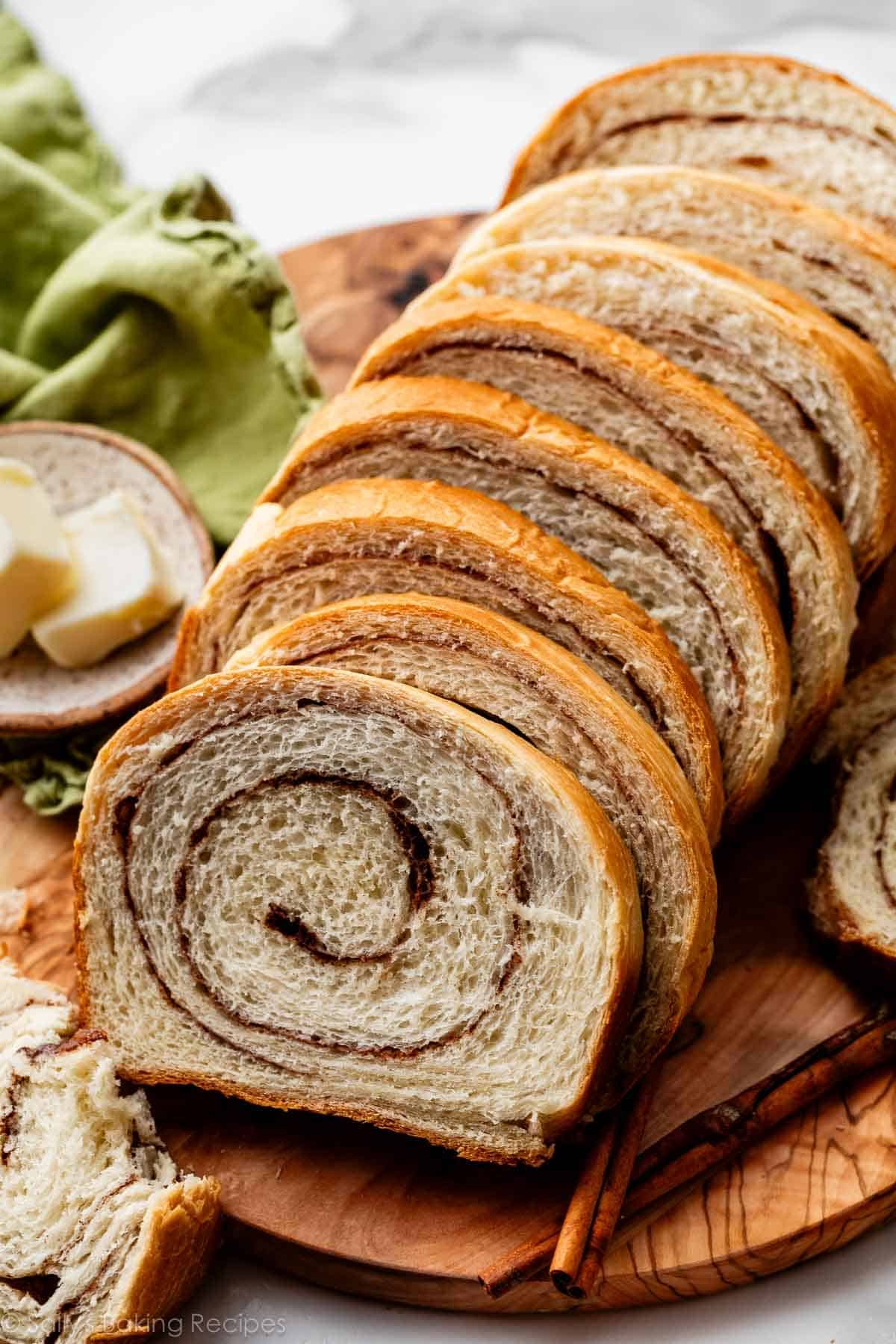
Homemade cinnamon swirl bread is one of life’s greatest treasures. Hot & fresh out of the oven, the smell alone will captivate a large crowd. The bread is buttery soft and the hypnotizing swirls are deliciously sweet. This recipe is basically a simplified version of my cinnamon crunch bread.
You know I love a good cinnamon sugar swirl (I mean, have you tried this cinnamon swirl banana bread??) But honestly, there is nothing on earth quite like the craft of homemade yeast bread. Isn’t it so satisfying? That’s why I have so many homemade yeast bread recipes on this website. Everyone’s favorite!
One reader, Michelle, commented: “One of the best recipes for cinnamon swirl out there. The bread is fluffy like you would find in a bakery and it has just the right amount of cinnamon and sugar, without being too gooey. We made our first loaf last night and by morning it was gone, so we have to make a second loaf. ★★★★★”
Baking with Yeast Guide
Are you a yeasted bread beginner? Reference this Baking with Yeast Guide whenever you work with baker’s yeast. I include practical answers to all of your common yeast questions.
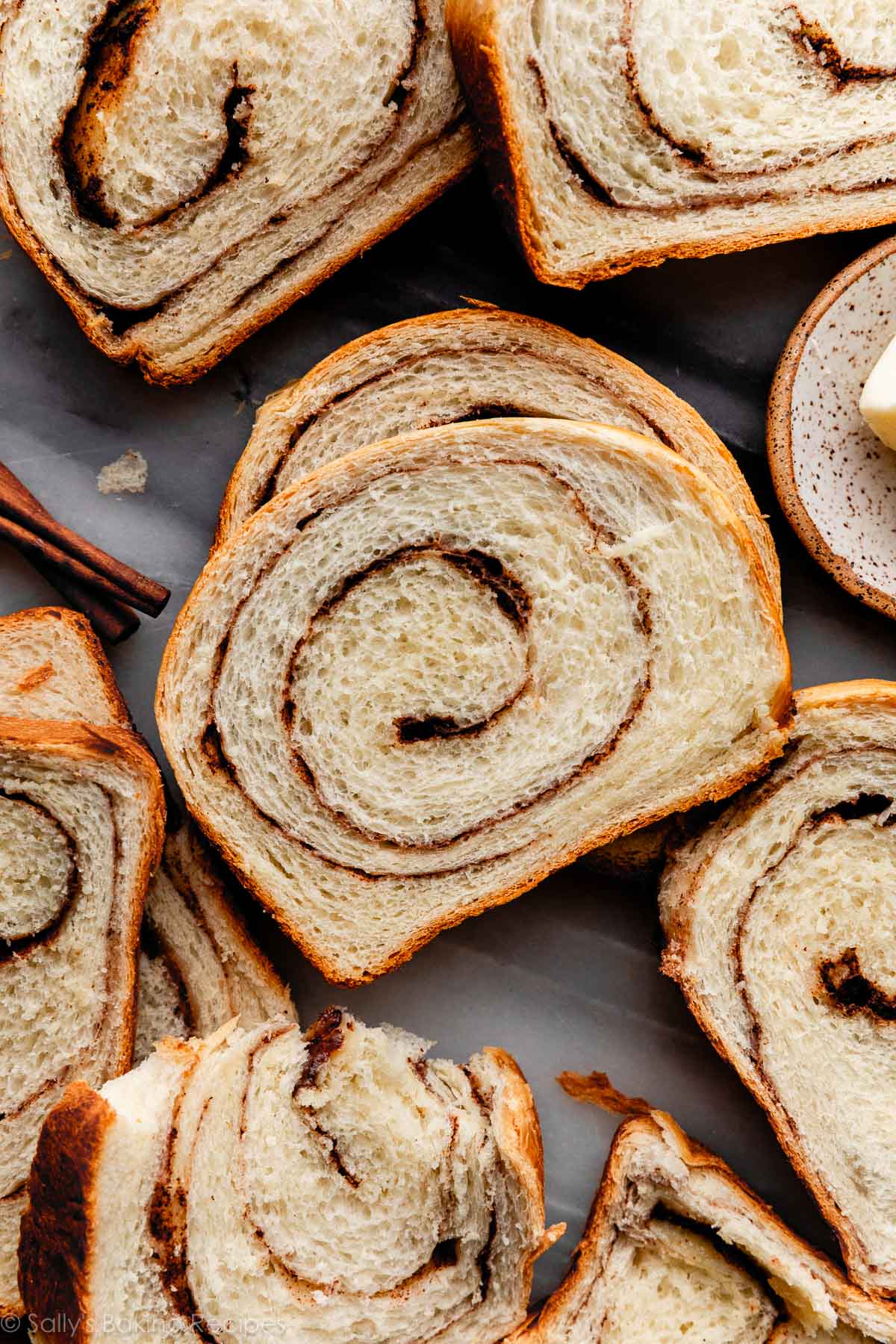

Updated & Improved Cinnamon Swirl Bread Recipe
This recipe has seen some updates over the past decade, and I want to show a quick comparison photo. When I first published this recipe, I shaped the dough into a thick square and rolled it up. This gave me very little swirl inside the baked bread. Now I roll it out into a thinner 8×20-inch rectangle. I brush the rolled-out dough with egg white, and sprinkle the cinnamon sugar on top. The egg white helps the cinnamon sugar stick, and helps prevent large air gaps in the baked bread.
This method produces more swirls in each slice. The loaf also rises taller as it bakes. I still can’t believe the BIG difference these SMALL changes make. Look at the slices:
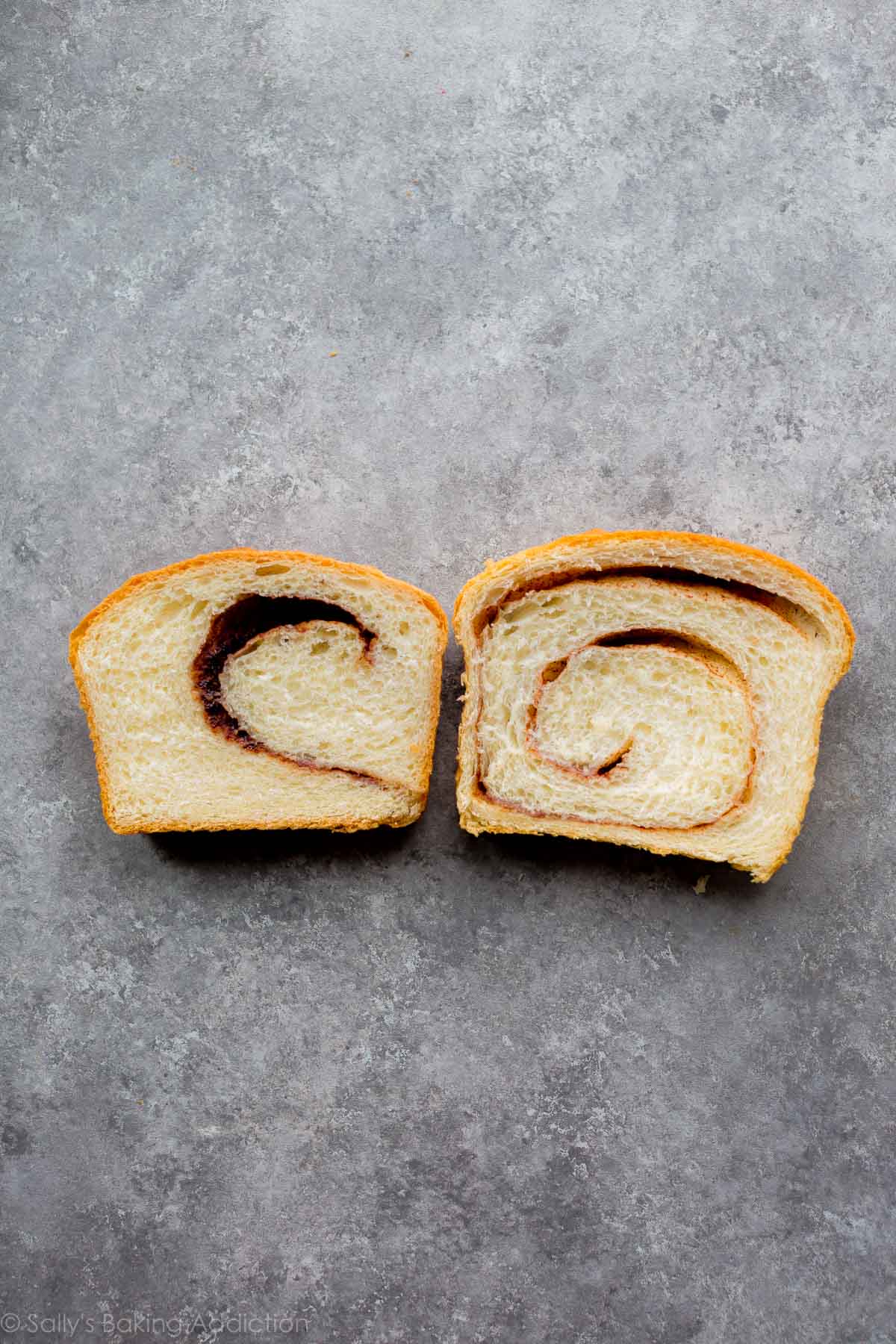
How to Make Yeasted Cinnamon Swirl Bread
Today I’m teaching you how to become a bread-baking professional (well, close to it!). This recipe is very similar to my sandwich bread recipe, but it’s a little sweeter. Follow my tips and soon you’ll bake homemade croissants or croissant bread, homemade bagels, cheese bread, and even star bread. With only a handful of basic ingredients, your kitchen will transform into a bread bakery!
- Prepare the Dough: The first step is to mix the bread dough. You need yeast, sugar, water, milk, butter, bread flour, and salt. The thing about homemade bread is that the ingredients are SO basic, but throw the word “yeast” in there and many feel intimidated. I promise it’s not difficult to throw this dough together. As long as you give the yeast, sugar, water, and milk a few minutes to sit before adding the other ingredients, you’re on the right track!
- Use Bread Flour: All-purpose flour doesn’t have enough strength to support the rise and structure of cinnamon swirl bread. Bread flour is sold right next to the all-purpose flour in the baking aisle, and if you need some recipe inspiration for your leftover bread flour, try any of these recipes.
- Knead the Dough: Do you know how to do this? If not, I have an entire tutorial and video for How to Knead Dough.
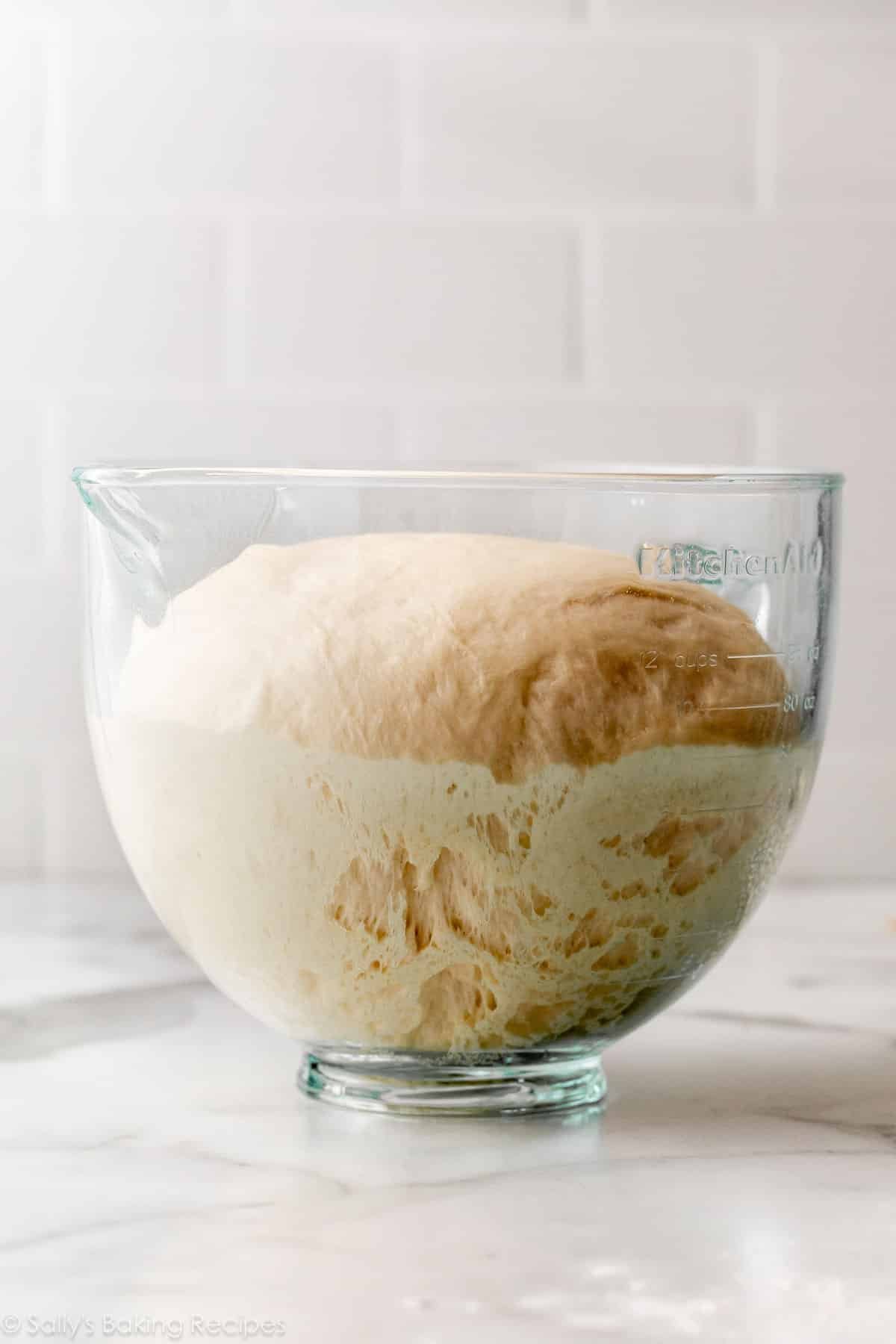
- First Rise: The dough must rise twice. After you knead the dough, let it rise until doubled in size.
- Swirl the Dough: After the dough rises, punch it down, then roll it out. Brush with egg white, sprinkle with cinnamon and sugar, and roll back up.
- Second Rise: Place the rolled dough into a loaf pan and let it rise for 1 more hour.
- Bake: Pat yourself on the back because—congratulations!—you’re a bread baker with the simplest yet tastiest homemade cinnamon bread recipe in the world.
These Step-by-Step Photos Will Help:
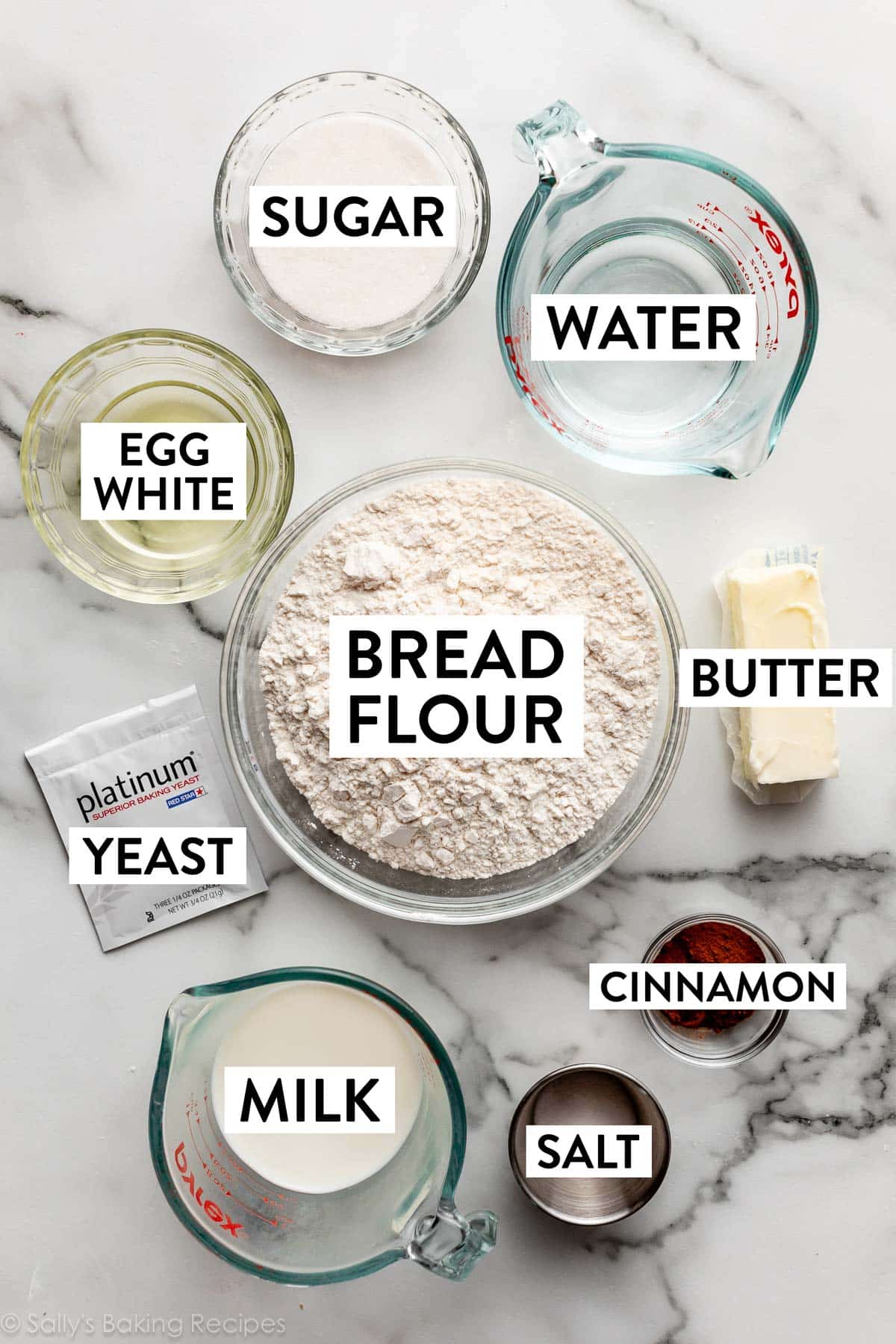
These are the ingredients you need:
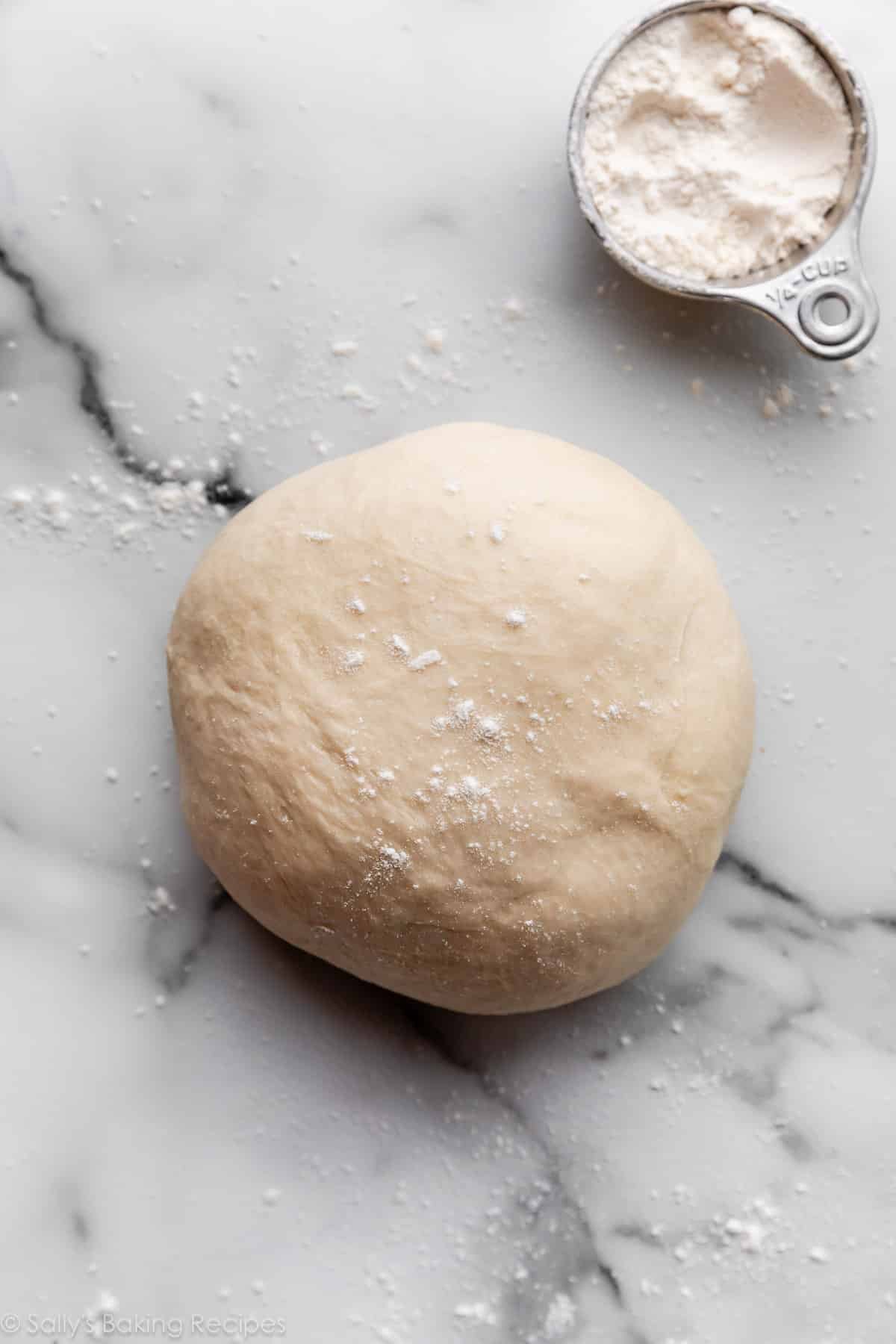
Here is the dough after kneading:
Let the kneaded dough rise until doubled in size, like this:
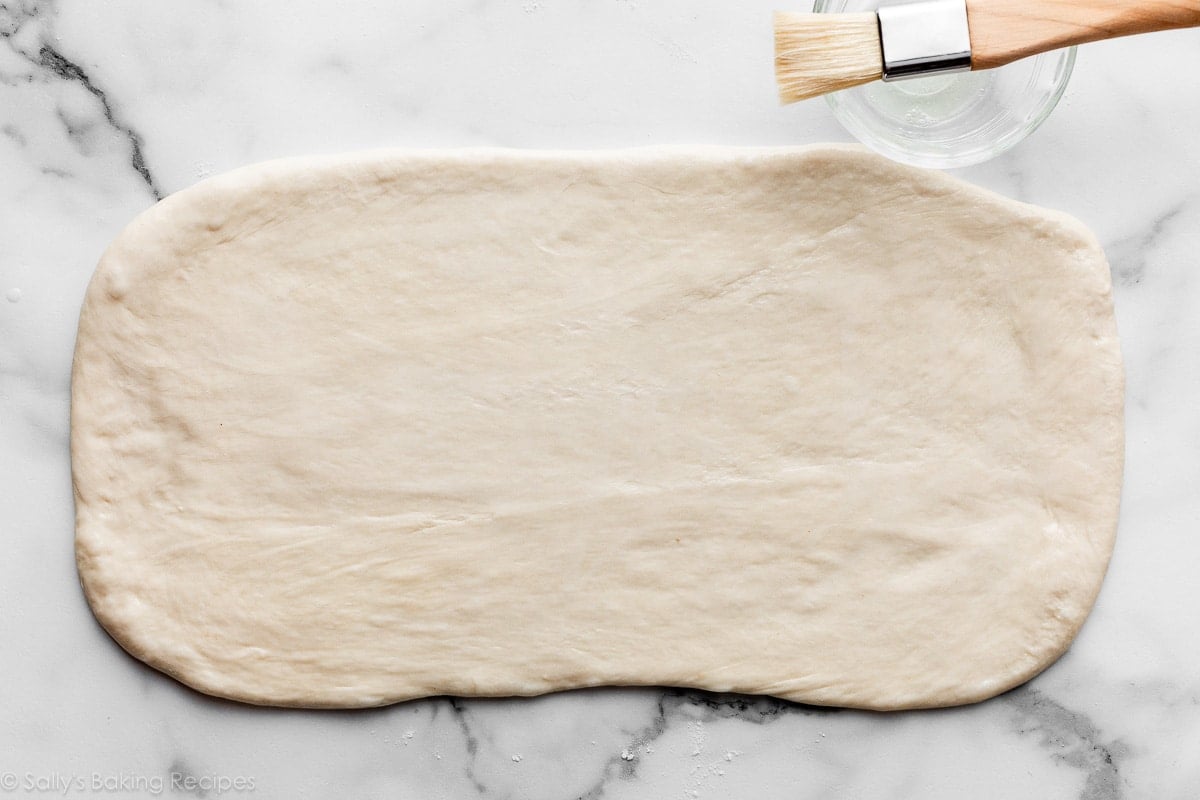
Punch it down to release the air, and roll it out into an 8×20-inch rectangle:
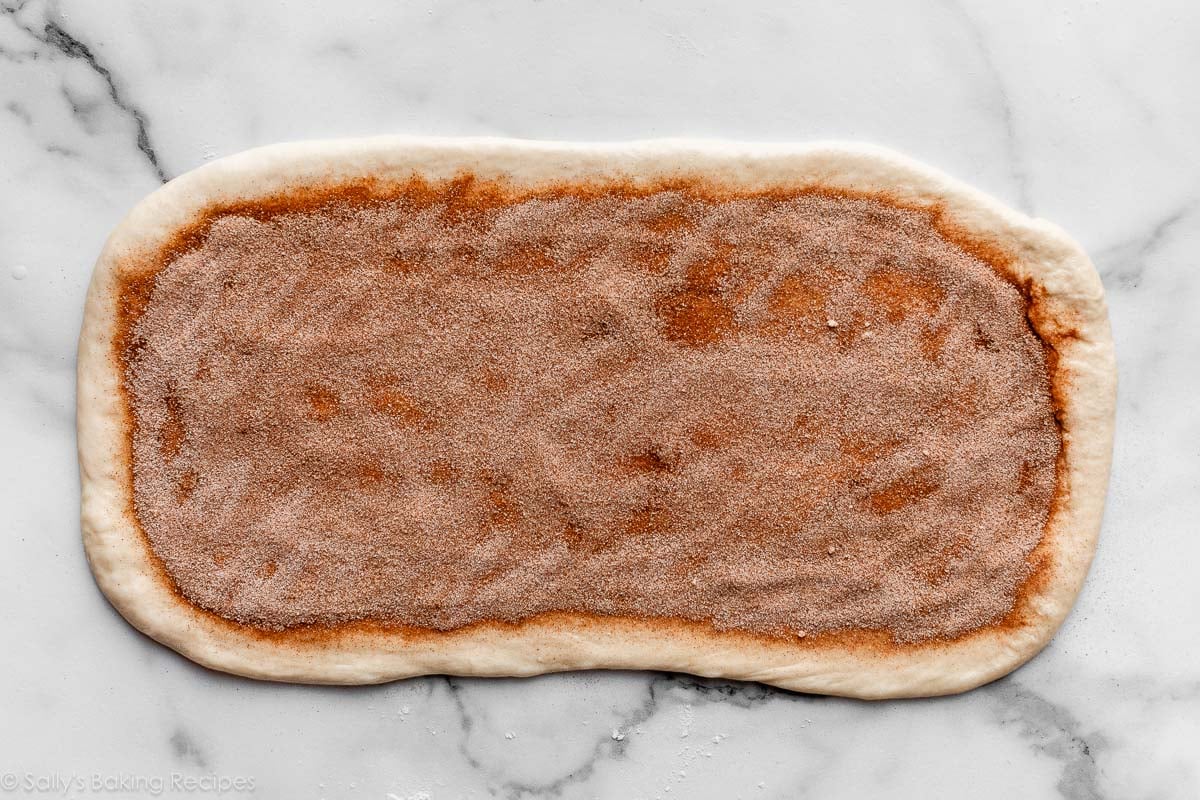
Using a pastry brush, brush the surface with a beaten egg white. Sprinkle cinnamon sugar on top:
Roll it up into a 9-inch log, place into a loaf pan, and let it rise once again. Here is the dough before and after this 2nd rise:
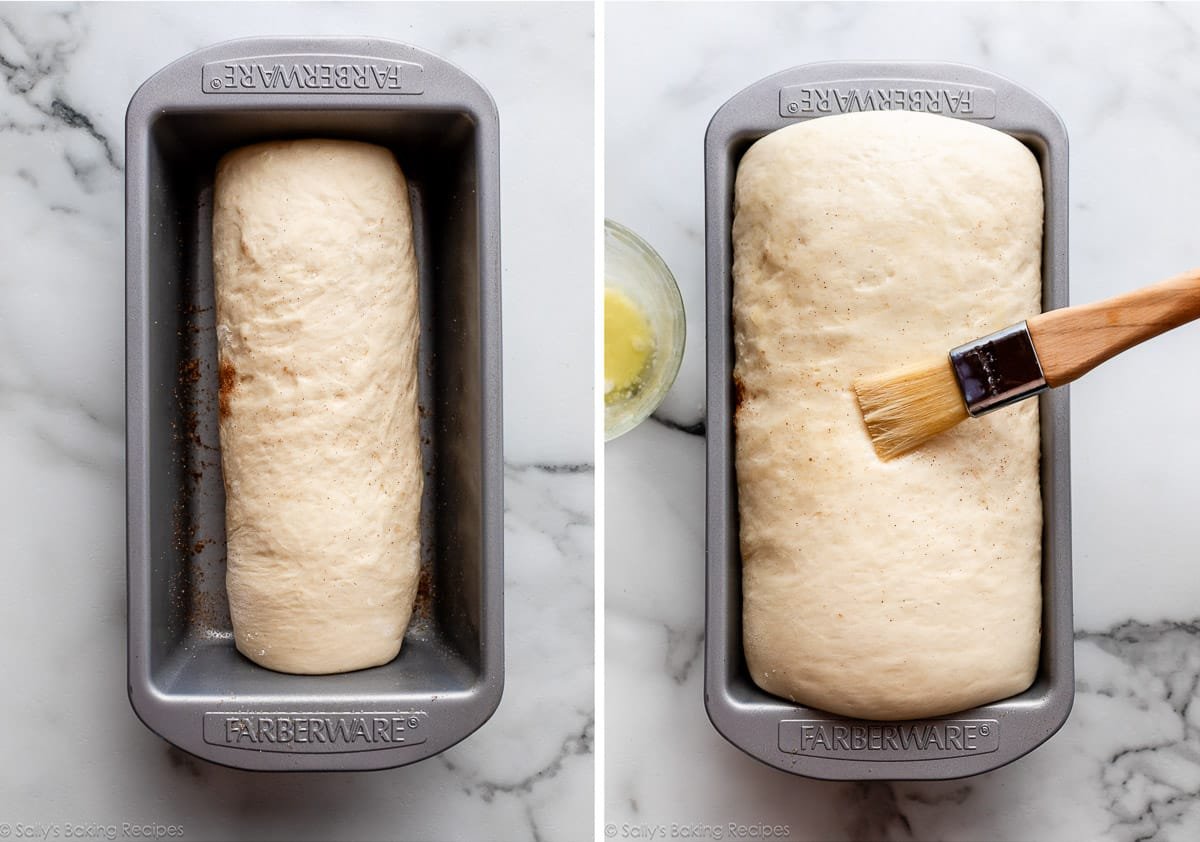
Before baking, lightly brush the top of the loaf with melted butter.
The bread takes about 40 minutes in the oven. Use an instant-read thermometer to check the internal temperature of the baked bread. This guarantees you won’t under-bake or over-bake the bread. The bread is done when the center is 195–200°F (90–93°C). An instant-read thermometer is an incredibly helpful bread-baking tool; you can also use it at the very beginning of the bread-making process to check the liquids are warmed to the right temperature to activate the yeast.
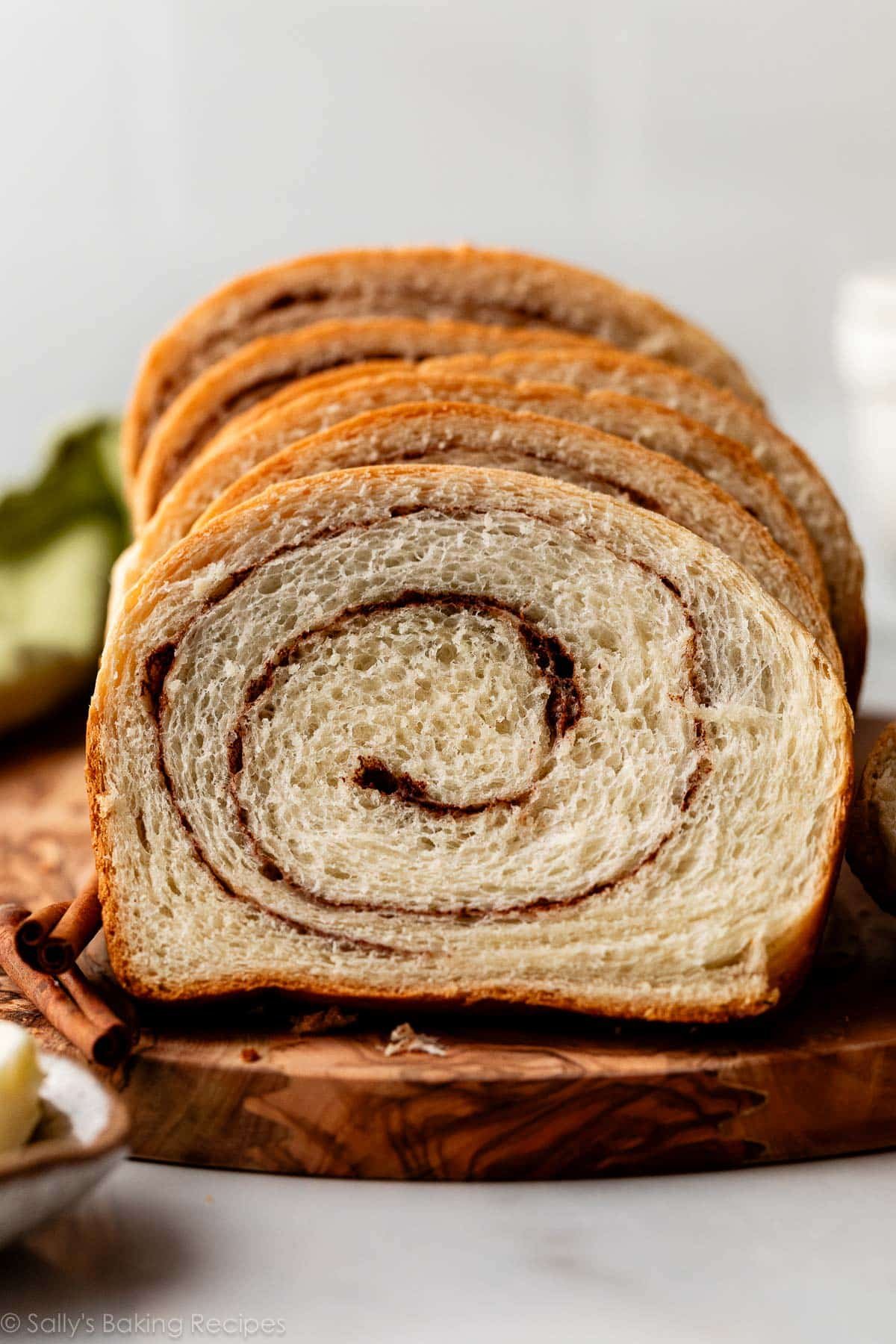
Gaps can form between the dough and cinnamon swirl in your homemade cinnamon swirl bread. It’s happened to me plenty of times! It’s the moistened dough separating from the dry cinnamon-sugar mixture as it bakes. To help prevent this, make sure you are brushing the dough with egg white before adding the cinnamon sugar. Additionally, you can use a toothpick or thin skewer to poke 3 holes in the top of the risen loaf right before baking; this will help steam escape.
I still can’t decide which is best: the smell of homemade cinnamon swirl bread baking, the buttery and fluffy interior, or the hypnotizing, gooey, sticky, delectable cinnamon swirl.
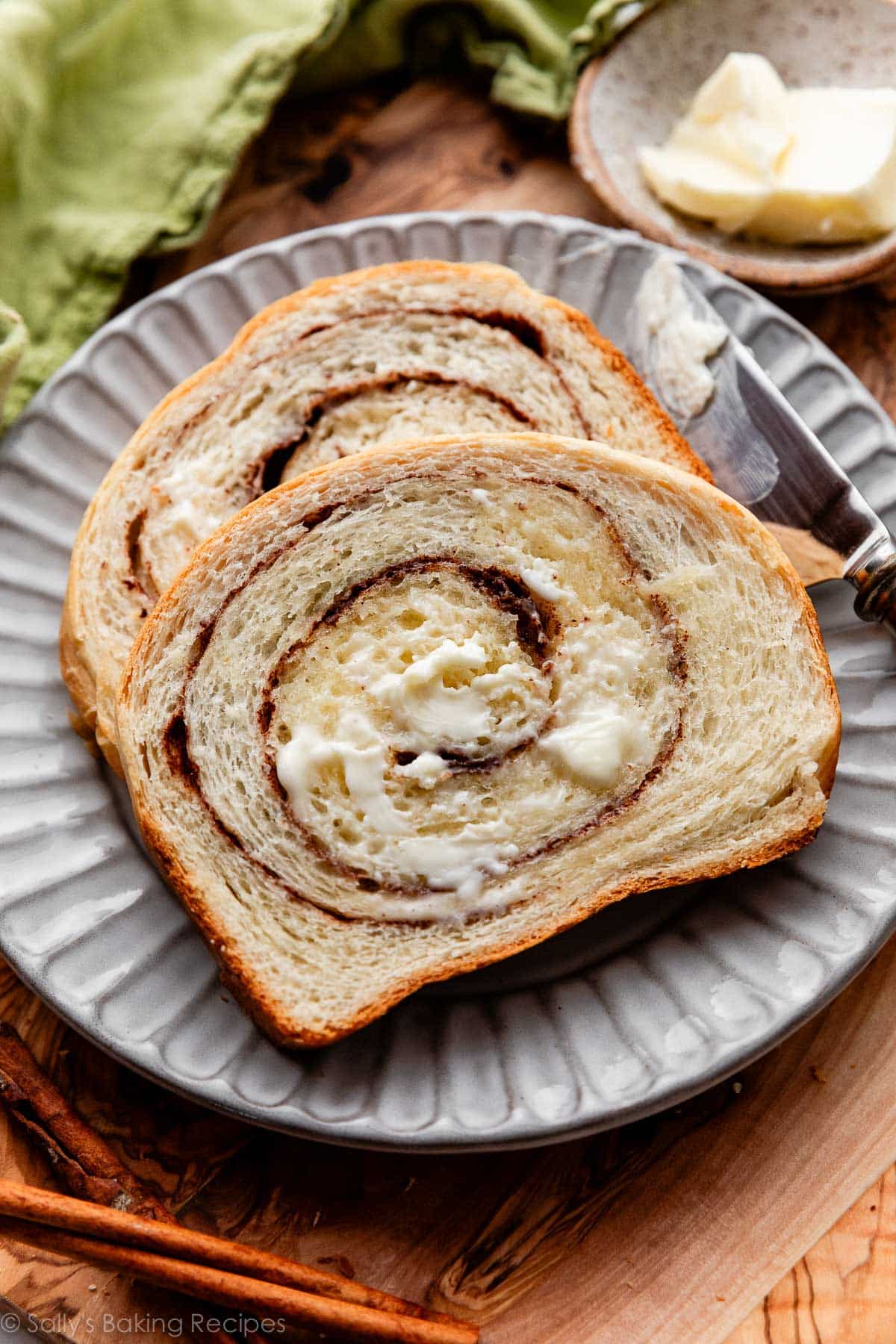
Try it with a swipe of homemade honey butter or cinnamon butter. And, you’ll definitely want to use this bread to level up your French toast game, especially if you use it for apple cider French toast!
Become a Bread Baker with My Approachable Recipes:
- Homemade Bread Bowls
- Multigrain Bread (so soft!)
- Whole Wheat Bread
- Soft Pretzels & Soft Pretzel Rolls
- Homemade Breadsticks
- Dinner Rolls
- No-Knead Honey Oat Bread
- Homemade Pizza Dough
- Homemade Flatbread Pizza
- Cinnamon Raisin Bagels
Here are all of my bread recipes and video tutorials.
Homemade Cinnamon Swirl Bread
- Prep Time: 3 hours, 30 minutes
- Cook Time: 40 minutes
- Total Time: 4 hours, 45 minutes
- Yield: 1 loaf
- Category: Bread
- Method: Baking
- Cuisine: American
Description
This homemade cinnamon swirl bread recipe is a family favorite and only requires a handful of basic ingredients. It’s soft and fluffy with the most unbelievably gooey cinnamon swirl inside! See recipe Notes for freezing and overnight instructions. You can also reference my Baking with Yeast Guide for answers to common yeast FAQs.
Ingredients
- 1/2 cup (120ml) water, warmed to about 110°F (43°C)
- 1/2 cup (120ml) whole milk, warmed to about 110°F (43°C)
- 2 and 1/4 teaspoons (7g) instant or active dry yeast (1 standard packet)*
- 1/4 cup (50g) granulated sugar, divided
- 4 Tablespoons (1/4 cup; 56g) unsalted butter, softened to room temperature and cut in 4 pieces
- 3 cups (390g) bread flour (spooned & leveled), plus more as needed
- 1 teaspoon salt
For the Swirl & Topping
- 1 egg white, beaten
- 1/4 cup (50g) granulated sugar
- 2 teaspoons ground cinnamon
- 1 Tablespoon (14g) unsalted butter, melted
Instructions
- Prepare the dough: Whisk the warm water, warm milk, yeast, and 2 Tablespoons of sugar together in the bowl of your stand mixer fitted with a dough hook attachment. Loosely cover and allow to sit for 5–10 minutes until foamy and frothy on top. *If you do not own a stand mixer, you can do this in a large mixing bowl and in the next step, mix the dough together with a large wooden spoon or silicone spatula. It will take a bit of arm muscle. A hand mixer works, but the sticky dough repeatedly gets stuck in the beaters. Mixing by hand with a wooden spoon or silicone spatula is a better choice.*
- Add the remaining sugar, the butter, 1 cup flour (about 130g), and the salt. Beat on low speed for 30 seconds, scrape down the sides of the bowl with a silicone spatula, then add another cup of flour. Beat on medium speed until relatively incorporated (there may still be chunks of butter). Add the remaining flour and beat on medium speed until the dough comes together and pulls away from the sides of the bowl, about 2 minutes. If the dough seems too wet to a point where kneading (next step) would be impossible, beat in more flour 1 Tablespoon at a time until you have a workable dough. Dough should be soft and a little tacky, but still manageable to knead with lightly floured hands.
- Knead the dough: Keep the dough in the mixer and beat for an additional 8–10 full minutes, or knead by hand on a lightly floured surface for 8–10 full minutes. (If you’re new to bread-baking, my How to Knead Dough video tutorial can help here.) If the dough becomes too sticky during the kneading process, sprinkle 1 teaspoon of flour at a time on the dough or on the work surface/in the bowl to make a soft, slightly tacky dough. Do not add more flour than you need; you do not want a dry dough. After kneading, the dough should still feel a little soft. Poke it with your finger—if it slowly bounces back, your dough is ready to rise. You can also do a “windowpane test” to see if your dough has been kneaded long enough: tear off a small (roughly golfball-size) piece of dough and gently stretch it out until it’s thin enough for light to pass through it. Hold it up to a window or light. Does light pass through the stretched dough without the dough tearing first? If so, your dough has been kneaded long enough and is ready to rise. If not, keep kneading.
- 1st Rise: Lightly grease a large bowl with oil or nonstick spray. Place the dough in the bowl, turning it to coat all sides in the oil. Cover the bowl and allow the dough to rise in a relatively warm environment for 1.5-2 hours or until double in size. (I always let it rise on the counter. Takes about 2 hours. For a tiny reduction in rise time, see my answer to Where Should Dough Rise? in my Baking with Yeast Guide.)
- Grease a 9×5-inch loaf pan. (I usually use this one or this one.)
- For the swirl: In a small bowl, whisk 1/4 cup (50g) sugar and the cinnamon together.
- Shape the dough: When the dough is ready, punch it down to release the air. Lightly flour a work surface, your hands, and a rolling pin. Roll the dough out into a large 8×20 inch rectangle. It does not have to be perfect—in fact, it will probably be rounded on the edges. That’s ok! Using a pastry brush, brush the surface with beaten egg white, then sprinkle on the cinnamon-sugar, leaving a 1-inch border uncovered. Roll it up into an 8-inch log. Place the loaf, seam-side down, into the prepared loaf pan. If any cinnamon-sugar filling spilled out of the sides, don’t waste it! Sprinkle it on top of the bread in the loaf pan.
- 2nd Rise: Cover the shaped loaf and allow to rise for 1 hour, or until it’s about 1 inch above the top of the loaf pan.
- Adjust oven rack to a lower position and preheat oven to 350°F (177°C). (It’s best to bake the bread towards the bottom of the oven so the top doesn’t burn.)
- After the dough rises, melt the remaining 1 Tablespoon of butter. Lightly brush the melted butter on top of the shaped loaf before baking. Bake for 35–45 minutes, or until golden brown. Check on the bread about halfway through baking—if the top of the loaf is browning too quickly, tent with aluminum foil. To test for doneness, if you gently tap on the loaf, it should sound hollow. For a more accurate test, the bread is done when an instant-read thermometer inserted into the center of the loaf registers 195–200°F (90–93°C).
- Remove from the oven and allow bread to cool for a few minutes in the pan on a cooling rack. Remove loaf from the pan and cool it directly on a cooling rack for at least 10 minutes before slicing. Feel free to let it cool completely before slicing, too.
- Cover leftover bread tightly and store at room temperature for 6 days or in the refrigerator for up to 10 days.
Notes
- Overnight Instructions: Prepare the dough through most of step 4, allowing the dough to rise overnight in the refrigerator instead of in a warm environment. The slow rise gives the bread wonderful flavor! In the morning, let the dough sit on the counter until it comes to room temperature, then continue with step 5. I don’t recommend shaping the bread the night before as it will puff up too much overnight.
- Freezing Instructions: Baked bread freezes wonderfully! Wrap the loaf in plastic wrap, then a layer of aluminum foil. Freeze for up to 3 months. Thaw overnight in the refrigerator or at room temperature, then warm to your liking. You can also freeze the bread dough. After punching down the dough in step 7, wrap the dough tightly in plastic wrap, then a layer of aluminum foil. Freeze for up to 3 months. Thaw overnight in the refrigerator, then bring to room temperature. Once at room temperature, punch the dough down again to release any air bubbles. Continue with the rest of step 7 (shaping the dough).
- Special Tools (affiliate links): Electric Stand Mixer | Glass Mixing Bowl | Wooden Spoon or Silicone Spatula | Rolling Pin | Pastry Brush | 9×5-Inch Loaf Pan | Instant-Read Thermometer | Cooling Rack
- Milk: Whole milk or 2% milk are best. I don’t suggest a lower-fat milk. Readers have used nondairy milks with success, but I haven’t personally tested it.
- Yeast: I always use Red Star Platinum yeast, an instant yeast. You can use active dry yeast instead, with no changes to the preparation. Rise times will be slightly longer. Reference my Baking With Yeast Guide for answers to common yeast FAQs.
- Flour: Higher-protein flour like bread flour is best for this bread recipe because of its strong gluten formation and high rise. All-purpose flour may yield a flimsy bread.
- Whole Wheat Flour: I don’t recommend whole wheat flour because it doesn’t have the same baking properties as white flour or bread flour (the gluten levels are different). If you wish to use whole wheat flour, try my recipe for whole wheat bread instead, and feel free to add the egg white/cinnamon swirl to that dough instead.
- Can I Add Raisins? Yes, you can add 3/4 cup (about 110g) of raisins to the cinnamon-sugar mixture. Sprinkle it over the egg white-brushed dough.
- Bread Machine Questions: I don’t own a bread machine so I have not tested it, but some readers have reported success in the comments section.
- Prevent Large Gaps: Gaps can form between the dough and cinnamon swirl in your homemade cinnamon swirl bread. It’s happened to me plenty of times! It’s the moistened dough separating from the dry cinnamon-sugar mixture as it bakes. To help prevent this, make sure you are brushing the dough with egg white before adding the cinnamon-sugar. Additionally, you can use a toothpick or thin skewer to poke 3 holes in the top of the risen loaf right before baking; this will help steam escape.














Reader Comments and Reviews
I want to make this bread for my mom who LOVES cinnamon swirl bread but she has a gluten allergy. Could I use gluten free flour in this? If so, what flour would you recommend? I have 1-1 substitution flour but it says it’s not good for yeasted recipes.
Hi Kiersten, we wish we could help, but we haven’t tested this recipe with a 1:1 gluten free flour, so we’re unsure of the results. We don’t recommend other gluten free flours, like almond flour, oat flour, etc. as they wouldn’t be 1:1 swaps and would require additional tweaks to the recipe. Let us know if you decide to do any experimenting.
can you use normal all purpose flour as an alternative to the bread flour?
Hi Amri, Higher-protein flour like bread flour is best for this bread recipe because of its strong gluten formation and high rise. All-purpose flour may yield a flimsy bread.
Love the bread recipe, however I would probably add double the cinnamon sugar next time. My daughter and I made this as a healthier alternative to store bought cinnamon bread and she didn’t love this as much as her favorite sugary store-bought one. The recipe though, couldn’t be a better base bread recipe.
Ive made 3 of these loaves since this morning. Super simple and they come out perfect everytime. Great recipe!
When baking ANYTHING, I only use this site.. AMAZING recipes which are always a success! I’m trying this bread now..
Hello! In the notes to prevent gaps, it says to make sure you are brushing the dough with egg white before adding the cinnamon-sugar.
The instructions say to brush with butter. Which do you recommend?
Thank you.
Hi Meggin, see step 7: “Using a pastry brush, brush the surface with beaten egg white, then sprinkle on the cinnamon-sugar, leaving a 1-inch border uncovered. Roll it up into an 8-inch log.” The melted butter comes into play later in step 10, when it is brushed on top of the loaf before baking. “After the dough rises, melt the remaining 1 Tablespoon of butter. Lightly brush the melted butter on top of the shaped loaf before baking.” Hope this helps!
When I was using this recipe I thought I may fixed up the recipe but luckily it came out good. My bread looked kinda dry but the recipe I was a bit confusing to me by using my phone of instructions.
This bread came out absolutely perfect! It was my first loaf and it looks amazing! I am so impressed with this recipe and look forward to trying some more of your recipes.
Hi sally. I’ve made your bread a few times and it’s so good. Tge only thing is when i let the dough sit for 2 hours, it doesn’t proof as big as your picture. And when i di the second proof for 1 hour the dough just make it above the pan . I would like to know how to make it higher. Thx
Hi Eric, so glad you love this bread! When the loaf rises in the pan, it should rise to just about an inch above the top of the pan. What size pan are you using? And are you using instant or active-dry yeast?
You mentioned whole wheat flour isn’t recommended, but would spelt flour be okay?
Hi Abby, we haven’t tested it, so we’re unsure of the results. We highly recommend sticking with bread flour for best results.
I made this with my granddaughter and it turned out just lovely and delicious!
Delicious! Need I say more it was perfect!
Just tried this loaf today and it was delicious! How would you double this recipe? Would all the measurements be doubled?
Hi Samantha, we recommend making two batches instead of doubling.
Hi! Do you think this could be made in a 9×4 Pullman loaf pan?
Hi Christina, We’re not completely sure if this recipe would work in a pullman loaf pan because we haven’t tested it ourselves. It *shouldn’t* be a problem to use it as is, but again—we haven’t tested it. Let us know if you do give it a try!
Thanks, Lexi! I just might give it a try…
Can this recipe be doubled or tripled?
It can, Debbie! Just be careful not to over-or under- mix the batter. Separate batches ensure this won’t happen!
I’m so impressed with this recipe. Easy, and so good. Soooooo good. You just can’t buy something that tastes this good and is so “real”.
I have made this recipe several times, and my family loves it. It is delicious and turns out perfectly for me as written. The last time I made this, though, I decided to throw the leftover egg yolk in when I was mixing the dough. The recipe doesn’t need it, but I liked the way it made the bread a little softer and richer, and it was nice to be able to put that yolk to use in the same recipe.
I am curious why no eggs?also an input the raisins right into the dough instead of the filling?
Hi Sarah! This dough doesn’t need egg. You can add 3/4 cup (about 110g) of raisins to the cinnamon-sugar mixture. Sprinkle it over the egg white-brushed dough.
This came out great! I had looked at other videos and they had eggs so I was curious! Did it need them. I also kneaded the raisins into the dough and it came out great.
Extremely easy to pull together.. I nearly doubled the cinnamon mixture (personal preference) and during the dry Minnesota winter months the recipe needs a couple Tablespoons of extra moisture.
I make this bread about every other week. I give half to my neighbor, he enjoys making french toast with it.
I apply an additional technique, as I roll I brush the roll with egg wash it helps the cin/sugar mixture stick better. Wish I could share a photo because the swirl is perfection.
This bread is so delicious! My family loves it. A loaf usually doesn’t last a full day. I have made it about 10 times.
I am having issues with separation between the swirls creating big air pockets even though I feel like I’m rolling it tightly. Any tips?
Hi Kelly, we’re so glad it was a hit! When rolling the dough up, be sure to roll it very tightly like you mention. And we find that if we really coat the dough heavily in the egg white, the sugar has more to stick to, and gaps are less likely to form. You want it sticky inside. Hope this helps!
I apply an additional technique, as I roll I brush the roll with egg wash it helps the cin/sugar mixture stick better. Wish I could share a photo because the swirl is absolute perfection
I just made this for the first time. The flavor is amazing. Not sweet and as others have said, the right amount of cinnamon.
My loaf had spaces between the cinnamon swirl and the bread (separated). Still holds together but wondering if anyone has had this challenge and if they have any hints. The bread texture is reatl
I’m have attempted this recipe 3 times right now. I’ve measured the flour to the gram and there is no way 3 cups of flour is correct. The first time I thought I didn’t level. The second time I thought I got the measurements on the liquid wrong and now the third time I used a scale and measuring cups to literally no help. The dough is so dry it won’t even form a ball. Using a stand mixer or my hands. I am a skilled baker and this isn’t my first bread to bake.
I’m so sorry you’ve had such a frustrating experience, especially since you’re working so carefully. This dough shouldn’t be dry at all, so if it’s crumbly and not coming together, it usually means it simply needs more moisture. Even when flour is measured to the gram, the actual absorption can vary quite a bit depending on brand, storage, humidity, and how dry the flour is, and some flours drink up noticeably more liquid than others. In my kitchen, 3 cups/390g bread flour gives a soft, workable dough, but it’s completely normal for bread doughs to need extra liquid, even when the measurements are correct. I recommend adding 1 tablespoon of milk or water at a time until the dough forms a smooth, cohesive ball—you won’t hurt the recipe at all by doing this. Thank you for sticking with it, and I’m happy to help troubleshoot further if you’d like.
I’ve been having the same issue. I’ll try adding more liquid 1 tbsp at a time. Thank you 🙂
I’m having the same issue. Wish I had come to the comments before. It was dry to begin with and didn’t rise. I will try more liquid next time. Thank you.
3 cups of flour is accurate for one cup of liquid
Are you using a cup of liquid? Half milk half water?
Same things happened to me I just added tablespoons of warm water to it while I kneaded it and it worked perfectly
I’ve made your cinnamon rolls and sandwich bread and they both turn out great. Now I’m looking for a Raisin bread recipe. I’m sold out to your recipes. Thanks much
Val Smith