

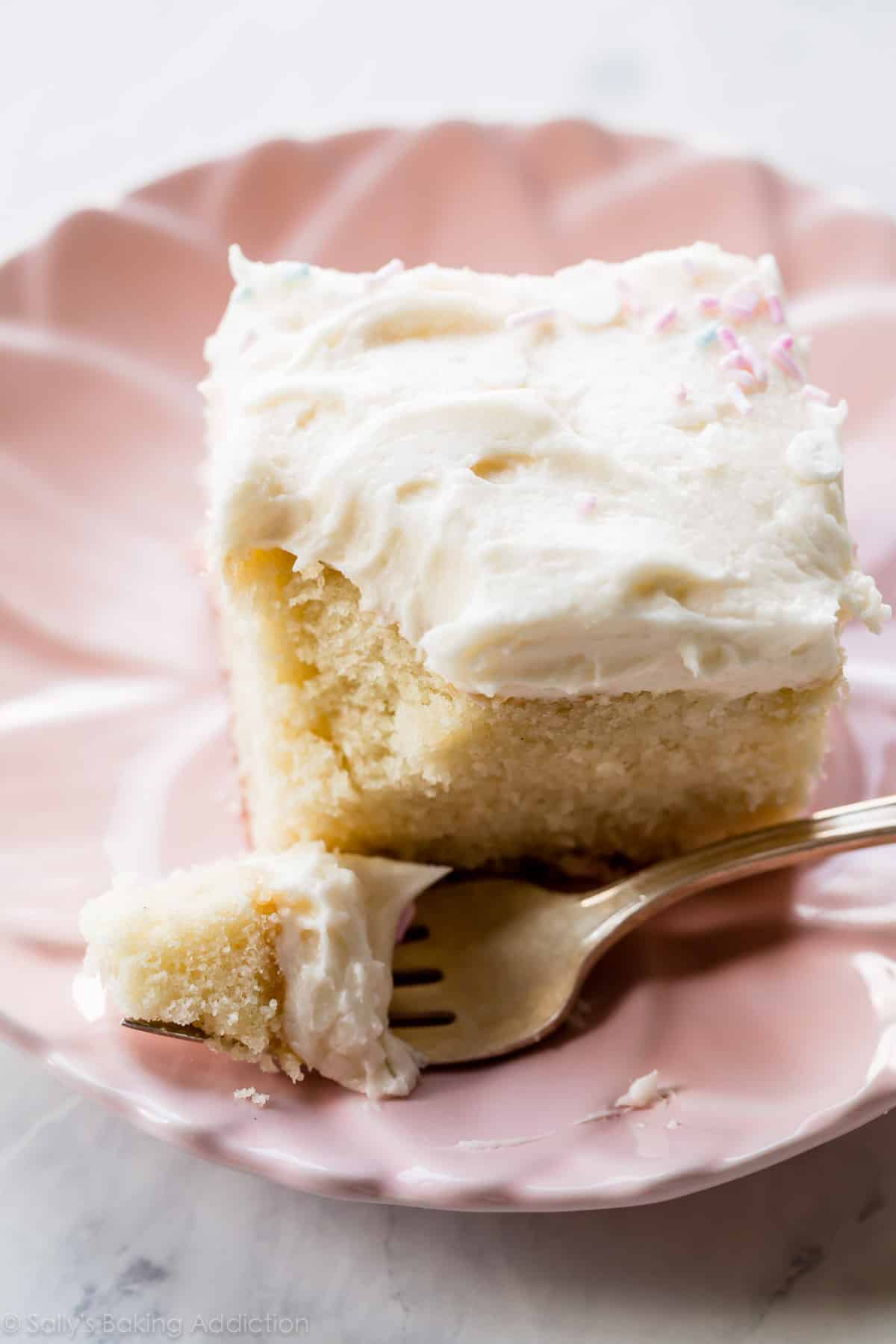
This vanilla sheet cake recipe uses the reverse creaming method, an easy technique that promises a uniquely soft and springy crumb with the most delicious buttery vanilla flavor. Use this cake recipe as a birthday sheet cake or for anytime you crave a simple classic dessert. Top the cake with whipped vanilla buttercream, a frosting made from butter, confectioners’ sugar, and heavy cream and whipped until extra fluffy.
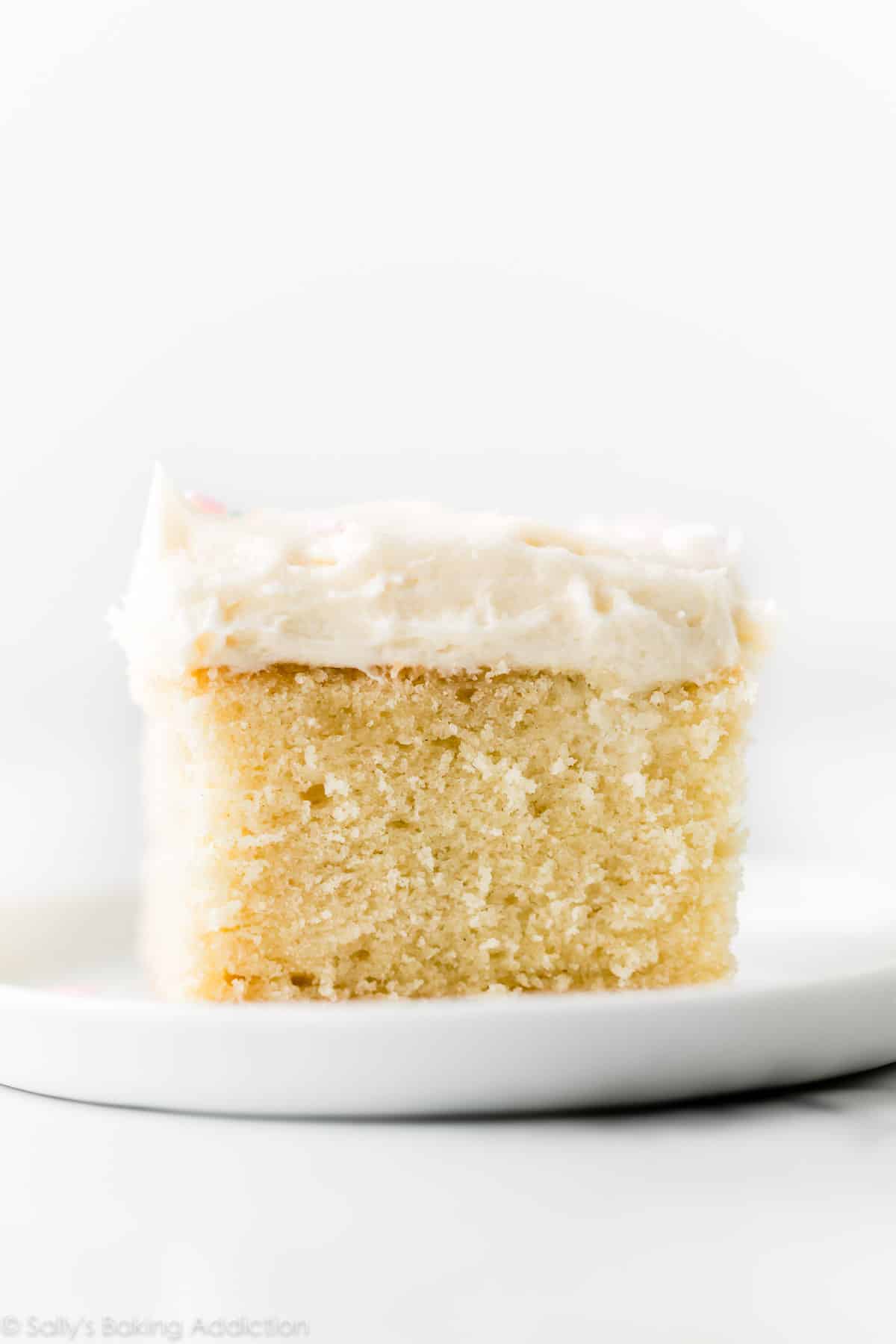
When it comes to classics like vanilla cake, the chapter never really ends. You see, there’s 3 layer vanilla cake, vanilla cupcakes, vanilla naked cake, one layer vanilla cake (aka strawberry shortcake cake!), vanilla 6 inch cake, confetti cake, and even a vanilla white cake hybrid. Each of these recipes use the same ingredients, only remixed and divided in different proportions.
But what about a simple vanilla sheet cake recipe?
That’s what we’re focusing on today. This is a pure and classic vanilla sheet cake with a soft, springy crumb and unbelievable sweet vanilla flavor. It’s the simple birthday cake you need and buttery taste you love. And let’s add a giant fluff ball on top—otherwise known as whipped buttercream. This is dessert nostalgia at its finest!
One reader, Gabrielle, commented: “I followed the recipe exactly and it came out amazing! I made it for someone’s birthday at work and it was a hit. It transported and served nicely right out of the dish. I would make this again! ★★★★★“
Another reader, Teri, commented: “Just made this today! Delicious, light, fluffy, and rose beautifully! ★★★★★“
Another reader, Alycia, commented: “Love, love, LOVE this cake! It has become my go-to birthday cake recipe, both for myself and for anyone I can talk into letting me make them a cake. It is fluffy with great crumb and flavor. I’ve made it into a 2-layer cake several times, following the baking instructions in the recipe Notes section. I’ve added sprinkles and mini chocolate chips, too! ★★★★★“
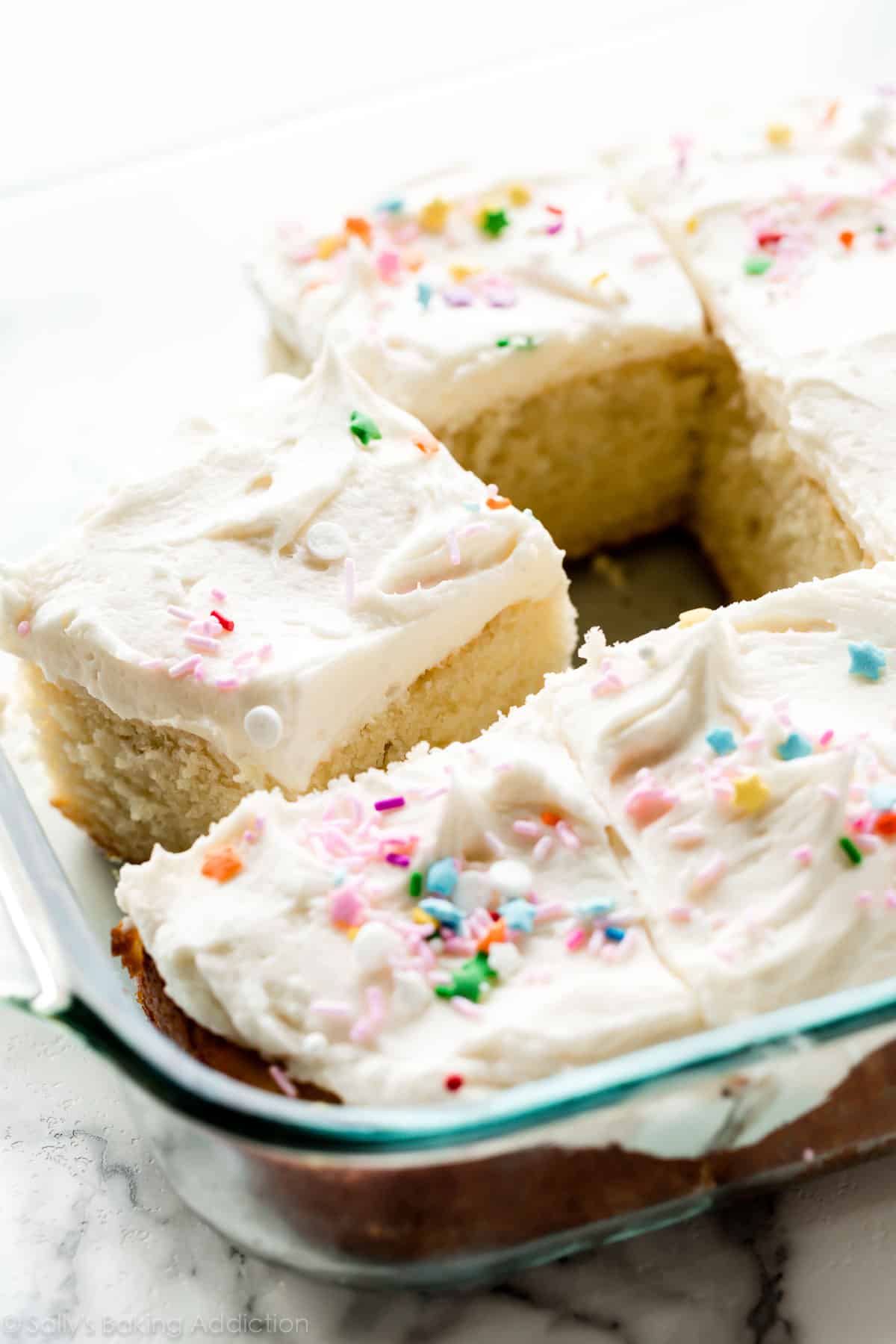
Behind the Vanilla Sheet Cake Recipe
My vanilla cake recipe (the best I’ve ever had!) yields too much batter for a 9×13-inch quarter sheet cake, while the strawberry shortcake cake batter isn’t quite enough. My 2 layer vanilla/white cake hybrid is super light and fluffy and while it’s the perfect amount for a 9×13-inch quarter sheet pan, it doesn’t have the same buttery tight crumb as traditional vanilla cake. For today’s recipe, I took what I love about these cakes and combined them into the appropriate amount of batter to fit this classic size pan.
First, let’s walk through an in-depth tutorial of the mixing method. (Reverse creaming! You’re going to love it.) Though this is a very straightforward recipe, I encourage you to read through my tips before getting started.
Reverse Creaming Method for Cake
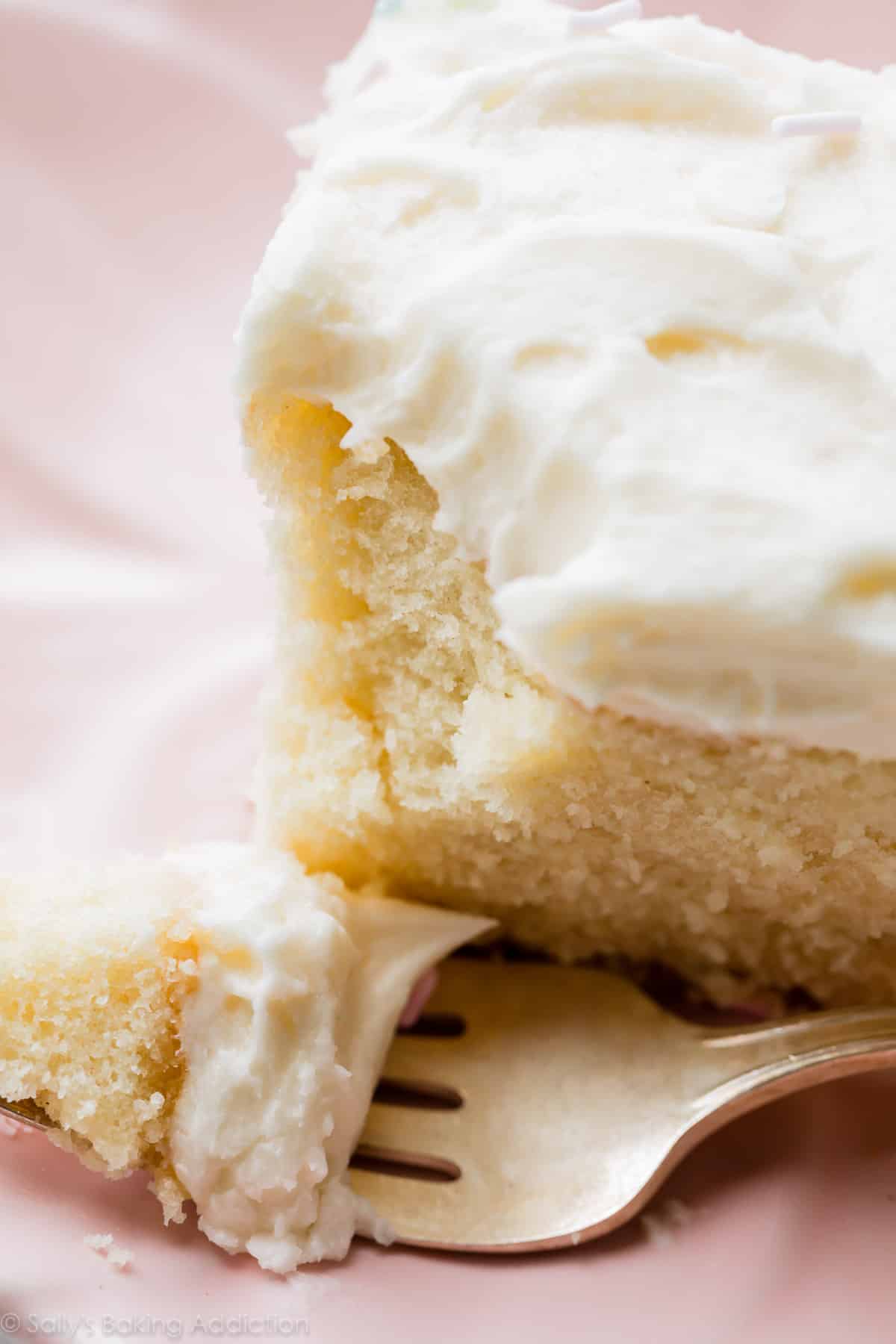
Do you remember when I shared Tessa’s Blackberry Lavender Cake? I just love her recipes! Prior to that cake, I had only used the reverse creaming method a handful of times. I loved her cake’s texture, so I replicated it with my strawberry shortcake cake not long after. We’re going to use the same method with today’s vanilla sheet cake recipe. Instead of starting with creaming butter and sugar together like traditional cake recipes, the reverse creaming method begins with the dry ingredients and ends with the eggs. This method produces a lighter and tighter crumb with more spring. The slices are tight like pound cake, but not dense in the slightest. It’s velvety soft and almost tastes creamy.
This method is so unique, but very easy.
Sift the dry ingredients, including the sugar, into a bowl. Sifting with a fine mesh strainer is imperative because it aerates the dry ingredients and leaves behind larger sugar crystals. Remember, we aren’t creaming sugar and butter together where large sugar crystals are usually broken down. Next, mix in cubed room temperature butter, a little milk, and vanilla extract. In this step, the butter coats the flour. The coating of fat minimizes the flour’s formation of gluten, which helps result in a finer cake crumb. You’ll taste the difference.
By the way, we coat flour with fat when we make biscuits and pie crust too. This practice helps produce an extra flaky (not dense) baked good.
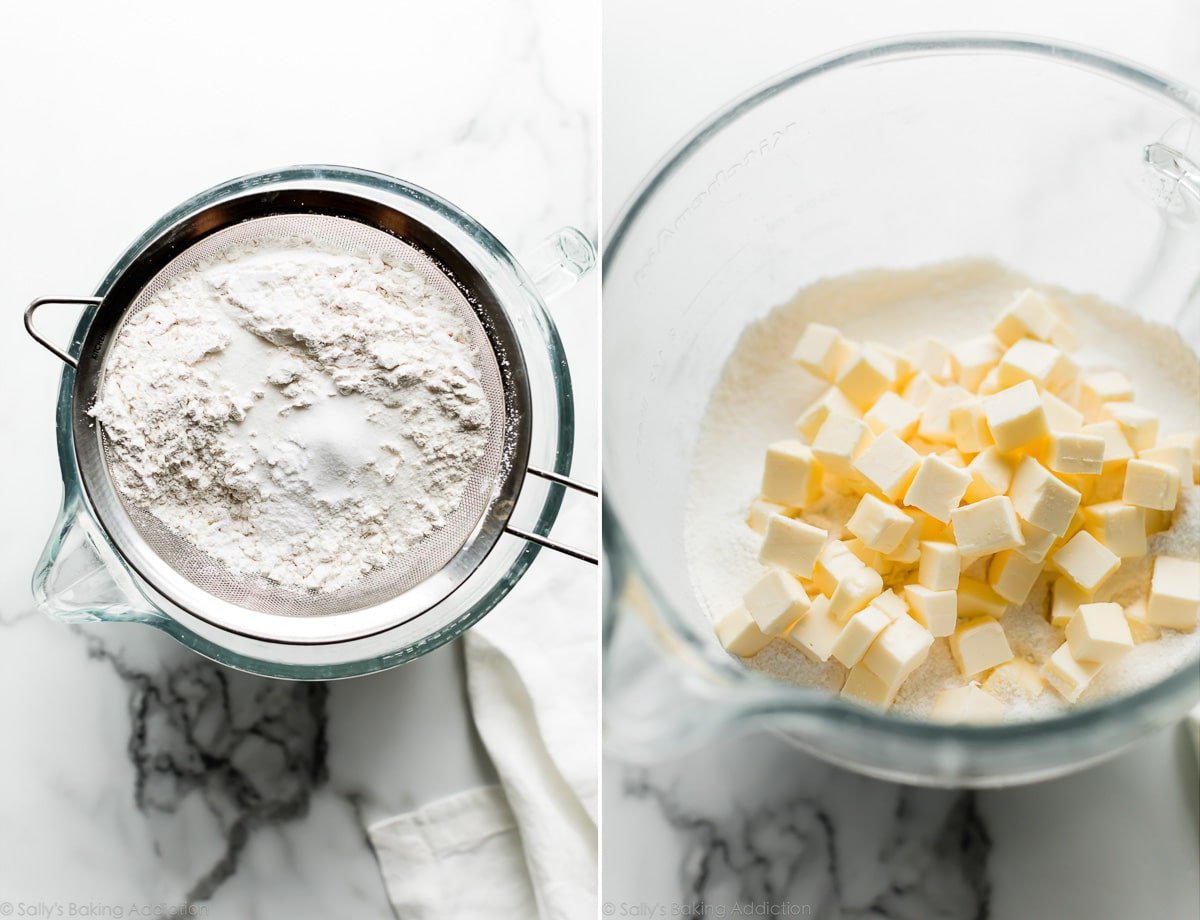
Success Tip: Cube the butter when it’s cold. Smaller pieces of butter will warm to room temperature much quicker than a full stick of butter. Plus, it’s easy to cut cold butter into cubes as opposed to warmer room temperature butter.
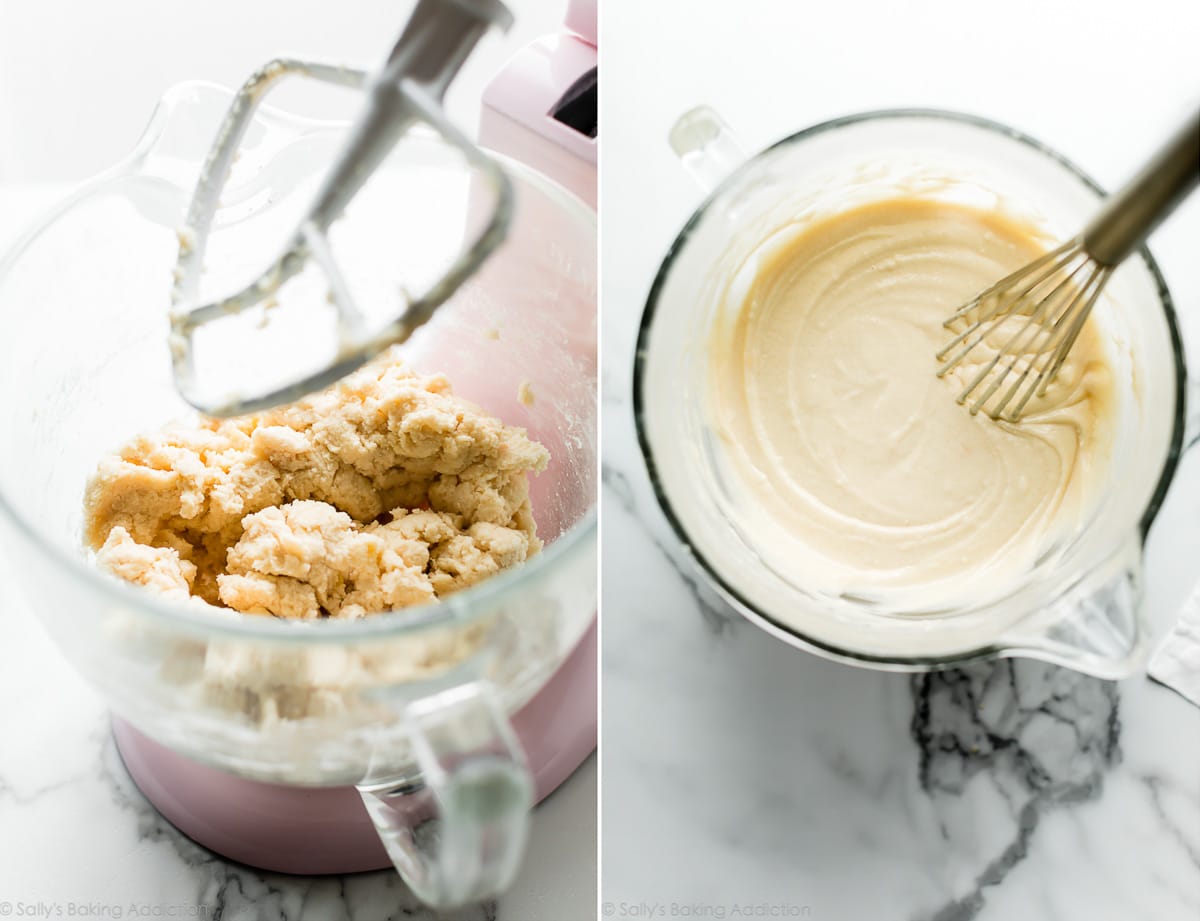
After that, we’ll add the rest of the liquids including the remaining milk, the sour cream, and eggs. The photo on the left (below) is our sheet cake batter. I promise it’s the creamiest batter you’ll ever work with. Avoid over-mixing it.
Which Cake Pan?
Use whichever 9×13-inch pan you have on hand. I usually lean towards a glass 9×13-inch pan simply because the cake looks extra beautiful serving right out of the dish. It’s what I prefer when making cookies and cream cake and yellow sheet cake, too. If using a metal baking pan, keep a close eye on the cake. Metal pans usually mean a quicker bake time, though my test recipes (in all different pans) each finished baking around the same time.
Vanilla Sheet Cake Ingredients
Whether you’re a beginner baker or pro, you’ll be happy to see that this vanilla sheet cake requires only a handful of super basic baking ingredients. Each one serves a purpose and for best results, I don’t recommend making substitutions.
- Cake Flour: Cake flour produces the softest cake. There’s simply no competition, but you can certainly make this cake flour substitute if needed. Cake flour is sold in the baking aisle with the other flours. You can use leftovers in any recipes using cake flour.
- Sugar & Salt: Sugar sweetens the cake and salt adds flavor.
- Baking Powder & Baking Soda: Remember the differences in baking powder vs baking soda and why it’s important to use both in some recipes?
- Butter: Room temperature butter is the workhorse behind this whole recipe, especially the reverse creaming method. It also adds flavor. I recommend using unsalted butter in this sheet cake recipe. If you’re interested, here’s a post I wrote on salted butter vs unsalted butter.
- Vanilla Extract: Vanilla extract adds flavor. Use an entire Tablespoon… trust me! And if you use homemade vanilla extract, even better. 🙂
- Whole Milk: The cake’s crumb is extra rich and we have the whole milk to thank for it. Avoid lower fat or nonfat milks. Moist cakes need fat.
- Sour Cream: The moist maker! Thanks to sour cream, this cake melts in your mouth.
- Eggs: To obtain a fluffier cake, I usually add extra egg whites. However, this sheet cake didn’t need it. Maybe my ratios were off, but my few test recipes proved that this combination of ingredients brought together with the reverse creaming method doesn’t need extra whites. Simply use 3 full eggs. Actually, in one test recipe, I used 4 eggs with no sour cream. The cake tasted heavy, so I ultimately swapped 1 egg with sour cream. The cake is much lighter and moister.
Whipped Buttercream
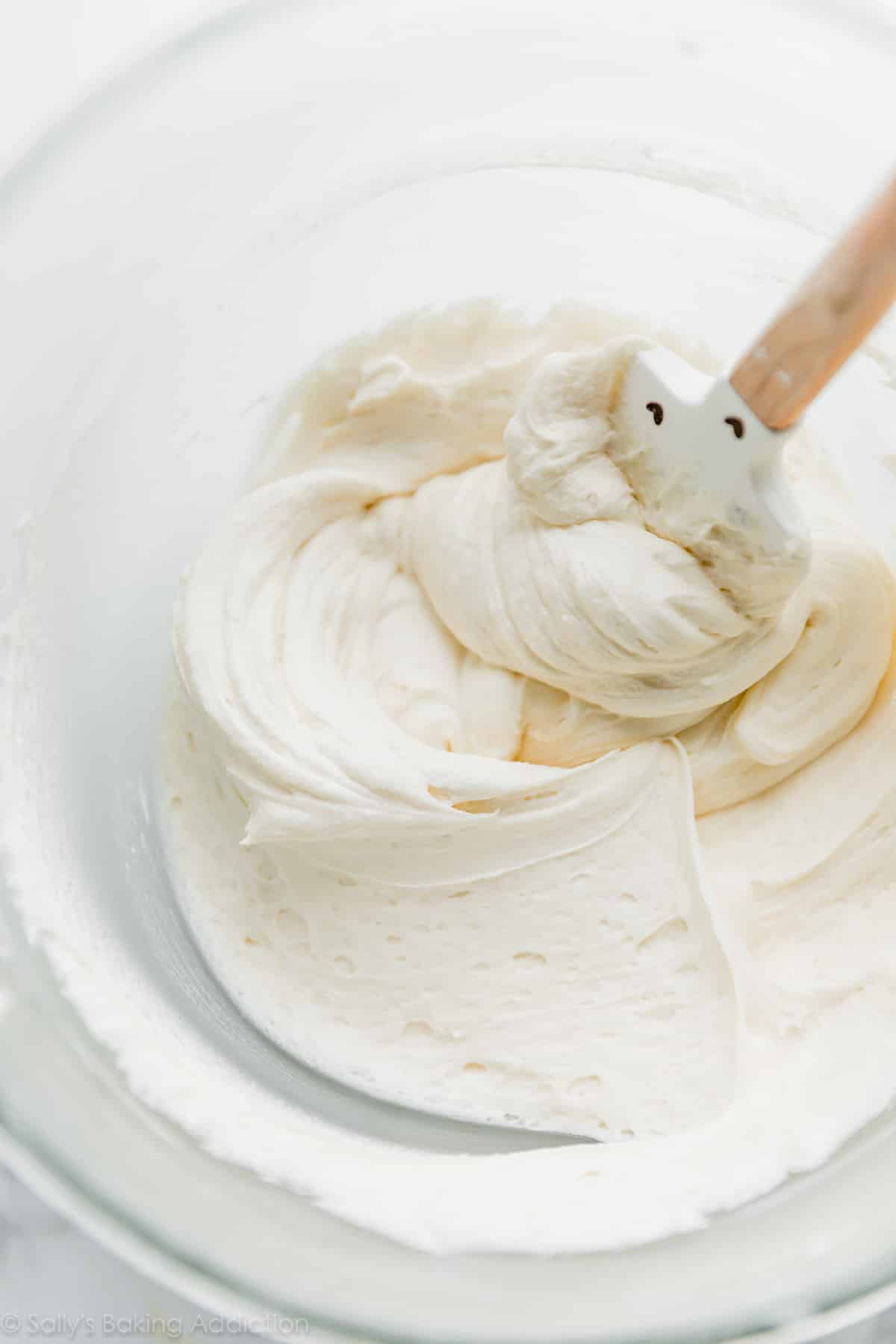
Elevating this vanilla sheet cake is a lovely blanket of whipped buttercream. Use the same ingredients as my regular vanilla buttercream recipe, but add extra heavy cream and whip it for a few extra minutes. A little extra cream and a little extra whip turn this frosting into a buttercream/whipped cream duo. This is the same frosting we use to fill our cream-filled chocolate cupcakes. It’s mega creamy and fluffy, as if you borrowed a puffy cloud from the sky and slathered it on a cake. Talk about dreamy!
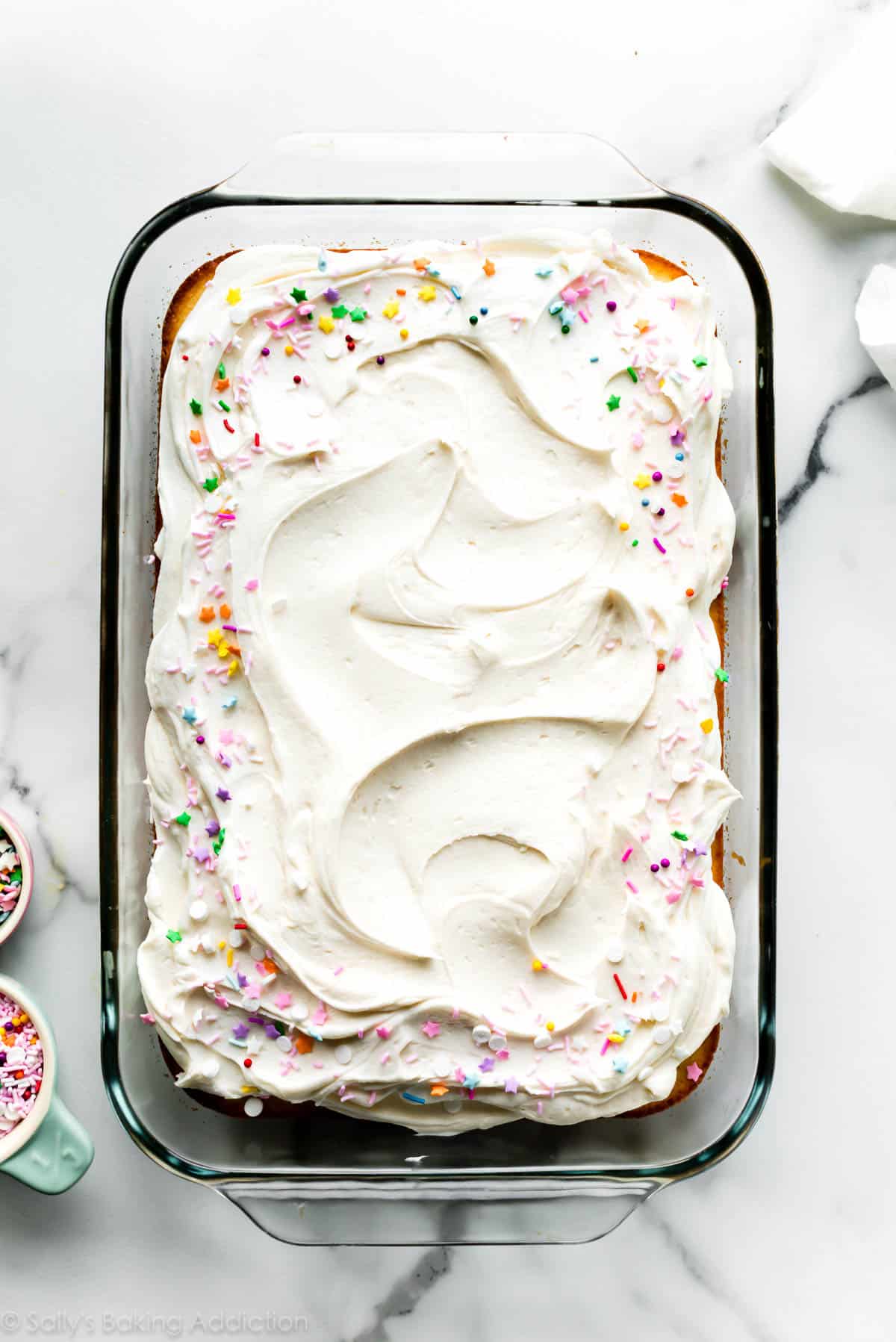
Couldn’t you get lost in these swirls?
If you want to go the extra mile, top this beauty with thick and fluffy Swiss meringue buttercream instead. For a less sweet option, try my whipped frosting. It’s a personal favorite! And for a pretty pink spin, strawberry buttercream frosting pairs wonderfully with vanilla cake.
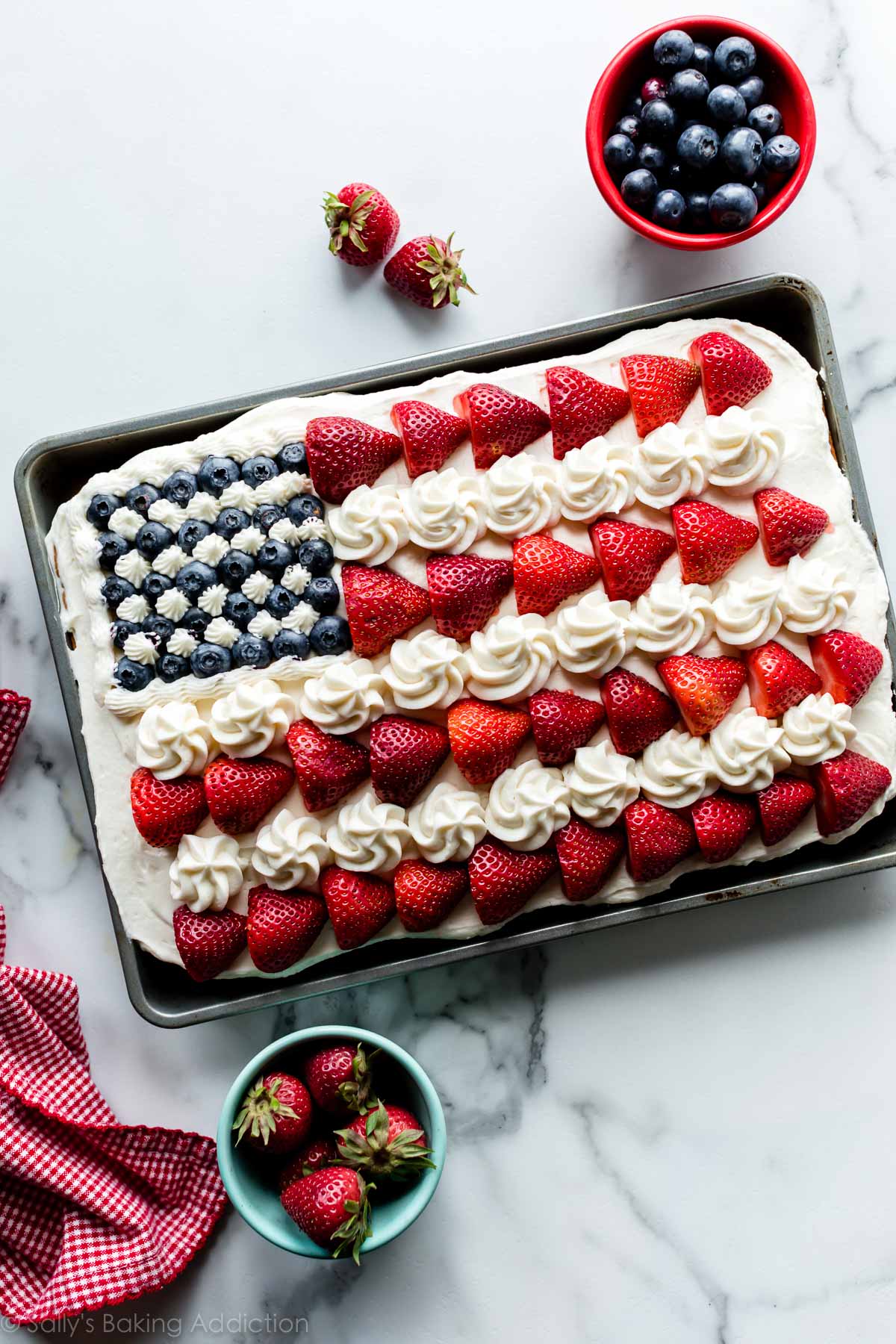
Make an American Flag Cake!
Before we finish up, let’s chat about turning this vanilla sheet cake into a flag cake. Spread 2/3 of the frosting all over the cake, saving the remaining 1/3 for piping detail. Grab some fresh blueberries and halved strawberries and line them up to mimic the stars and stripes on an American flag. I used Ateco 32 piping tip for the piping between the “stars” and Ateco 844 piping tip for the piping between the “stripes.”
This would be an excellent choice for Memorial Day Weekend or the Fourth of July. See more Memorial Day Weekend recipes and 4th of July desserts.
Would love to know if you try this sheet cake!!
More Quarter Sheet Cake Recipes
- Banana Cake
- Pumpkin Cake
- Cookies & Cream Cake
- Yellow Sheet Cake
- Pineapple Carrot Cake
- Spice Cake & Apple Cake
- Zucchini Cake
Vanilla Sheet Cake with Whipped Buttercream Frosting
- Prep Time: 20 minutes
- Cook Time: 30 minutes
- Total Time: 4 hours
- Yield: serves 12
- Category: Dessert
- Method: Baking
- Cuisine: American
Description
This vanilla sheet cake recipe uses the reverse creaming method, an easy technique that promises a uniquely soft and springy crumb with the most delicious buttery vanilla flavor. Each ingredient serves a purpose and for best results, I don’t recommend making substitutions.
Ingredients
- 3 cups (354g) cake flour (spooned & leveled)
- 1 and 1/2 cups (300g) granulated sugar
- 1 teaspoon baking powder
- 1/2 teaspoon baking soda
- 1/2 teaspoon salt
- 1 cup (16 Tbsp; 226g) unsalted butter, cubed and softened to room temperature
- 1 Tablespoon pure vanilla extract
- 1 cup (240ml) whole milk, at room temperature and divided
- 1/3 cup (80g) sour cream, at room temperature
- 3 large eggs, at room temperature
Whipped Vanilla Buttercream
- 1 cup (16 Tbsp; 226g) unsalted butter, softened to room temperature
- 4 and 1/2 cups (540g) confectioners’ sugar
- 1/3 cup (80ml) heavy cream (can be cold or room temperature)
- 2 teaspoons pure vanilla extract
- salt, to taste
- optional: sprinkles for garnish
Instructions
- Make the cake: Preheat the oven to 350°F (177°C). Generously grease a 9×13-inch cake pan.
- Sift the cake flour, sugar, baking powder, baking soda, and salt in the bowl of a stand mixer. (Or if using a handheld mixer, any large mixing bowl.) With the paddle attachment, beat the ingredients together on low speed for a few seconds to gently combine. Add the butter, vanilla, and 1/2 cup of milk. Mix on medium speed until the dry ingredients are moistened, about 1 minute. Stop the mixer and scrape down the sides and up the bottom of the bowl. The mixture will resemble a thick dough.
- Whisk the remaining milk, the sour cream, and eggs together in a medium bowl. With the mixer running on medium speed, add the egg mixture in 3 additions, mixing for about 15 seconds after each addition. Stop the mixer and scrape down the sides and up the bottom of the bowl, then mix for about 15 more seconds until batter is completely combined. Avoid over-mixing. Some small lumps are OK.
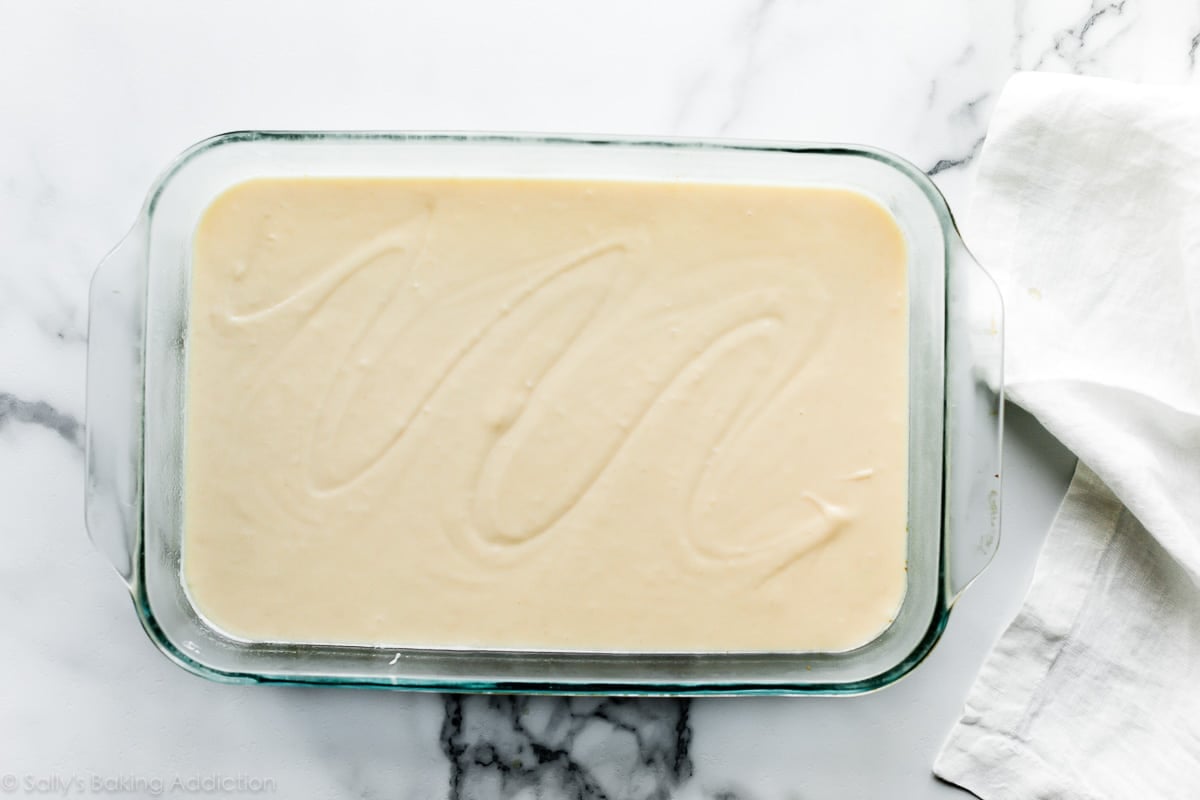
- Pour and spread batter evenly into prepared pan. Bake for around 32-35 minutes or until the cake is baked through. To test for doneness, insert a toothpick into the center of the cake. If it comes out clean, it’s done. Allow cake to cool completely in the pan set on a wire rack. The cake must be completely cool before frosting.
- Make the buttercream: With a handheld or stand mixer fitted with a paddle attachment, beat the butter on medium speed until creamy, about 2 minutes. Add confectioners’ sugar, heavy cream, and vanilla extract. Beat on low speed for 30 seconds, then increase to medium-high speed and beat for 4 full minutes. Add up to 1/4 cup more confectioners’ sugar if frosting is too thin or another Tablespoon of cream if frosting is too thick. Add a pinch of salt if frosting is too sweet. (I add 1/8 teaspoon salt.) Frosting should be extra fluffy.
- Spread frosting in a thick layer on cooled cake. I use and recommend an offset spatula. If desired, use a piping tip to pipe some frosting and/or garnish with sprinkles. Slice and serve.
- Cover leftover cake tightly and store in the refrigerator for up to 5 days.
Notes
- Make Ahead & Freezing Instructions: The cake can be baked, cooled, and covered tightly at room temperature overnight. Likewise, the frosting can be prepared then covered and refrigerated overnight. Let the refrigerated frosting sit at room temperature for 10 minutes, then beat with a mixer for 1 minute to bring it back to a spreadable consistency. Frosted cake or unfrosted cake can be frozen up to 2-3 months. Thaw overnight in the refrigerator and bring to room temperature before decorating/serving.
- Special Tools (affiliate links): 9×13-inch Cake Pan | Fine Mesh Sieve | Electric Mixer (Handheld or Stand) | Glass Mixing Bowl | Whisk | Cooling Rack | Offset Spatula
- Cupcakes: Fill cupcake liners 2/3 full. Bake at 350°F (177°C) for 19-21 minutes. Yields about 2 dozen. Or try my vanilla cupcakes recipe.
- 2 Layer Cake: If desired, you can use this batter to make a 2 layer cake instead. Grease two 9-inch cake pans, line with parchment paper rounds, then grease the parchment paper. Parchment paper helps the cakes seamlessly release from the pans. Divide the batter evenly between the pans. Bake time will be a few minutes shorter—keep a close eye on the cakes at 20 minutes and check for doneness with a toothpick.
- Cake Flour: For the best results, I strongly recommend cake flour. You can find it in the baking aisle and I have many more recipes using it. If you cannot get your hands on cake flour, you can make a DIY cake flour substitute.
- Why is everything at room temperature? All refrigerated items should be at room temperature so the batter mixes together easily and evenly. Read here for more information.
- Sprinkle Cake: To make a sprinkle cake, fold about 2/3 cup (105g) of sprinkles into the cake batter. Avoid nonpareils (the little balls), which tend to bleed their color.
- Chocolate Frosting: If desired, swap the whipped vanilla buttercream with chocolate buttercream. The chocolate buttercream calls for beating for 1 minute, but for a fluffy whipped texture, whip for 3 full minutes.













Reader Comments and Reviews
Is this cake too delicate to stack if I wanted to make two layers?
Hi FW, you could stack two layers of this cake—not a problem!
Can you double this for a 1/2 sheet cake size. How long will you need to cook if so?
Hi Gidget, we haven’t tested this cake batter as a 1/2 sheet cake, so we’re unsure of the exact bake time. This cake pan sizes and conversions guide will be helpful for scaling.
Would this recipe fill a half sheet cake (13×18)or do I need to double it first?
Hi Julia! Here is everything you need to know about converting recipes to different Cake Pan Sizes.
I made this for my son’s birthday party and it was INCREDIBLE. One of the parents even said it was the best cake he had ever had. Thank you, Sally!
If I don’t have cake flour can I use all purpose flour and would it be the same amount ?
Hi Emily, cake flour produces the softest crumb. You can make this cake flour substitute if needed.
Does this recipe cut in half ok?
Hi Crystal, here is everything you need to know about cake pan sizes and conversions. Our general rule for halving an egg is to crack it open, beat the yolk and white together with a fork, measure the volume (should be a few Tbsp), then use half. Hope this helps!
Quick question. Can I use this as a base for a rainbow cake? Divide the batter into portions and colour each portion? Or will that risk over mixing?
I have bake several of your other recipes before and have had amazing successes. Especially with your muffin recipes!
Hi Mia, that shouldn’t be a problem, or you can use our vanilla cake recipe. You can divide the batter between 6 cake pans. The bake time will be shorter since the cakes will be thinner. You can use the frosting listed with that cake or this whipped one. Enjoy!
I’ve made many cakes in my 70 plus years unfortunately no success with this recipe, it didn’t rise at all, far too flat to use as a birthday cake. I often use your recipes with great results.
Hi Margy, thank you so much for giving this recipe a try, and I’m really sorry this one didn’t work out for you, especially for a birthday cake. When a reverse-creaming cake doesn’t rise, it’s usually related to the leavening or the mixing steps. I recommend double-checking that the baking powder and baking soda were fresh, since older leaveners can lose strength over time. Additionally, make sure the butter isn’t cold and avoid over-mixing. Thank you again for trying it, and for your kind words about my recipes. I’m sorry again that this was a disappointment.